

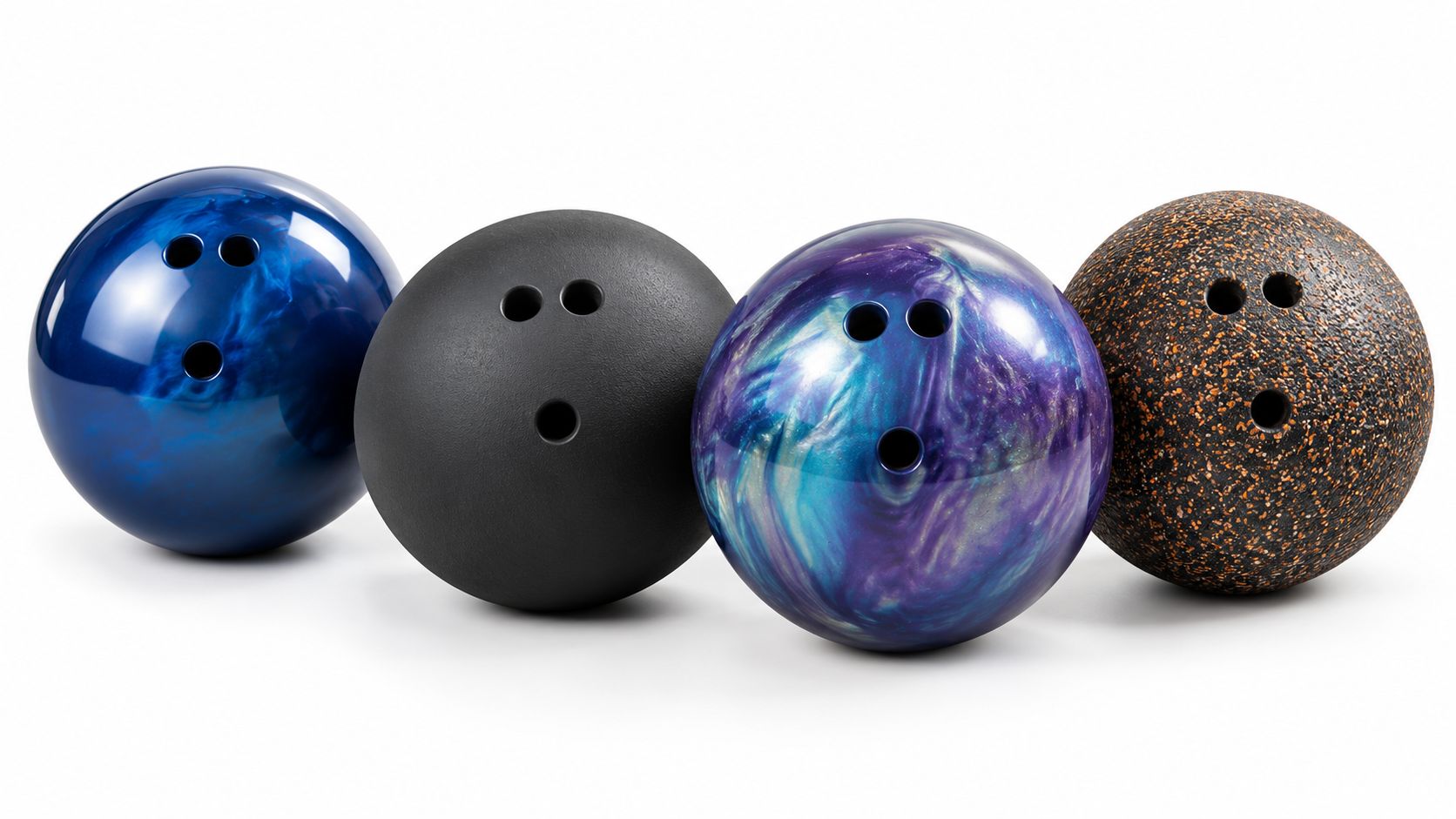
Why does a brand-new bowling ball sometimes skid past the breakpoint instead of producing the smooth arc you expected? The answer often isn't the logo, the drilling, or even the core shape. It's the coverstock, the outer surface that meets the lane and determines how readily the ball creates friction.
Think of the coverstock as the ball's face, or like the tread on a tire. The core supplies the underlying dynamics, but the coverstock controls how that energy interacts with the lane. A strong core with the wrong surface can feel weak, while a well-matched coverstock can turn a confusing reaction into a predictable shot.
Table of Contents
- What Are Bowling Ball Coverstocks and Why Do They Matter
- The Four Main Types of Coverstock Materials
- How Reactive Resin and Particle Coverstocks Create Friction
- Solid Versus Pearl Versus Hybrid Coverstocks Explained
- Matching Coverstocks to Oil Patterns and Lane Conditions
- How Surface Prep Interacts With Core Dynamics
- Choosing the Right Bowling Ball for Your Game
What Are Bowling Ball Coverstocks and Why Do They Matter
A bowling ball coverstock is the outer shell of the ball. It's the part that touches the lane, encounters the oil, and creates the friction that changes the ball's direction. The material, texture, porosity, and surface finish all influence when the ball leaves its skid phase, begins to hook, and continues through the pins.
That's why the coverstock often matters more than a flashy core description. The core affects how the ball rotates and changes direction internally, but the coverstock determines whether that stored motion can connect with the lane at the right time.
Practical rule: The core is the engine. The coverstock is the tire tread. A powerful engine still performs poorly with the wrong tires.
A useful guide to the bowling ball's outer face helps clarify the distinction. The core sits inside the ball and influences dynamics such as rotation, flare, and overall shape. The coverstock sits outside and manages the physical relationship between the ball and the lane.
Friction controls the timing
A ball doesn't “hook more” or “hook less.” It hooks at a particular point on the lane. A low-friction surface may travel farther before changing direction, while a higher-friction surface may begin reading the lane sooner.
That timing creates the reaction you see:
- More early friction can produce a smoother arc and stronger midlane read.
- Less early friction can preserve length and create a sharper move downlane.
- Too much friction can make the ball burn energy before it reaches the pins.
- Too little friction can make the ball skid past the intended breakpoint and lose continuation.
The three major modern performance eras show how dramatically outer-shell design changed bowling. Polyester became common in the 1970s, urethane arrived in the 1980s, and reactive resin emerged around 1990, producing the largest shift in ball motion and scoring during that development period. The American Bowling Congress recorded 14,889 perfect games in the 1991-92 winter season, followed by 17,654 the next season, an increase of nearly 20%, as documented in this history of bowling ball coverstock development.
The lesson is simple. Before moving your feet or changing your target, ask whether the ball's face matches the lane.
The Four Main Types of Coverstock Materials
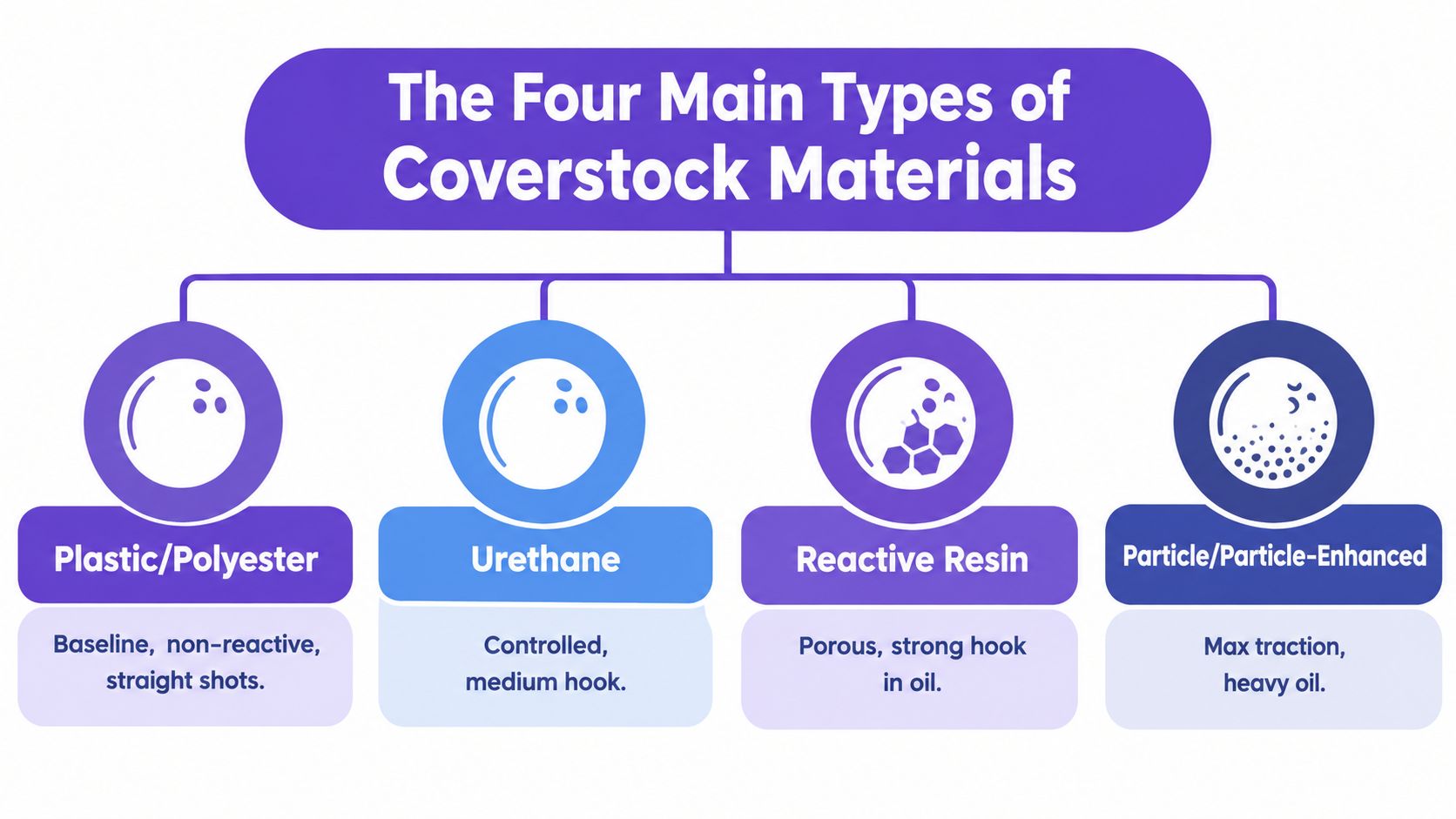
Modern bowling ball coverstocks fall into four practical families: plastic or polyester, urethane, reactive resin, and particle-enhanced reactive. They differ in how much friction they generate, how soon they respond to oil, and how much energy they preserve for the backend.
Plastic and polyester
Plastic, usually called polyester, is the baseline material. It creates relatively little friction and tends to travel straight, which makes it dependable for spare shooting. A plastic ball isn't designed to read the lane aggressively, so it usually won't provide the shape a bowler wants for a strike shot.
Its predictability is its strength. If you need the ball to pass through a line of standing pins without introducing much curve, polyester keeps the reaction manageable.
Urethane
Urethane was introduced circa 1980 and offered more hook than polyester, according to this overview of bowling ball coverstock classes. Its motion is often described as controlled, rounded, and readable. Rather than waiting for a dramatic backend snap, urethane tends to begin its response earlier and continue in a steady arc.
That shape can help bowlers control entry angle, but urethane selection now requires more care in sanctioned competition because legality may depend on hardness and oil-absorption behavior, not merely the material name. USBC rules introduced a 78D hardness requirement for certain slow oil-absorbing high-performance urethane balls effective December 31, 2025, with national tournament restrictions effective January 1, 2026, as explained in the USBC equipment governance report.
Reactive resin
Reactive resin became the high-performance standard in the early 1990s. Compared with plastic and urethane, it reads the lane more aggressively and can store energy for a stronger backend move. Reactive balls are commonly chosen when a bowler needs more traction, continuation, or overall hook potential.
The word “reactive” doesn't mean the ball is making a dramatic chemical transformation on every shot. It refers to the coverstock's formulation and its enhanced interaction with lane oil and the lane surface.
Particle-enhanced reactive
Particle coverstocks add microscopic solid particles to a reactive-resin base. Those particles increase surface bite and help the ball maintain traction when oil volume makes a standard reactive shell struggle.
The tradeoff is important. Particle balls can reduce skid distance and create earlier friction, which may stabilize motion on heavy oil. On a lighter condition, the same traction can make the ball read too early or respond too sharply. The coverstock choice guide from Bowlingball.com connects particle design with increased lane contact on oily conditions and emphasizes the importance of surface preparation and pattern volume.
The practical hierarchy is straightforward. Polyester gives the least friction, urethane offers a controlled response, reactive resin supplies stronger lane read and backend potential, and particle-enhanced reactive coverstocks add even more traction when oil is the main problem.
How Reactive Resin and Particle Coverstocks Create Friction
A reactive ball's motion begins with contact, not with the visible hook at the pins. As the ball travels through the front of the lane, its coverstock meets an oil film and a textured lane surface. The coverstock's roughness, friction behavior, and ability to interact with oil determine how much of the ball's rotational energy transfers into directional change.
Reactive resin is more willing than plastic to create that interaction. It can grip the lane sooner, allowing the ball to transition from skid into roll while it still has room to shape the shot. If the reaction happens at the right time, the ball doesn't merely turn. It changes direction, continues through the pocket, and carries its energy into the pins.
Why particles change the conversation
A particle coverstock begins with a reactive-resin foundation, then adds microscopic solid material. Those particles function like small points of traction within the surface. They help the ball maintain contact when oil would otherwise separate the cover from the lane.
That design is especially useful when a pattern contains substantial oil volume. The ball can “reach through” the oil more effectively, reduce skid distance, and establish an earlier read. A smoother, earlier motion can be easier to control than a delayed ball that suddenly changes direction at the backend.
The same design can become a liability when the lane doesn't provide enough oil. If the coverstock creates too much friction too soon, the ball may lose energy before it reaches the pins. You'll see a shape that starts left, stands up early, and fails to continue rather than one that drives through the pocket.
Read the symptom, not just the hook: A ball that hooks early isn't automatically strong. It may be spending its energy too soon.
Chemistry and texture work together
It's tempting to describe reactive resin as “chemical friction” and particles as “physical friction,” but the ball's motion comes from both effects working together. The resin formulation affects how the shell interacts with oil, while the surface texture determines how readily the ball contacts the lane.
That's why two reactive balls can look completely different even when both are described as high-performance equipment. One may glide through the front and make a quick move late. Another may read the midlane sooner and produce a continuous arc.
The most useful question isn't whether a coverstock is reactive or particle. Ask where the ball creates friction, how quickly it uses energy, and whether the lane offers enough oil to support that behavior. That approach explains why the same particle ball can look excellent on a heavy pattern and unusable after the lane transitions.
Solid Versus Pearl Versus Hybrid Coverstocks Explained
Solid, pearl, and hybrid describe variations within reactive coverstocks. They aren't completely separate material families. Instead, they help bowlers understand how the formulation and surface influence the timing of friction.
A solid reactive generally reads the lane earlier and produces a smoother transition. It's often the first choice when the ball needs to pick up in the midlane rather than skate through the front. The motion can look rounded because the cover starts changing direction before the breakpoint.
A pearl reactive usually creates more length before its main move. That delay can preserve energy and produce a more angular backend reaction, especially when the lane has enough friction farther downlane to activate the coverstock.
A hybrid reactive combines solid and pearl characteristics. It may provide some early traction while retaining enough length to create continuation at the backend. The result depends heavily on the exact formula and finish, so the label is a starting point rather than a guarantee.
Compare the timing, not the marketing label
| Coverstock Type | Friction Timing | Ideal Lane Condition |
|---|---|---|
| Solid reactive | Earlier and smoother | More oil or a need for midlane control |
| Pearl reactive | Later and more angular | Medium conditions where length and backend response are useful |
| Hybrid reactive | Balanced between early read and backend shape | Conditions requiring traction without sacrificing continuation |
The phrase hybrid reactive bowling balls can sound like a promise of perfect compromise, but no coverstock solves every lane problem. A hybrid may still read too early for a high-rev player on friction, or too late for a lower-rev player facing heavy oil.
Entry angle starts with timing
Suppose your ball reaches the breakpoint and turns sharply but then quits at the pins. You may not need more backend. You may need earlier traction so the ball can transition gradually and retain energy. A solid or hybrid surface could fit that need better than a highly polished pearl.
Now reverse the problem. If the ball reads too soon and rolls forward before it reaches the pocket, a pearl surface or a cleaner finish may delay the response. The goal isn't maximum hook. It's the correct sequence of skid, hook, and roll.
Surface labels help narrow the choice, but your release, speed, axis rotation, and lane transition determine whether that choice works.
Matching Coverstocks to Oil Patterns and Lane Conditions
Coverstock selection begins with the lane, not the ball rack. You're looking for the amount of oil, the location of friction, and the shape your current equipment produces. A ball that looks strong on a fresh condition may become unusable once the front of the lane dries.
Use this practical matching process:
- Heavy or high-volume oil: Start with a particle-enhanced reactive or a solid reactive with a duller surface. These options create earlier traction and can help the ball avoid skidding too far.
- Medium oil: A standard solid reactive or hybrid often gives a useful balance between midlane read and backend continuation.
- Lower-volume or drier conditions: Consider a pearl reactive with more surface shine, or move toward plastic when you need a straighter spare line.
- Transitioning lanes: If the ball begins hooking too early, change to a cleaner coverstock or adjust the surface before making a large feet-and-target move.
Match surface grain to volume
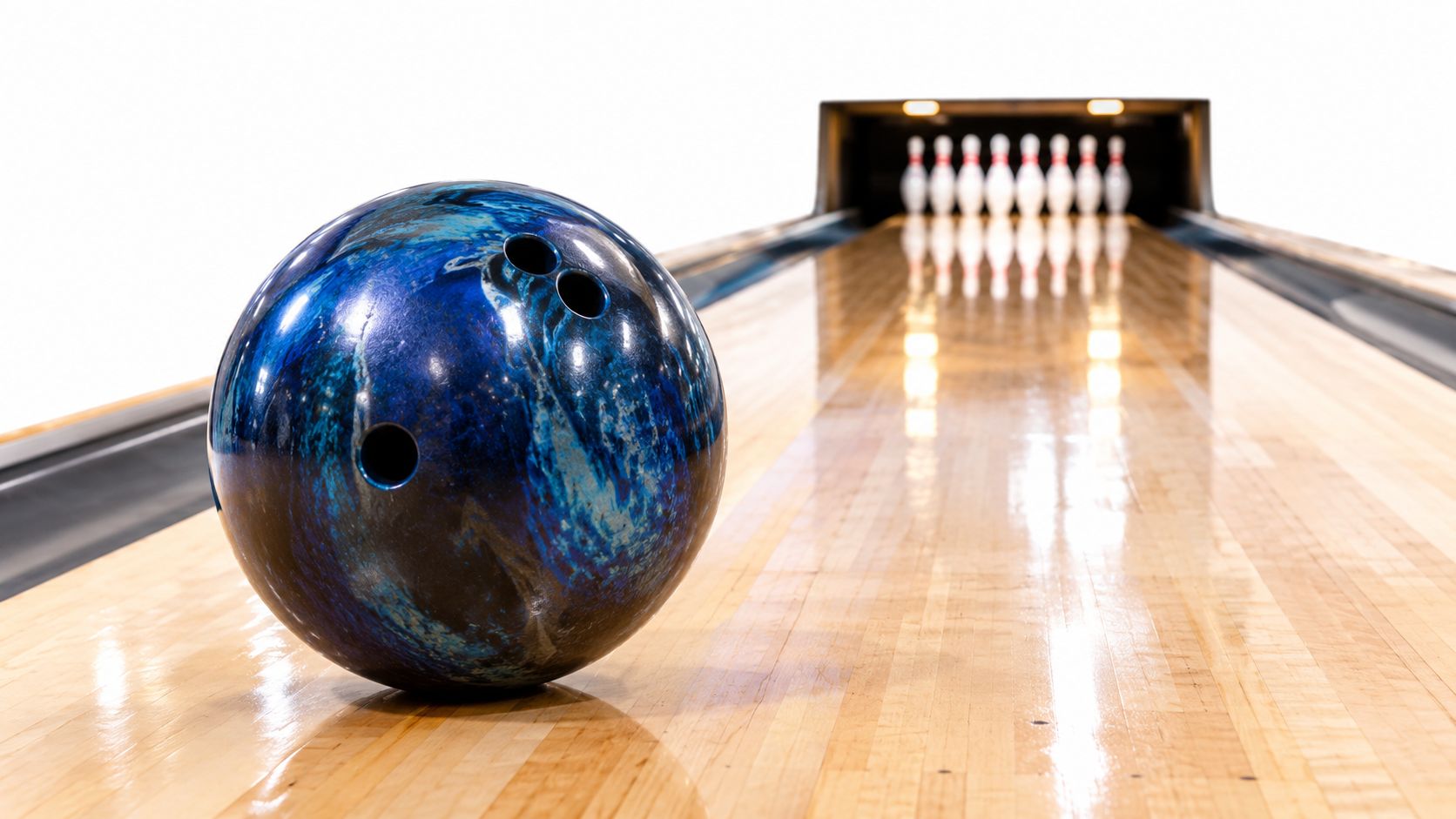
A duller surface generally gives the cover more opportunity to grip earlier. A polished or higher-grit finish generally delays that friction and helps the ball retain length. The finish doesn't replace the coverstock category, but it can shift the timing enough to make a ball useful on a different lane condition.
A coverstock is only “too strong” or “too weak” relative to the lane and the bowler throwing it.
House shots often provide built-in miss room, but that doesn't mean every strong ball fits them. If the ball sees too much friction outside the oil, it can jump high. If it stays trapped in oil, it can miss weak and leave corners. Your best setup creates a readable shape that gives you room on both sides of the intended line.
For tournament or sport conditions, avoid choosing equipment by color, brand, or hook rating alone. Ask a pro shop operator to observe the ball motion and identify whether the failure occurs in the front, midlane, or backend. That location tells you whether you need a different coverstock, a surface adjustment, or a change in release and speed.
How Surface Prep Interacts With Core Dynamics
Surface preparation is the adjustment many bowlers overlook. The same ball can behave differently after cleaning, sanding, or polishing because surface roughness changes how soon the coverstock finds traction.
The core still matters. Core dynamics influence how the ball rotates and transitions, while the coverstock controls how that motion connects with the lane. A useful bowling ball sanding guide treats surface work as a tuning process, not a substitute for proper ball selection.
A fitting example from the shop
A league bowler brings in a ball that skids too long and then makes a weak move at the pocket. The bowler's first instinct is to buy a stronger core. Before doing that, I'd inspect the coverstock, ask where the ball was used, and check whether the surface has become noticeably smoother through lane wear and handling.
If the core already matches the bowler's release, a controlled surface adjustment may help the ball read sooner. A slightly rougher finish can move the friction point toward the midlane, allowing the ball to transition instead of waiting until the backend. The adjustment should be tested gradually, because too much early traction can make the ball roll out before it reaches the pins.
Now consider the opposite case. A high-differential core paired with an overly polished cover may store plenty of motion but fail to use it at the correct time. The ball can skid through the front, encounter friction abruptly, and produce a sideways move that looks impressive but isn't repeatable.
Think in systems
Core and coverstock work as a partnership:
- The core influences rotation, flare potential, and the broad shape of the transition.
- The coverstock controls traction, oil interaction, and friction timing.
- Surface prep fine-tunes when the cover begins that interaction.
- The bowler supplies speed, rev rate, axis rotation, and launch direction.
Changing one part affects the whole reaction. Sanding a pearl ball may make it read earlier, but it won't turn that ball into a different core design. Polishing a strong solid may create more length, but it won't erase the cover's underlying traction characteristics.
Shop-floor diagnosis: Don't ask only, “How much does this ball hook?” Ask, “Where does it hook, and what does it do after it gets there?”
When a ball skips instead of arcs, examine the complete system. The cover may be too smooth, the core may be poorly matched, the lane may have too little oil for the surface, or the release may be sending the ball past its usable friction window.
Choosing the Right Bowling Ball for Your Game
The common assumption is that the raw coverstock material determines the reaction. In practice, surface preparation often dictates the timing more than the material label alone. A polished solid and a dull solid can create noticeably different shapes, just as a pearl cover can become earlier after surface work.
Start with your most common lane condition and your ball speed. Then consider how much natural rev rate and axis rotation you create. A bowler who generates substantial rotation may need a cover that preserves length, while a bowler with lower revs may need earlier traction to prevent the ball from skidding past the breakpoint.
Use these questions before buying:
- Does your current ball read too early, too late, or at the correct point?
- Do you need a smoother arc or a sharper backend change?
- Are you choosing for strike shots, spare shooting, or both?
- Will the ball see mostly dry, medium, or oily conditions?
- Can the coverstock and core support your release without forcing constant adjustments?
A solid reactive can provide a dependable starting point for a bowler who needs traction and control. A pearl reactive may help a high-rev player create length when the front of the lane is becoming difficult to manage. Particle equipment can offer useful bite when oil volume is the dominant problem, but it needs enough oil to justify that traction. Polyester remains a practical spare option because its low friction keeps the line predictable.
Bowling Gear Reviews publishes independent bowling ball reviews and buying guides that compare coverstock type, core design, surface preparation, hook shape, and lane-condition suitability. Visit Bowling Gear Reviews to compare equipment with your own ball motion in mind, then bring those observations to a pro shop operator who can match the cover, core, and surface to the lanes you bowl on.

2 Comments
Pingback: 7 Best Solid Reactive Bowling Balls for 2026
Pingback: Different Types of Bowling Balls Explained for 2026