

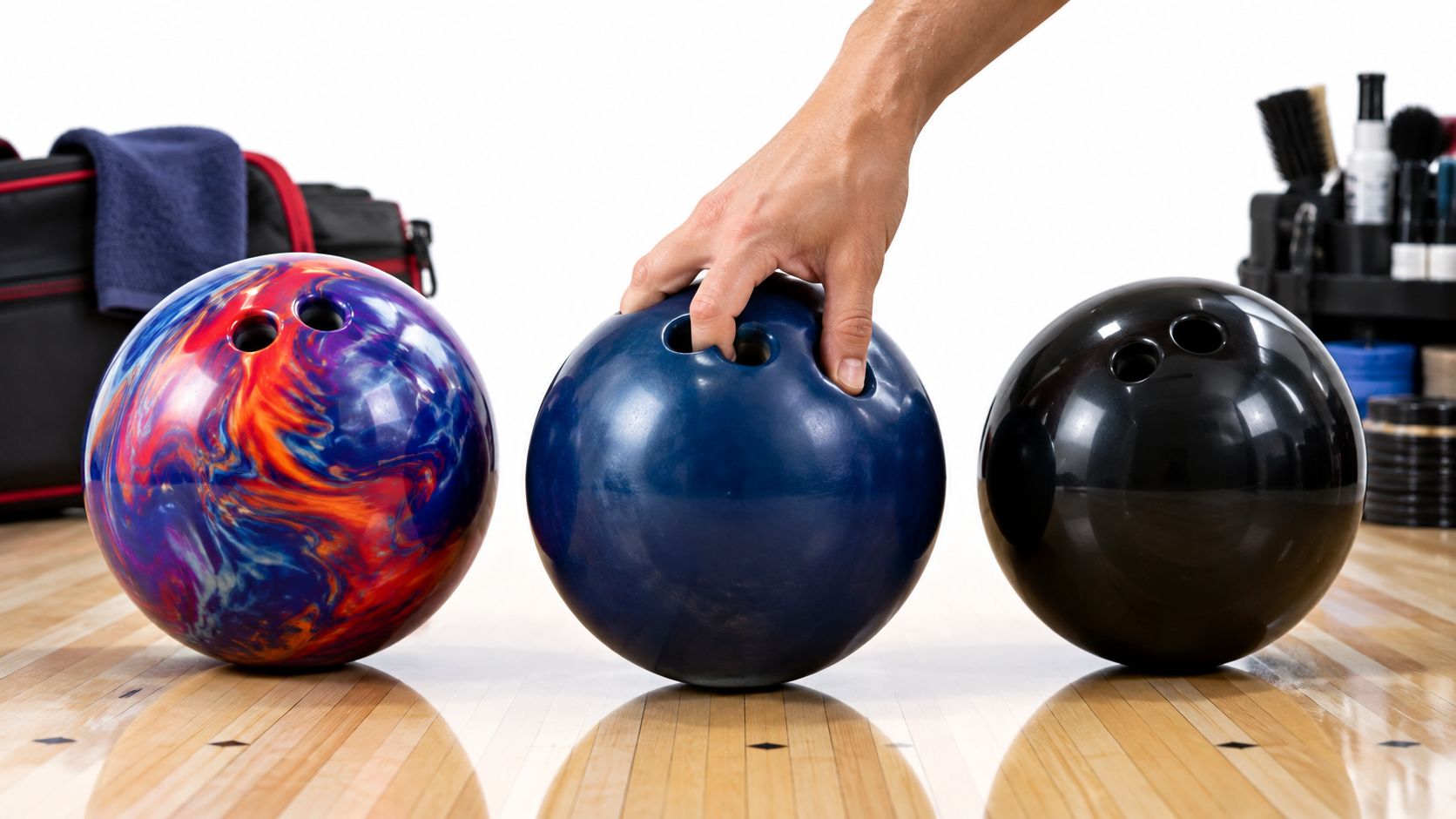
Reactive resin is the best ball type for intermediate bowlers facing medium to heavy oil because it offers superior traction and versatility. A standard ball can weigh up to 16 pounds, but the strongest legal ball isn't automatically the best choice if you can't control it through a full session.
Why do so many intermediate bowlers buy more hook and end up with less consistency? The answer usually appears during league transition. A ball looks impressive in the first game, then reads too early, misses the intended breakpoint, or forces repeated moves that the bowler can't execute comfortably. The better target is reaction stability, meaning a predictable read through the front, a manageable breakpoint, and enough energy to finish through the pins.
The right equipment should match your release, typical lane conditions, maintenance habits, and competition rules. Plastic, urethane, and reactive resin each solve different problems, while the core determines how the coverstock translates friction into motion. This guide focuses on what helps intermediate bowlers score more reliably, not on the ball that produces the most dramatic hook in a showroom video.
Table of Contents
- Choosing the Right Ball for Your Game
- Understanding Coverstock and Core Dynamics
- Comparing Urethane and Reactive Resin
- Matching Ball Specs to Your Delivery
- Drilling and Fit Considerations
- Common Mistakes to Avoid
- Final Recommendations for 2026
Choosing the Right Ball for Your Game
A common league scenario goes like this. An intermediate bowler arrives with a plastic ball that has served well while learning to roll the ball, then buys a highly aggressive reactive resin ball after watching it make a sharp move at the back of the lane. The first few shots look powerful. By the middle of the session, the ball is reading earlier, the breakpoint has become difficult to find, and pocket hits depend on timing that isn't yet repeatable.
That upgrade didn't fail because reactive resin is unsuitable. It failed because the ball's reaction was stronger than the bowler's ability to manage changing friction. Intermediate bowlers need performance equipment, but they also need a reaction they can repeat when the lane stops looking fresh. A controlled benchmark ball often improves scoring more than an aggressive option that creates constant guesswork.
Historically, the move from plastic to performance equipment has followed clear coverstock changes. Hardwood balls were common until rubber appeared in 1905. Polyester, commonly called plastic, arrived in 1959 and became dominant by the 1970s because it created less friction and less hook than rubber. Urethane emerged in the early 1980s, while reactive resin followed in 1991 with microscopic pores that increased oil absorption and traction. USBC research identifies reactive resin as the dominant competitive technology by the late 1990s, while traditional urethane had declined to negligible levels. You can review that development in the USBC equipment history and research report.
Start with the lanes you actually bowl on
A useful starting point is to identify the lane condition you face most often, then choose a ball that gives you room to miss.
| Typical need | Practical starting point | Why it works |
|---|---|---|
| Straight spare shooting | Plastic polyester | Minimizes friction and keeps the path predictable |
| Earlier, smoother control | Urethane or a smooth reactive cover | Helps shape the front-to-back reaction when friction is available |
| Medium to heavy oil | Reactive resin | Adds traction and continuation where weaker covers may skid too long |
| Drying lanes during a session | Cleaner or less aggressive cover | Reduces the chance of early roll and lost energy |
The most useful test isn't whether a ball hooks more than your current one. Watch whether it reaches the same breakpoint with small release variations, whether it enters the pocket with energy, and whether your feet and target move gradually instead of dramatically. A ball that gives you a repeatable look is usually a better purchase than one that only looks powerful on the best shot.
For U.S. competition, check current approval and drilling requirements before buying, altering, or resurfacing equipment. USBC specifications regulate weight, diameter, hardness, balance, drilling, and dynamic properties, and competition rules can change over time.
Understanding Coverstock and Core Dynamics
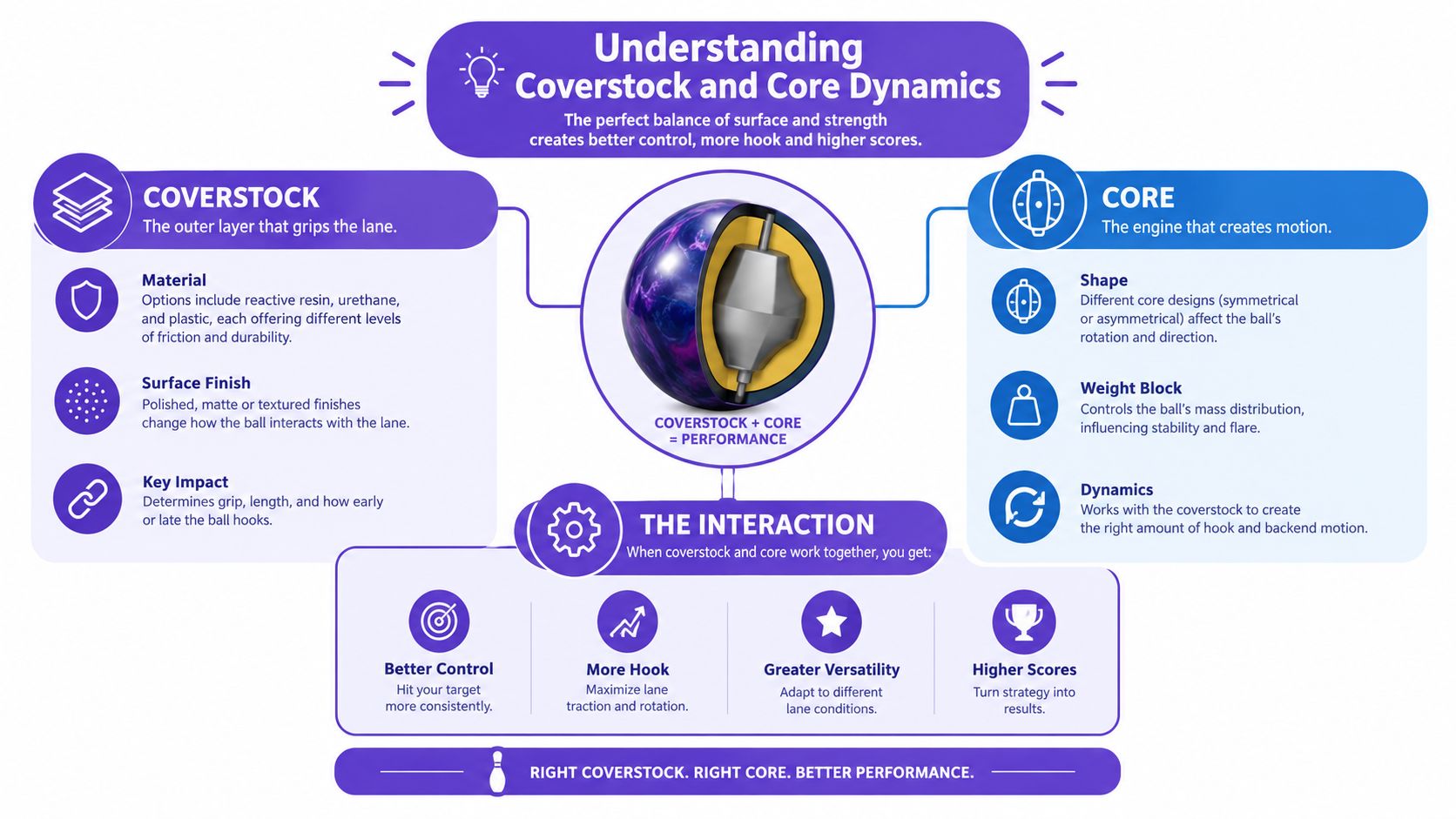
A bowling ball's motion comes from the interaction between its outer shell and its internal mass distribution. Treating either part as a standalone hook rating leads to poor comparisons. The coverstock determines how the ball responds to oil and dry boards, while the core influences how quickly it revs, how much it flares, and how the changing track exposes fresh surface.
USBC-sponsored ball-motion research identified dry-lane coefficient of friction, oil-absorption rate, and low RG as the three most influential measured variables in ball path. That finding gives intermediate bowlers a more useful framework than just sorting balls by “strong” and “weak.” A porous reactive shell can absorb conditioner and create traction, while plastic absorbs little oil and generally produces a straighter reaction. Urethane behaves differently from both, often creating earlier and smoother friction.
What RG and differential actually tell you
Radius of gyration, or RG, describes how mass is distributed around the ball's axis. A lower-RG design generally begins revving earlier, while a higher-RG design tends to delay that initial revving response. Differential RG describes flare potential. More differential can expose more fresh coverstock as the ball rolls, which generally increases total hook potential but can make the reaction less forgiving when speed and rev rate don't match.
Those specifications are comparative tools, not performance grades. A lower-RG, moderate-differential ball can provide an effective benchmark on medium conditions because it reads early without necessarily producing an uncontrollable change of direction. A higher-differential design may create useful lane separation when the pattern demands more flare, but pairing it with a rough surface can make it burn energy before the breakpoint.
The same coverstock can behave differently on different cores. Core properties affect rotational behavior, while friction and oil absorption determine where the ball begins changing direction. Compare candidates at the same factory surface whenever possible, and use this guide to bowling ball coverstocks to clarify what the shell is designed to do.
Test motion instead of chasing labels
Record the ball's front-lane read, breakpoint shape, entry angle, pocket-hit quality, and energy at the pins. A ball that hooks earlier but arrives weak may score worse than a smoother option that reaches the pocket with continuation. Your goal is a reaction window wide enough to survive ordinary release errors and lane transition.
Comparing Urethane and Reactive Resin
Which ball gives you the steadier reaction as the lane changes, urethane or reactive resin? They are different tools, not weaker and stronger versions of one design. Urethane shapes friction earlier and more smoothly, while reactive resin creates stronger traction and often more continuation. The useful choice depends on reaction stability, oil volume, and how quickly you can adjust.
Urethane can calm a jumpy reactive ball and provide a readable shape on shorter or drier conditions. Its rounded motion helps when you need control rather than a sharp move off the breakpoint. Modern slow-oil-absorbing urethane can also affect lane-pattern integrity through oil carrydown, so its control profile does not make it harmless to the pattern.
Reactive resin absorbs more oil and produces stronger traction, making it a versatile option for medium to heavy oil. It can read the midlane and continue through the pins, but a strong cover changes the lane faster. As oil moves and depletes, you may need more precise moves with your feet, target, or ball surface.
| Feature | Urethane | Reactive Resin |
|---|---|---|
| Friction shape | Earlier and smoother | Stronger traction with more continuation or backend shape |
| Oil response | Behaves differently from porous reactive covers and can contribute to carrydown | Absorbs conditioner and can increase friction as the surface remains comparatively dry |
| Best practical use | Control when a readable, rounded motion is needed | Medium to heavy oil and broader condition coverage |
| Main risk | Carrydown and competition restrictions for affected designs | Early roll, excessive hook, and frequent moves when the cover is too strong |
| Intermediate-bowler priority | Predictable shape and speed control | Traction without sacrificing energy at the pins |
Use the urethane bowling ball guide to compare traditional control equipment with newer designs, then confirm whether the specific ball is permitted. USBC rules effective December 31, 2025 require slow-oil-absorbing, high-performance balls with oil-absorption times above 90 minutes to meet a 78D hardness standard, according to the USBC rule-change FAQ. Rules effective January 1, 2026 restrict or prohibit some affected balls in selected national tournaments.
The PBA stated that its 2026 events would continue allowing urethane balls that meet the specified hardness conditions. Before relying on urethane, check the exact ball, governing body, and event rules. Recreational league decisions may differ from tournament requirements, so confirm the local policy before drilling a ball for regular use.
Matching Ball Specs to Your Delivery
A ball's specifications only become useful after you connect them to your delivery. A bowler with moderate speed and high rev rate may need a cleaner cover or smoother surface to prevent early hook, while a player with more speed and fewer revs may need additional traction to avoid skidding past the breakpoint.
Start by observing three moments: the ball's response off the hand, its transition from skid to roll, and its movement through the pins. RG and differential help shape those moments, but coverstock friction determines how strongly the lane exposes them. A low-RG ball with a rough, oil-absorbent reactive surface can read very early. A similar core with a cleaner surface may travel farther before changing direction.
Use your miss pattern as evidence
If your ball skids too long and leaves weak corners, you may need more traction, a lower-RG benchmark, or a surface that reads sooner. If it hooks before the breakpoint and loses energy, the problem may be excessive cover strength, too much differential, or a release that produces more revs than the ball can store.
Compare balls under consistent conditions. Prepare the surfaces the same way, use the same lane pattern, and note your approximate speed, starting board, breakpoint board, and visible skid-to-roll transition. The guide to bowling ball weight blocks can help translate core terminology, but your own reaction notes should decide the purchase.
Practical rule: Choose the ball that gives you the largest comfortable margin around the breakpoint, not the one that makes the biggest move when you throw your best shot.
Weight also needs to support repeatability. USBC rules set the maximum ball weight at 16 pounds, approximately 7.3 kilograms, and the permitted diameter at 8.500 to 8.595 inches, approximately 21.59 to 21.83 centimeters, as documented in the bowling ball specifications overview. The heaviest legal ball isn't automatically appropriate. If the weight changes your speed, balance, or release late in a session, a lighter controllable option may produce better results.
Drilling and Fit Considerations
A strong coverstock and well-designed core can't rescue a poor fit. If the thumb hangs in the hole, the fingers need excessive squeeze, or the span forces tension into the hand, your release will vary before the ball has a chance to show its intended motion.
Use a certified pro shop operator and bring the ball you currently throw, if you have one. The fitter can compare your existing span, pitches, thumb shape, finger position, and grip pressure rather than guessing from measurements alone.
A practical drilling sequence
Describe your release. Explain your approximate speed, rev rate, axis rotation, and whether the ball tends to read early or late. The operator needs your motion, not just your hand size.
Check the fit before discussing layout. Your thumb should exit without squeezing, and your fingers should sit comfortably in the inserts. A repeatable fit protects the release and reduces unnecessary strain.
Choose layout goals after selecting the reaction. Layout can influence flare and timing, but it can't turn an unsuitable coverstock into the right ball for your lane conditions.
Roll the finished ball before making changes. Note whether it clears the front, reaches the breakpoint, and retains energy. Don't alter pitches or surface based solely on how the ball looks on a single shot.
Drilling also interacts with current competition rules. USBC prohibited balance holes in competition on August 1, 2020, because they could alter ball dynamics after drilling, as described in the USBC equipment history report. Confirm legality before drilling a ball for sanctioned competition.
Common Mistakes to Avoid
The costliest mistake is equating more hook with higher scores. Fast oil-absorbing covers can create strong motion, demand frequent moves, and push the bowler farther inside as oil is depleted downlane, according to USBC continued technology research. That reaction can suit a player with a dependable release, yet overwhelm an intermediate bowler still learning to read transition.
A strong ball may look excellent in the opening game and become difficult later. Oil absorbed into the cover can make the reaction earlier and weaker, while changing lane friction shifts the breakpoint. Treat oil absorption as both a ball-reaction factor and a lane-management factor, especially under the 2026 rules affecting urethane and slow oil absorption.
Replace guesswork with a reaction log
Record ball motion instead of relying on a manufacturer's strength label.
- Front-lane read: Does the ball clear the heads cleanly, or spend energy too soon?
- Breakpoint shape: Does it reach the intended board with a rounded, readable move?
- Pin energy: Does it continue through the pocket, or deflect after early friction?
- Required moves: Can you adjust gradually, or does the ball demand repeated large changes?
- Post-session condition: Does cleaning restore the reaction, indicating that oil affected the cover?
Maintenance can prevent a wrong equipment diagnosis. If a reactive ball becomes earlier and weaker, clean it after the session and consider periodic resurfacing to restore its intended friction profile. Check how the ball responds again before changing your line or replacing it.
A control option that remains readable through transition may improve scoring more than another strong asymmetrical reactive ball. The best choice is the ball that lets you repeat a productive line after the lane changes, not the one that produces the largest move on a fresh condition.
Final Recommendations for 2026
For most intermediate bowlers, a reactive resin benchmark ball is the best primary upgrade for medium to heavy oil. Choose a surface and core combination that reads the lane without exhausting itself before the pins. Low RG can help create earlier roll, moderate differential can provide useful flare without excessive volatility, and a manageable coverstock can preserve the reaction as the session develops.
Build the decision around four questions:
What does the lane require? Use plastic for predictable spare shooting, smoother equipment for control, and reactive resin when oil demands traction.
What does your release create? Match surface strength and core dynamics to your speed and rev rate. A ball that looks strong on paper may be too early for a high-rev player or too clean for a speed-dominant player.
Can you maintain the reaction? Clean the cover after bowling, monitor changes across games, and resurface when the ball no longer responds as intended. Maintenance belongs in the performance plan.
Where will you compete? Verify approval for each league, tournament, and governing body. The 2026 urethane and slow-oil-absorption rules don't apply identically to every competition, so identify the exact ball and event before building your arsenal around it.
Test candidates on the same pattern, record breakpoint shape and carry, and judge the ball after transition rather than after one ideal shot. A controlled ball with a reliable fit can improve scoring more effectively than an aggressive purchase that demands perfect timing.
Bowling Gear Reviews publishes hands-on ball reviews, comparisons, and buying guides that examine coverstock, core design, surface preparation, lane-condition suitability, control, and consistency. Visit Bowling Gear Reviews to compare current equipment and use those practical observations alongside your own league reaction notes before choosing your next ball.
