

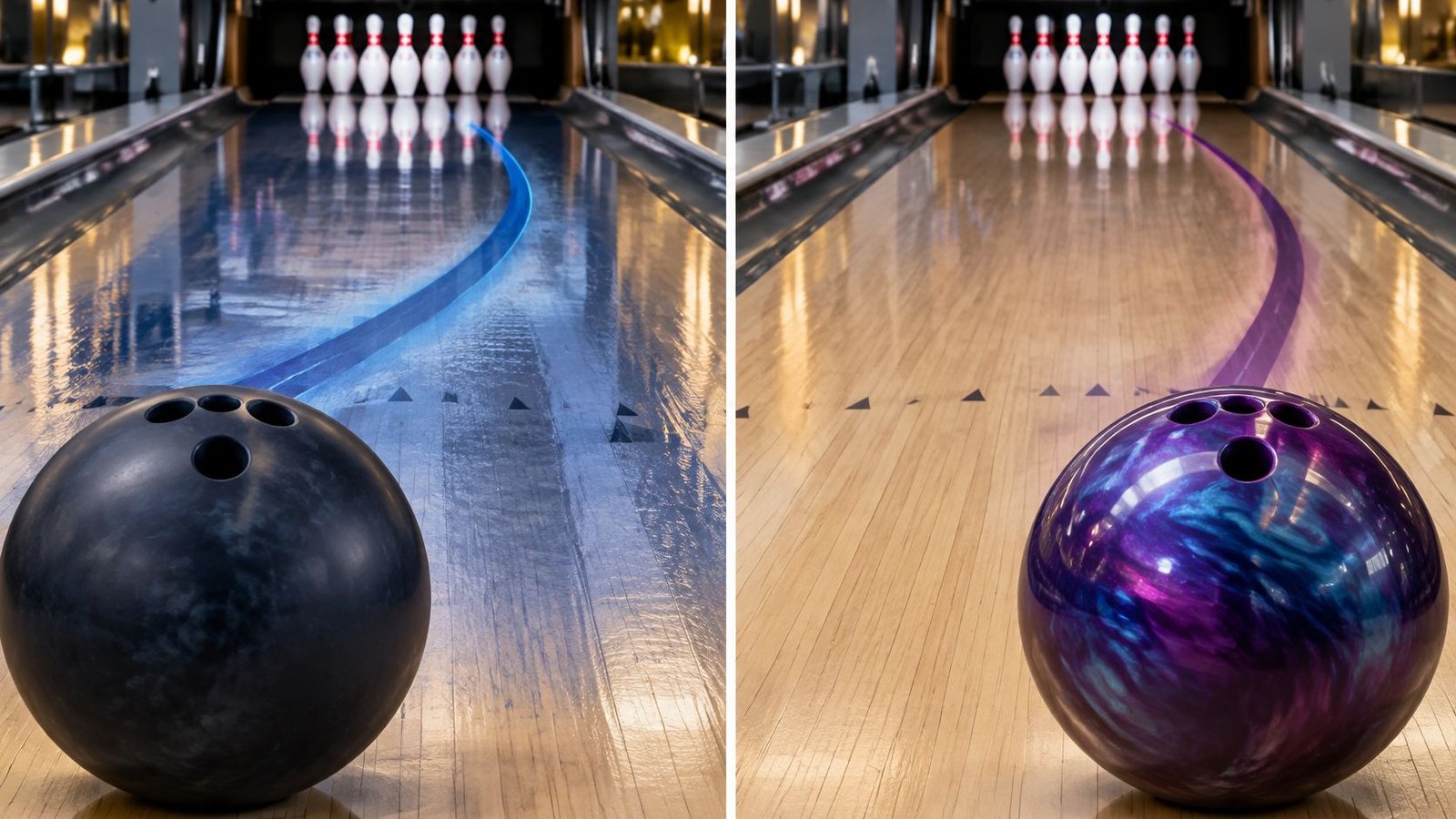
Solid for heavy oil, pearl for dry lanes. That's the first piece of coverstock advice most bowlers hear, and it's the one that causes the most expensive mistakes at the pro shop counter. The advice isn't wrong so much as incomplete. It describes where a cover starts creating friction, not how much total hook it makes, and it falls apart the moment you change the surface. A heavily sanded pearl will out-read a polished solid on the same lane. Two pearls from different companies, with different core numbers and different additives in the shell, can behave like they came from different decades.
What decides your ball reaction is a stack of variables, and the coverstock label sits near the middle of that stack rather than the top. Ball speed, rev rate, drilling layout, oil volume, pattern length and the grit you're throwing today all move the breakpoint. Knowing what pearl and solid do differently is still worth your time, because it tells you which direction to push. Just don't let the word printed on the box make the decision for you.
Table of Contents
- Pearl vs Solid Differences and Friction Timing
- Surface Prep That Reverses the Usual Choice
- Which Reaction Fits Each Lane Condition
- Matching the Reaction to Your Skill Level
- How to Test Pearl and Solid Balls Yourself
- Choose Between Pearl and Solid Before You Buy
Pearl vs Solid Differences and Friction Timing
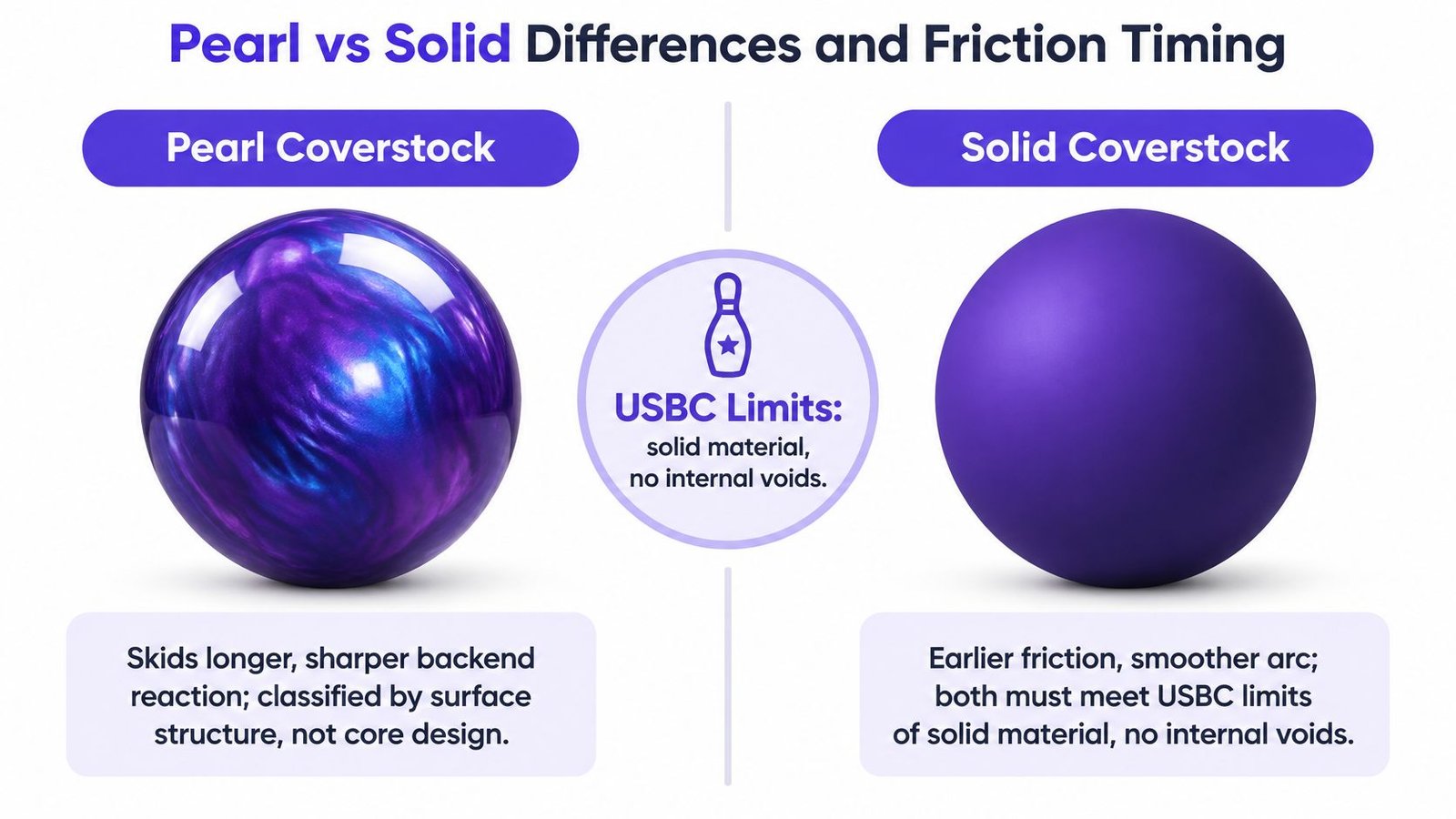
Pearl and solid describe reactive-resin coverstocks, not core designs or entirely different ball constructions. The distinction helps predict when a ball may begin to read the lane, but it does not guarantee a particular shape. USBC equipment specifications govern a bowling ball's materials and surface.
Reactive resin followed earlier rubber, polyester, and urethane covers. Its porous surface can absorb oil and create more traction than plastic. The key difference between solid and pearl reactive is generally friction timing: solids tend to read sooner, while pearls tend to retain length.
| Trait | Solid reactive | Pearl reactive |
|---|---|---|
| Surface structure | Typically has a more open, traction-oriented surface | Mica additives give the surface a different character |
| Friction in oil | Tends to gain traction earlier | Tends to retain length through more of the lane |
| Typical read point | Earlier in the midlane | Later, farther downlane |
| Backend response | Often smoother and more continuous | Can appear sharper when it finds friction |
| Common fit | Earlier control when the lane has more oil | More length when the fronts have transitioned |
| Common risk | Reads too early or loses continuation on a drying lane | Skids too far to turn the corner in heavier oil |
Treat the table as a starting point, not a promise. A ball's core, layout, surface preparation, and the lane all affect its motion. Two balls with different cover labels can overlap in reaction, especially after their surfaces have been changed.
Entry, Breakpoint, Continuation
Follow the ball through three parts of its path to read the difference.
- Entry, the first 15 to 20 feet: The ball travels through the heads, where oil is present. A pearl cover often creates less friction there, helping the ball retain length. If it does not find enough traction later, it may skid past the intended breakpoint.
- Breakpoint: The ball transitions from skid into its turn. A solid cover often starts that transition earlier, though the surface and the bowler's release can change the timing.
- Continuation: After the breakpoint, the ball keeps moving toward the pins. A pearl that has retained energy may change direction more sharply when it meets friction; a solid often makes a smoother move.
That difference in timing is why a pearl can look more angular without necessarily hooking more overall. A strong solid may cover more boards while making a rounder, earlier move. The label describes a tendency, not a measure of total hook.
What Oil Absorption Adds
Reactive covers can absorb lane oil as the ball rolls. How quickly a cover takes up oil affects its traction and can influence how the lane changes as play continues. The USBC ball technology study reports that faster oil-absorbing balls tend to hook more, prompt bowlers to move farther inside, and deplete oil deeper downlane more quickly.
The practical trade-off is timing. A sanded solid may start reading early, but if it uses too much energy before the breakpoint, it can arrive at the pins flat. A polished pearl may clear the front part of the lane more easily, but on heavy oil it can miss the friction it needs to turn.
Reading What You Just Threw
If the ball reacts earlier than expected, friction is taking hold sooner than your line or release calls for. The cover's surface, the layout, and the lane can all contribute. A ball that skids and turns late points to the opposite timing problem.
Watch the pins and the shape together. On heavier oil, a shiny pearl that skids past the breakpoint may leave a bucket or a weak ten. As the lane dries, an aggressive solid can read too early and lose continuation, producing flat tens or ringing corner pins.
The short version: Solid covers tend to create an earlier, rounder read; pearl covers tend to retain length and make a later move.
What the Label Can't Tell You
The coverstock label is only one part of the reaction. Core shape, drilling layout, surface finish, oil volume, ball speed, rev rate, and lane transition can all change what you see. Pearl balls, for example, can have very different core designs. The Hammer Zero Mercy Pearl product listing gives a core RG of 2.524, a differential of 0.053, and a mass-bias differential of 0.020 (Hammer Zero Mercy Pearl product listing).
Use solid or pearl as an initial clue, then judge the ball by when it reads and how it continues. A solid may suit a fresh lane when you want an earlier read; a pearl may help when you need more length. Surface preparation can shift either reaction substantially, so the finish and your ability to repeat your release matter as much as the label.
Surface Prep That Reverses the Usual Choice
The coverstock label is only a starting point. A solid with polish can provide more length than a sanded pearl, while sanding a pearl can make it read earlier. Finish and a bowler's consistency matter as much as whether the cover is pearl or solid.
| Cover and finish | Early friction | Skid and length | Lane it suits |
|---|---|---|---|
| Sanded solid | Highest early friction | Early, strong read, shorter skid | Fresh or heavy oil |
| Polished solid | Less front-lane friction | Longer, smoother continuation | Transitioning lanes needing length |
| Sanded pearl | More early traction than a polished pearl | Reads earlier than polished pearl | Long pattern that reads late |
| Polished pearl at 2000 grit or higher | Lowest early friction | Longest skid, sharp backend | Dry or broken-down lanes |
A polished solid can travel farther downlane than a sanded pearl, making it a length option on a transitioning lane when you want to keep the same ball. A sanded pearl can read earlier than a polished pearl, which may help on a long pattern where the ball is reaching the breakpoint too late.
The USBC ball motion study identifies on-lane friction, oil-absorption rate and surface roughness as the strongest motion variables, which is why finish can shift a ball's reaction as much as its coverstock category. Adjusting grit or polish changes when the ball encounters friction, though the result also depends on the lane and the bowler's delivery.
Lane conditions change during a session. As oil breaks down, friction rises, and a ball that read well early may start hooking too soon. If the ball lines up but reacts at the wrong point, try a surface adjustment before switching coverstock families.
Practical rule: Test a polished solid for added length before buying another pearl. A guide to sanding a bowling ball explains how to adjust the finish with sanding pads.
Which Reaction Fits Each Lane Condition
Match the reaction to the condition you see at the start of the session, then plan the adjustment you'll make when it changes.
| Lane condition | Lean toward | Reason | Warning sign |
|---|---|---|---|
| Fresh, heavy oil pattern | Solid, sanded | Early friction and oil removal keep the ball on line | Flat backend if energy is spent before the breakpoint |
| Medium oil, mid-session | Solid or hybrid, moderate finish | Balanced read as oil starts to break down | Early hook as the breakdown continues |
| Dry or transitioned lane | Pearl, polished | Preserves length and backend response | Skids past the breakpoint if oil returns |
| Long pattern, lane drying | Pearl, sanded if an earlier read is needed | Earlier read without losing length | Over-hook as the lane dries |
| Rapid transition within a game | Pearl, with finish adjusted between games | Delays friction as the lane changes | Less early control in the first frames |
Pattern length changes the answer more than bowlers expect. On a longer pattern a pearl keeps its energy stored and gives you carry once the lane opens, because there's enough oil in front to justify the length. On a short, heavy pattern a solid's early read keeps the ball from squirting past the breakpoint, and control beats recovery.
Watch for two failure patterns and name them. If the ball is reading early and your miss keeps drifting left, the solid is too aggressive for what the lane is giving you, and moving your feet won't fix the shape. If the ball skids long and leaves the pocket high, the pearl has more length than the oil can support. Neither problem is solved by blaming your release.
Rapid transition inside a single game is the case that catches people. The ball that opened the game is not the ball that closes it, and rather than reaching for a third ball, a quick surface change between frames often restores the shape. Knowing how oil patterns are built helps you predict which way the lane will move before the pins tell you.
Matching the Reaction to Your Skill Level
The most common piece of bad advice in league is that pearls suit beginners because they skid longer. Skidding longer isn't the same as being controllable. A pearl's sharper change of direction punishes a missed target harder, and a newer bowler misses targets constantly.

The key question is which reaction repeats for your speed and rev rate, not which one hooks most. Three profiles cover most league bowlers.
- Beginners with inconsistent speed and low rev rate: a predictable solid or hybrid reaction usually wins, because the ball gives a clear, repeatable read you can learn from. A pearl's late move gives you less feedback about what you did wrong.
- Steady league bowlers with a repeatable release: a pearl starts earning its place once the same shot produces the same carry, making the extra length and recovery an asset rather than a lottery.
- High speed, high rev bowlers: a pearl's sharper backend fits the way you already create angle, but only if the ball still gives you miss-room. Plenty of strong players are better off with a smoother shape and a bigger error window.
Log four things rather than one: miss-room, breakpoint sensitivity, carry consistency, and how many moves the ball demands as the oil breaks down. These describe controllability. Hook potential describes almost nothing useful.
Say the same one-board miss at the breakpoint leaves a flat ten with the pearl and still finds the pocket with the solid. The solid is the better ball for that bowler right now, no matter which one covers more boards. Forgiveness beats maximum hook every night of the week.
Rule for moving up: switch to a pearl after two or three sessions of stable carry with the same ball, and keep the solid as your reference point if the pearl's miss-room shrinks.
For a look at how the two shapes behave on the lane before you drill anything, the video below is worth the time.
How to Test Pearl and Solid Balls Yourself
A fair comparison reports more than hook potential. What you want is miss-room, breakpoint sensitivity, carry consistency and how many moves the ball forces as the oil breaks down, the same framework BowlingBall.com's solid versus pearl comparison uses. That's testable on your own league pair.
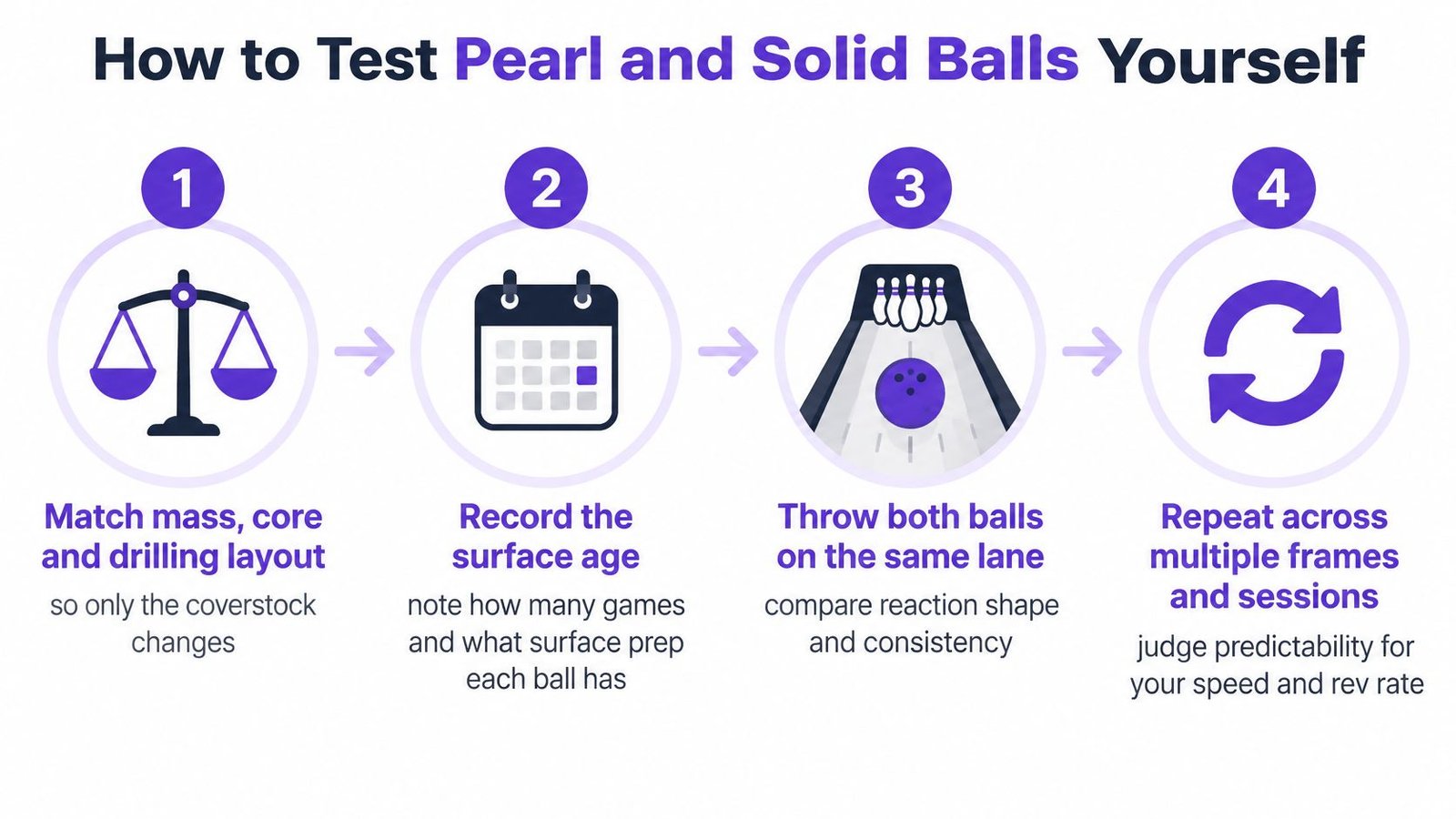
- Match mass, core and layout. Same weight and the same layout family, so the only variable left is the cover. Otherwise you're testing the drill bit, not the coverstock.
- Record surface age and finish on both. A 20-game sanded ball against a fresh polished one isn't a comparison, it's a guess with numbers on it.
- Bowl a fresh-oil game and log breakpoint distance, entry angle and pocket percentage. These three numbers describe where the ball turns and what it does when it gets there.
- Bowl a later game after the oil has broken down and log the same three. The gap between the two sets is the transition cost of that ball.
- Measure miss-room by moving two boards left and right of target. Note the pins you leave. This is the number that decides close matches.
- Clean both balls after every session. Accumulated oil and wear reduce friction and total hook, which skews a multi-week test.
- Compare across three sessions, not one. A single game lies, especially on a house shot that hides differences in shape.
We test bowling gear in real bowling conditions for exactly this reason. A ball that looks superb on a fresh practice pair can be unusable by the third game of league, and only repeated sessions on a real lane surface expose that.
The clean result has a shape you can recognize. The ball that holds a stable breakpoint and steady carry across both the fresh and broken-down conditions, with misses staying inside the pocket line, is your better match, even if its total hook number is lower than the alternative.
Choose Between Pearl and Solid Before You Buy
Work through three questions in order, and the decision usually makes itself.
- Which condition do you bowl? Fresh or heavy oil with a need for early control points to a solid, ideally sanded where you want friction sooner. Drying or transitioned lanes with a need for length point to a pearl, polished where you want more skid.
- Can you repeat the reaction? If your speed and release are still settling, pick the shape you can repeat rather than the one with the biggest hook number, and use the miss-room and carry checks above instead of the spec sheet.
- Which finish can you maintain? A ball you'll resurface beats a ball with a factory finish you're afraid to touch.
Keep a short checklist before you commit.
- List the lanes you bowl most often. One house shot once a week needs two balls, not five.
- Log your speed and rev rate. They determine whether length or traction is the scarce resource in your game.
- Pick a finish you can maintain. A pad and a compound keep a surface honest through a season.
- Run the two-ball test before buying a second ball. It costs two league sessions.
The pearl vs solid bowling ball label is one input, not the verdict. Layout, oil volume and lane transition often decide the result, and core selection shapes the motion before the cover touches the lane. Read up on bowling ball core types before you settle on a drilling, because a cover that fights the core is money wasted. Bowling Gear Reviews only recommends products it believes offer value to its readers, and brands don't influence those reviews.
Your action this week: take your logged test results to a pro shop or a coach and ask them to drill both candidates to the same layout before you commit to either. That single conversation removes the guesswork the coverstock label can't.
If you want help turning a stack of lane notes into a decision, Bowling Gear Reviews publishes hands-on ball reviews and buying guides that compare coverstocks, cores, finishes and lane fit in plain language. The site covers balls, shoes, bags and accessories, with guides on choosing weight and style so you can build an arsenal around the conditions you bowl. Visit Bowling Gear Reviews and start with the coverstock and ball guides before your next pro shop visit.
