

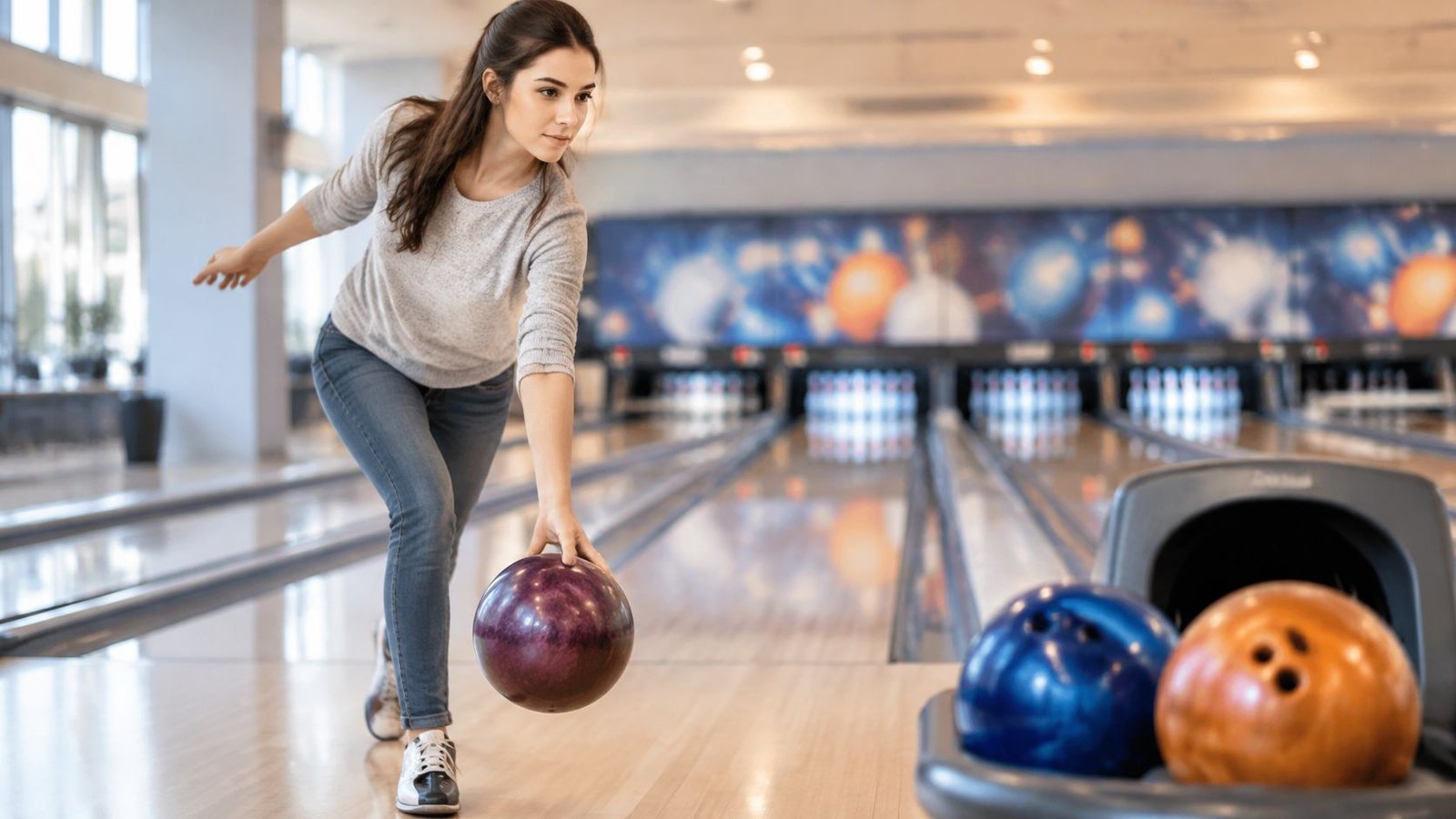
Most adult beginners start between 11 and 14 pounds, using about 10 percent of body weight as a screening estimate. The maximum is 16 pounds, not a target.
You're standing at the ball rack, trying to decide whether the ball that feels easy to lift will really knock pins down, or whether the heavier one will wear out your arm. Don't make that decision from a single lift or one lucky strike. The best bowling ball weight for beginners is the weight you can release comfortably and keep on target after the initial excitement has worn off.
Table of Contents
- Starting Weight by Body Weight and the 16-Pound Ceiling
- How to Run a Progressive Fit Test on the Lane
- Warning Signs That Your Ball Is Too Heavy
- Starting Points for Youth, Women and Older Bowlers
- Buy and Confirm Your First Ball This Week
Starting Weight by Body Weight and the 16-Pound Ceiling
A body-weight calculation gives you a shortlist of candidates at the rack. It says nothing about which of them you can control through a full session.
| Bowler profile | Body-weight screen (10%) | Typical starting range |
|---|---|---|
| 120-lb adult | About 12 lb | 11–14 lb |
| 150-lb adult | About 15 lb | 14–15 lb for many men |
| 180-lb adult | 16 lb, capped at the maximum | 16 lb ceiling, not a starting recommendation |
| Adult women, typical | Calculate from individual body weight, then test | 12–14 lb |
The adult calculations follow the approximate 10% body-weight guideline described by Bowling.com's ball-weight selection guide, which gives the examples of a 120-pound bowler starting near 12 pounds, a 150-pound bowler near 15 pounds, and a 180-pound bowler reaching the 16-pound cap. Use the table to pick two or three candidates from the rack. The lane test still makes the final call.
The ranges answer different questions. Bowling.com's beginner weight answer recommends 11–14 pounds for most adult beginners, while its beginner buying guide gives typical starting bands of 14–15 pounds for many adult men and 12–14 pounds for many adult women. A beginner who trains regularly can sit above these bands; a bowler with a weaker wrist or little practice time may start below them. The screen narrows the field, nothing more.
What the legal limit actually means
The United States Bowling Congress playing rules set a maximum ball weight of 16.00 pounds and specify no minimum weight requirement. A legal ball can still be completely wrong for your current swing.
That distinction matters at the heavier end of the rack. Reaching the competition limit earns you nothing if you have to pull the ball through the downswing, tighten your shoulder, or rush your feet to deliver it. You are choosing equipment for a repeatable bowling motion, and a motion that breaks down under load scores worse than a relaxed one.
Going too light costs you as well. Once your release is stable, additional manageable weight helps the ball retain momentum through the pins. Extra mass only works in your favor when the target and the release stay the same from shot to shot.
Practical rule: Choose weight for the delivery you can repeat, not the strongest delivery you can produce.
Use the calculation to narrow the rack
Body weight doesn't describe hand size, wrist control, mobility, or how often you bowl. Someone who regularly trains may handle the screened weight comfortably, while another person of similar size may struggle to keep the swing relaxed. That gap is exactly why the calculation starts the search instead of finishing it.
Hole fit can distort your first impression. A ball with an oversized thumb hole feels difficult because you're squeezing to hold it, and a tight hole can make a manageable ball hard to release cleanly. Weight and fit get blamed for each other's problems all the time at the ball rack.
Start with a candidate near your screen and select nearby alternatives with reasonably similar hole fit. Comparing a comfortable lighter ball against a heavier ball whose thumb hole barely accepts your hand tells you about the grip, not the weight.
Expect to try several candidates before settling. Your final choice should be the heaviest option that passes a controlled, comfortable lane test rather than the number closest to your body-weight calculation.
How to Run a Progressive Fit Test on the Lane
Bring a phone note or a small score sheet. You're looking for repeatable delivery quality, so record what happens instead of relying on which ball produced the most memorable strike.
The following approach adapts the delivery checks in the USBC Level I coaching materials: use 10–15 practice deliveries, check a repeatable four-step approach, and compare candidates over equal 10-ball blocks, watching the final five deliveries for deterioration.
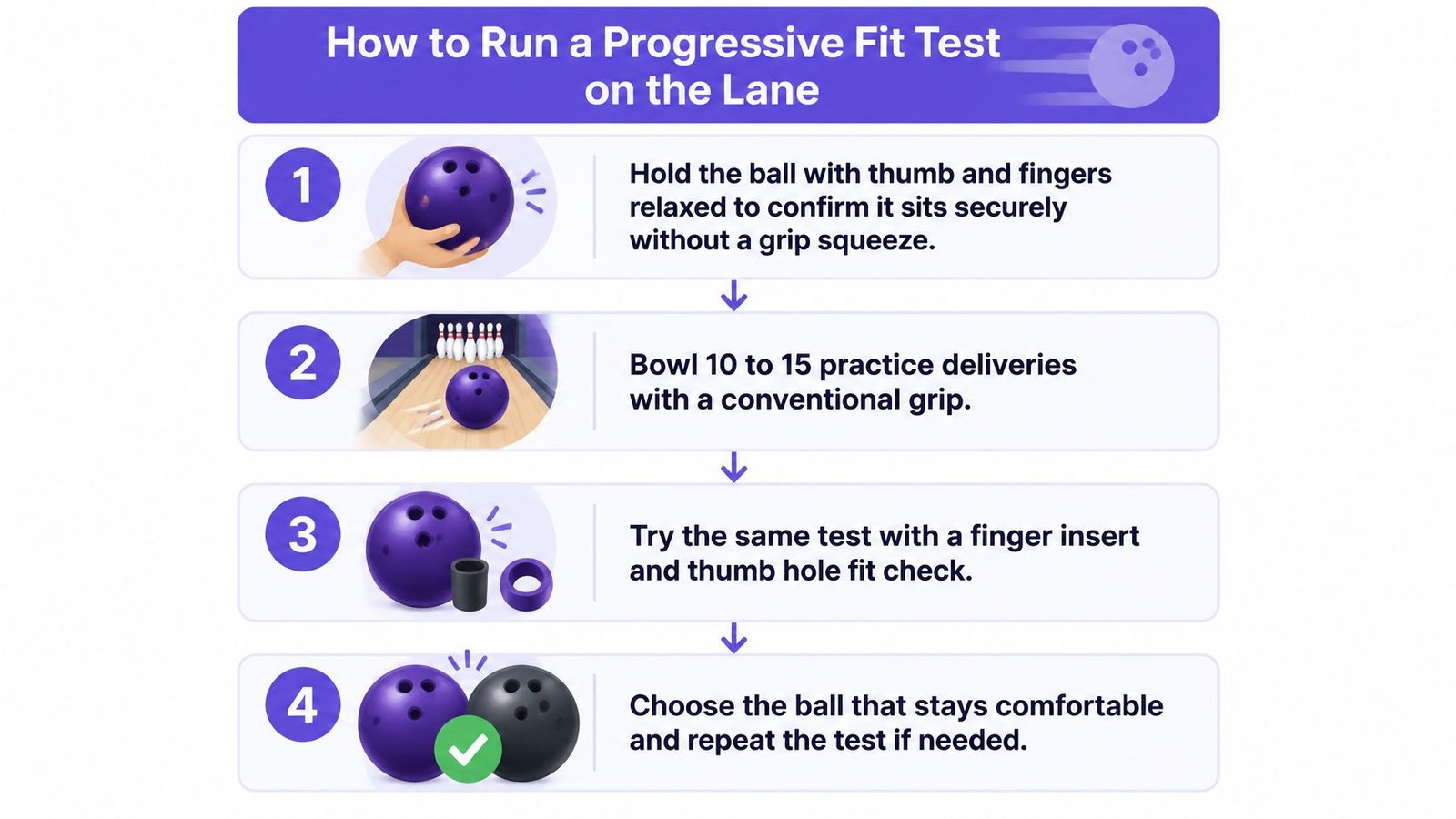
Use this visual as a reminder of the fit-and-comfort sequence.
Run the comparison without chasing strikes
Check the hold before approaching the lane. Support the ball with your other hand while placing your bowling hand in the holes, then check whether it sits securely without a hard squeeze. Your thumb should release cleanly, and your fingers shouldn't feel stretched.
Warm up with a conventional grip. Use the practice-delivery block described above to settle into a normal rhythm rather than throwing hard immediately. With a conventional grip, your fingers enter to the second joint.
Watch the approach, finish, and release. Keep your steps repeatable and finish balanced enough to hold your position after letting go. A ball that makes you stagger, pull sideways, or snatch your hand out hasn't passed.
Change weight only when the motion allows it. Try a heavier candidate if your swing remains relaxed and your shoulder, wrist, and forearm feel comfortable. Move lighter if your arm drops, your swing becomes forced, or your target misses widen; stop if pain appears.
Compare adjacent weights under similar conditions. Use equal delivery blocks, the same starting position, and the same visual target. Avoid changing technique halfway through, because then you're testing a new delivery rather than the equipment.
Judge the end of each block. Retain the heavier ball only when pocket accuracy and release consistency remain comparable without a late decline. A powerful opening delivery doesn't outweigh a finish full of forced shots.
Write down the result. Record pocket hits, clear off-target misses, and perceived effort using plain descriptions such as relaxed, working, or straining. Note thumb sticking separately so a fit problem doesn't get mistaken for fatigue.
Separate grip problems from weight problems
If a candidate feels promising but the holes don't, have the pro shop inspect it before drawing a conclusion. Our guide to bowling ball inserts explains the components you'll encounter when discussing a more secure, comfortable grip.
A single good shot proves very little. You might time an awkward ball correctly once, then compensate on every delivery afterward. The later throws reveal whether you can maintain the motion without recruiting extra effort.
A passing result should feel uneventful: you walk normally, swing freely, release without fighting the thumb, and finish balanced. Comfort should survive the session, not just the warm-up.
Warning Signs That Your Ball Is Too Heavy
An arm that drops or a ball that pulls you forward at the top of the swing is an early reason to reassess your choice. Don't respond by tightening everything and trying harder. First decide whether the problem is weight, fit, or both.
Match the symptom to the adjustment
| Warning sign | Likely cause | What to do |
|---|---|---|
| Arm drops or swing is forced | Ball too heavy for control | Move to a lighter candidate and retest |
| Accuracy falls late in the comparison block | Fatigue from excess weight | Test the adjacent lighter weight over a full session |
| Thumb swelling or numbness | Span or thumb hole may not fit | Stop and have a pro shop re-measure |
| Wrist or forearm pain after practice | Compensating grip or another loading problem | Stop, reassess weight and fit, and check any wrist support |
| Ball shakes during a brief hold | Weight may exceed comfortable control | Go lighter and repeat the fit check |
These are troubleshooting clues, not medical diagnoses. A tired beginner can also miss because of unfamiliar timing, and a sticking thumb can disrupt a swing even when the weight is manageable. Change one thing at a time so you can identify what helped.
Don't fall into the gripping trap
A loose thumb hole encourages you to clamp down to prevent an early drop. An excessive span can make you stretch your hand and hold tension through the release. Either problem can make the ball feel heavier than it should.
Squeezing harder masks the original fault while adding work for your hand and forearm. Ask the pro shop to check span, thumb fit, and finger-hole diameter, rather than enlarging a hole until you can force your hand through.
Pain deserves attention, but it doesn't prove that ball weight alone caused an injury. In a study of 39 elite tenpin bowlers, 53.8% had de Quervain's tenosynovitis and 52.4% reported pain during training; the elite sample doesn't establish causation or predict a beginner's injury risk.
Pain is a reason to stop and reassess, not evidence that you need to build tolerance.
Don't use a wrist support to push through a painful delivery. If you already wear one, check that it isn't creating pressure or forcing an uncomfortable position, and have a coach or fitter assess the setup. Persistent pain, numbness, or swelling warrants advice from a qualified healthcare professional.
For the equipment decision, the rule is straightforward: pain-free repeatability beats pin carry. A strike isn't a useful result if the delivery hurts.
Starting Points for Youth, Women and Older Bowlers
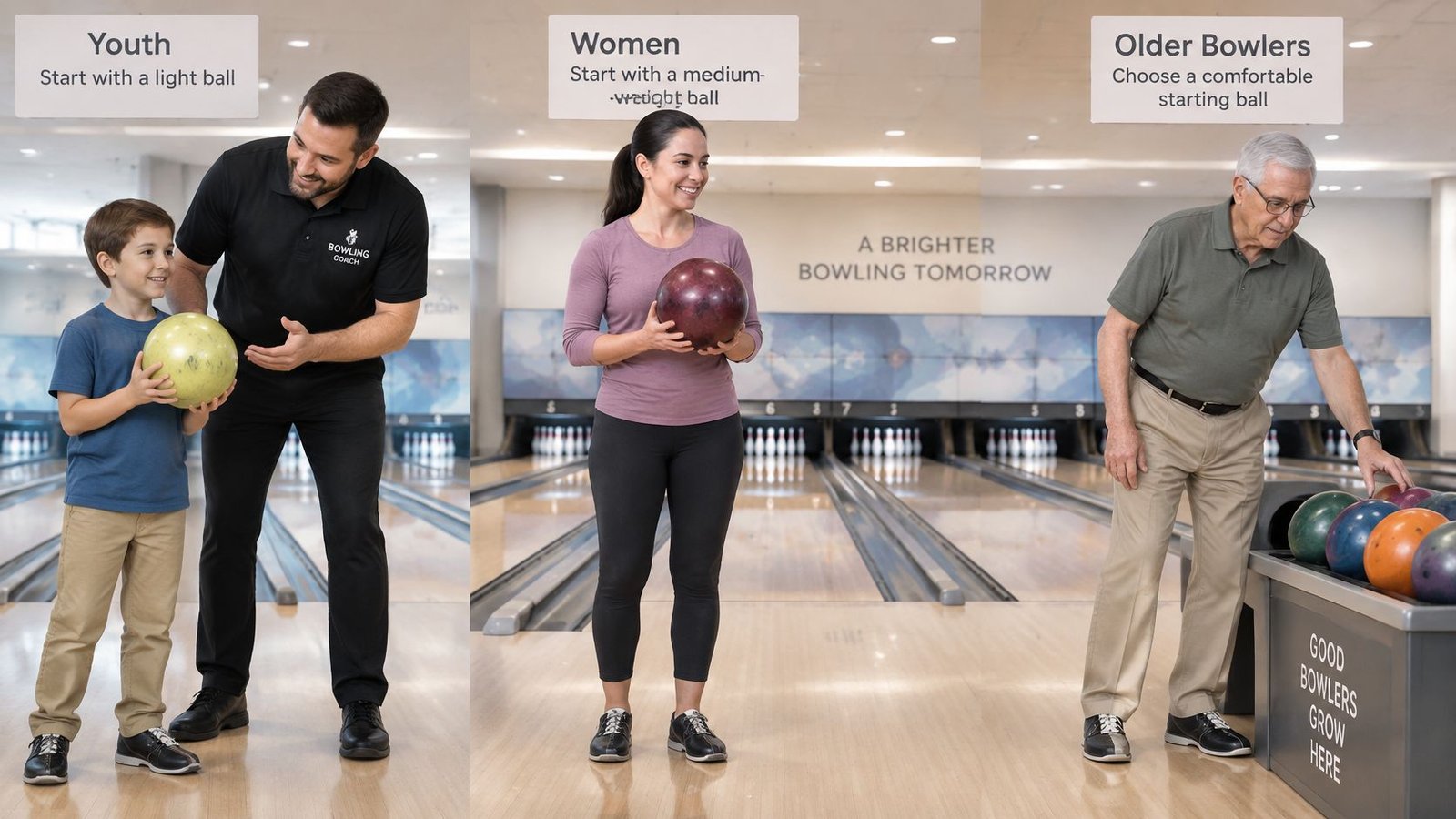
Different bowlers can arrive at different answers without anyone choosing incorrectly. Watch how the person moves with the ball, rather than expecting a demographic label to determine the purchase.
The coaching goal stays consistent across these profiles: a secure hold and an unforced delivery.
Children need room to learn the movement
Bowling.com's beginner-ball guide says many children begin with 6–12-pound balls, emphasizing a comfortable, relaxed swing. Let the child demonstrate balance and control instead of selecting weight primarily for stronger pin action.
Check the hand fit carefully. A child shouldn't need to spread the fingers awkwardly or clamp down to keep the ball secure. If the available house ball has unsuitable holes, ask the center or pro shop for another option rather than treating the awkward delivery as a strength problem.
Women and smaller-handed adults
Broad gender bands hide meaningful differences in strength and hand dimensions. A woman with a secure fit and a stable swing may comfortably use a heavier candidate than another beginner who shares her body weight.
Say two adults weigh the same, but one has a much smaller hand and shorter span. The smaller-handed bowler struggles with the available house-ball holes and settles on a lighter candidate during testing, while the other passes with a heavier one. That's an individual equipment decision, not evidence that either person should force a standard recommendation.
Watch the delivery as a whole rather than judging the ball from the hold alone.
Older adults and bowlers returning after injury
For an older beginner, assess balance, comfortable range of movement, and how easily the hand releases. Age alone doesn't require a light ball, but a weight that demands a sudden pull or hurried recovery isn't a good match. Our guide to bowling balls for seniors can help you consider equipment alongside those practical needs.
If you're returning after injury, follow your clinician's guidance and begin conservatively. Don't turn the first outing into a test of your former capacity; build practice gradually and reassess how you feel afterward.
A lighter first ball is a better foundation than a heavier one that forces compensation. You can reconsider weight when your delivery changes, without having spent your early practice learning how to fight the equipment.
Buy and Confirm Your First Ball This Week
Make the purchase after you have a short record of how the finalists perform. The aim isn't to find a perfect number on paper. It's to choose a ball that supports the delivery you're learning.
Turn testing into a buying decision
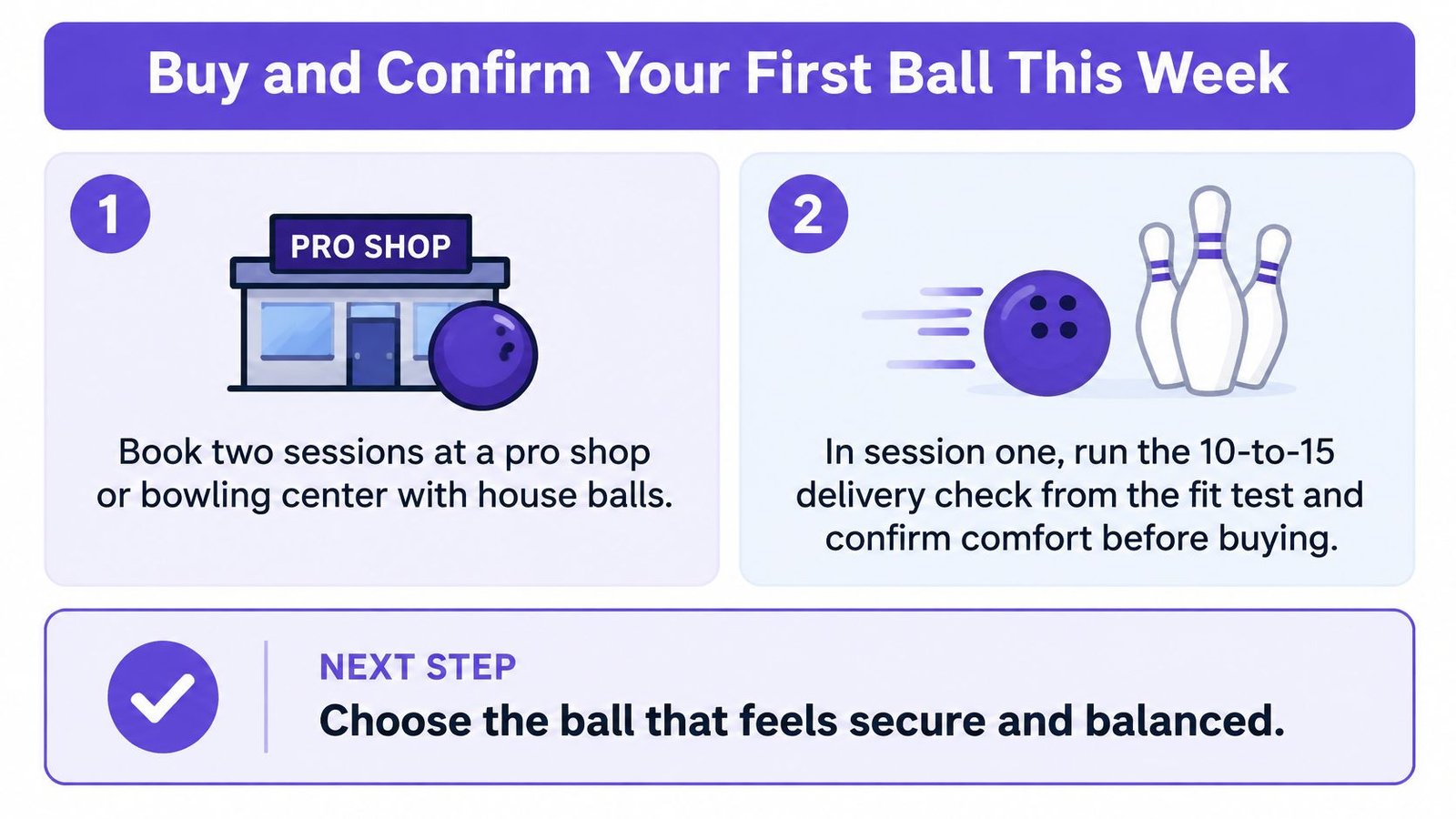
Book an initial practice and a confirmation visit. Choose a bowling center with a useful selection of house balls and access to a pro shop. Tell the fitter you're selecting your first ball and want to separate weight from hole-fit problems.
Use the initial visit to narrow your options. Work through the hold, warm-up, and comparison checks with candidates around your screening estimate. Don't keep moving heavier after your form starts deteriorating.
Confirm the finalists on another day. Repeat the comparison while you're fresh, then continue long enough to assess sustained comfort. Keep the heavier candidate only if you don't need extra effort to preserve your delivery.
Order with a measured fit. Have the pro shop measure your hand and discuss the grip before drilling. Retest the finished ball rather than assuming a custom fit automatically justifies more weight.
Keep the appointment plan simple enough to follow.
Bring a useful record to the pro shop
- Starting information: Your body weight, relevant physical limitations, and intended bowling frequency.
- Test results: The house-ball weights you tried and which candidates stayed comfortable.
- Fit notes: Thumb sticking, loose holes, stretched fingers, or pressure points.
- Session response: When fatigue appeared and whether discomfort continued afterward.
Once you've established weight, compare different types of bowling balls for the motion you want to learn. At Bowling Gear Reviews, we offer guides to choosing the right ball, weight, and style, and we only recommend products we believe offer value to our readers.
Let the full-session test decide the purchase: choose the weight you can deliver without constantly thinking about how to manage it.
Visit Bowling Gear Reviews for practical ball-selection guides, equipment comparisons, and clear explanations of fit and bowling style. Bring your lane-test notes, use our guides to narrow your options, and have your pro shop confirm the fit before you buy.
