

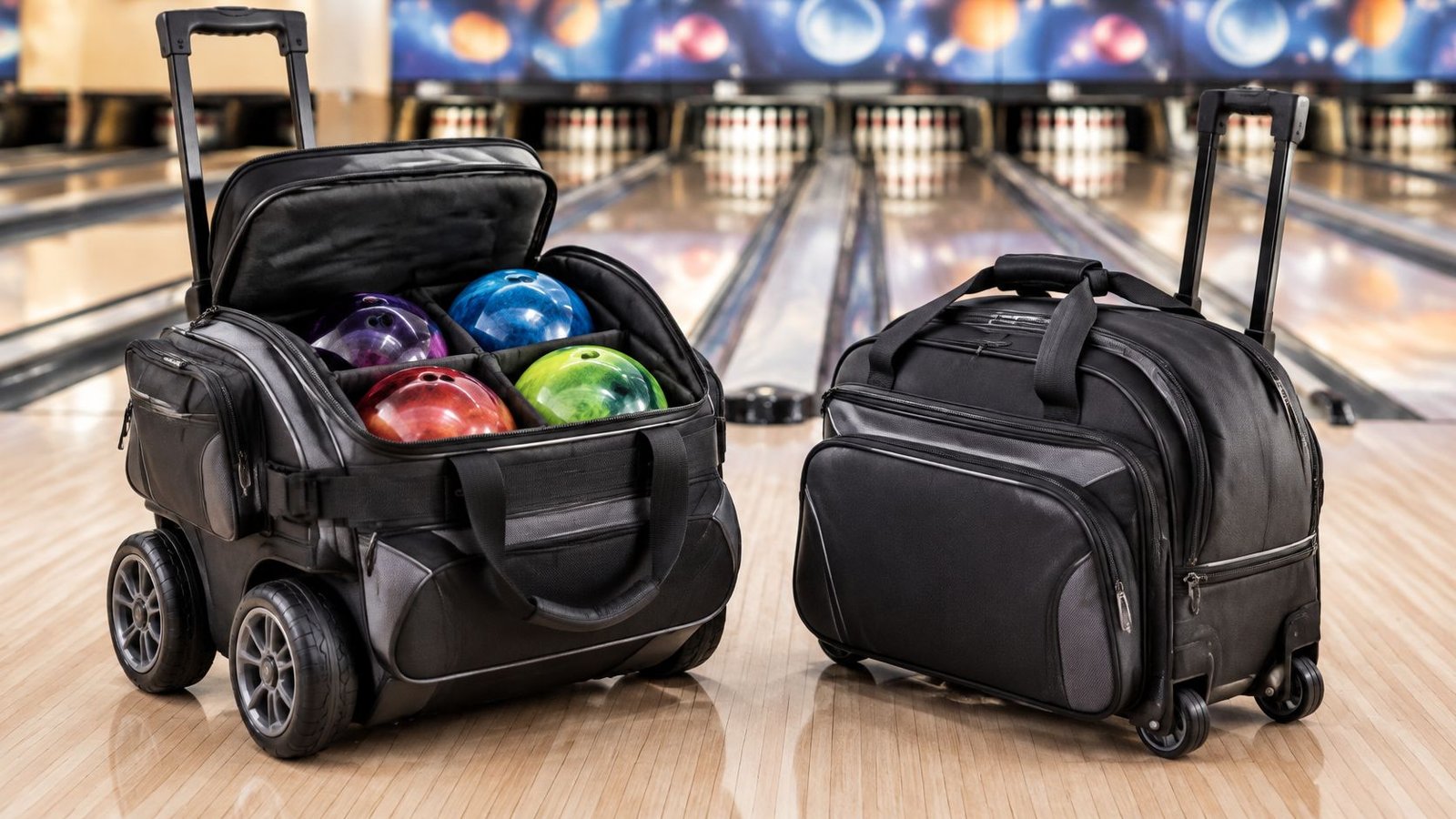
League starts in thirty-five minutes, and there are four bowling balls on the garage floor. Two for the fresh-oil line you'll see in game one, one for when the middle burns up, and the ball you keep telling yourself you'll finally throw in the third. The bag in the corner looked roomy in the product photo. Now the handle digs into your palm, the front wheel catches on the expansion joint, and you're recalculating whether three balls and a separate shoe bag would make the night easier.
That recalculation is the whole decision with 4 ball bowling bags with wheels. Capacity is the easy question, and every listing answers it. Loaded weight, wheel layout, external dimensions against a carrier's linear-inch ceiling and the ball limit printed in your event's rulebook are the questions that decide whether a bag earns its place in your trunk.
Three current models appear on most 2026 shortlists, and each one offers a different way to hold four balls. This is what the retailer listings confirm, and where thorough testing has to begin.
Table of Contents
- Four-Ball Roller Quick Picks at a Glance
- Matching Four Balls to Your Bowling Routine
- How Four Balls Change the Weight Math
- Wheels, Handles and Maneuverability on Real Floors
- Protection and Build Quality for Heavy Loads
- Travel Limits for a Four-Ball Bag
- Confirm Your Ball Count Before You Buy
Four-Ball Roller Quick Picks at a Glance
A four-ball roller has to do three jobs at once: hold four balls without binding them, roll across a parking lot, and fit whatever comes next, whether that is a sedan trunk, a motel closet or a check-in scale. The three models below handle those jobs differently, and the published specs show where they part ways.
Four-ball roller shortlist with listed specifications
| Model | Listed price | Wheels | Size W x D x H (inches) |
|---|---|---|---|
| Path Premium Deluxe 4 Ball Roller (Pyramid Bowling, 2025 listing) | Not published in the 2025 listing | 5-inch urethane wheels | 22 x 16 x 32 |
| Storm Rolling Thunder 4 Ball Roller (Bowling.com, 2026) | $329.99 | Three 5-inch eight-spoke wheels | 23 x 14 x 29 |
| KR Strikeforce Konvoy 4 Ball Roller (Great Call Athletics, 2026) | $314.95 regular price | 5-inch urethane wheels | Not published by the retailer |
The Path Premium Deluxe 4 Ball Roller is the taller of the two rollers with published dimensions. Pyramid Bowling's 2025 listing puts it at 22 inches wide, 16 inches deep and 32 inches high on 5-inch urethane wheels, per the Path Premium Deluxe roller listing. Sixteen inches of depth is a lot of footprint, and it decides whether two bags sit side by side in a trunk or one slides under a bench.
The Storm Rolling Thunder 4 Ball Roller lists at $329.99 on Bowling.com in 2026 with three 5-inch eight-spoke wheels in a 23 by 14 by 29 inch envelope, according to the Bowling.com Rolling Thunder listing. Fourteen inches of depth makes it the shallower of the two published footprints, and it is the only model here whose spec sheet commits to a three-wheel layout.
The KR Strikeforce Konvoy 4 Ball Roller pairs 5-inch urethane wheels with the lower of the two published prices, but the retailer never released external dimensions. Treat that footprint as unknown until you measure a floor model or ask the shop to measure one for you.
Specs narrow the field. They do not rank it. Nothing in a listing describes how a frame behaves under a full load, how a handle lock holds up over a season of trunk-to-lanes cycles, or whether the upper balls rest directly on the shell.
What the listing can't say: how the bag feels at 60 pounds. That answer only comes from a loaded roll.
Pick the one or two models whose price and footprint fit your car and budget, then judge them the way you will use them: loaded, rolling and measured.
Matching Four Balls to Your Bowling Routine
Start with the rulebook. It sets your ball count before a single bag spec matters. USBC rules cap an individual ball at 16 pounds and impose no minimum weight, and the 2026 USBC Open rules allow a maximum of eight balls, require bags to be manufactured solely for transporting bowling balls, and prohibit wagons or dollies for moving equipment to the lanes, per the USBC playing rules for 2025-2026.
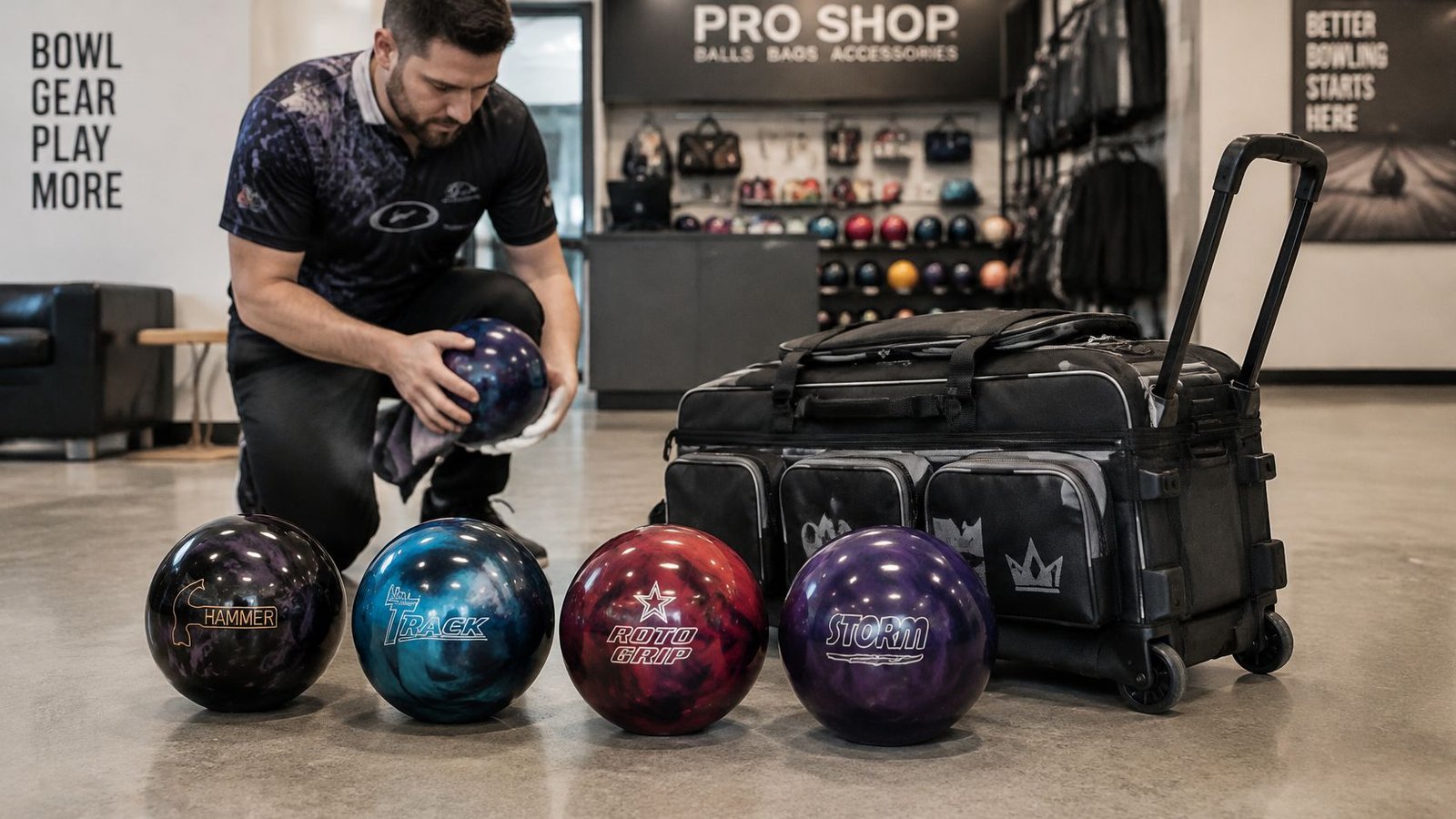
That rule set exposes a gap most product listings ignore. Approval and eligibility aren't the same thing. A ball can be USBC approved and still be barred from a particular competition, and a bag can be perfectly legal and still be the wrong call for the event you're driving to.
Match the bag to what you actually carry
- Beginners throwing one or two balls should skip this category entirely. Four balls add weight and strain with no competitive payoff, and a smaller bag gets you to the lanes fresher.
- League bowlers gain the most from four slots, because a house shot transitions and each phase of the night may call for a different ball and a different look.
- Tournament bowlers need to count against the event limit first. Four balls plus accessories is a workable plan at an eight-ball event, but only if the bag meets the construction rule.
- Junior bowlers, women and travelers should start from their own ball weights and travel plans rather than the assumptions baked into generic listings. A lighter arsenal shifts the weight arithmetic and often makes three balls plus a separate accessory case the easier bag to check.
The size of the audience explains why the category exists at all. More than 67 million Americans bowl during a typical year, including over 1.2 million who regularly compete in certified league play, according to the bowling participation figures compiled by Encyclopedia.com. A four-ball roller serves the specialized end of that crowd, not the whole of it.
Bag categories blur together in listings, too. If the difference between a roller, a tote and a shoulder bag still isn't clear, this explanation of what a bowler bag is sorts them out before you spend anything.
A short look at four-ball rollers in motion:
A four-ball bag is a decision about how many balls you carry, not just how many fit.
How Four Balls Change the Weight Math
Four balls is a weight problem dressed up as a storage problem. Two bags with identical capacity can put wildly different loads on the same wheels, axles and handle, because the number that matters is what you put inside them.
Load four balls at your own weight
| Weight per ball | Four balls total | Room left under a 100 lb checked-bag ceiling |
|---|---|---|
| 12 lb | 48 lb | 52 lb |
| 14 lb | 56 lb | 44 lb |
| 15 lb | 60 lb | 40 lb |
| 16 lb | 64 lb | 36 lb |
Read the row closest to your own set. If you throw 14s, you are rolling 56 pounds of ball before the shell, the shoes and the bottle of cleaner. That is the figure to hold onto, not the four-ball badge stitched on the front panel.
The spread across the table is what catches buyers out. A four-ball arsenal built on 12-pound balls puts 48 pounds in the shell; the same bag loaded with 16s carries 64. Same bag, same wheels, a third more mass. A roller that glides through the parking lot at the light end of that table can feel like a different product at the heavy end, so rate the hardware against your heaviest realistic set rather than your lightest.
Why the heavy row is the real test
At the top of that range, wheel axles, handle rigidity and frame flex outrank colorways and embroidery. The design history backs that up. A U.S. patent for a "bowling bag cart" filed in the mid-1970s describes a wheeled apparatus built to move bowling-ball bags across horizontal surfaces and to help lift them at stairways, as the bowling bag cart patent records.
The logic hasn't changed in fifty years. Wheels carry the dense load, compartments protect it, and everything else is refinement. Judge a four-ball roller on wheel stability, frame strength, handle operation, compartment separation and maneuverability over flooring and stairs, in that order.
Diameter tolerance and compartment fit
The USBC equipment specifications manual permits a bowling ball diameter from 8.500 to 8.595 inches. That tenth-of-an-inch band is why two balls of the same weight can feel completely different going into the same compartment, especially once one wears a ball protector or carries a slug of thumb tape.
A snug fit is good. A forced fit is how zippers and seams fail under 60 pounds of load. Measure your own equipment against the compartment instead of trusting the capacity claim, write down the weight of every ball you bowl with, find the matching row, and weigh the loaded bag on a scale before the first trip. The ceiling in the table only means something against the number that scale gives you.
Wheels, Handles and Maneuverability on Real Floors
Four balls aboard means as much as 64 pounds of dead weight riding on a few inches of urethane and small bearings. Where a roller is comfortable and where it fights you shows up on the first rough patch of asphalt, which makes wheel layout a load question before it is a convenience one.
What the wheel layout changes
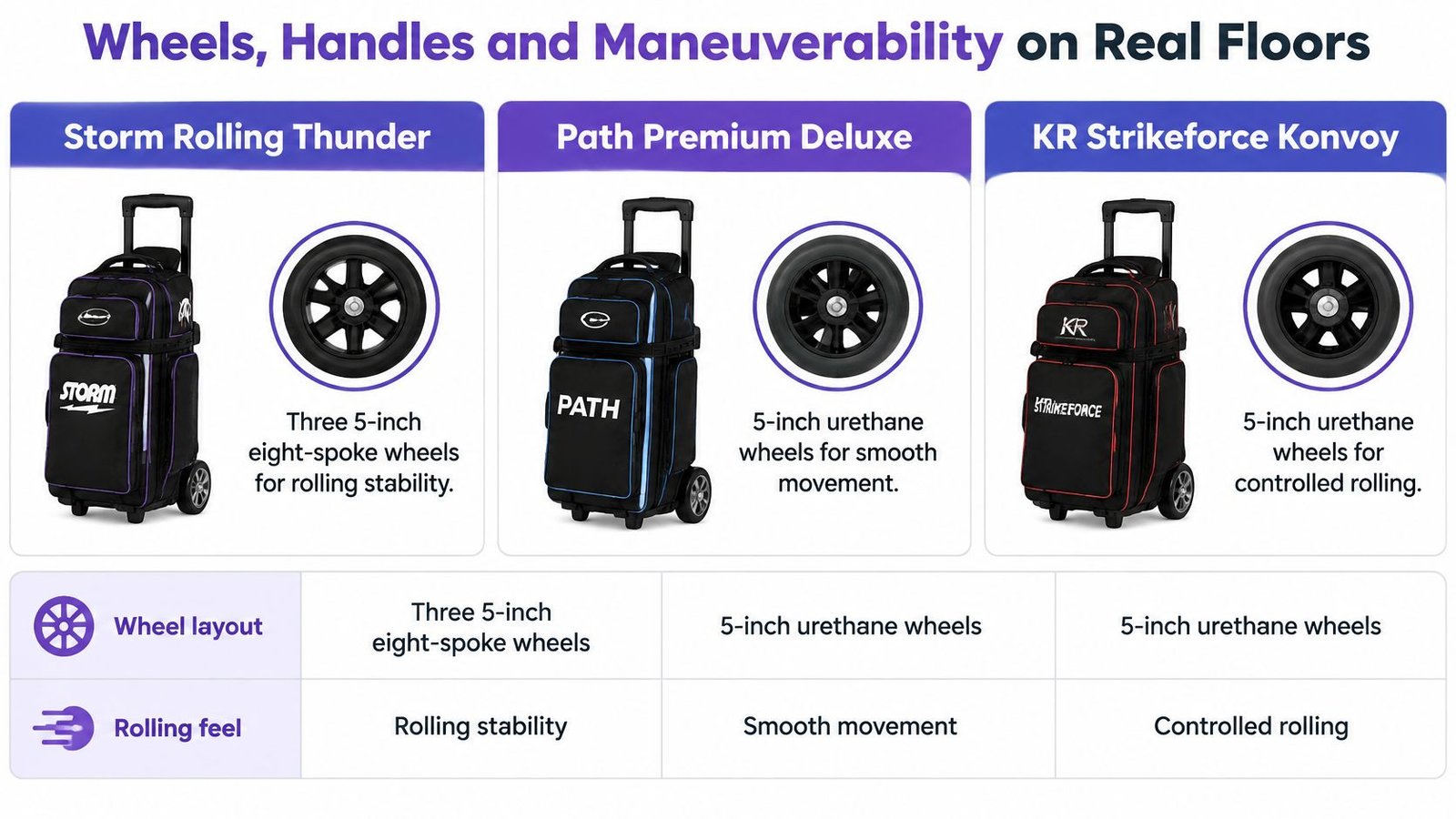
The Storm Rolling Thunder is the only pick here with a confirmed wheel count: three 5-inch eight-spoke wheels. More wheel contact points spread a heavy load across the floor and can form a platform that stands on its own. Fewer wheels rely more on the handle for balance, and you feel that balancing work in your wrist and forearm over a long pull from the parking lot.
The Path Premium Deluxe and the KR Strikeforce Konvoy are both listed on 5-inch urethane wheels, with no wheel count stated. Check the count on each bag before deciding, because how many wheels carry the frame changes the feel more than what the wheels are made of. Urethane itself rolls with little noise on a finished concourse, and that matters at 6:45 a.m. in a hotel lobby.
Once wheels are large enough to clear pavement seams and gravel, bearing quality, axle alignment and how the frame distributes weight matter more than the number printed on the spec sheet.
A five-step roll test you run yourself
- Smooth floor. Roll the loaded bag across a garage slab or the lane-side concourse and watch whether it tracks straight or crabs to one side.
- Rough pavement. Take it across a lot with seams, gravel and a curb cut. Listen for wheel chatter and feel for frame shake through the handle.
- Threshold lift. Lift it over a doorway or curb with all four balls aboard. If you can't clear six inches cleanly, stairs will be miserable.
- The 180. Turn the bag around in a narrow space. Note how much room the swing takes and whether the bag tips.
- Handle cycles. Extend and collapse the handle a dozen times. It should lock with a positive click and return without a shimmy.
Record four things for each model: wheel tracking, handle wobble, turning radius and handle extension height. Those four numbers separate a bag you'll keep for years from one you'll resent by February.
Practical rule: if the handle wobbles while the bag stands still, it will wobble worse at full load halfway across a lot.
Weight the results by how you use the bag. League nights mean smooth floors, short walks and a car trunk, so prioritize tracking and a handle that locks hard. Daily carrying on stairs and broken pavement puts wheel clearance, frame rigidity and a lift you can manage with four balls aboard ahead of everything else. Bowling gear gets tested in real bowling conditions here for exactly this reason, by experienced bowlers ranging from league regulars to former collegiate players.
For a closer look at how wheel size, bearings and handle hardware differ across bag families, this wheeled bowling ball bag guide covers the components.
Protection and Build Quality for Heavy Loads
Protection in a four-ball bag isn't the thickness of the padding. It's whether the balls stay separated, off the shell and easy to pull out after two hours in a hot trunk.
Four checks, in order
- Shell and frame rigidity. Stand the loaded bag upright and look at the base. Does it bow, flex or sag at the corners? A base that sags puts the zipper under tension before you've lifted anything.
- Divider and compartment separation. Load your own balls, zip it shut, then hunt for contact points where the upper balls rest on the shell or on each other.
- Zipper stress. Lift the loaded bag by the handle and watch the seams where the load pulls hardest. Gaps at the seam mean the shell is doing work the frame should be doing.
- Extraction. Can every ball come out without forcing it past a divider or a frame rail? A ball you have to wrestle out in a crowded settee area gets dropped.
Matching each failure to a fix
Visible bowing or shell contact points to heavier balls riding in the lower compartments, or to a bag whose footprint is too small for your weights. Hard extraction points to a wider compartment or a different divider layout, not to more muscle. A seam that gaps under lift means the load has outgrown the frame, and no packing trick fixes that.
The trade-off is real. More interior room helps with 16-pound balls and thicker protectors, but it adds shell weight and height, and height gets measured at the check-in counter. Then there's the shoe question: a shoe pocket that swallows interior volume takes protective room away from the balls. Decide up front whether shoes ride inside the main compartment or in their own external pocket, because that choice shapes how the bag carries.
A bag that swallows four house balls in a showroom can bind on four of yours at home.
Load the bag with the balls you own, at the weights you throw, in the store or inside the return window. Anything less is guessing.
Travel Limits for a Four-Ball Bag
Flying with a four-ball roller punishes different design choices than league night does. A bag that feels planted and stable in a bowling center can be the one the counter refuses.
Southwest's bowling equipment baggage policy allows bowling bags with metal frames specifically designed to transport bowling balls to be checked with balls and shoes inside, but equipment over 100 pounds or 115 total linear inches cannot be checked at all.
Do the linear-inch math
Linear inches are length plus width plus height. From the listed dimensions, the Path Premium Deluxe at 22 by 16 by 32 inches totals 70 linear inches, and the Storm Rolling Thunder at 23 by 14 by 29 inches totals 66. Both sit comfortably under the 115-inch ceiling. The KR Strikeforce Konvoy can't be checked on paper because the retailer published no dimensions, so measure one before you book a flight around it.
Measure with the wheels and the retracted handle included. Listed sizes usually include both, but "usually" isn't a guarantee when a gate agent has a tape measure.
Four steps before you fly
- Weigh the bag loaded with your balls and shoes on a bathroom scale. Write the number down.
- Measure length, width and height with the handle fully retracted.
- Add the three measurements and compare the total against 115 linear inches, and the weight against 100 pounds.
- If the bag fails either limit, price out a three ball bowling bag tote plus a small accessory case instead.
With four 16-pound balls aboard, roughly 36 pounds remains for the shell, shoes, towel, cleaner and tape before you reach the carrier ceiling. Heavy shells and oversized wheels eat that allowance fast, and a bag that clears it empty may not clear it packed.
Capacity and checking ease pull in opposite directions. The four-ball bag that holds your arsenal most comfortably is usually the tallest of the group, and the tallest fails linear limits first. Larger wheels and a rigid frame help with curbs and parking lots; a lighter two-wheel build cuts checked weight and stair effort. Carrier policies differ by airline, so confirm your specific route before you pack the balls.
Confirm Your Ball Count Before You Buy
Count the balls you'll carry at your most demanding event, not the ones sitting on your rack at home. That number, plus the rules attached to it, decides the bag.
- Count balls per event. Four for a league rotation, three for a travel night, eight as an absolute ceiling at a USBC Open event.
- Confirm event and carrier rules. The construction requirement and the dolly ban apply before you ever reach an airport.
- Shortlist two models whose dimensions match your trunk and your scale. Keep the third as a fallback if your first choice doesn't fit when loaded.
- Load and test with the heaviest ball you bowl with. Not the average, not the lightest. The heaviest.
Here's the budget read. The KR Strikeforce Konvoy 4 Ball Roller held a $314.95 regular price at Great Call Athletics in 2026, with room for four balls plus shoes and accessories on 5-inch urethane wheels, which makes it the value pick if its footprint fits your space. The Storm Rolling Thunder at $329.99 is the stability pick for anyone carrying regularly over rough ground, since three wheels share the load and stand the bag up on its own. The Path Premium Deluxe's current price isn't published in the listing reviewed here, so check with the retailer before ranking it on value.
Those two prices are close enough that price shouldn't decide it. Footprint, wheel layout and loaded handling should.
Bowling Gear Reviews participates in affiliate marketing programs, so some links on the site are affiliate links, and it may earn a commission on purchases made through them at no additional cost to you. The site recommends only products it believes offer value, and brands don't influence its reviews.
The bag that wins is the one that matches your ball count, your event rules and your car, not the one with the biggest capacity number printed on the box.
Bowling Gear Reviews tests gear on real lanes, and its bag coverage runs from loaded four-ball rollers down to compact totes, with notes on wheel hardware, compartment layout and how each model survives a full arsenal. If you're still deciding between four balls and three, or you want to see how a specific roller holds up before you commit, the site's independent reviews and buying guides put the measurements next to the marketing claims. Start at Bowling Gear Reviews before you spend on your next bag.
