

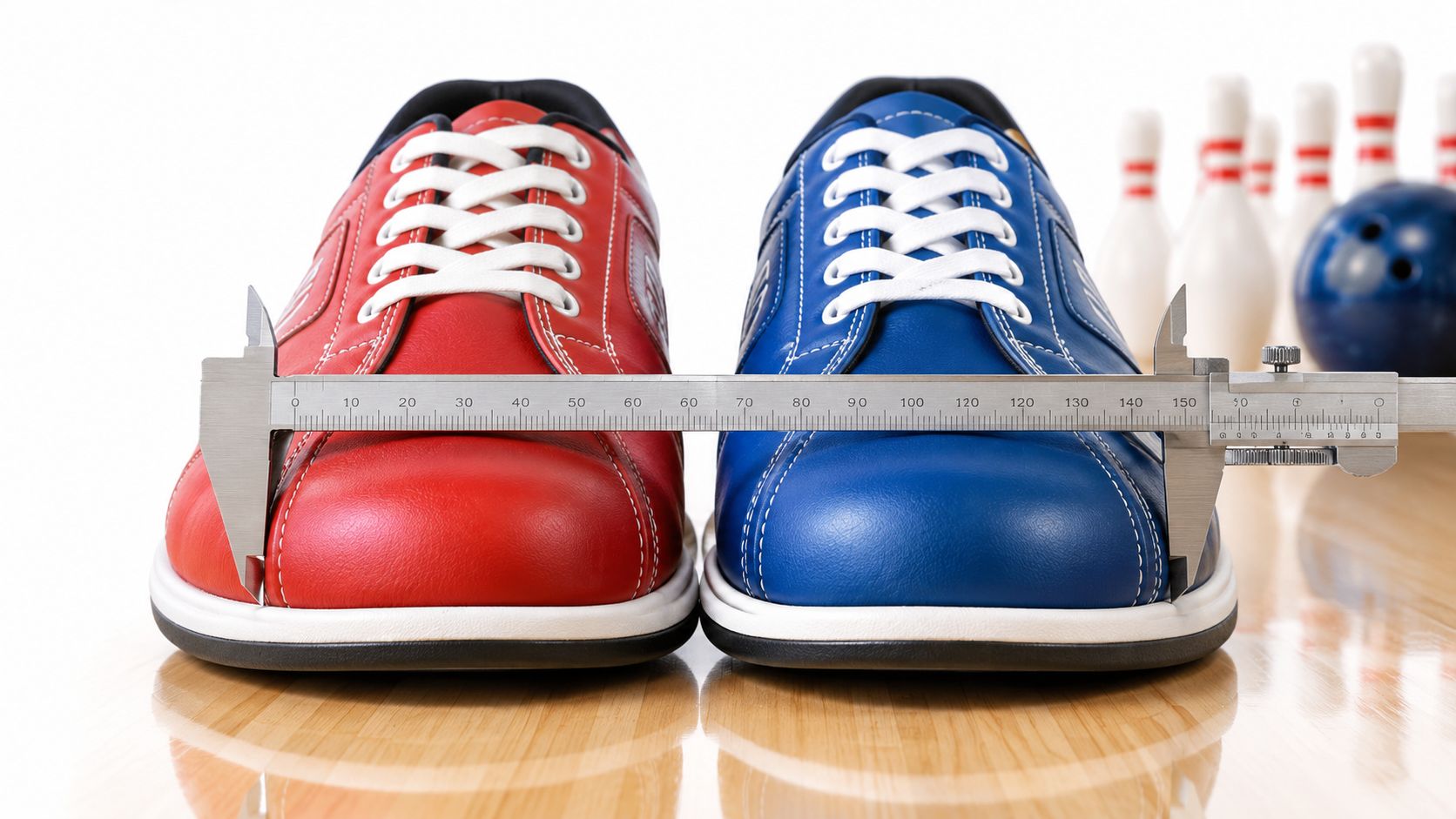
League night usually tells the truth by game two. Your first few shots feel fine, then the front of your feet start to burn, your toes spread harder into the shoe, and the slide that felt smooth in practice turns grabby or late. You haven't suddenly forgotten how to bowl. More often, your shoes are squeezing the wrong part of your foot and changing how you move on the approach.
That's why bowling shoes wide width matter so much. A wide shoe isn't just a comfort upgrade for bowlers who hate tight footwear. It can change how stable you feel in the pushaway, how cleanly you clear the slide, and how confident you are planting at the line after a full session instead of just one warm-up game.
I've watched plenty of bowlers try to “fix” this by buying a longer shoe. That usually creates a second problem. The forefoot gets a little relief, but the heel starts floating and the slide becomes less predictable. The right answer is usually better width matching, not extra length.
Table of Contents
- Introduction Why Wide Width Changes Your Game
- Understanding Wide Width Sizing and Foot Profiles
- How Fit Affects Slide Traction and Approach Stability
- 7 Best Bowling Shoes Wide Width on Amazon Compared
- How to Test Fit and Break In Wide Bowling Shoes
- Care Adjustments and Interchangeable Soles for Wide Feet
- Conclusion Choosing Your Best Wide Width Fit
Introduction Why Wide Width Changes Your Game
League night exposes shoe fit fast. A pair can feel acceptable while you are standing still, then turn inconsistent once you repeat the same approach 30 or 40 times. The usual warning signs are familiar. Pressure at the little toe, a cramped forefoot, and a slide foot that finishes differently from shot to shot.
That matters because bowling shoes do more than cover your feet. They act like the connection point between your body and the approach. If that connection is too tight across the front, your foot cannot spread and settle during the last steps. The result often shows up as small balance leaks. You may drift a little, plant a little harder, or protect the sore spot without realizing it.
Wide width changes the conversation from simple comfort to repeatable motion.
What makes wide width different
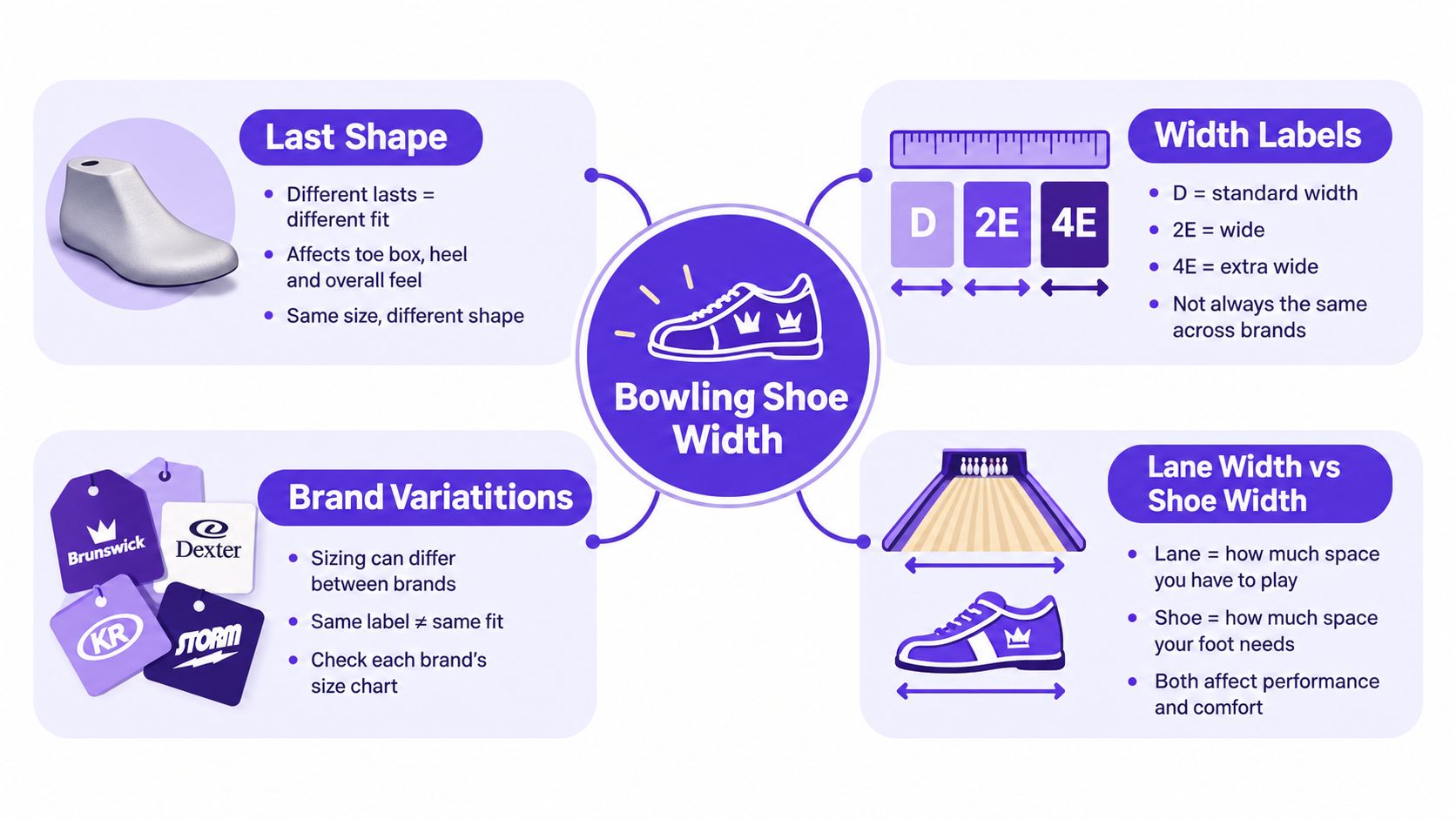
Most bowling shoes start from a medium-width shape, while roomier versions are usually labeled D, 2E, or 4E depending on brand and market. A sizing reference in this bowling shoe sizing guide explains that wide feet often need more space across the ball of the foot than standard models provide, which helps explain why some bowlers feel fine in the chair but restricted once they begin sliding.
In league-length testing, that extra room tends to matter most at two moments. First, during the approach, when the foot loads and rolls forward. Second, at the line, when the slide foot needs to stay calm instead of twisting or bracing. A shoe that matches a broad forefoot but still holds the heel can make the finish feel more even from frame 1 to frame 30.
The easiest comparison is this. Adding length to solve width is like using a larger glove when only the fingers are too tight. One area gets relief, but control gets worse somewhere else. Proper wide-width fit keeps the forefoot from being squeezed without letting the rear of the shoe move around.
League note: If your slide starts clean in practice but turns grabby later, check forefoot pressure before blaming the sole.
Who should pay attention to this
Wide-width shoes deserve a close look if your feet spread under load, if standard sneakers usually pinch at the sides, or if your slide consistency fades later in a set. They also matter for bowlers coming out of rental shoes and into their first personal pair, because house shoes often hide fit problems until you start paying attention to your finish position.
Foot profile matters here. Some bowlers need more toe-box width. Others need more volume over the top of the forefoot, with a secure heel behind it. That is why the right choice is not just "buy a wide model." It is matching your foot shape to a shoe that supports your approach pattern, slide length, and finish stability over a full session.
Understanding Wide Width Sizing and Foot Profiles
Width labels confuse bowlers because they sound precise, but they still vary by brand. Think of shoe width the way you think of target zones on the lane. Two boards matter, but where those boards sit also matters. A D or 2E label tells you the category, not the whole story of shape, toe box volume, or heel hold.
What D 2E and 4E usually mean
Most brands use D, 2E, or 4E to identify roomier versions of the same basic model. In bowling terms, width is a core spec because fit affects approach stability, slide control, and comfort over a full session, not just how the shoe feels in the chair. If you want a useful baseline before ordering, this guide to bowling shoe sizes helps compare fit language across models.
A medium-width last fits many bowlers well enough, but broad forefeet usually need more toe-box space and more volume across the ball of the foot. If the shoe only feels okay because the material stretches under pressure, it's probably still too narrow.
Measure your foot the smart way
Use a sheet of paper, stand with your full weight on it, and mark both the heel and the longest toe. Then measure the widest part across the ball of the foot. Do this later in the day if you can, because your feet are more likely to reflect bowling-session size than they are first thing in the morning.
Use both feet. Many bowlers have one foot slightly wider or longer. Fit for the larger foot, then fine-tune the other side with sock choice or lacing tension if needed.
A good fit should do three things at once:
- Center the forefoot: The ball of your foot should sit at the widest part of the shoe.
- Leave front clearance: You want about a thumb's width in front of the longest toe.
- Hold the rearfoot: The heel and midfoot should stay snug enough that they don't slide forward.
The mistake most bowlers make
The classic error is sizing up in length to escape forefoot squeeze. That can feel better for ten minutes and worse for ten games. A too-long wide shoe often lets the foot travel inside the shoe, which weakens heel lock and makes your finish feel late or soft.
A wide shoe should fit your shape, not just give your toes somewhere to hide.
If your toe room looks generous but your heel lifts when you walk or set into your finish, don't assume the shoe needs breaking in. It may be the wrong shape for your foot profile. Broad forefoot with average heel is common, and that's exactly where width-specific bowling shoes help most.
How Fit Affects Slide Traction and Approach Stability
A wide bowling shoe changes more than comfort. It changes how your foot meets the floor during the last two steps, and that can steady your approach or make the finish feel uncertain.
League bowlers usually notice fit problems at the foul line, not in the chair. The shoe may feel roomy and pleasant while you are standing still. Then you start your approach, the foot shifts a little inside the shoe, and the slide foot lands a fraction off-center. That small movement can turn a clean slide into a short stop, a drift left, or a finish that feels late.
Why snug in the right places matters
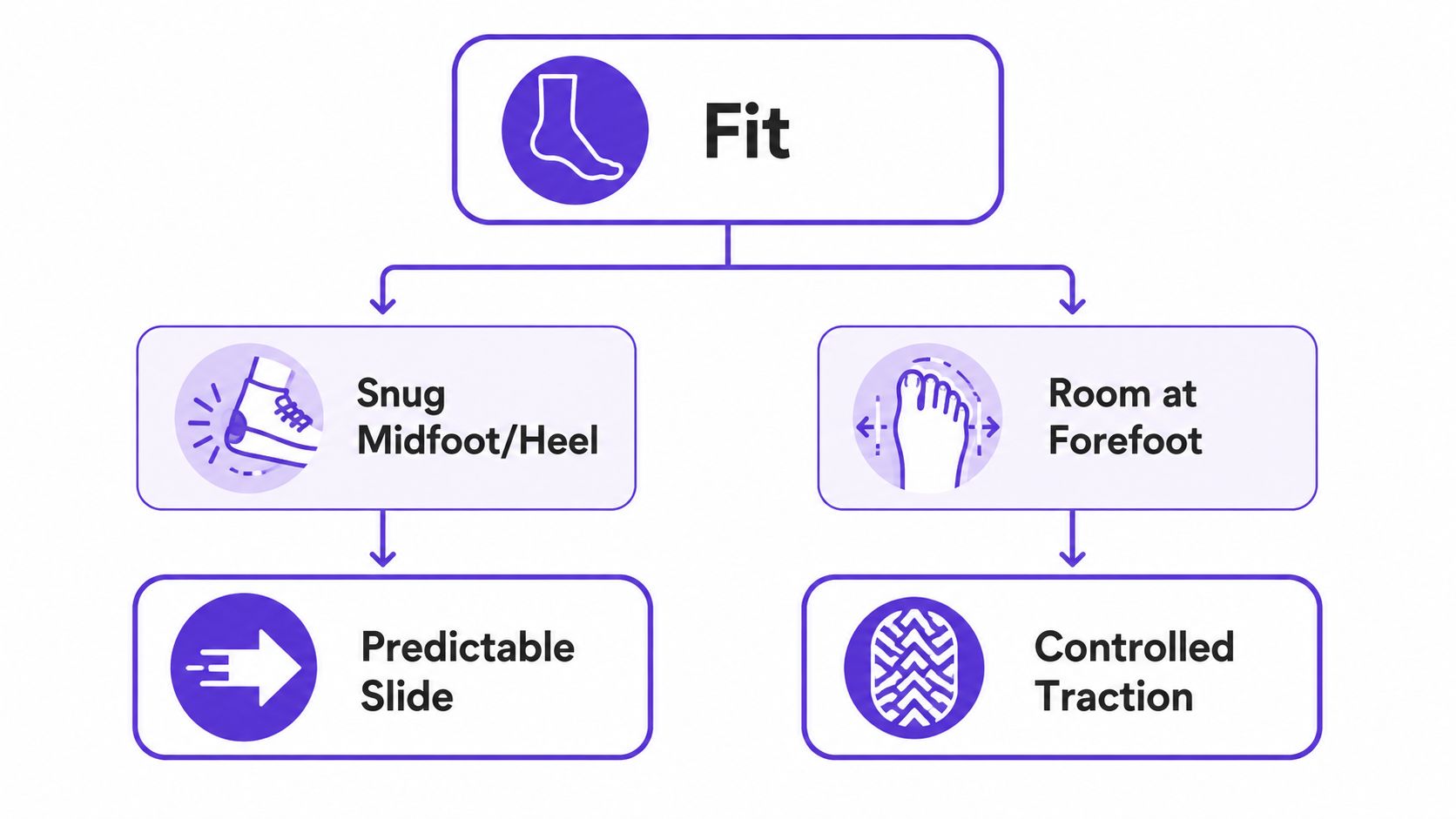
Your slide shoe works like the tire and suspension on the same car. The sole touches the approach, but the fit decides whether your weight stays centered over that sole. If the forefoot has space to spread while the heel and midfoot stay locked in place, pressure reaches the floor in a more repeatable way. If the whole shoe is loose, your foot can roll or creep forward before the sole even starts to do its job.
That is why wide width does not mean roomy everywhere. Many bowlers need extra width across the ball of the foot but still need a normal-feeling heel. USBC coaching fit fundamentals describe the basic target clearly: the ball of the foot should line up with the widest part of the shoe, there should be modest toe clearance, and the heel should stay secure. On the lane, that shape match often matters as much as the sole itself.
From league-length testing notes, the pattern is pretty consistent. Bowlers with a broad forefoot and average heel usually slide more cleanly in a true wide model than in a longer standard-width shoe. Bowlers with a wide heel as well as a wide forefoot tend to prefer fuller-volume uppers because they get less side-to-side wobble at the finish.
Fit changes what traction feels like
Slide and traction are not opposites in bowling. You need both at the right time. Early in the approach, the shoe has to let you walk and post without feeling sloppy. At the finish, it has to let the slide foot travel just enough while still giving you a stable base under the ankle and knee.
A poor fit scrambles that timing. A forefoot that is too tight can make you protect the foot and shorten the slide. A heel that lifts can make you brake early because your body senses the instability before your brain fully names it. A shoe that is too long can delay where your weight settles, which is why some bowlers say the finish feels "soft" or "late" even though the sole material seems right.
The common point of confusion is this: a sticky slide is not always a sole problem, and a slippery slide is not always a fit problem. Often it is both. Slide soles need break-in and occasional tuning, but loose fit adds another variable because your foot is moving inside the platform. If you want a clearer picture of sole materials and how they affect motion, this guide to a bowling shoe slider helps separate sole behavior from fit behavior.
Here's a quick visual on how bowlers think about slide and traction in real time:
A simple way to diagnose the problem
After a few frames, read the finish first and the shoe second.
| Sign on the approach | Likely cause |
|---|---|
| Toes feel pinched and the slide gets shorter | Forefoot width is too tight |
| Heel lifts or the ankle feels shaky at the line | Shoe is too long, too loose in the rearfoot, or the heel shape is wrong |
| Slide starts sticky but becomes more normal after use | Sole needs break-in or light tuning |
| Stability gets worse later in the set | Foot swelling changed how your foot sits in the shoe |
One practical cue helps here. If your slide foot lands and you feel pressure under the big toe one frame, then under the outside edge the next, the shoe may be wide enough on paper but wrong for your foot profile. Good wide-width fit should make pressure feel centered and repeatable, especially across a full league set.
On-lane read: If your balance fades as games go on, check whether your foot is spreading past the platform or sliding forward inside it before you blame timing or release.
7 Best Bowling Shoes Wide Width on Amazon Compared
Amazon is one of the easier places to sort by width because some listings show explicit variants such as Standard, Wide (EE), and Wide (2E), and one category page shows men's sizes running from 4.5 to 14 depending on the width selection, as seen in this Amazon bowling shoe collection. That doesn't solve fit by itself, but it does make it easier to compare real width options instead of guessing from product photos.
7 Best Wide Width Bowling Shoes at a Glance
| Model | Width Options | Slide System | Best For |
|---|---|---|---|
| ELITE Classic | Wide width listing available | Basic universal slide setup | Budget-minded league bowlers |
| KR Strikeforce Flyer | Wide variant often available on Amazon | Entry athletic slide setup | New bowlers who want sneaker feel |
| Brunswick Renegade | Wide options commonly listed | Universal soles | Casual and league crossover use |
| Dexter Raquel | Wide women's fit options often available | Universal slide setup | Women needing roomier forefoot fit |
| Dexter SST 8 Power Frame BOA | Some wide-fit marketplace listings | Interchangeable sole system | Competitive bowlers who tune slide |
| Hammer Power Diesel | Wide-friendly fit reputation in marketplace listings | Performance sole and heel setup | Bowlers prioritizing support |
| 3G Tour Ultra | Roomy platform with replaceable components | Advanced interchangeable setup | Higher-frequency bowlers |
1. ELITE Classic Wide Width
The ELITE Classic is one of the easier starting points if you want clear size details. One Amazon listing for the wide-width version publishes heel-to-toe measurements, including size 9 at 10.6 inches, size 10 at 11.0 inches, and size 13 at 12.2 inches, which helps if you're balancing width and length instead of guessing from your normal sneaker size in this ELITE Classic wide-width listing.
Pros
- Useful fit data on the listing
- Good starting pick for bowlers moving out of rentals
- Simple slide feel that won't overwhelm a beginner
Cons
- Less tuning range than performance shoes
- Basic support compared with heavier-duty models
Verdict: Best for the bowler who wants a straightforward wide shoe and values measurable sizing data.
2. KR Strikeforce Flyer
This is the kind of shoe many bowlers like when they want a lighter, athletic look. It tends to suit shorter-approach bowlers and newer league players who don't want a stiff, bulky feel underfoot.
The fit profile usually works best for broad forefeet that don't need an aggressive heel clamp. If your release is smooth and you don't do a long power slide, this style can feel natural quickly.
3. Brunswick Renegade
The Renegade sits in the practical middle. It's often a comfortable move for the bowler who wants one pair for open bowling, practice, and league without dealing with sole swapping.
Why some bowlers like it
- The shape tends to feel familiar if you wear athletic casual shoes
- The slide character is usually moderate, which helps bowlers who fear over-sliding
- It's a sensible option for occasional to regular use
4. Dexter Raquel
For women shopping specifically for bowling shoes wide width, the Raquel style is often one of the easier fits to live with over longer sessions. It usually favors bowlers who want more forefoot comfort without stepping into a heavy performance model.
This one is a smart choice if standard women's shoes tend to pinch across the toe box but you still want a clean, lower-profile feel on the approach.
5. Dexter SST 8 Power Frame BOA
The conversation shifts from fit only to fit plus tuning. The SST 8 family is built for bowlers who care about approach response and want the option to change slide behavior rather than just accept what the stock sole gives them.
Pros
- Interchangeable sole system
- Better for bowlers who notice approach differences center to center
- Secure upper feel for bowlers who want less internal movement
Cons
- More shoe than many casual bowlers need
- Takes more attention to setup and break-in
Verdict: Best for competitive bowlers who need wide-fit comfort without giving up sole control.
6. Hammer Power Diesel
This is the model I'd point wider-footed bowlers toward when they say comfort matters as much as score. It usually appeals to players who like a more planted base and don't want the upper to feel flimsy by the end of a long night.
If your current shoes feel fine for one game but harsh by the end of league, look at support under the whole foot, not just width at the toes.
The tradeoff is that a more supportive build can feel less quick and airy than lightweight entry shoes. For many league bowlers, that's a fair trade.
7. 3G Tour Ultra
The 3G-style performance approach is for bowlers who already know they react strongly to approach changes. Roomy fit, stronger platform feel, and replaceable parts make this a serious option for frequent players.
It won't be the simplest first purchase, but it makes sense for someone who bowls enough to appreciate micro-adjustments in slide and braking feel.
Which one fits your use case
If you want a fast shortlist, use this:
- First pair with wide fit needs: ELITE Classic or Brunswick Renegade
- Athletic casual feel: KR Strikeforce Flyer or Dexter Raquel
- Support-focused league shoe: Hammer Power Diesel
- Performance tuning and interchangeable parts: Dexter SST 8 Power Frame BOA or 3G Tour Ultra
One practical note. Product listings on Amazon can change by colorway and width selection, so always verify that the exact version in your cart is the width variant you intended to buy.
How to Test Fit and Break In Wide Bowling Shoes
A shoe can pass the living-room test and still fail on the approach. That's why I like a simple routine that starts seated, moves to walking, then finishes with controlled practice slides.
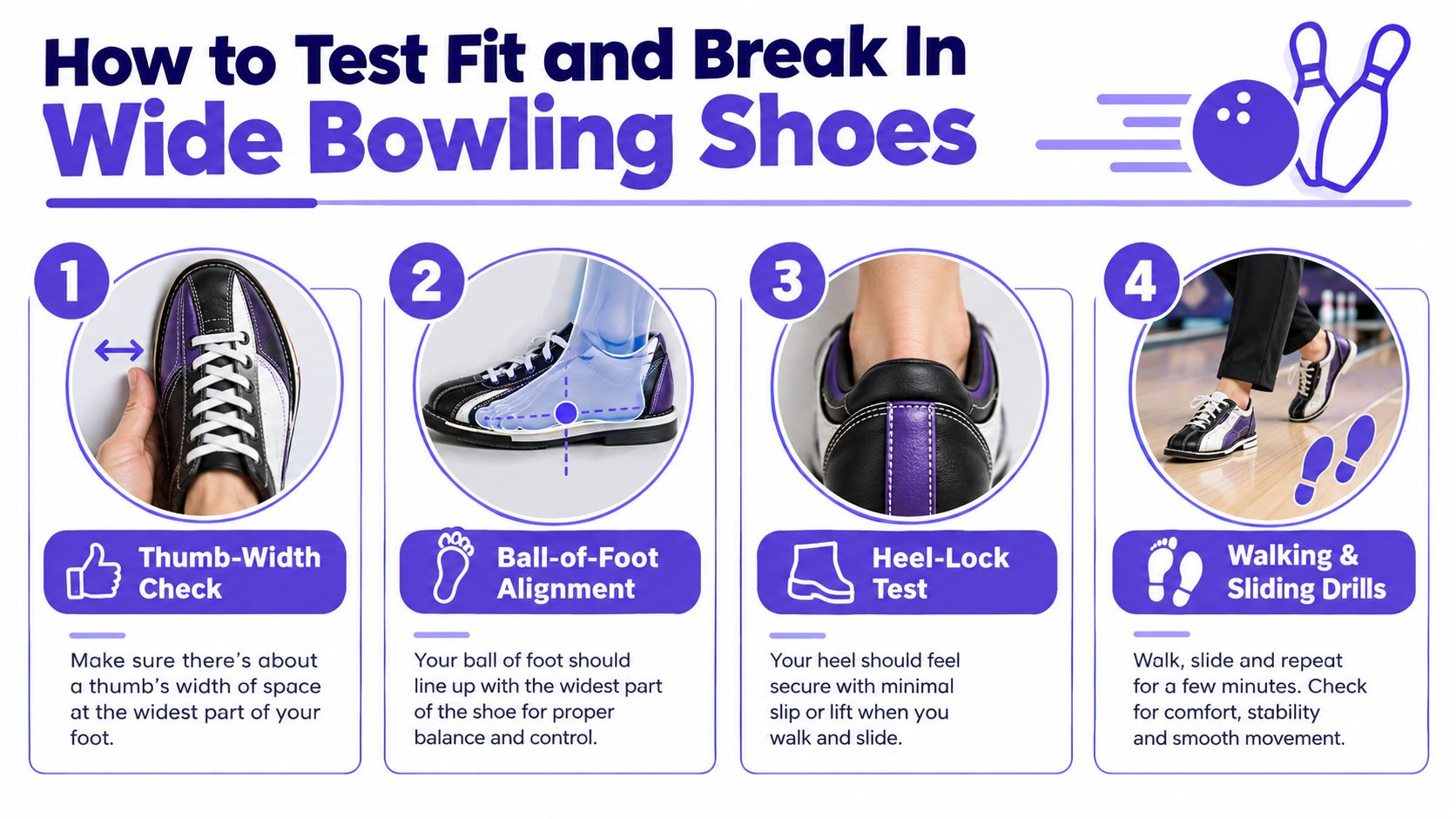
Four checks before you trust the shoe
Thumb-width check
Stand up in the shoes and make sure there's about a thumb's width in front of your longest toe. Don't check this while seated. Your foot lengthens under body weight.Ball-of-foot alignment
Bend your knees slightly and feel where the widest part of your foot sits. If it spills past the shoe's widest point, the fit is wrong even if the length seems okay.Heel-lock test
Walk briskly, then stop hard. Your heel shouldn't pop upward enough to notice. A tiny bit of movement can be normal in some uppers, but obvious lift is a warning sign.Walking and sliding drills
On a safe surface and then during practice, take a few controlled approach steps without throwing. You're looking for even pressure, not toe cramming or side-to-side foot drift.
Breaking in the slide sole
Most bowlers make one of two mistakes. They either panic because the sole feels sticky at first, or they assume it will always improve no matter what. In reality, soles often need gradual use and sometimes light prep before they settle into a predictable reaction.
Start with short sessions. Practice a few approach-only slides, then a few shots at reduced speed. Pay attention to whether the shoe gets smoother with use or whether the problem is really internal fit.
What to notice by the end of a set
Use a short league-night checklist:
- Forefoot pressure: If the front of the foot feels more crowded each game, the width may still be too tight.
- Finish position: If your slide foot lands in a different balance point as the night goes on, the shoe may be too loose or too grabby.
- Post-session comfort: A good fit should leave you tired from bowling, not distracted by hot spots and pinched toes.
Good bowling shoes disappear under you. You still notice the approach, but you stop noticing your feet.
If the shoe feels close but not perfect, give it a fair break-in period on clean approaches. If it still twists, pinches, or lets the heel wander, exchange it before you convince yourself you can bowl around it.
Care Adjustments and Interchangeable Soles for Wide Feet
Wide shoes last longer when you treat them like equipment, not just footwear. If the upper gets damp and collapses inward between sessions, the fit can feel narrower next time out. Let shoes dry fully, store them upright, and brush the slide sole so debris doesn't change the reaction.
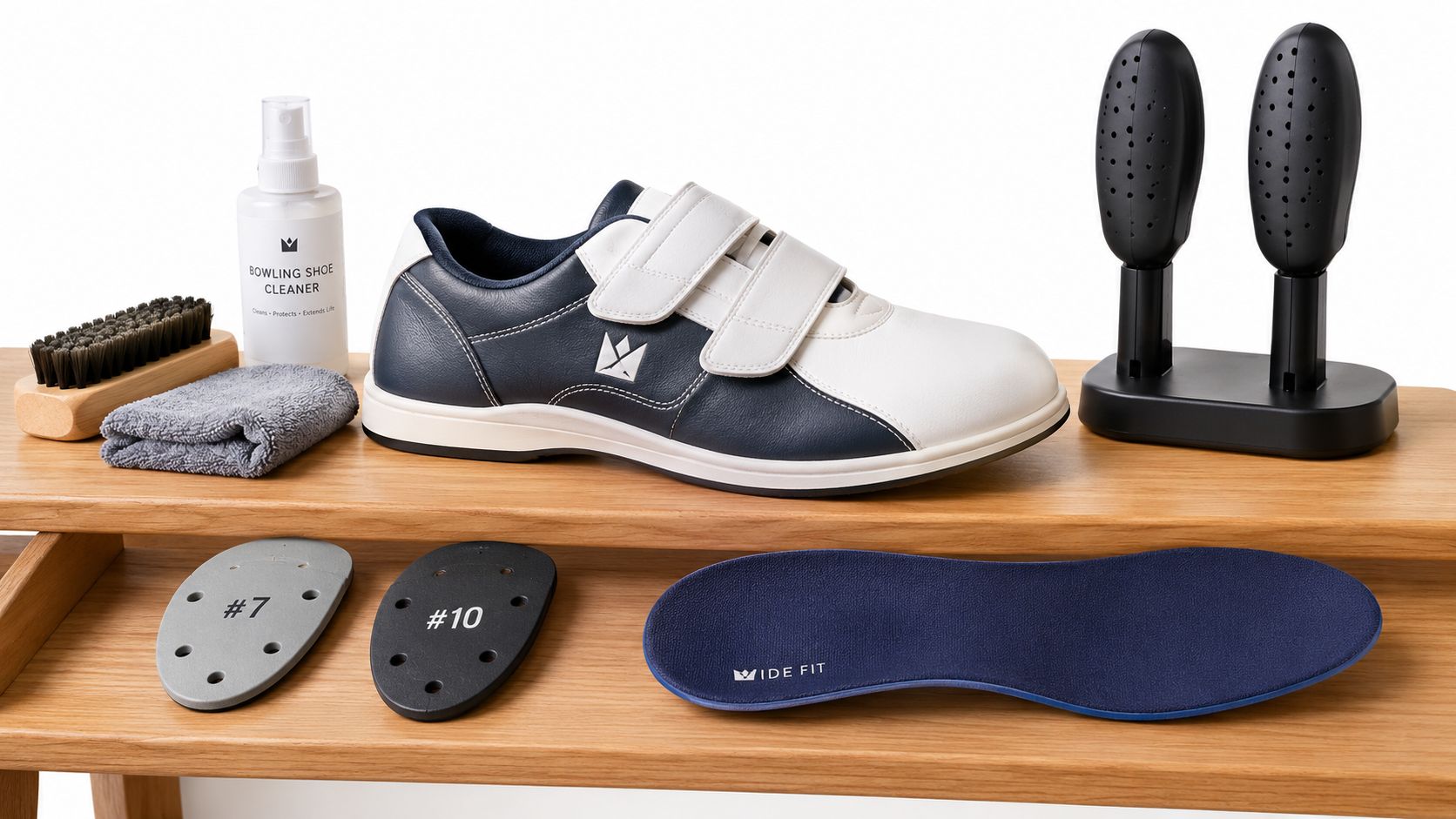
Small adjustments matter
For bowlers using performance shoes, interchangeable parts open another layer of fit and motion control. If you want a primer on models built for that style of setup, this guide to bowling shoes with interchangeable soles is a good reference point.
Interchangeable bowling slide soles are sold as numbered systems, and one pro-shop source states the removable soles are numbered #2 through #10, where #2 provides the least slide and #10 the most slide. That same source also says the soles are oversized and can be trimmed to fit the shoe, as shown in this interchangeable slide sole product page.
Build a long-term comfort routine
Try these habits:
- Keep the shape open: Loosen the shoe after bowling so the upper doesn't fold inward across the widest part.
- Tune one variable at a time: If your slide changes, adjust sole or heel first, not socks, tape, and lacing all at once.
- Use micro-adjustments carefully: Thin inserts, lacing changes, or heel fit tweaks can help, but don't overstuff a wide shoe and recreate the same pressure problem you were trying to solve.
That's also where an editorial site like Bowling Gear Reviews can be useful. It publishes hands-on shoe comparisons and fit notes that help bowlers sort out whether a problem is width, support, or slide setup.
Conclusion Choosing Your Best Wide Width Fit
The right wide bowling shoe should do two jobs at once. It should free the front of your foot enough to stay comfortable through a full session, and it should hold the midfoot and heel securely enough to keep your slide and finish predictable.
If you're a newer bowler, start simple and prioritize shape over fancy features. If you bowl league regularly, look harder at support and how the shoe behaves by the end of the night. If you already notice approach differences from center to center, a wide performance shoe with interchangeable soles gives you more control.
The safest buying path is straightforward. Match width first, confirm length second, then test the shoe under real bowling movement instead of judging it from a few indoor steps. That's how you find bowling shoes wide width that help your game instead of just feeling roomy in the box.
If you're narrowing down shoes, balls, bags, or fit accessories, Bowling Gear Reviews publishes hands-on comparisons and practical buying guides built around real lane use. It's a helpful next stop if you want to match wide-fit footwear with the rest of your setup and avoid gear that fights your game.
