

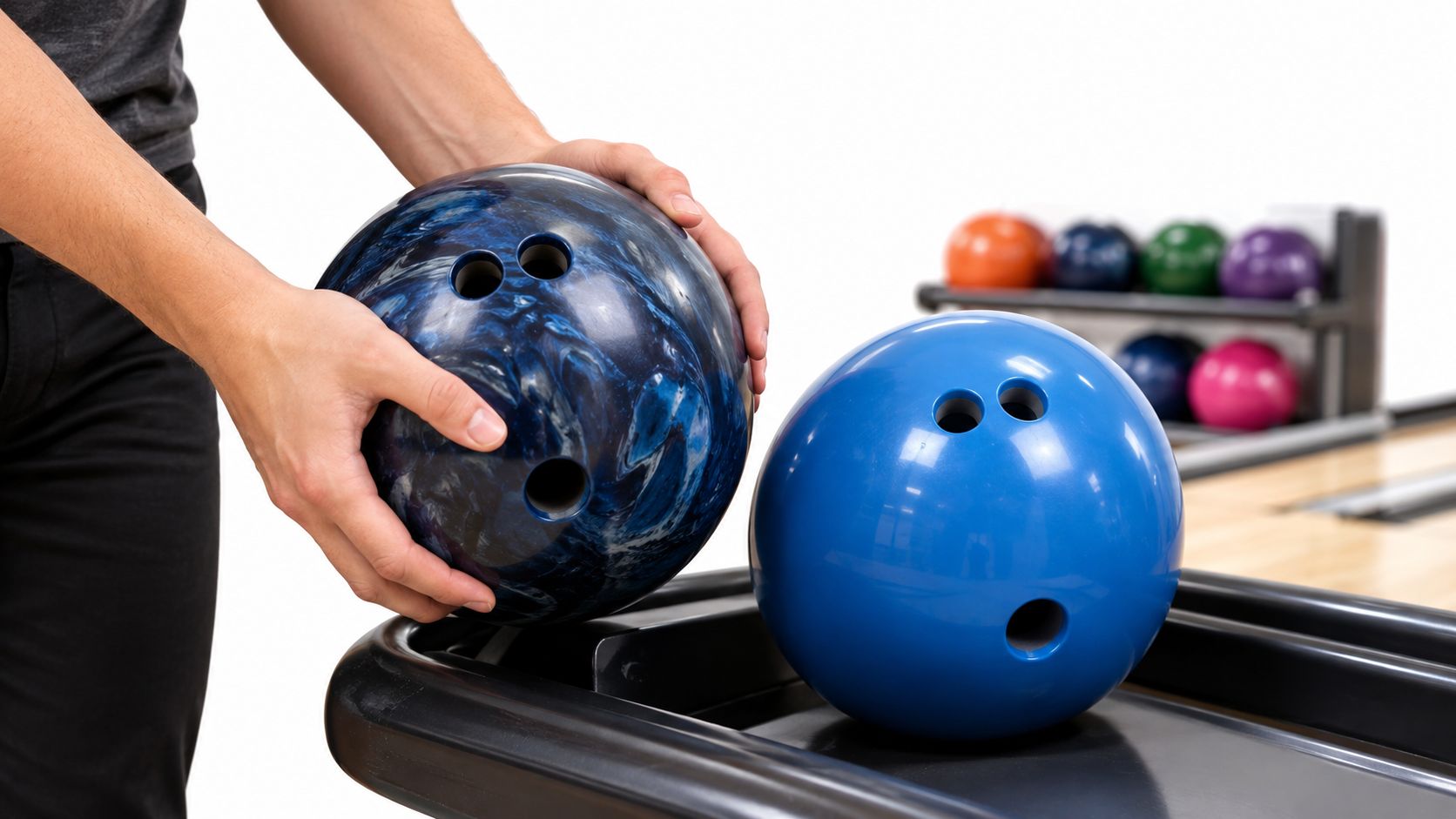
The most popular advice for choosing a first bowling ball is also one of the easiest to misuse: pick a ball that weighs roughly 10% of your body weight. That rule can provide an initial estimate, but it doesn't tell you whether you can control the ball after fatigue affects your swing, balance, grip pressure, and release.
The right beginner ball isn't the heaviest one you can lift from the rack. It's the heaviest ball you can swing, release, and repeat without pain or technical compensation. Weight matters, but fit, comfort, and repeatability matter more when you're learning how to choose a bowling ball for beginners.
Table of Contents
- Finding the Right Weight for Your Swing
- Getting a Custom Fit and Drilling Layout
- Understanding Coverstock and Core Basics
- Matching Surface Prep to Lane Conditions
- Setting a Realistic Budget and Buying Checklist
- Maintaining Your Gear and Testing on the Lanes
Finding the Right Weight for Your Swing
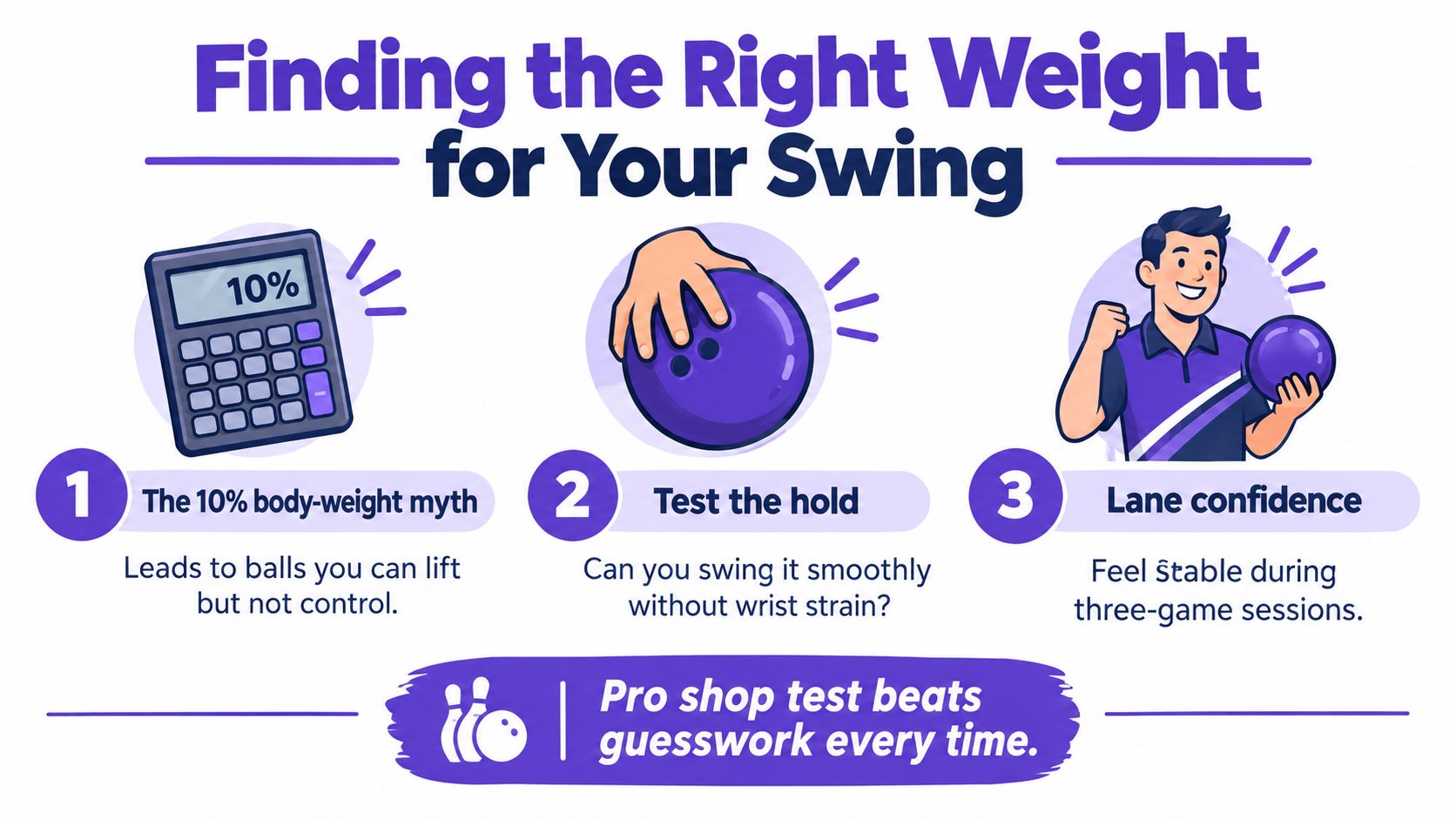
A ball you can lift once isn't necessarily a ball you can bowl with. New players often test a heavy ball by holding it at waist height or throwing a single shot, then assume that successful attempt proves the weight is suitable. That test measures maximum effort, not sustainable control.
USBC coaching guidance lists weight, span, and fit as primary selection variables and treats the 10% body-weight rule as an initial benchmark, not a final answer. Sanctioned ten-pin bowling allows balls up to 16 pounds, with no minimum weight requirement, so a lighter choice is legally and practically acceptable when it helps you bowl safely and consistently.
A practical starting point for many adult beginners is often 12 to 14 pounds, provided the ball can be swung and released without shoulder tension, excessive squeezing, forearm fatigue, or loss of balance. That range isn't a rule for every bowler. Hand size, age, strength, physical condition, and the fit of the finger holes all change how a ball feels.
Test repeatability, not ego
Use a two-stage test at the center or pro shop. Start with a provisional weight near 10% of your body weight, then compare it with nearby options. A 120-pound beginner might initially test a 12-pound ball, but should move down if the swing becomes forced or release control deteriorates.
Make 10 to 20 relaxed deliveries, including enough shots to imitate a full practice-game rhythm. The test isn't about throwing every shot as hard as possible. Watch for these signs:
- Loose swing: The arm should swing rather than lift or muscle the ball.
- Clean thumb exit: Your thumb shouldn't stick as you try to release.
- Stable finish: You should reach the foul line without leaning, stepping away, or losing balance.
- Consistent timing: The ball and your walking motion should remain coordinated.
- Late-session control: Your accuracy shouldn't collapse as your forearm and shoulder tire.
Practical rule: Choose the heaviest ball that preserves your mechanics for the whole session, not the heaviest ball you can briefly throw.
A ball that's too heavy often creates squeezing, shoulder tension, a stiff backswing, and an early release. A ball that's too light may feel easy to control but can provide less pin impact. The useful compromise is the weight that lets you maintain a relaxed swing while producing a repeatable shot.
This approach is particularly important for women, older adults, children, and bowlers with smaller hands. Nominal weight doesn't show how far the thumb and fingers must stretch, how much pressure the holes create, or how much strain the wrist absorbs. A beginner bowling ball weight guide can help you compare general options, but a pro-shop test is more reliable than a formula alone.
Getting a Custom Fit and Drilling Layout
A new bowling ball isn't ready to use when it leaves the box. The undrilled shell has no thumb hole, finger holes, or hand-specific geometry, so the ball's printed weight tells you only part of the story. The drilling process determines whether the ball feels secure or forces you to grip it tightly.
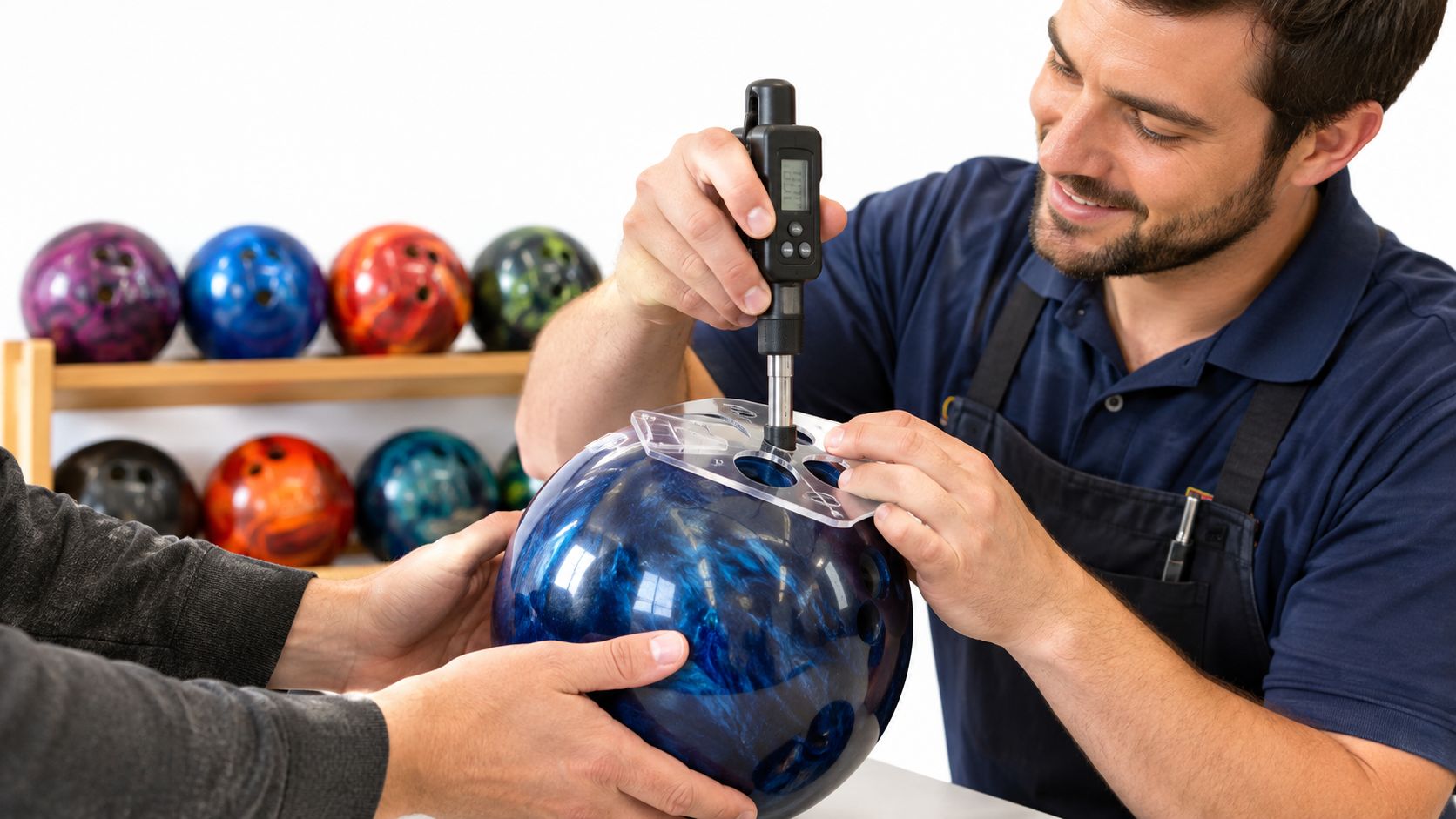
A fitter will usually examine your hand size, thumb shape, finger length, flexibility, and natural span. The main measurements include span, which is the distance between the thumb and finger holes, and pitch, which describes the angle at which those holes are drilled. Hole diameter matters too. A thumb hole that's too tight can stick during release, while one that's too loose can make you squeeze to keep control.
What to expect at the pro shop
Bring the shoes and any wrist support you expect to use. Your posture and hand position can change with different equipment, and the driller needs to see how you naturally hold and release a ball rather than relying only on a generic measurement.
A good fitting should include:
- Hand assessment: The technician checks finger length, thumb flexibility, skin contact, and any sensitive areas.
- Span and pitch measurement: These measurements determine where the holes sit and how your hand enters the ball.
- Test grip: You should insert your thumb and fingers without forcing them into position.
- Dry-swing feedback: The fitter can look for squeezing, wrist strain, or an uncomfortable hand angle.
- Post-drilling adjustment: Small changes to tape, inserts, bevel, or hole size can make a major difference.
Finger grips and a thumb insert aren't mandatory for every bowler, but they can improve comfort and make the contact points easier to repeat. The important point isn't the accessory itself. It's whether the finished grip lets your fingers enter smoothly and your thumb exit without catching.
Don't accept discomfort as something you'll “break in.” A little unfamiliarity is normal, but sharp pressure, rubbing, numbness, or a thumb that sticks indicates that the fit needs attention. The bowling ball drilling layout guide can help you understand layout terminology before visiting a pro shop, but your hand measurements and release should determine the final setup.
A custom drill also changes how heavy the ball feels. A properly fitted ball can reduce the squeezing that makes a house ball feel unwieldy, but good drilling can't rescue a weight that already causes fatigue. Weight and fit must be evaluated together.
Understanding Coverstock and Core Basics
Once weight and fit are under control, the next decision is ball motion. Bowling balls don't all respond to lane friction in the same way. The outer material, called the coverstock, controls much of the ball's traction, while the inner core influences how the ball stores and releases energy as it travels down the lane.
For a beginner, the goal usually isn't maximum hook. A ball that reacts violently can punish small timing and release errors, especially when you don't yet know how to move your feet or target. A predictable, medium-strength reaction is often easier to read and adjust.
Coverstock in plain English
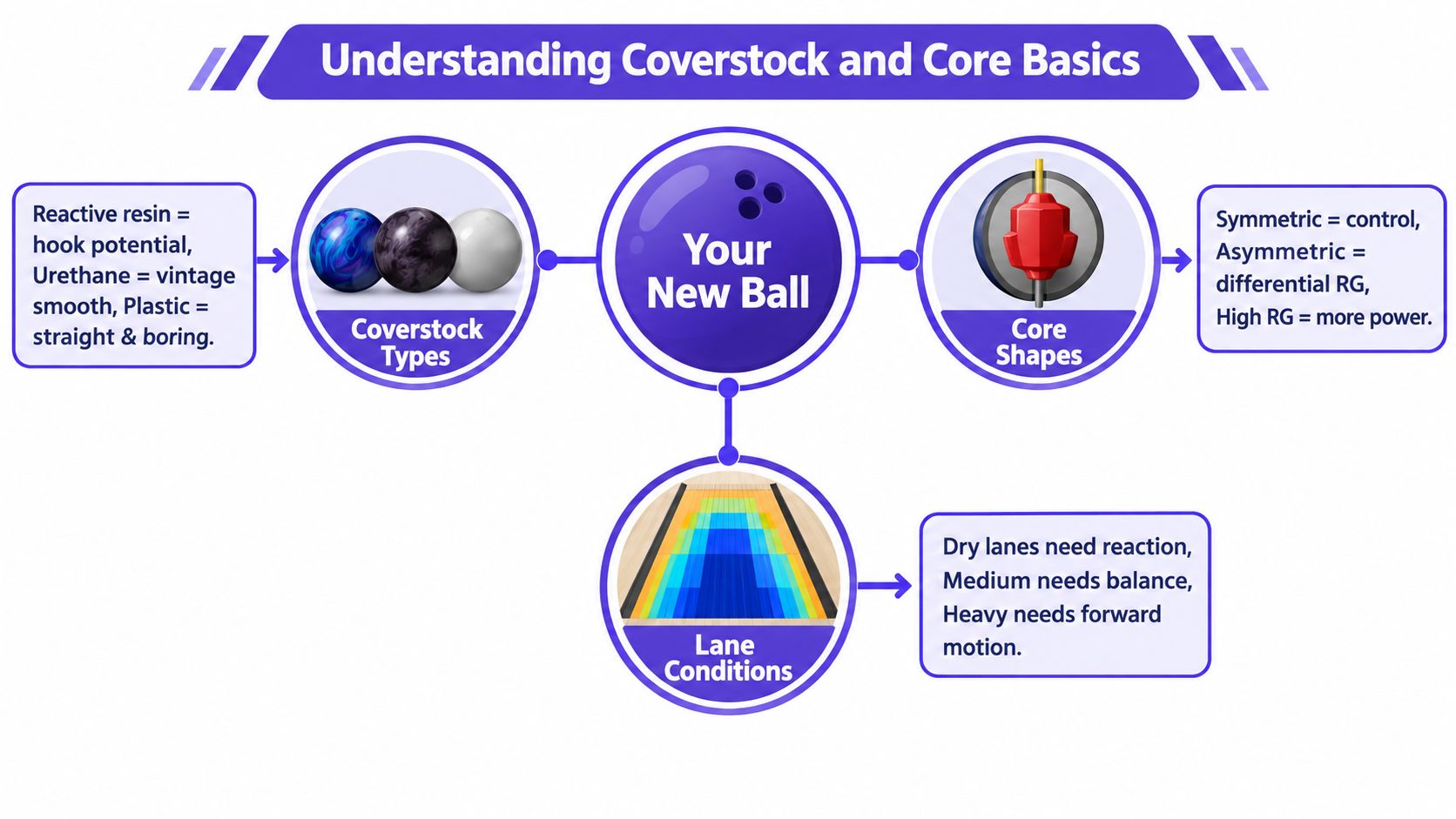
Plastic or polyester covers are smooth and tend to travel straighter. They make sense for spare shooting because they don't create as much hook as more friction-sensitive materials. A plastic ball can be a useful second ball later, but many beginners want a first ball that offers some controlled reaction rather than a completely straight path.
Urethane creates a smoother, earlier motion. It can be useful when a bowler wants a rounded reaction that doesn't jump sharply at the backend, though its motion may not suit every lane or player.
Reactive resin generally offers more traction and hook potential. The ball can skid through the front part of the lane, read the midlane, and turn more strongly when it encounters friction. That can help create entry angle, but an overly strong reactive ball can become difficult to control on dry lanes or with an inconsistent release.
The bowling ball coverstock guide provides a useful reference for comparing these categories. The practical buying question is simple: do you need the ball to go straighter, create a smooth arc, or produce a stronger change of direction?
Core shape and reaction
The core is the dense structure inside the ball. Its shape and density distribution affect how the ball rotates, changes direction, and creates track flare. Beginners don't need to calculate every core measurement, but they should understand the broad distinction.
A symmetric core often produces a more predictable and controllable shape. An asymmetric core can create a more pronounced change in motion and may require better speed, rotation, and lane reading. Neither is automatically superior. A stronger core inside an aggressive coverstock can create more reaction than a new player can use.
The lane still decides what you see. Oil reduces friction and delays hook, while dry boards increase friction and make the ball change direction earlier. A medium-strength coverstock with a controllable core is usually easier to learn than an extreme combination designed for high-rev competitive bowling.
Read the manufacturer's description as a starting point, not a guarantee. Your release speed, rotation, tilt, surface, and lane environment all affect the final shape. The best beginner ball is the one whose motion gives you time to see what happened and make a sensible adjustment.
Matching Surface Prep to Lane Conditions
Surface preparation changes how quickly a bowling ball responds to friction. Two balls with the same coverstock can behave differently if one has a rougher finish and the other has been polished. Beginners often blame their swing when the actual problem is a surface that doesn't match the amount of oil on the lane.
A sanded surface creates earlier traction. A polished surface generally helps the ball skid farther before responding. Manufacturers and pro shops describe finishes with systems such as Abralon or Siaair grit, but the label matters less than the ball's observed motion. You need to know whether the ball reads the lane too early, too late, or at a useful point.
Read the ball before changing your swing
On a dry lane, a rough surface may grab too soon and roll out before reaching the pocket. A polished finish can help the ball conserve length, though too much skid can leave it weak or late. On heavier oil, a rougher surface can help the ball create traction, while a highly polished ball may slide too far before turning.
Medium conditions usually provide the clearest environment for learning a new ball. You can see the relationship between your target, the ball's breakpoint, and its entry into the pocket without immediately needing an aggressive surface change.
Use this sequence when the reaction looks wrong:
- Identify the symptom: Is the ball hooking before the breakpoint, or failing to turn at all?
- Check your release: Make sure you didn't change speed, rotation, or launch direction first.
- Ask about the lane: A center's oil pattern and transition can change how the same ball reacts.
- Make one adjustment: Change your target, speed, or surface, but don't alter everything at once.
- Re-test: Look for a smoother, more readable motion rather than the biggest hook.
A beginner shouldn't routinely sand or polish a ball without understanding the reason. Surface changes can help, but they can also hide a release problem or make the ball less versatile. Start with the factory finish, observe the reaction across practice, and let a pro shop technician recommend a change when the ball consistently reads too early or too late.
Setting a Realistic Budget and Buying Checklist
The expensive option isn't automatically the right first option. A high-performance ball with an aggressive coverstock and asymmetric core may offer substantial motion, but that motion is useful only when the bowler can control speed, rotation, launch direction, and lane adjustments.
A simpler entry-level reactive ball can provide enough movement to learn pocket play without overwhelming a developing release. A plastic ball may cost less in some shops and can be valuable for straight spares, but it may not give a new player the reaction they expect from a primary strike ball. Prices vary by brand, retailer, drilling requirements, and local pro-shop service, so get a complete quote before ordering.
Compare the complete purchase
| Item | Estimated Cost | Priority Level |
|---|---|---|
| Custom-drilled beginner ball | Varies by model and pro shop | Essential |
| Drilling and fitting | Varies by pro shop | Essential |
| Microfiber towel | Varies by product | High |
| Approved reactive-ball cleaner | Varies by product | High |
| Basic rosin bag | Varies by product and local rules | Optional |
| Bowling shoes | Varies by model and fit | High if you bowl regularly |
| Bowling bag | Varies by capacity and construction | Useful |
| Future surface service | Ask the pro shop for local pricing | Occasional |
The ball and fitting deserve priority over decorative accessories. A quality microfiber towel and approved cleaner support consistent care, while a basic rosin bag may help manage moisture if your center and league rules permit its use. Household cleaning products aren't a substitute for a product intended for bowling-ball surfaces.
Spend where your hand benefits
Don't save money by skipping the fitting. A ball that fits poorly can make a moderate weight feel difficult, encourage squeezing, and create thumb or finger irritation. The drilling fee is part of the equipment, not an optional add-on.
You can usually postpone a second strike ball, specialty surface work, and a large tournament bag. Learn how your first ball behaves on your home center's lanes, then buy around a real need. If you later add equipment, a straight spare ball often fills a clearer role than another aggressive strike ball.
Ask the pro shop these questions before paying:
- What reaction is this ball designed to create?
- Will it suit my speed and current release?
- What does drilling include?
- Can the thumb hole or inserts be adjusted later?
- Which cleaner is approved for this coverstock?
- What service is available if the ball changes reaction?
A sensible first setup should leave room to learn. Your initial purchase needs to support a repeatable swing, not imitate the equipment of a bowler whose technique and lane strategy are already advanced.
Maintaining Your Gear and Testing on the Lanes
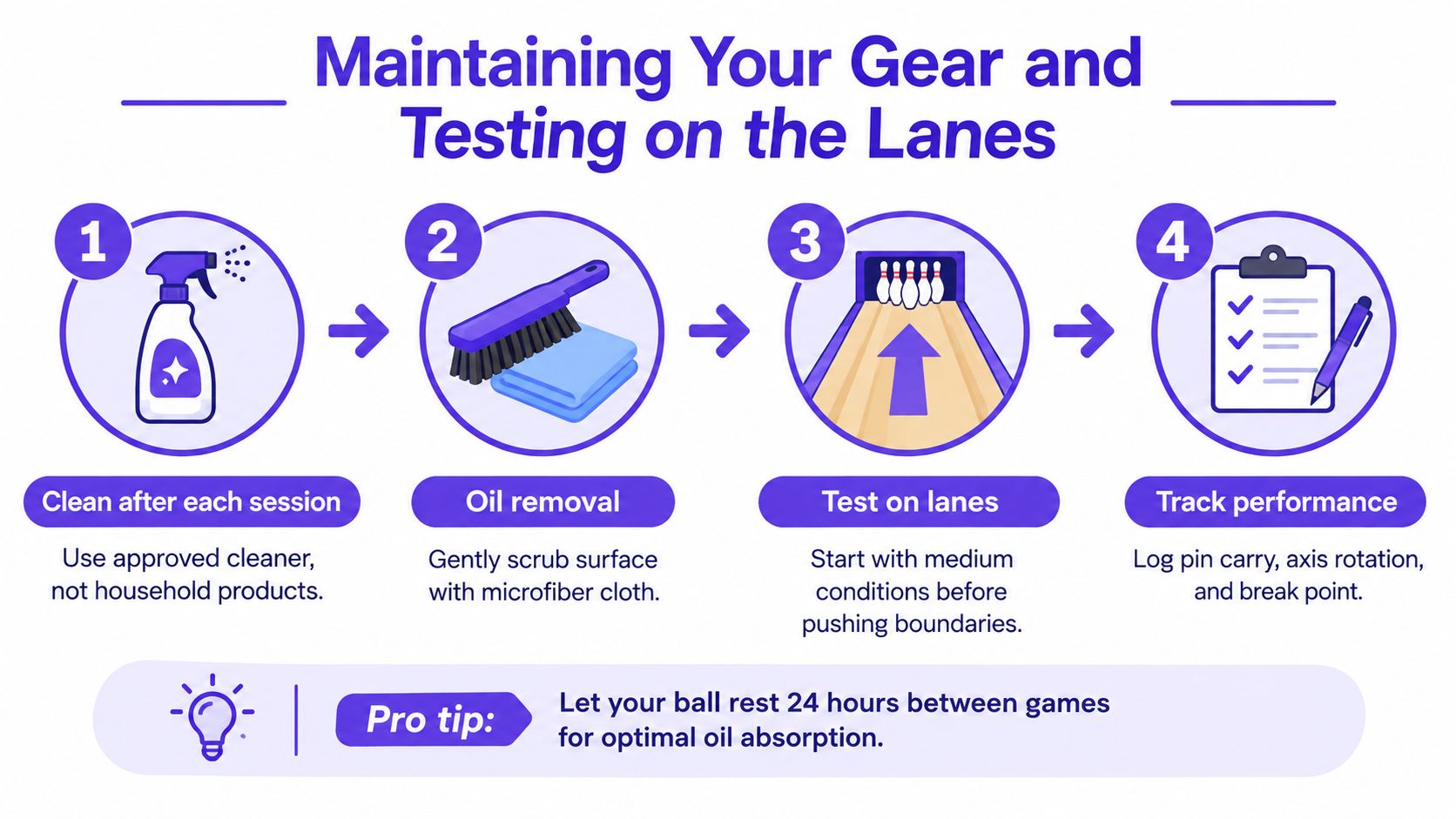
Your new ball's performance depends on what you do after drilling. Oil and lane conditioner collect on the coverstock during use, and a dirty surface can change how quickly the ball responds. Cleaning isn't about making the ball look new. It's about keeping its reaction more predictable from session to session.
Wipe the ball between shots with a microfiber towel, especially after it returns from the pin deck. After bowling, use an approved bowling-ball cleaner and follow the product instructions. Don't use household solvents or abrasive products that can damage the coverstock or alter the surface unexpectedly.
Build a simple routine
A towel belongs in your bag from the first session. Wipe the ball before it goes into storage, keep the finger and thumb openings free of debris, and inspect the inserts for looseness or sharp edges. If the ball starts hooking earlier, sliding farther, or feeling different in your hand, record what changed before asking for a surface service.
A pro shop can assess whether the issue comes from oil absorption, surface wear, fit, or a change in your release. Don't automatically request a resurface because the ball looks dull. The correct service depends on the coverstock, current finish, lane environment, and the motion you're trying to restore.
Establish a baseline on the lanes
Use your first practice sessions to learn the ball rather than chase a score. Start on a lane condition that lets you see a readable motion, then use the same target for several shots before making an adjustment.
Track a few observations:
- Starting position: Note where your feet and target begin.
- Breakpoint: Watch where the ball changes direction.
- Entry shape: Decide whether the ball arcs smoothly or changes direction abruptly.
- Pin contact: Record whether the ball arrives with useful angle and energy.
- Physical comfort: Notice any thumb, wrist, elbow, shoulder, or back discomfort.
Your first adjustments should be small. If the ball misses to the outside and doesn't recover, consider whether you released it too fast, aimed too far inside, or encountered more oil. If it hooks early, check your speed and target before changing the surface.
Use the same weight-selection standard that guided the purchase. If fatigue changes your balance or release, the session is giving you useful information. A ball that feels powerful for a few shots but forces compensation later isn't helping you build a dependable game.
On-lane habit: Write down what the ball did, what you changed, and what happened next. Memory turns equipment testing into guesswork surprisingly quickly.
A beginner doesn't need a complicated arsenal. One properly fitted ball, maintained surface, and repeatable testing routine can teach more than a bag full of mismatched equipment. Start with comfort, observe the reaction, and let your technique develop around control rather than forced power.
Bowling Gear Reviews publishes independent reviews, comparisons, and how-to guides covering bowling balls, fit, surface preparation, and related equipment. Visit Bowling Gear Reviews to compare beginner-friendly options and use practical selection guidance before your next pro-shop visit.
