

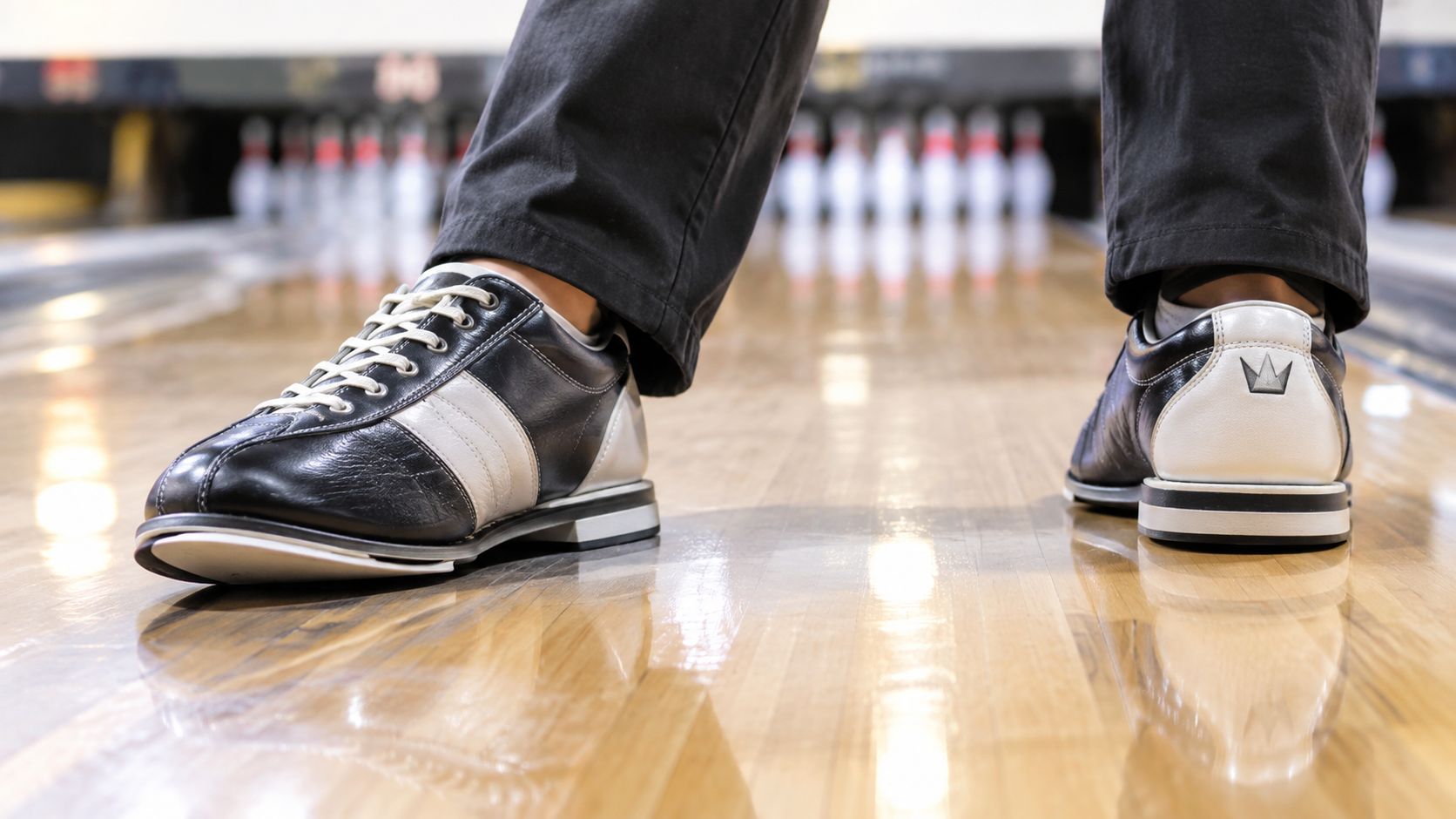
Modern bowling shoes use low-friction materials like leather and microfiber on the sliding foot to allow a controlled glide, while using traction materials like rubber on the braking foot. That deliberate contrast is why they feel slippery during the approach, but it's also what helps you release the ball without sticking or stopping abruptly.
You notice the problem most clearly when the approach feels different from your last visit. Your foot glides farther than expected, your balance shifts at the foul line, and the ball leaves your hand late. In another center, the opposite happens: the sole catches, your slide stops short, and your shot pulls wide.
The useful question isn't just “why are bowling shoes slippery?” It's whether the amount of slide matches the shoe, the approach, and your delivery. A correctly tuned shoe should let you move forward smoothly while keeping the braking foot stable. Too much or too little friction changes your timing, posture, and confidence.
Table of Contents
- Introduction to Bowling Shoe Slipperiness
- Understanding the Materials and Physics
- Impact of Lane Conditions on Shoe Slipperiness
- Choosing the Right Sole for Your Style
- Maintenance Tips for Optimal Slide
- Conclusion – Mastering Your Slide
Introduction to Bowling Shoe Slipperiness
A bowler who expects a sneaker-like grip often gets an unpleasant surprise on the first approach. The sliding foot moves easily, the upper body keeps traveling forward, and the foul line arrives before the bowler has learned how much momentum the shoe will carry. That sensation can feel unsafe, especially with rental shoes that may have been used by many bowlers and exposed to changing approach conditions.
The slipperiness is intentional. Modern bowling shoes use a smooth slide sole on one foot and a higher-traction sole or heel on the other, creating controlled asymmetry rather than equal grip on both sides. Industry guidance describes leather, suede, and microfiber as common low-friction materials for the sliding side, while rubber and textured composites provide braking traction on the opposite side. Replacement slide sole guidance explains how these materials support different levels of movement.
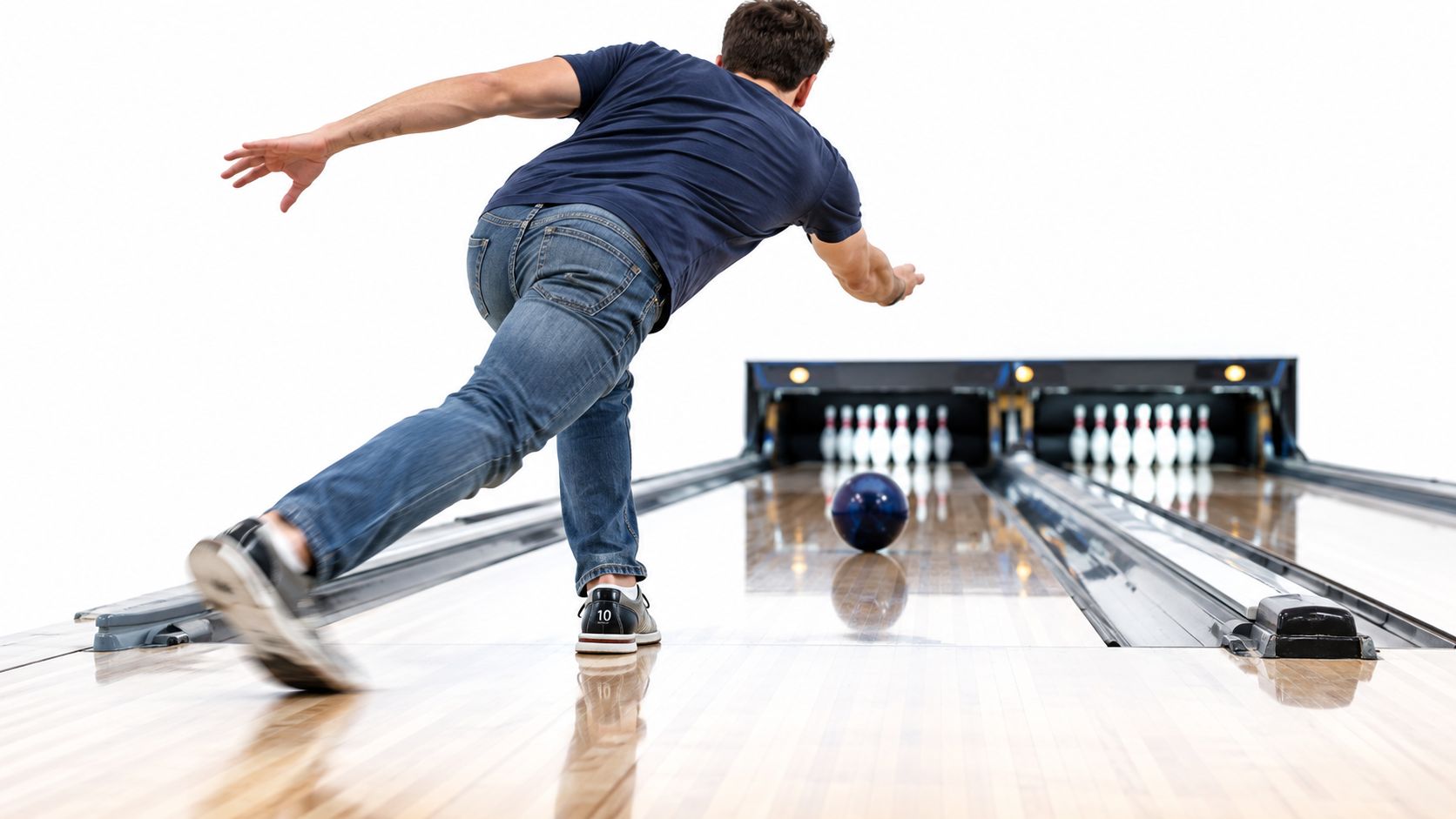
The slide is part of the release
During a normal delivery, your body transfers forward momentum toward the foul line. The slide lets that momentum continue instead of forcing the lead foot to stop suddenly. That helps preserve balance, posture, and release timing, particularly when the bowler uses a multi-step approach.
The braking foot still needs traction. It supports the push-off and helps the bowler control the finish position. A shoe with equal grip on both feet would make the approach feel rigid, while equal slipperiness would make it difficult to stop with confidence.
Coach's rule: A good bowling shoe shouldn't feel slippery everywhere. It should slide where you need motion and grip where you need control.
That distinction also explains why street shoes aren't a practical substitute. Their rubber soles are designed to grip floors and stop movement, not to let a bowler move smoothly into release. Bowling shoes evolved from ordinary footwear into lane-specific equipment because the approach demands predictable friction.
Understanding the Materials and Physics
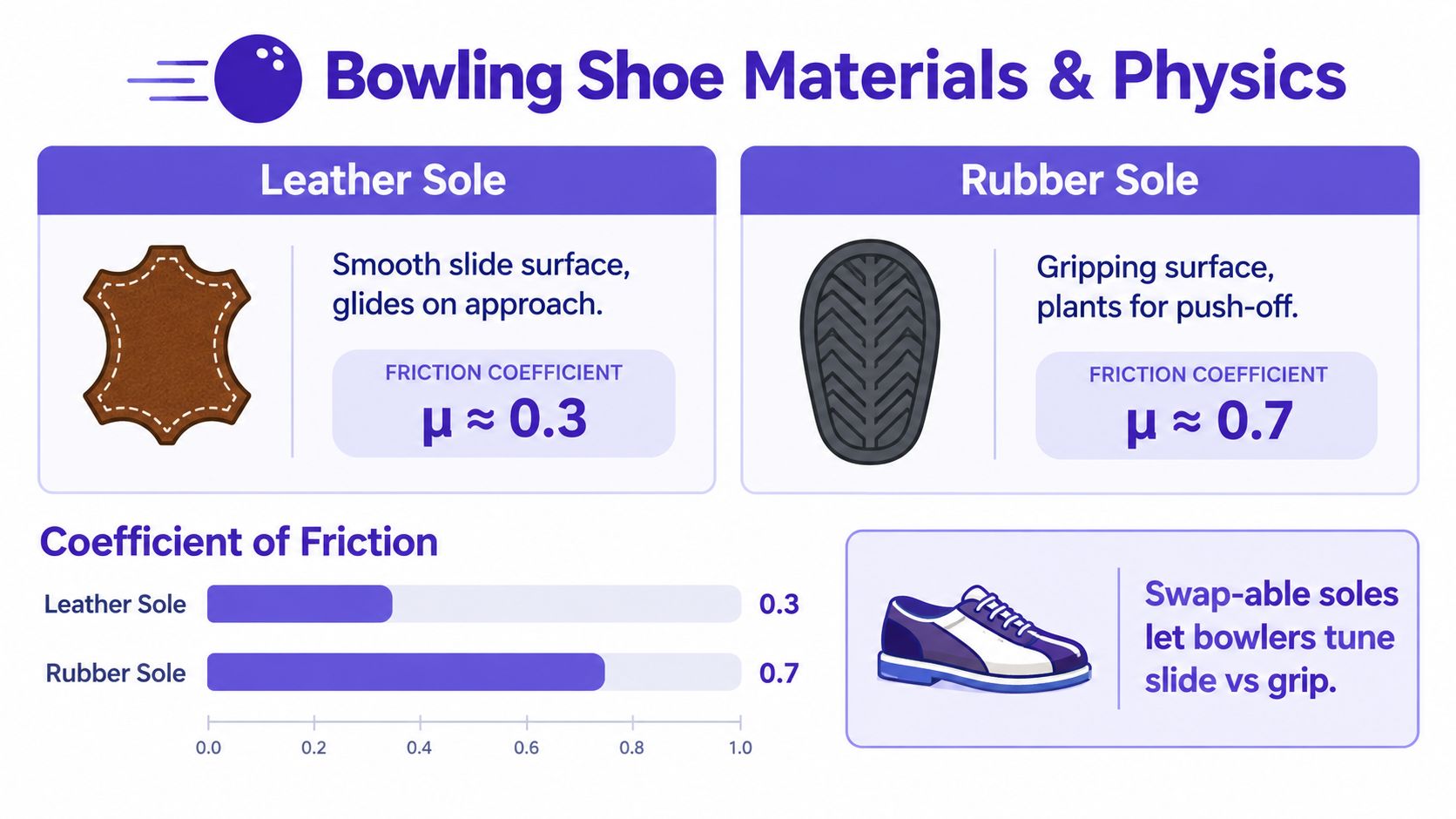
The physics starts with friction. A smooth sole resists the approach less than a regular rubber sneaker, so the sliding foot can travel forward under controlled pressure. The opposite sole creates more resistance, giving the bowler a stable platform for braking and balance.
Industry guidance gives approximate friction coefficients of 0.1–0.3 for a leather slide sole, compared with 0.5–0.7 for a braking sole. A regular rubber sneaker on wood may be around 0.8–1.0, making it substantially grippier than the materials used for the bowling slide. These figures are approximate, but they show why ordinary footwear can interrupt the delivery. Technical guidance on bowling shoe friction connects the material difference to the controlled movement bowlers need.
Why one foot slides and the other brakes
The slide foot needs low resistance during the final step. Leather, suede, microfiber, and similar materials provide a smoother contact surface, while rubber or textured composites increase traction on the braking side. The result is a shoe that supports two different jobs in one delivery.
A controlled slide of about 12–18 inches is often described as a useful target for a stable release, particularly with a 3–4 step approach. Bowling shoe guidance explains that sole systems are tuned by friction level, with higher-numbered slide soles generally producing longer slides and lower-numbered soles producing more traction.
| Component | Primary job | Typical material |
|---|---|---|
| Slide sole | Allow forward movement | Leather, suede, or microfiber |
| Braking sole or heel | Control the finish | Rubber or textured composite |
| Interchangeable insert | Adjust friction | Material selected for the approach |
The numbers on replacement soles are relative settings, not universal guarantees. A lower number generally means less slide and more traction, while a higher number means more slide. That system gives experienced bowlers a way to respond when the approach changes, rather than forcing the same sole choice in every center.
For material comparisons and fit considerations, this guide to leather bowling shoes can help you evaluate how the upper and sole construction affect the feel of a pair.
Impact of Lane Conditions on Shoe Slipperiness
The same shoe can feel controlled in one center and dangerously slick in another. The approach surface, dust, humidity, wear, and residue all affect how the slide sole interacts with the floor. That's why experienced bowlers test the approach before committing to a full-speed delivery.
Humidity can alter the friction between bowling shoes and the approach, so sole choice may need to change for consistent performance. Interchangeable sole guidance also identifies humidity, dust, and surface wear as conditions that can change the feel of the approach.
Read the approach before changing your technique
Start with controlled movements rather than immediately changing your release. Take a few slow practice steps without a ball and notice whether the sliding foot moves freely, catches, or continues farther than expected.
Use this sequence:
- Test the finish. Make a gentle approach and stop in a balanced position. If the foot sticks before the finish, you need more slide or a cleaner, smoother slide surface.
- Check for over-slide. If the foot travels too far and your torso keeps moving after the ball leaves, reduce slide or add traction.
- Compare the center's approaches. Don't assume the feel from one bowling center will transfer to another. Local maintenance and surface wear can produce noticeably different friction.
- Inspect the sole before blaming the lane. A contaminated, damp, or worn sole can create inconsistent movement even when the approach is sound.
Tacky or dry approaches commonly call for more slide, while slick approaches generally require less slide and more traction. Smoother inserts, microfiber, or leather can help a bowler move across a sticky approach, but adding slide without checking the underlying cause can make a slick approach harder to control.
Separate approach problems from shoe problems
A rental shoe may be extra slippery or unexpectedly sticky because its sole has worn unevenly. Universal house shoes also need to serve both left- and right-handed bowlers, which can limit how precisely the traction matches your delivery. USA Bowling's equipment guidance highlights the effect of wear and the dual-handed design of house shoes.
Dust buildup, seasonal humidity changes, and residue from slide powders can also change the surface. If several bowlers report the same issue, the approach may need attention. If only one shoe behaves strangely, inspect the sole, heel, and shoe cover before changing your mechanics.
Choosing the Right Sole for Your Style
Sole choice should follow your delivery, not a label such as beginner or advanced. A bowler with a short, deliberate approach may need less slide than someone who carries more forward momentum. Your finish position tells you more than the sole's appearance.
| Sole Type | Friction Level | Best For |
|---|---|---|
| Rubber or textured sole | Higher traction | Braking, slick approaches, and bowlers who over-slide |
| Microfiber sole | Moderate to high slide | General tuning across changing approaches |
| Leather or suede sole | Lower friction, more slide | Sticky approaches and bowlers who need a longer glide |
| Interchangeable slide system | Adjustable | Bowlers visiting different centers or fine-tuning release feel |
A fixed sole keeps the decision simple. That's useful for beginners who are still learning a consistent approach and don't yet know whether their main issue is technique or equipment. The trade-off is limited adaptability when the approach feels different.
Match slide to the bowler
If your lead foot catches before the ball reaches the target, a smoother sole may help. If your foot keeps traveling and your shoulders fall behind the release, a lower-slide sole or more traction may be the better correction. Neither symptom should be solved by adding speed to the approach.
A bowler who practices in several centers benefits from an interchangeable system. Numbered sole ranges commonly run from roughly 1–10, with lower numbers offering less slide and higher numbers offering more, as described in this interchangeable-sole guide. The practical advantage isn't the number itself. It's the ability to make a measured adjustment instead of adapting your entire delivery to a shoe that feels wrong.
For a first personal pair, prioritize secure fit, a stable heel, and a slide level that lets you finish upright. For regular league or tournament play, interchangeable soles and heels offer more control across changing approaches. A guide to bowling shoes with interchangeable soles provides a useful framework for comparing those systems.
Maintenance Tips for Optimal Slide
A bowling shoe only performs consistently when the sole stays clean, dry, and properly aligned with your delivery. Many slide complaints begin with contamination or wear, not with the original design. Treat the sliding sole as a performance surface, not as ordinary footwear.
Keep the shoes inside the bowling center and use a shoe cover whenever you leave the approach. Outdoor moisture, dust, and grit can change the way the sole contacts the floor. Never wear bowling shoes outside, even for a short walk, because the material that creates the slide can pick up debris quickly.
Build a repeatable care routine
- Inspect before bowling. Look for flattened nap, torn edges, loose inserts, or uneven wear across the slide sole.
- Keep the slide dry. Moisture can make friction unpredictable, especially when the approach already feels different from normal.
- Brush compatible slide pads carefully. A light brush can restore the texture of some materials, but aggressive brushing can damage the surface.
- Store shoes flat and clean. Avoid crushing the sole or leaving the pair in a damp bag after a session.
- Replace worn components. If the shoe alternates between sticking and over-sliding, the insert or heel may no longer provide a consistent contact surface.
A bowling shoe slider guide can help you compare accessories and care methods for maintaining a predictable slide. Use accessories to solve a specific problem, not to hide a damaged sole or a contaminated approach.
A clean sole gives you useful feedback. A dirty sole makes every adjustment guesswork.
Technique still matters. Keep the slide knee soft, avoid jumping into the foul line, and make changes one variable at a time. If you change the sole, approach speed, and finish position together, you won't know which adjustment fixed the problem.
Conclusion – Mastering Your Slide
Bowling shoes feel slippery because the sliding foot needs controlled forward movement while the opposite foot provides braking traction. That asymmetry supports the release, but it doesn't guarantee the same feel in every center. Approach texture, humidity, dust, residue, shoe wear, and sole material all influence the friction you experience.
The most reliable troubleshooting process starts with observation. Test the approach slowly, identify whether the foot sticks or travels too far, then adjust the sole or heel before rebuilding your entire delivery. A sticky approach may call for more slide, while a slick approach generally needs more traction. The right choice depends on the friction window you can control at the finish.
Beginners usually benefit from a stable, well-fitting shoe with a predictable fixed sole. Frequent bowlers gain more from interchangeable systems because they can respond to different centers and changing conditions. In either case, clean surfaces and proper storage matter as much as the shoe's original construction.
Practical finish: Your slide is correct when it lets you reach the foul line balanced, repeat the release, and stop without fighting the floor.
Don't judge a shoe by how slippery it feels during a casual step. Judge it by what happens during the complete approach. If your foot catches, the shoe may need more slide or maintenance. If it runs away from you, reduce the slide and check the approach before making a larger equipment change.
Bowling Gear Reviews publishes hands-on evaluations, comparisons, and care guides covering slide systems, fit, replaceable soles, and bowling accessories. Visit Bowling Gear Reviews to compare equipment options and find practical guidance for building a more consistent approach.
