

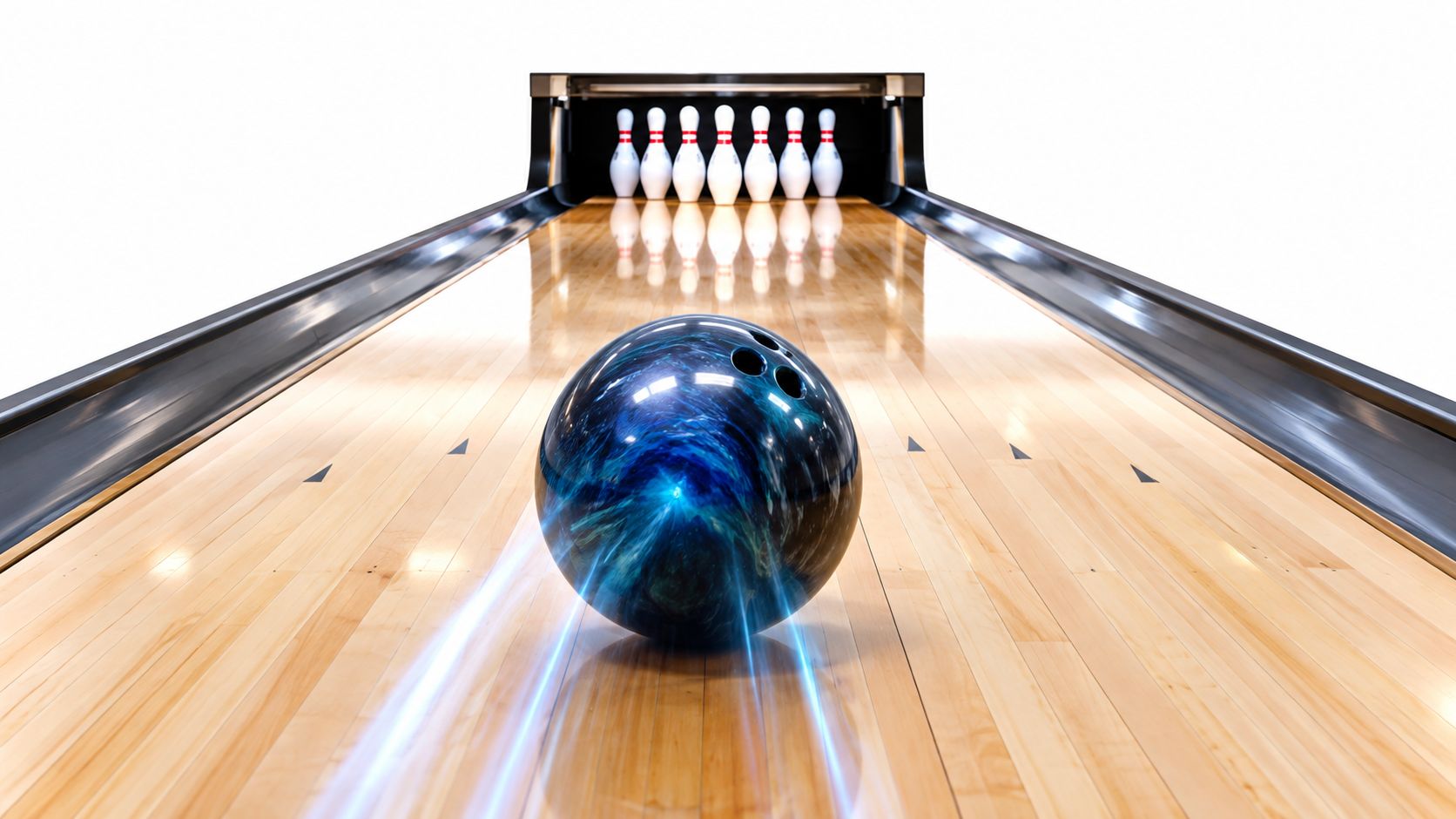
You're standing on the approach with a ball that looks great on paper, then it reads the lane too soon, checks up before the pocket, and leaves you with that dead, under-hit reaction that never seems to carry. That's the moment most bowlers start shopping for the best ball for distance, but the fix usually isn't “more hook.” It's better skid-to-breakpoint control, then enough backend to finish the job.
| Ball Category | Core Specs | Best Use | Motion Shape |
|---|---|---|---|
| Length-first control | High RG, low differential | Cleaner fronts, straighter shapes | Long skid, smoother backend |
| Length-plus-backend | High RG, moderate differential | When you need stored energy and more angle | More pop downlane, stronger move |
| Polished hybrid look | Medium to high RG, moderate differential | Versatile league play | Easy length with a readable breakpoint |
A lot of bad distance advice chases the strongest hooking ball on the rack. That works only when the lane gives you enough friction and your speed, rev rate, and surface all line up. On real league shots, the better answer is usually a ball that stays clean through the front, revs when you want it to, and still finishes hard enough to keep the carry honest.
Table of Contents
- Introduction Why Distance Means More Than Hook
- How RG and Differential Control Distance and Breakpoint
- Distance Ball Categories Compared by Motion Shape
- Hands On Testing Notes for Length and Carry
- Setup Tips to Maximize Distance Without Losing Backend
- Best Ball for Distance by Bowler Type and Lane Condition
- Final Recommendation and Smart Buying Checklist
Introduction Why Distance Means More Than Hook
The most common complaint I hear is simple. A bowler says the ball looks strong in the hand, but by the time it finds friction, it's already spent. The reaction stands up early, rolls out, and leaves flat tens, weak corners, or that annoying hit that never feels like it gets through the pins.
That's why distance is not the same thing as softness or weakness. The best ball for distance is the one that gives you usable skid without giving up the backend finish you need to drive through the pocket. On dry lanes, that might mean a cleaner motion with a controlled move. On medium oil, it might mean a polished piece that stores energy just long enough to respond at the breakpoint.
What distance really looks like on the lane
In practical terms, distance means the ball holds its line through the front part of the lane, then transitions at the right spot instead of reading early and burning up. That's a different goal from “hooking less.” A weak reaction can travel long and still miss the pocket because it never changes direction with purpose.
USBC's technical materials tie that skid-to-hook window directly to radius of gyration, or RG, and differential RG. They note that RG specifications were first implemented in 1993, with the allowable range set at 2.430 to 2.800, then later tightened when USBC reduced the maximum differential RG from 0.080 to 0.060 in 2005 and changed the lower RG limit to 2.447 in 2010 to manage flare and entry angle (USBC Technology Study). Those changes matter because distance-oriented balls live or die on how they store and release energy.
A ball that goes long but quits isn't a distance ball, it's a ball that runs out of solution too soon.
That's the lens I use in the rest of this guide. Core shape, surface, and speed all matter, but the question is whether the ball gives you the right kind of length for your lane and your release.
How RG and Differential Control Distance and Breakpoint
RG is the first spec I check when a player wants a longer shape. USBC-related technical guidance describes RG on a 2.46 to 2.80 scale, and the basic rule is easy. Lower RG balls rev up earlier, while higher RG balls store energy longer and tend to make their move later (RG guidance). For distance work, that usually points you toward a higher-RG core, because it helps the ball stay cleaner through the front of the lane before it starts to turn.
The part differential plays
Differential RG is the second piece. USBC defines it as the difference between low- and high-axis RG values, and that difference is the technical basis for flare potential and motion shape (USBC Technology Study). Under USBC rules, differential is capped at 0.060, and lower differential generally means less flare, a smoother shape, and more length, while higher differential creates more flare and more hook potential (Core Properties).
The important part is how those specs interact. A high-RG, low-differential ball is usually the cleanest route to extra skid. A high-RG ball with moderate differential can still preserve length, but it'll change directions more noticeably when it finally sees friction. That's where many players go wrong. They assume the biggest motion change comes from chasing the strongest core, when the jump often happens as differential rises from very low to moderate.
USBC ball-motion testing backs that up. In one test set, low-RG balls with low differential went farther downlane and reached a breakpoint around 46 feet, while high-RG balls hooked earlier at about 43 feet (USBC ball motion testing). The same study found low-differential balls averaged 16.8 boards of hook, compared with 20.6 boards for high-differential balls. In a separate summary, balls with 0.030-inch differential hooked about 1 board less and had about 0.4 degrees less entry angle than 0.060-inch differential balls, while 0.060-inch and 0.080-inch differential balls performed nearly identically (USBC ball motion summary).
A simple way to read that is this. If you want length, don't chase flare for its own sake. If you want the ball to clear the fronts and still turn the corner, start with higher RG, then use just enough differential to keep the motion readable.
Distance Ball Categories Compared by Motion Shape
Ball categories make more sense when you compare what they do on the lane instead of what the marketing says. A distance ball is never just “clean.” It's either clean and smooth, clean and sharp, or clean and versatile enough to survive a few different lane looks.
Clean control versus backend pop
A high-RG, low-differential ball is the safest choice when you need the longest possible read through the front. It usually pairs well with a simple solid or a cleaner pearl finish, and it's the least likely to jump when you miss a little right on dry boards. The trade-off is obvious. You get the most length, but you won't always get the strongest move off friction.
A high-RG, moderate-differential ball gives up a little of that dead-smooth shape in exchange for more defined backend motion. That's often the sweet spot for league bowlers who still want distance but can't afford a ball that floats forever and never turns. The backend is more noticeable, but the ball can also become more sensitive to the lane if the front gets too dry.
The best differentiator isn't “more hook,” it's whether the ball still looks predictable when it finally exits the skid phase.
A polished hybrid sits between those two. It can give you a usable length window on medium oil and still let you open your angles when the front part of the lane starts to go. That's why finish matters so much. The same core can look completely different once you change surface.
| Distance Ball Motion Comparison by Core Specs | RG Range | Differential | Expected Motion |
|---|---|---|---|
| Length-first control | High | Low | Long skid, smooth and controlled finish |
| Length-plus-backend | High | Moderate | Clean front, sharper move when it sees friction |
| Polished hybrid | Medium to high | Moderate | Versatile length with a readable breakpoint |
For drilling context, the layout can change how soon the ball reads, especially when you're trying to keep it from revving too early. A good reference is bowling ball drilling layouts, because layout and core orientation can either preserve the distance you bought or shorten it fast.
Hands On Testing Notes for Length and Carry
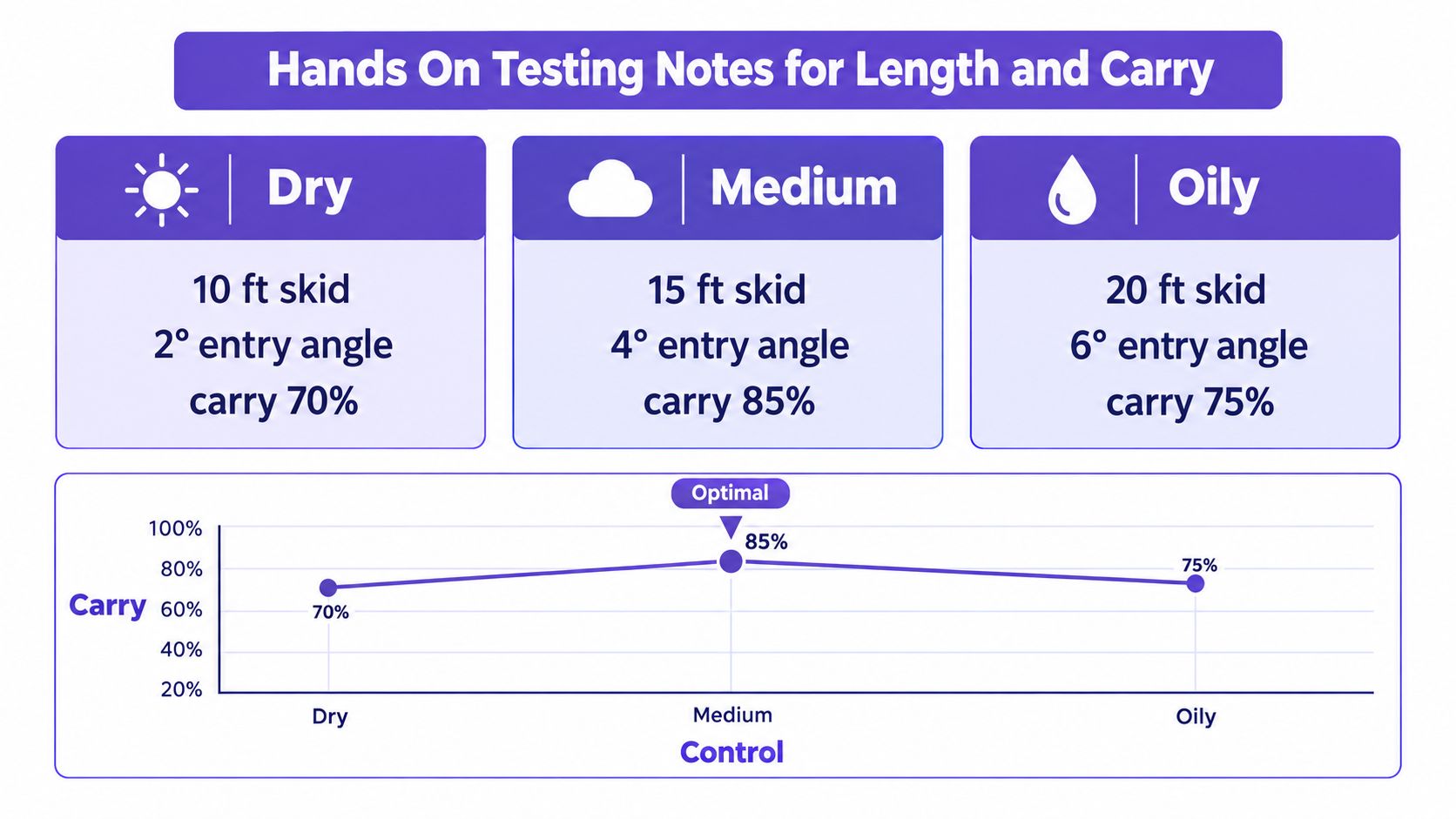
Lane testing separates the balls that merely look long from the ones that carry. On repeat drills, the biggest pattern was consistency in the front part of the lane. When a ball stayed cleaner, it delayed the transition and gave more room to control the breakpoint. When it picked up too early, it lost the energy needed to finish through the pins.
What showed up on real lanes
On drier lanes, the cleaner, higher-RG pieces gave the easiest front-lane travel. They held their line without feeling lazy, which matters because a ball that burns immediately can look “active” but still carry poorly. On medium conditions, the most useful balls were the ones that stayed patient up front and then offered a defined change of direction, not a lazy slide.
On heavier oil, distance was still valuable, but it had to be paired with enough energy retention to finish the shot. That's where the ball's motion shape mattered more than the label. A stronger core with the wrong surface can lose the benefit of its length, while a cleaner shell with the right surface tune can still produce useful continuation.
The ball that finished best wasn't the one that skidded the longest. It was the one that got to the breakpoint with something left.
A separate USBC motion study showed the relationship clearly, because the lower-differential balls went to a breakpoint around 46 feet, while the higher-RG balls hooked earlier around 43 feet and produced different hook totals (USBC ball motion testing). That's not just lab talk. On the lane, that gap is the difference between a ball that lands in the pocket with angle and one that gets there flat.
For model-level comparison, I also found it useful to review model comparisons alongside lane notes, because the category label alone never tells you enough about actual continuation.
Setup Tips to Maximize Distance Without Losing Backend
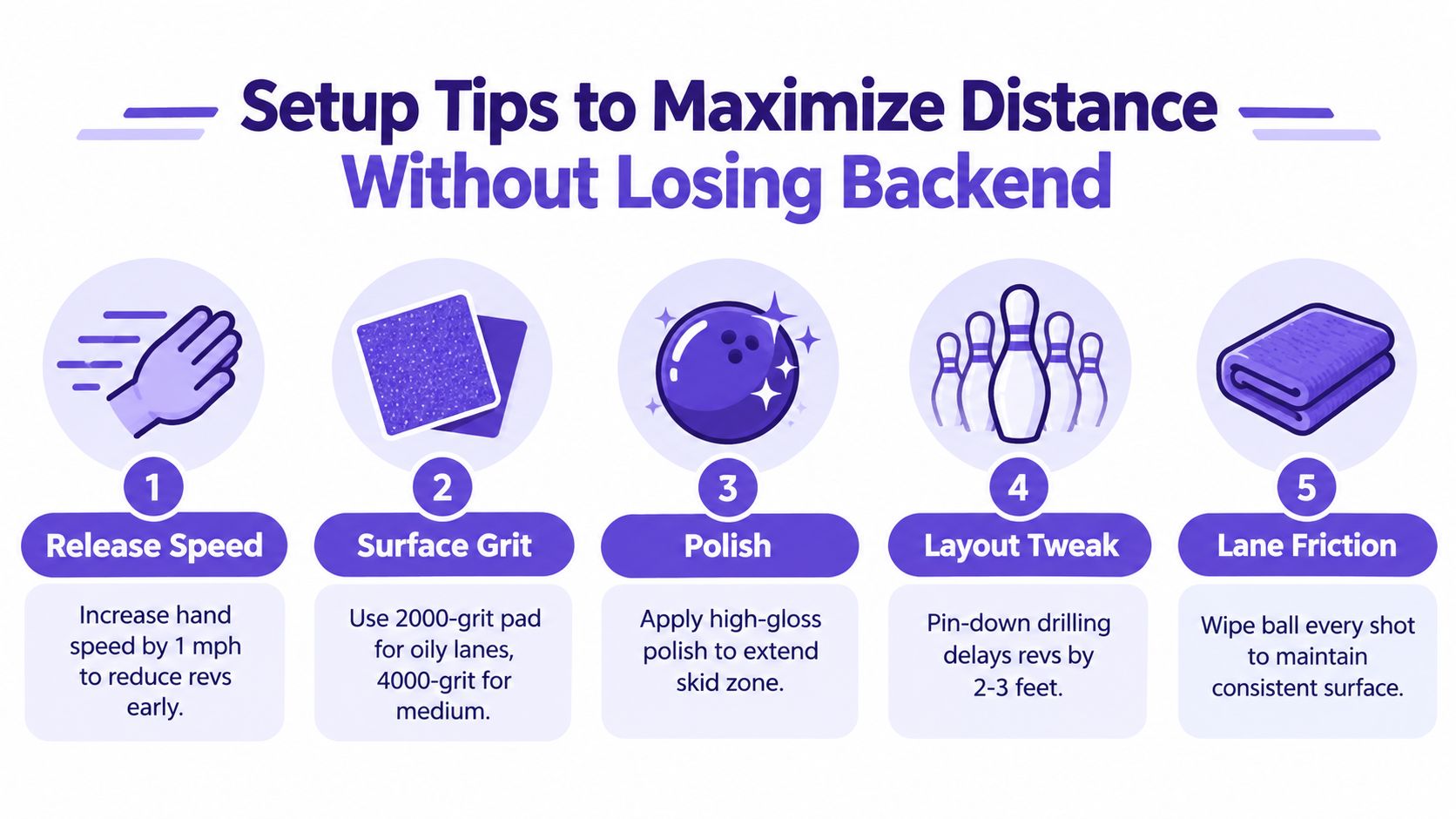
If the ball is close but not quite right, setup usually gives you the cheapest fix. Speed, surface, and lane friction work together, and the wrong surface can erase the benefit of a good core fast. That's why a distance ball often responds better to careful tuning than to another purchase.
Speed and surface before panic buying
USBC-related ball-motion guidance often cites an optimal speed benchmark of about 21 mph at release and about 17 mph at the pins, with lane friction typically costing roughly 2 to 3 mph from release to impact (ball speed calculator reference). That matters because a ball that looks perfect on paper can still be too early or too late if your real speed doesn't match its motion window. If you're in the common recreational range, the practical question is always the same, will it stay long enough and still finish with authority?
Surface is the fastest lever. A little more shine usually helps the ball clear the front part of the lane, while a rougher surface lets it read earlier if the lane is too slick for the current look. Layout tweaks can help too, but I'd start with surface before drilling another ball just to chase a few feet of extra skid.
A good practice checklist keeps the changes controlled.
- Watch the first 15 feet: If the ball reads too early, it's probably too strong on surface or too low in RG for that pattern.
- Test one surface change at a time: Make a small move, then check whether the breakpoint moved without killing carry.
- Track finish strength, not just length: A long ball that stops at the pocket still needs more help.
- Clean every shot during testing: Residue changes surface quickly and masks the motion.
- Match speed to shape: If the ball is close but not strong enough, technique work can be smarter than a replacement.
Bowling Gear Reviews also fits into this process as an editorial guide that tests balls on real lanes and compares coverstock, core, surface prep, and pattern fit. That kind of lane-based review is useful when you're deciding whether you need a cleaner shell, a different finish, or a totally different motion shape.
Best Ball for Distance by Bowler Type and Lane Condition
The right pick depends on who's throwing it and what the lane is asking for. A beginner needs predictability. A league player usually needs length without giving up control. A speed-dominant bowler wants help storing energy, while a rev-dominant player often needs a ball that stays cleaner before it sees friction.
Match the ball to the player, not the hype
For beginners, a higher-RG, lower-differential ball is usually the least frustrating choice. It tends to stay in front of the player longer and gives a calmer motion when timing and release are still developing. That's useful when the main goal is learning to hit the pocket more often, not forcing a bigger move.
For league bowlers on medium house shots, a polished hybrid or a high-RG ball with moderate differential is usually the more balanced option. It gives enough distance to preserve energy, but not so much length that the ball looks dead. If the fronts are starting to go, a bit of backend helps keep the shape usable.
For speed-dominant players, a cleaner shell with a core that revs on the later side is often the smarter fit. Those players often need help getting the ball to respond without over-rolling early, especially when they throw it hard enough to fight the front of the lane.
For rev-dominant players, the cleaner fronts matter even more. They usually want the ball to get farther downlane before it reacts, so a high-RG, low-differential look can keep the motion from getting too steep too early.
Choose the ball that matches your release and your house shot first. Chasing a stronger core only helps if the lane can support the motion.
When to choose and when to pass
Choose a distance-focused ball when your current piece reads early, quits, or starts hooking before you want it to. Skip it when your main miss is control inside the breakpoint. In that case, more length can make the reaction harder to read, not easier.
If you play one center often, the smartest move is usually to test on your normal lane condition first. A distance ball that looks perfect on a dry practice pair can disappear on heavier league volume. The fit has to survive the session you bowl, not just the one you wish you had.
Final Recommendation and Smart Buying Checklist
The best choice is rarely the strongest hooking ball. It's the ball that gives you usable skid, a controlled breakpoint, and enough finish to drive through the pins on the lanes you bowl on. That usually means starting with high RG, keeping differential modest unless you need more shape, and tuning surface before you assume the ball itself is wrong.
Use this checklist before you buy.
- RG target: Start higher if you need the ball to save energy for later.
- Differential ceiling: Keep it lower for the smoothest length, raise it only if you need more motion.
- Surface finish: Pick the finish that matches your home condition, not the one that looks most aggressive.
- Speed fit: Make sure the ball still finishes at your real release speed.
- Maintenance: Clean the cover consistently so the same surface keeps the same motion.
A distance ball should feel like a tool, not a gamble. If it clears the front and still turns the corner with intent, you've got the right shape. If it only goes long and dies, it's not doing the job.
Bowling Gear Reviews publishes lane-tested bowling ball reviews, comparison guides, and fit advice that focus on how balls behave on the lane. If you're narrowing down the best ball for distance for your speed and house shot, visit Bowling Gear Reviews and compare real-world notes before you buy.
