

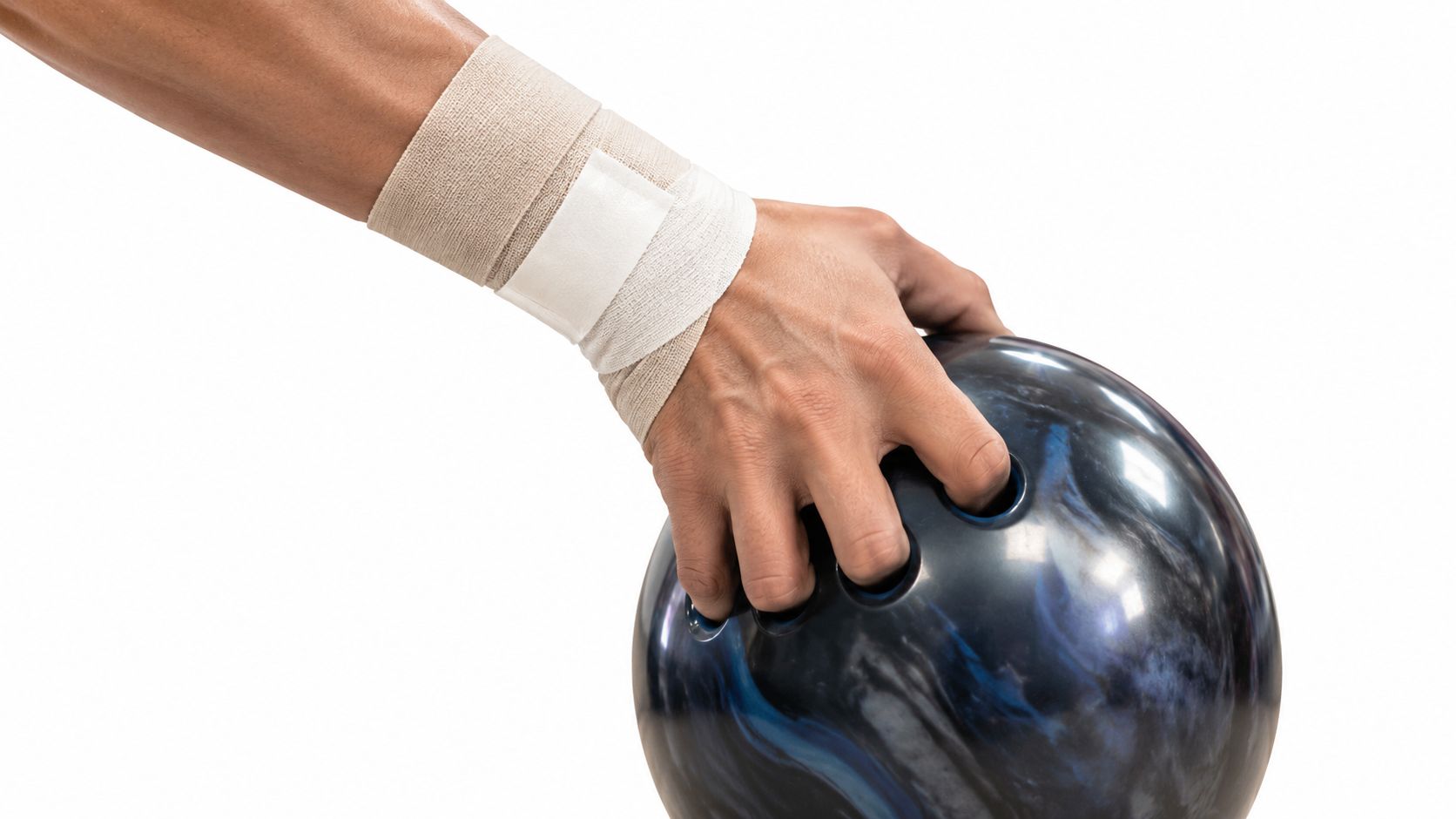
You're late in a league session, and the ball no longer feels quite the same coming off your hand. Your wrist feels tired, your release feels less predictable, and someone offers you a roll of tape. Before you wrap anything, pause. Wrist support tape works best when you know whether you need a clearer sense of position, less unwanted movement, or a comfortable wrap.
Table of Contents
- Why Bowlers Reach for Wrist Support Tape
- The Main Types of Wrist Tape and How They Behave
- What Wrist Support Tape Actually Does at Release
- Common Taping Patterns Bowlers Actually Use
- Durability, Sweat, and Care Between Sessions
- Matching Tape to Your Bowling Style
- Where Wrist Tape Falls Short and When to Step Back
- A Quick Selection Checklist Before Practice
Why Bowlers Reach for Wrist Support Tape
A familiar practice-night problem is easy to describe but harder to diagnose: you liked your early deliveries, then started feeling your wrist move differently near the bottom of the swing. Perhaps you're opening your hand early. Perhaps you're trying so hard to hold your position that the delivery no longer feels relaxed.
Those experiences aren't interchangeable. A player who loses awareness of wrist position needs a different starting point from someone seeking a physical limit on movement. And a player with pain needs assessment of that pain, not an automatic recommendation for stronger tape.
Name the problem before choosing the material
Start by describing what you notice without trying to name an injury.
- Position feels uncertain: You can move comfortably, but you struggle to recognize the wrist position you want.
- Movement feels excessive: Your wrist bends or drifts in a direction you're trying to limit.
- The wrap feels reassuring: You prefer light contact around the wrist without expecting firm restraint.
- Symptoms interrupt bowling: Pain, weakness, or altered sensation makes this a health question rather than a tape-shopping question.
The central distinction is sensory cueing versus mechanical restriction. Elastic tape is the cue-oriented option; rigid tape is the restriction-oriented option. Neither deserves to be called universally better.
Coaching rule: Describe the movement you want to manage before deciding how much support to add.
Think of the choice as a conversation about materials, placement, and feel. A stretchy strip placed along the wrist isn't equivalent to a stiff wrap encircling it, even if both packages say “support.”
For an initial trial, keep your expectations narrow. Ask whether the application helps you recognize or maintain your intended position comfortably. Don't ask it to fix your entire delivery, explain an ache, or compensate for equipment that doesn't fit.
The Main Types of Wrist Tape and How They Behave
The tape aisle mixes material categories with application formats. Rigid and elastic describe how tape behaves. Pre-cut describes how it arrives in the package, so a pre-cut strip may still be elastic or rigid.
Use the chart as a starting comparison, not a promise that any tape will lock a wrist completely or remain reusable.
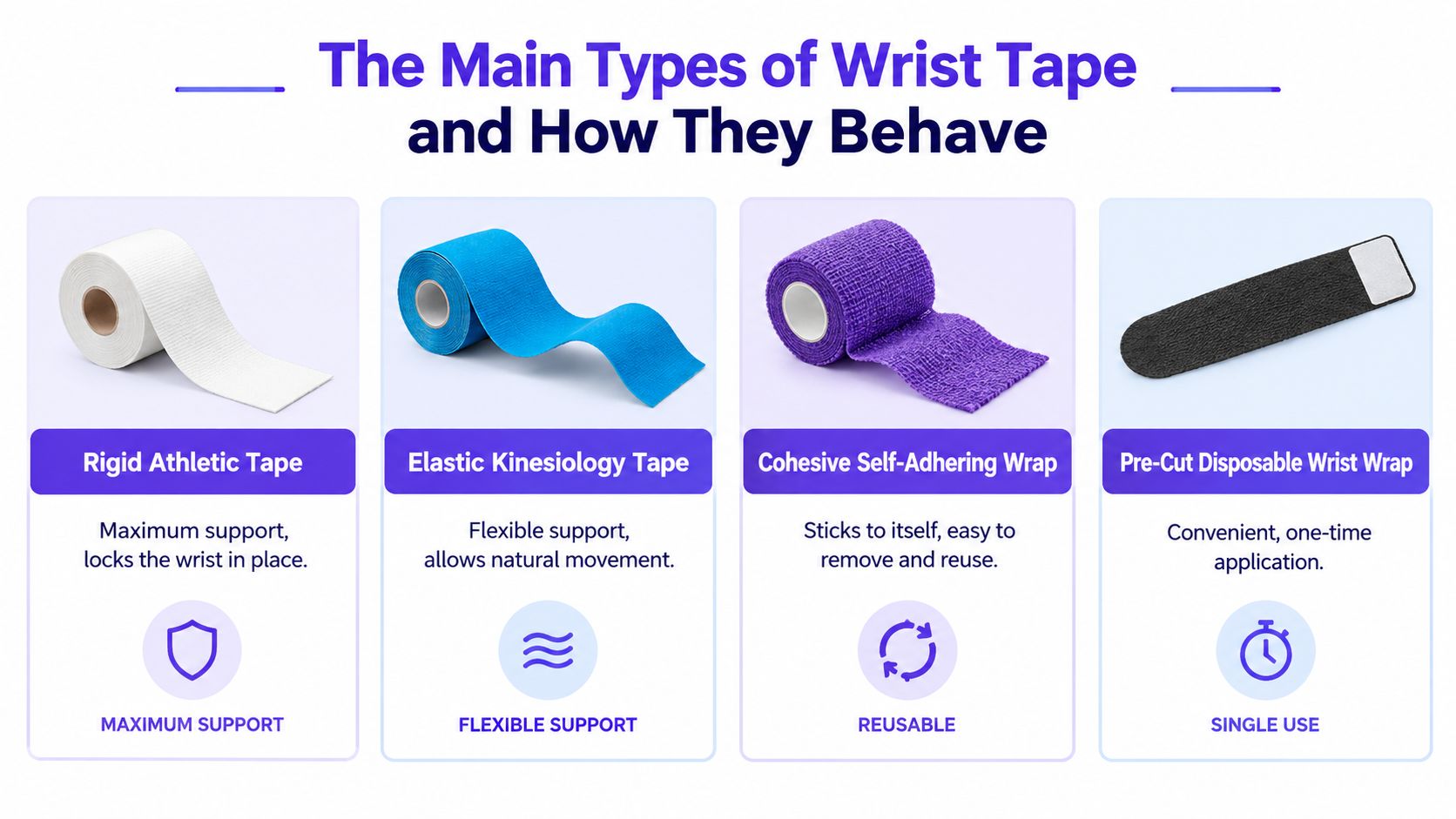
Rigid athletic tape and elastic kinesiology tape
Rigid athletic tape is the nonelastic option. Its job is to resist selected movement when applied in an appropriate pattern. Think of it as a restraint rather than a splint: its effectiveness depends on placement, anchors, and fit, and it isn't a fitted brace.
Elastic kinesiology tape stretches with movement and provides contact across the skin. The useful plain-language term is proprioception, your sense of position and force without having to watch your hand. It's closer to a reminder than a hard stop.
In a 2023 systematic review involving 11 studies and 279 participants, elastic tape significantly improved absolute force-sense accuracy (p = 0.009), while rigid tape didn't reach statistical significance for that outcome (p = 0.069). That result supports distinguishing the materials, not assuming either produces higher bowling scores.
Wraps and ready-cut options
| Option | What to examine | Sensible starting use |
|---|---|---|
| Cohesive self-adhering wrap | Whether it adheres to itself, its stretch, and the package's disposal instructions | A light wrap when direct skin adhesive isn't preferred |
| Pre-cut disposable wrist strips | The underlying material, shape, and intended placement | Convenient application when the supplied shape fits your purpose |
Don't assume all cohesive products can be washed or reused. Likewise, a ready-cut strip doesn't become structurally supportive just because its packaging shows a wrist.
Material composition also varies by product. Check the label for the backing fabric, adhesive information, and any sensitivity warnings rather than assuming every white roll or colored strip uses the same ingredients. Buy for behavior first, convenience second.
What Wrist Support Tape Actually Does at Release
At release, the question isn't whether your wrist looks neatly wrapped. It's whether the application changes the motion or awareness you intended to change.
This close-up shows the area where wrist tape interacts with the hand and forearm, but appearance alone can't establish the amount of support.
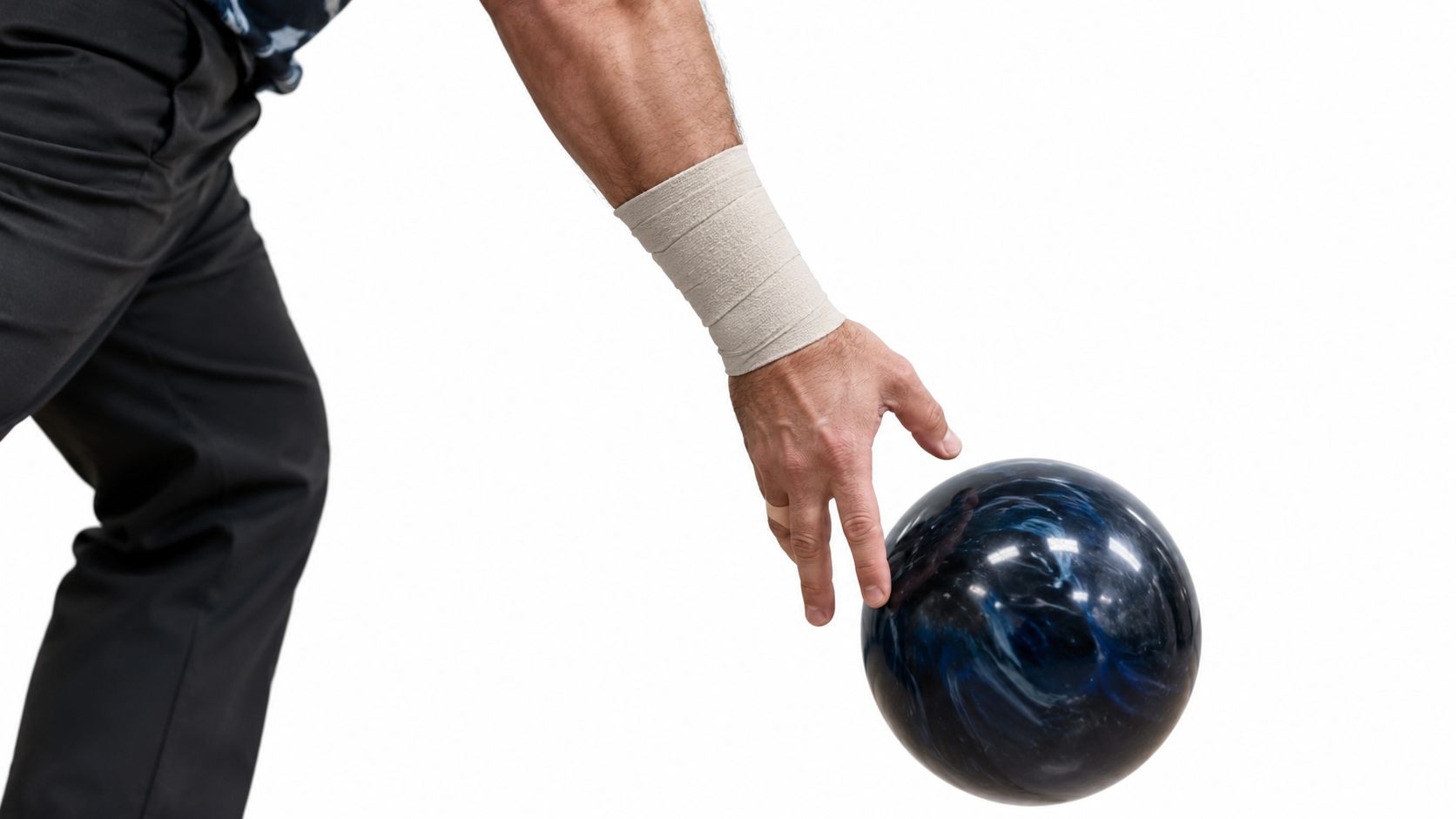
A restraint changes movement, a cue changes awareness
The mechanical principle has been demonstrated outside bowling. A controlled study of 18 elite male boxers.pdf) found that adding rigid tape to bandaging reduced wrist motion at impact during straight-arm punches from roughly 50% to 20% of total active motion, with statistically significant effects (p < 0.001).
A punch isn't a bowling delivery. The useful connection is narrower: rigid tape can meaningfully restrict movement under load. For a bowler, an appropriately selected application may resist an unwanted bend, but the boxing result doesn't establish the ideal bowling pattern or predict your release.
With elastic tape, concentrate on what you feel rather than how firmly the wrist is held. You might notice the strip more clearly as your hand moves away from the position you're practicing. That sensation can be useful feedback, but it doesn't physically return the joint to a correct position.
Use the video as a visual companion while keeping the distinction between movement control and sensory feedback in mind.
Test the delivery, not just the stationary wrist
A wrap can feel comfortable while you're sitting down and distracting once you hold the ball. Before bowling, check your normal grip and make a gentle rehearsal movement without forcing the wrist against the tape.
- Notice timing: Does the ball leave your hand naturally, or do you feel yourself compensating?
- Notice effort: Are you relaxing into the delivery or squeezing harder?
- Notice control: Can you identify the intended position without continually looking down?
Use release drills and equipment checks to keep the trial focused. A different feeling isn't automatically an improvement, especially if added restriction makes your usual release awkward.
Common Taping Patterns Bowlers Actually Use
A taping pattern determines where the material acts. Don't choose a figure-eight because it looks more serious than a straight strip; choose a layout that addresses the movement you've identified.
The illustration provides a visual vocabulary for discussing placement. It isn't a substitute for individualized instruction, particularly when pain or instability is involved.
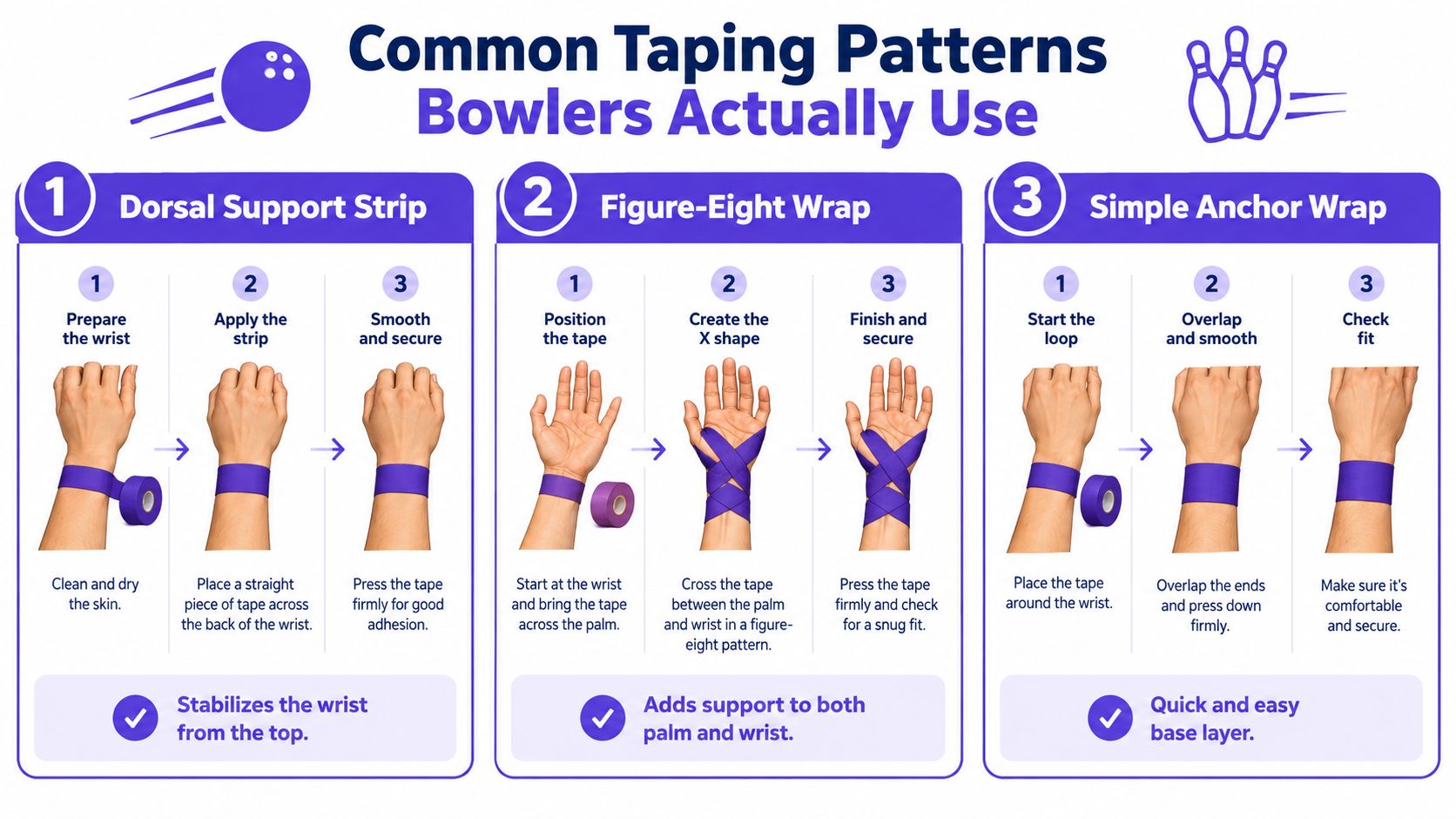
The dorsal support strip
Dorsal refers to the back of the hand and wrist. A strip spanning that area offers a relatively uncomplicated way to explore directional contact without covering much of the palm.
For a cue-oriented trial, elastic tape is the logical material to discuss with a trained practitioner. A rigid strip has a different purpose, and its placement and wrist position determine which movement it resists. Don't assume a strip on the back of the wrist prevents every kind of wrist break.
This layout may suit a player who wants feedback while leaving the gripping surface clear. It's less suitable as a guess at treatment for unexplained soreness.
Figure-eight versus circumferential cuff
A figure-eight travels between the hand and wrist, crossing rather than forming only a circular band. A rigid version can provide directional restraint, but its interaction with the palm makes fit especially important. If you feel cramping at release, adding bulk across your gripping surface isn't an automatic solution.
A circumferential cuff forms a loop around the wrist. A lightly applied cohesive wrap may suit someone seeking general contact, but a cuff shouldn't be mistaken for a directional brace. Pulling harder doesn't turn an imprecise pattern into a better-targeted application.
| Pattern | Main practical question |
|---|---|
| Dorsal strip | Does the strip span the intended area without pulling awkwardly during movement? |
| Figure-eight | Can you grip and release without palm bulk or uncomfortable pressure? |
| Cuff | Is the contact comfortable rather than constrictive? |
A technical review of tape properties reports that wider tape spreads force across a larger area, while thicker tape offers greater structural support at a potential comfort cost. More coverage isn't necessarily the right coverage for your hand.
A useful pattern targets a movement. A tight pattern merely feels tight.
For a first rigid application, ask a qualified athletic trainer or clinician to demonstrate placement and anchoring. Avoid experimenting with stretched circular layers or extending tape into the palm to keep loose edges down.
Durability, Sweat, and Care Between Sessions
Treat wrist support tape as a consumable with a condition check, not as a permanent addition to your bowling hand. There's no universal replacement schedule that fits every material, adhesive, skin type, and session.
Start with the product's instructions, then judge the actual application. Don't keep bowling with a failing strip because the package suggests a longer wear period.
Prepare skin without creating irritation
Clean and thoroughly dry the application area. Avoid putting tape over broken, inflamed, or already irritated skin, and test a small area before committing to a full application.
- Handle hair gently: If hair makes removal difficult, consider careful trimming rather than repeatedly shaving the area before taping.
- Keep anchors relaxed: Follow the application instructions instead of stretching the ends to make them feel secure.
- Check layered equipment: If you wear a brace, make sure the tape doesn't bunch or create a pressure point underneath it.
- Inspect during breaks: Look for lifting edges, slipping, wrinkles, or a change in how the material feels.
Sweaty skin deserves inspection, not an extra-tight overwrap. If the tape shifts or no longer does the job you applied it for, remove it and reassess the skin before replacing it.
Remove, inspect, and store
Peel tape back slowly while supporting the skin, working with the direction of hair where practical. Don't repeatedly yank adhesive off dry skin. If removal is difficult, follow the manufacturer's guidance for a suitable removal method.
Medical guidance on contact dermatitis identifies avoiding the responsible irritant or allergen as central to management; symptoms often clear within two to four weeks after exposure ends, while severe or persistent reactions warrant medical evaluation. That recovery window isn't permission to continue applying the same adhesive over a rash.
Skin check: Burning, itching, blistering, or worsening redness means stop using the application, not cover it with another layer.
Clear residue gently rather than scrubbing the wrist raw. Store rolls and unused strips in their packaging, away from moisture and excessive heat, following the label's storage directions. Keep backing sheets intact until application, and discard used disposable strips rather than trying to restore their adhesion.
Matching Tape to Your Bowling Style
Your bowling style gives context, but it doesn't diagnose your support needs. Two players with similar deliveries can prefer very different amounts of wrist freedom.
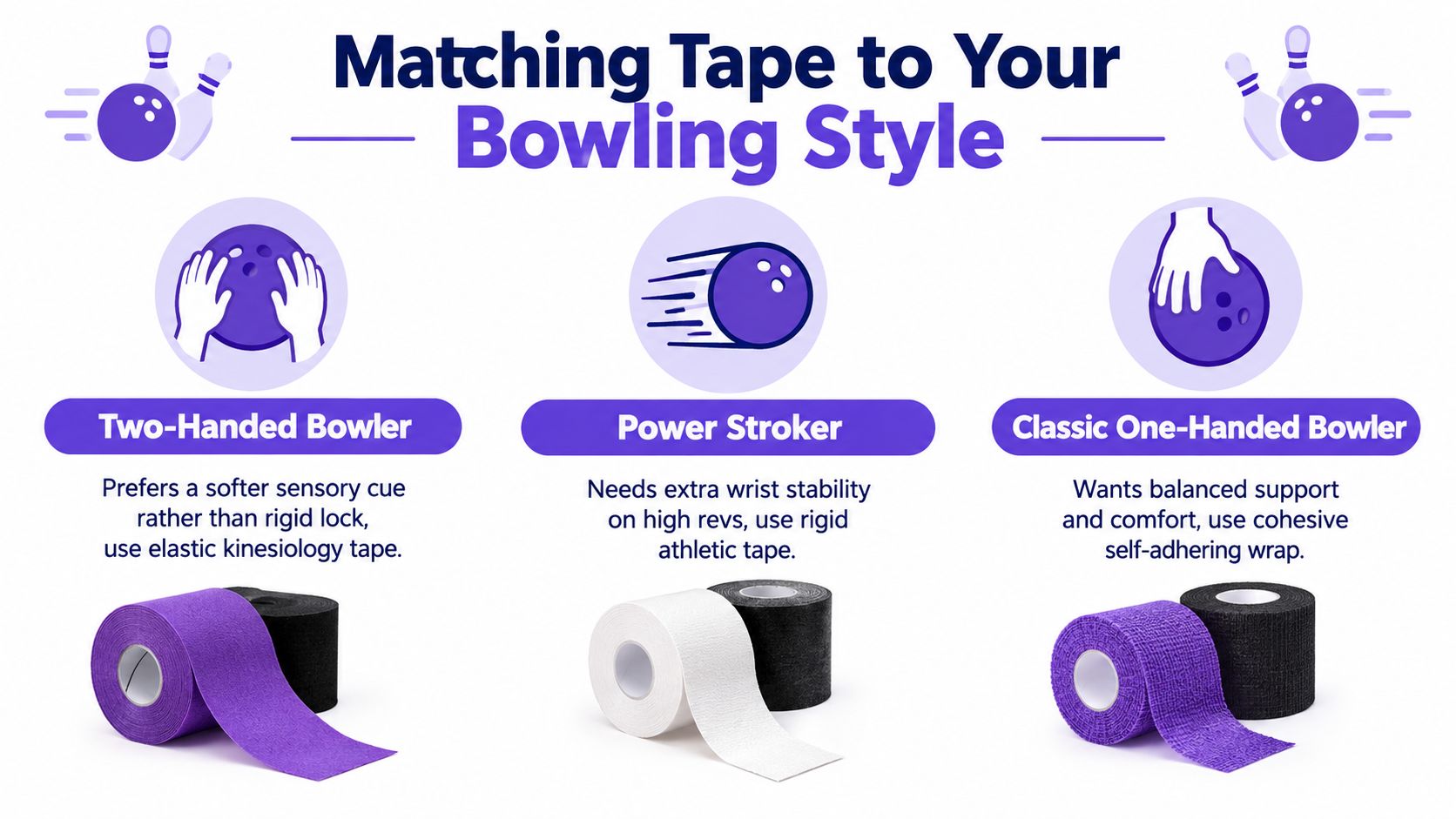
Treat these profiles as trial starting points, not rules about what every two-hander, power player, or classic one-hander should wear.
Choose according to the delivery problem
For a two-handed bowler who values freedom of movement but wants clearer feedback, an elastic application is a reasonable option to explore. Maximum restraint shouldn't be the default just because the delivery looks powerful.
A straight bowler with mild soreness shouldn't automatically reach for a rigid cuff. First establish whether bowling is comfortable and whether the soreness needs assessment. If the actual objective is to limit a specific movement, discuss a targeted rigid application rather than tightening a general wrap.
For a rev-dominant player, distinguish between drifting position and uncertain awareness. The former may call for a restriction-oriented trial; the latter may call for cueing. Review your bowling grip type and fit as part of that decision so tape doesn't become a workaround for an uncomfortable grip.
Sensitive skin changes the selection entirely. A self-adhering option may avoid direct adhesive contact, but no wrap is automatically suitable for every person. If previous applications caused reactions, consider going without tape and seeking advice before trying another adhesive.
Keep the test small and repeatable
In a controlled study of healthy adults using forearm taping, elastic tape produced significantly greater immediate grip and wrist-flexor strength than nonelastic tape (p < 0.05), with the researchers proposing cutaneous stimulation as a mechanism. That's an immediate finding in healthy adults, not a reason to choose tape solely for stronger grip.
Keep a short practice log instead:
- Application details: Material, width, placement, wrist position, and application tension.
- Delivery observations: Ease of release, unwanted movement, and whether you compensated.
- Session response: Comfort during bowling and how the wrist and skin felt afterward.
Change a single application feature at a time. You're looking for a useful fit, not trying to justify the first roll you bought.
Where Wrist Tape Falls Short and When to Step Back
Feeling supported isn't the same as being protected from injury. Tape may make movement feel more manageable during a session, but that sensation can't establish what's happening inside a painful wrist.
The research distinction matters. Evidence about external supports includes equipment and activities that differ substantially from flexible tape during repeated bowling deliveries. Results from rigid wrist protectors in snowboarding shouldn't become a blanket claim about bowling tape.
Control and prevention are different outcomes
The evidence on sports supports and taping includes prospective studies totaling 658 climbers that found no consistent protective effect of taping against overuse injuries, alongside a trial involving 68 healthy participants in which taping or elastic bandaging improved wrist joint-position sense while worn. Better awareness during wear and prevention of future injury are separate questions.
The studies discussed here also don't demonstrate a direct increase in bowling scores. A comfortable practice trial can tell you something about your own experience, but it can't prove long-term protection or treatment.
If you need dependable structural support, explore properly fitted bowling wrist supports rather than assuming additional tape layers will provide an equivalent result. A brace still isn't a substitute for medical assessment when an injury may be present.
Stop rather than tightening the wrap
These signs deserve a change of plan:
- Sharp or persistent pain: Stop the bowling trial and seek clinical advice.
- Swelling or weakness: Don't use stronger tape to push through the session.
- Numbness or tingling: Remove the application and stop testing it; seek assessment if symptoms persist or recur.
- Severe or spreading rash: Discontinue the material and obtain medical guidance.
A coach can help you examine delivery habits. A clinician can assess symptoms and determine whether support, rehabilitation, or another intervention is appropriate. Neither role is replaced by a convincing-looking wrap.
Keep tape in its proper role: an optional tool for a defined support or feedback objective, not clearance to bowl through warning signs.
A Quick Selection Checklist Before Practice
Make your choice before you're rushing onto the approach. A calm check makes it easier to notice whether the application suits you or merely feels unfamiliar.
Check the essentials
- Choose the category: Decide whether you're testing cueing, directional restraint, or light wrap contact. Confirm that a pre-cut product uses the material you want.
- Choose the pattern: Match placement to the intended objective. If you can't explain what the pattern is meant to do, get help before applying it.
- Check skin and preparation: Begin with comfortable, intact skin and follow the product's application instructions. Don't tape over yesterday's irritation.
- Set replacement triggers: Use slipping, lifting, lost function, or discomfort as reasons to reassess. Don't invent a wear schedule that overrides the label or your skin's response.
Before the approach: Hold the ball normally, rehearse gently, and check that you aren't changing your grip to accommodate the wrap.
Leave room to change your mind
Record the application and compare your experience with your usual untaped practice when it's comfortable and appropriate to do so. Keep the rest of the trial familiar so you can judge the tape rather than a collection of simultaneous changes.
Success is a comfortable, repeatable delivery, not the tightest wrist. If your needs change, reconsider the material and pattern rather than automatically adding tension.
Bowling Gear Reviews offers hands-on equipment reviews, accessory comparisons, and practical fit guides to help you evaluate tape alongside wrist supports and grip options. Visit Bowling Gear Reviews to compare your choices and plan a focused practice trial before buying more gear.
