

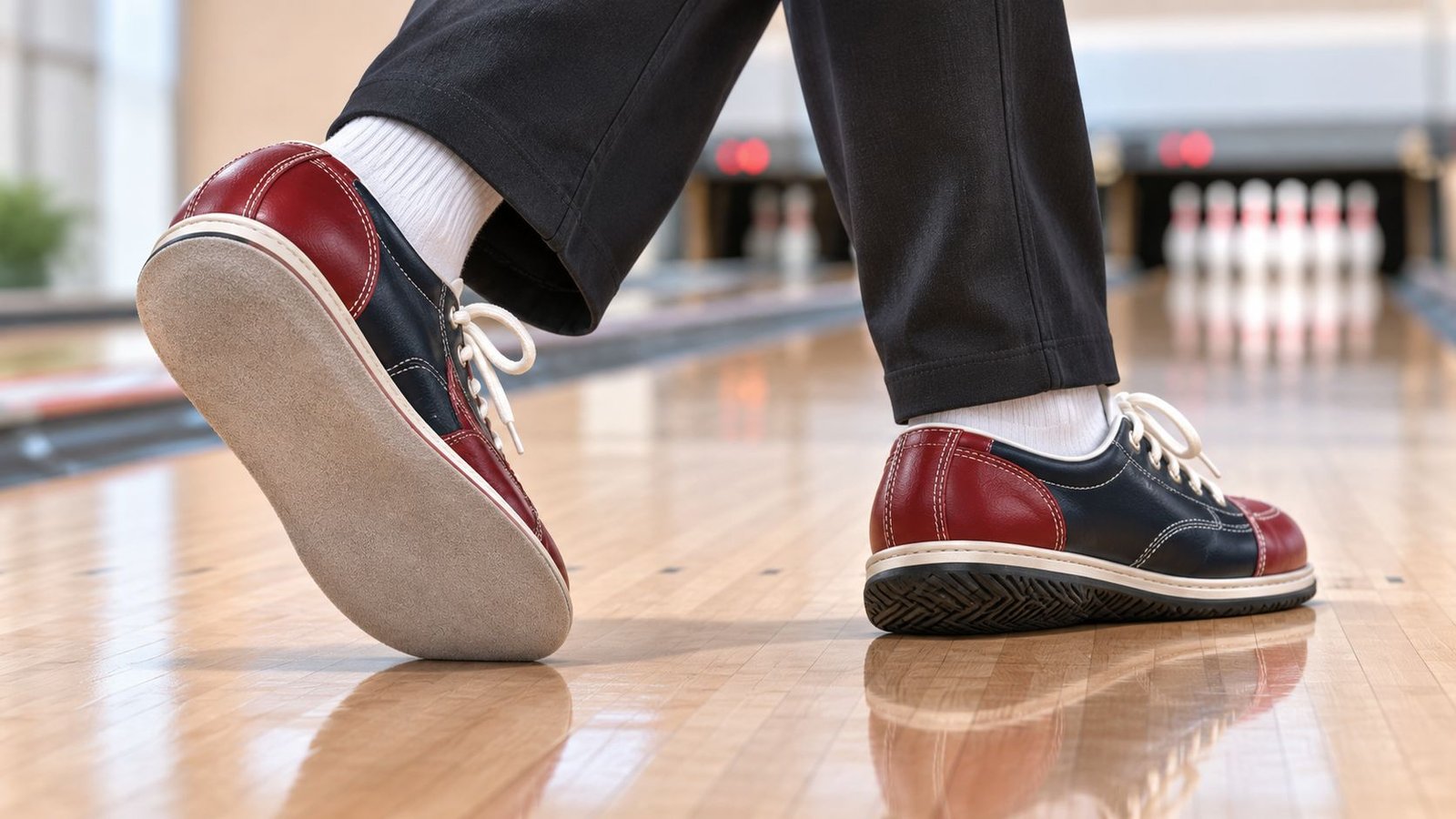
A classic bowling shoe is a low-profile lace-up with a smooth slide sole on one shoe and a rubber traction sole on the other, built for controlled movement through the final steps of the approach. The best pair isn't the one that looks vintage, it's the one that keeps your delivery predictable through a full league session.
You might be replacing inconsistent rentals or trying to work out whether a retro-looking pair belongs in your bowling bag. Start underneath the shoe, not with its color: the sole arrangement, heel security, and condition of the sliding surface tell you more than the styling.
Table of Contents
- What Makes a Classic Bowling Shoe Different
- The Two-Sole System Behind the Approach
- Fit, Heel Security and Width Choices
- Traction, Contamination and Keeping the Slide Steady
- Vintage Look Versus Lane-Ready Performance
- Fixing Slide Problems Mid-Session
- Choose the Right Classic Pair Before Your Next League Night
What Makes a Classic Bowling Shoe Different
During a league session, a shoe that slides predictably on the first frame should still feel controlled near the last. That consistency is the point of bowling footwear: ordinary athletic shoes are designed to grip, while a bowling shoe supports the controlled movement of your approach.
The approach is the area behind the foul line where you take your steps. Bowling shoes work there, helping you reach a stable finish without an abrupt stop that can throw off your balance.
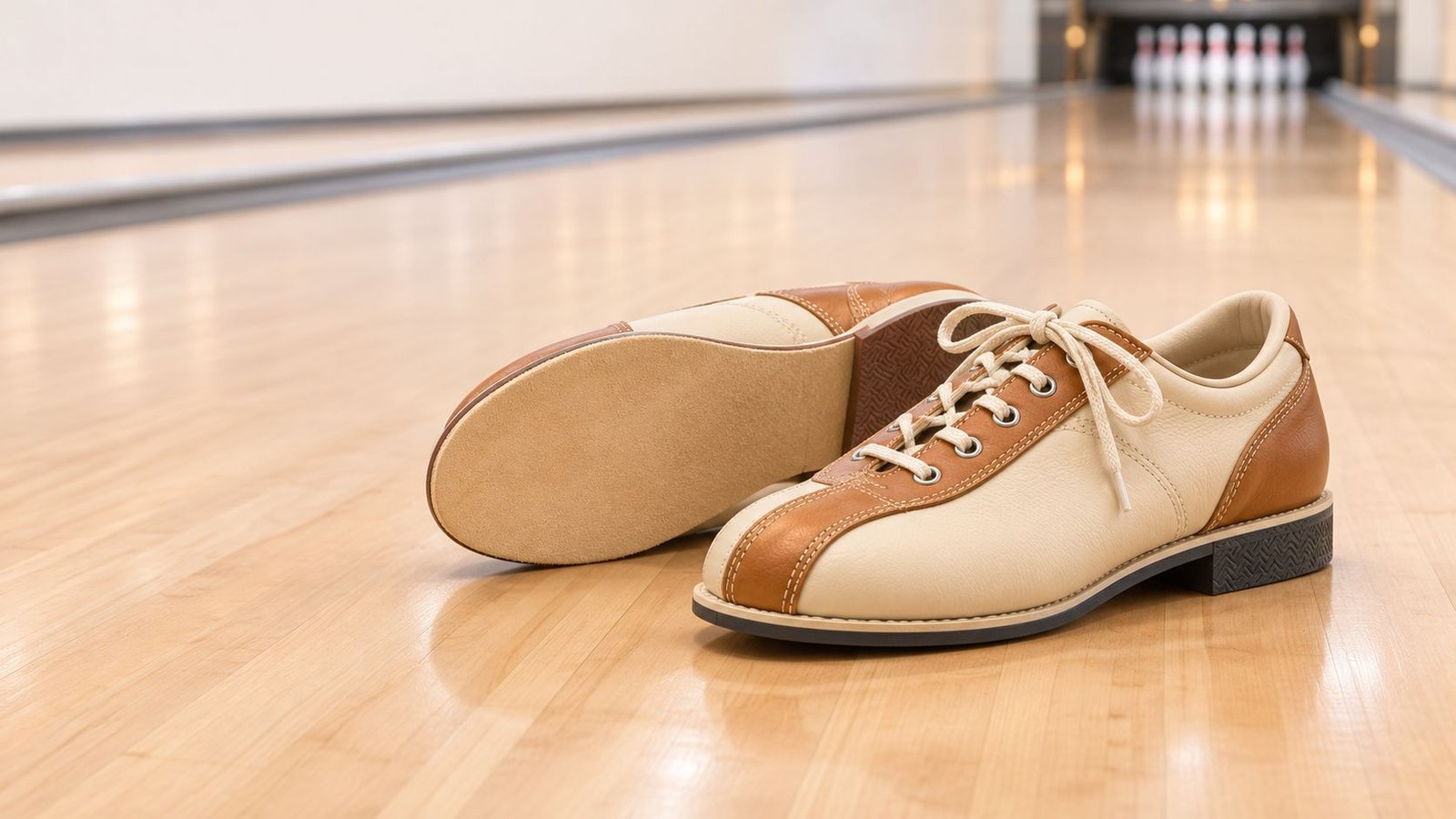
Why the rental-shoe heritage matters
Rental shoes made purpose-built bowling footwear familiar to generations of casual players. Bowling reached a mid-1960s peak, when centers were widespread across the United States. Today, the United States Bowling Congress lists more than 3,400 certified centers for the 2025–2026 season in its press-room information.
The lasting idea is practical: players need footwear suited to the approach. A classic shoe's low profile and contrasting panels signal its heritage, but appearance alone says little about how consistently it will perform across a full session.
- Traditional appearance: Low-profile uppers and familiar panel shapes define the style, not the quality of the slide.
- Bowling construction: The sole surfaces determine how the shoe behaves underfoot.
- Modern options: Interchangeable components and broader width choices can help you match the shoe to your fit and playing needs.
Some entry-level shoes have universal sliding surfaces rather than a handed arrangement. Check the shoe's construction instead of assuming that every classic-looking pair behaves alike. Fixed-sole models may suit bowlers whose approach conditions stay familiar, while adjustable components offer another way to adapt the shoe.
Judge a classic pair by its control over a league-length session, not by its vintage look. The styling is a preference; predictable performance on the approach is the purpose.
The Two-Sole System Behind the Approach
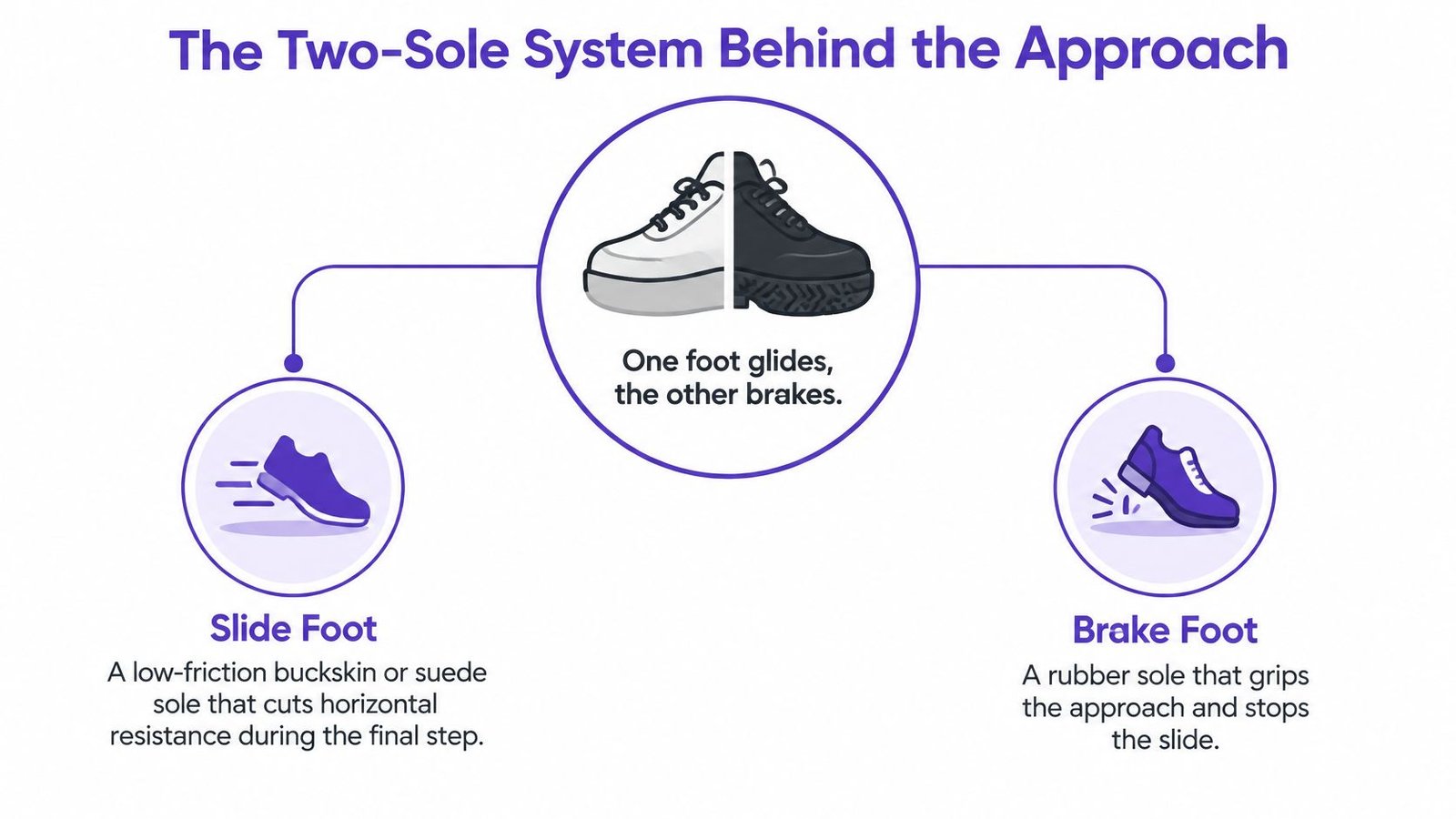
Think of the basic arrangement as one foot glides while the other supplies traction. There's an important refinement: the heel on the sliding shoe also helps bring the slide to a controlled finish. The opposite shoe supports your movement into that finish rather than acting as a separate emergency brake.
The diagram introduces the broad glide-and-brake distinction.
Follow the movement through the shoe
A buckskin or suede sliding surface reduces resistance as the sliding foot travels forward. The rubber traction surface on the opposite shoe gives you purchase during your steps and push-off. You need both functions to feel predictable, not merely a sole that slides as far as possible.
The Linds Classic construction described in the classic leather shoe product information combines a buckskin slide sole, smooth rubber traction sole with a leather tip, leather uppers and lining, and a removable antibacterial footbed. These are functional details to inspect individually, rather than treating leather construction alone as proof of performance.
For a conventional right-handed delivery, the left foot normally slides; a left-handed delivery reverses that arrangement. Check the handedness designation and the actual sole placement before ordering, especially when a listing offers several configurations.
Sole roles on a classic bowling shoe
| Sole or part | Typical material | Job on the approach | Check before play |
|---|---|---|---|
| Slide sole on the sliding foot | Buckskin or suede | Reduces resistance on the final step | Smooth glide, no debris or glaze |
| Traction sole on the opposite foot | Smooth rubber with leather tip | Supports push-off and controlled footwork | Predictable grip, no abrupt grab |
| Heel in the braking system | Rubber | Adds braking friction as the sliding foot settles | Even wear, no flat spots |
| Removable footbed | Model-specific cushioning insert | Supports the foot and keeps internal fit consistent | Replace when compressed or worn |
The footbed sits inside the shoe, so it doesn't touch the approach. Its contribution is indirect: when it compresses, your foot may sit differently and your heel may move inside the upper.
Practical rule: A longer slide isn't automatically a better slide. Look for a finish you can hold without stepping away to recover your balance.
Watch the footwork with attention to where the sliding foot settles, rather than concentrating only on the ball.
Before carrying a ball, make gentle practice approaches with the center's permission. Start slowly and confirm that you can finish in the same area with your weight supported comfortably. Don't force a full-speed delivery to discover whether an unfamiliar sole will stop.
Fit, Heel Security and Width Choices
A bowling shoe should hold your heel and midfoot snugly without squeezing, with roughly half an inch of toe room, according to Bowlingline's bowling-shoe guidance. That space lets your toes lie naturally; it isn't permission for your entire foot to travel forward inside the shoe.
Width deserves its own decision. If the forefoot feels pinched but the shoe is already long enough, choosing a larger size can exchange pressure at the sides for movement at the heel.
Check the fit in a bowling stance
Try shoes with the socks you intend to bowl in, and lace them evenly before judging the size. A different sock thickness changes how much space remains inside the upper.
- Stand with your weight distributed naturally. Your toes shouldn't curl or press into the front.
- Bend your knees into your finishing posture. Feel whether the heel stays seated as your ankle bends.
- Shift forward gently. The shoe should move with your foot rather than allowing your foot to slide inside it.
- Compare the width options. Look for comfortable contact through the midfoot without side pressure or excess space.
Our bowling shoe sizing guide can help you distinguish a length problem from a width problem. Don't judge fit only while sitting down, because a shoe can feel comfortable in a chair and unstable when you load the forefoot.
Separate cushioning from security
Softness can make a shoe pleasant to try on, but it doesn't prove that the heel is secure. Beginners often notice cushioning first; bowlers working on repeatable timing also need to notice whether the upper holds the foot during movement.
A replacement footbed should sit flat and leave enough room for your foot. Don't stack inserts to fill an oversized shoe, and don't assume an extra-thick sock will solve the underlying fit problem.
A comfortable shoe supports your foot without asking you to grip the inside with your toes.
Pay particular attention to narrow heels paired with wider forefeet. That combination may require a different model shape, not just a different size label.
The clearest warning signs are your foot moving inside the shoe during the approach or your toes striking the front as you finish. Neither is a normal adjustment that you should tolerate.
Traction, Contamination and Keeping the Slide Steady
A shoe can feel predictable during warm-up and start to grab or slip later in league play. Slide control depends on the condition of the sole and heel, as well as anything picked up from the floor. Oil, dust, talc, rosin, or worn rubber can change how the shoe meets the approach, making the finish less consistent.
The maintenance checklist focuses on those contact surfaces.
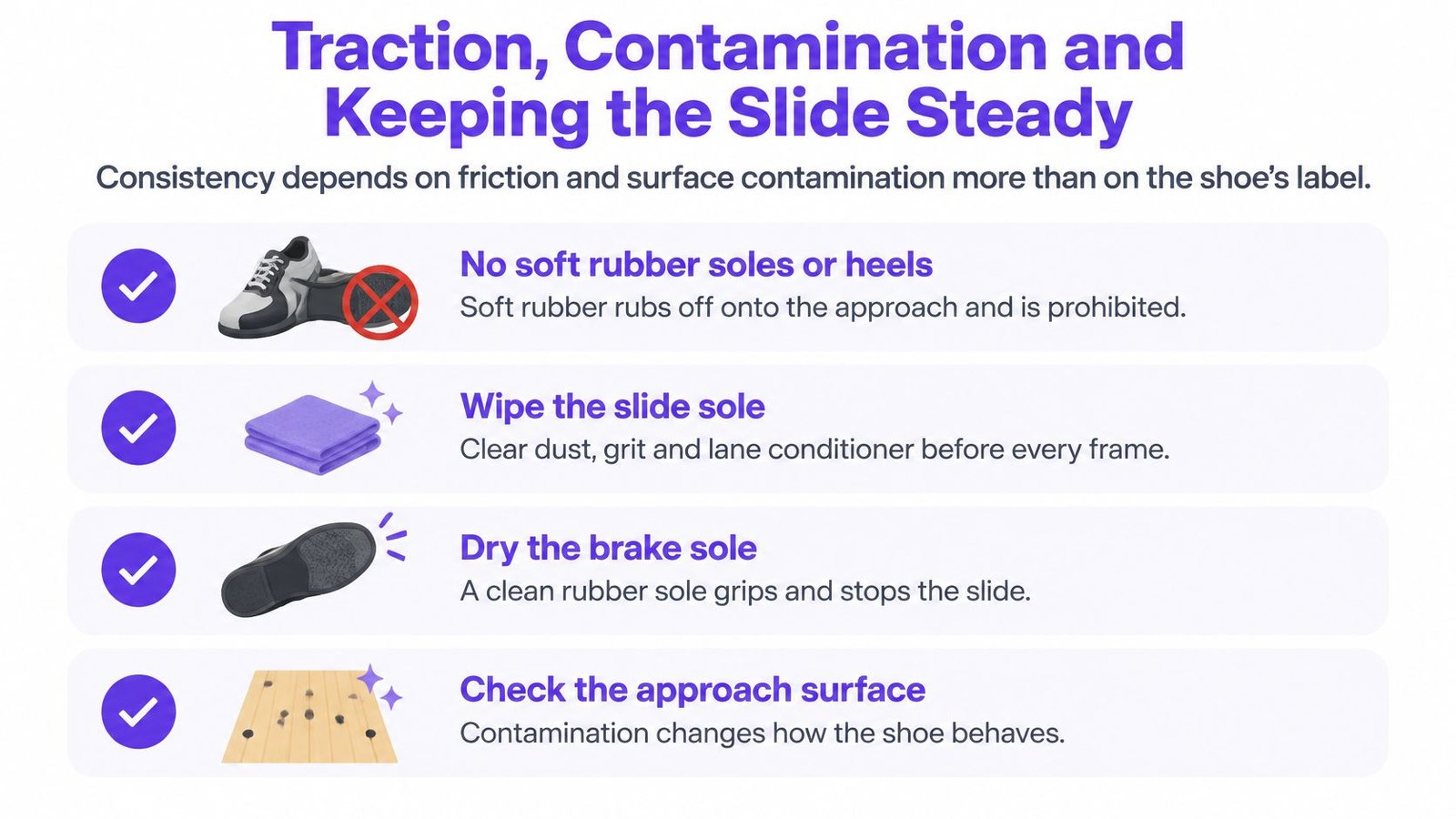
Keep residue off the approach
Footwear should not leave rubber, powder, or other material on the approach. A sole that sheds residue can affect the surface for other bowlers, too. Check with the center about which soles and products are permitted before bowling.
Avoid adding powder or another substance to make a reluctant sole slide. Household cleaners can also leave residue, so use a suitable product only if the center allows it. Follow this guide to cleaning bowling shoes for routine care.
Establish a pre-league baseline
- Inspect the sliding surface. Check for shiny, glazed patches, embedded grit, uneven wear, or edges pulling away.
- Remove contamination appropriately. Use a suitable shoe brush or permitted cleaning product, and let the sole dry before use.
- Make practice approaches without a ball. Ask permission and use an available approach rather than testing during another bowler's turn.
- Check the finish. Look for a familiar stopping area and balanced posture, without a sudden grab.
If the slide ends unpredictably, inspect the braking heel as well as the sliding pad. A clean sliding surface cannot make up for a damaged or contaminated heel.
Keep a simple record before league play: whether the approach felt tacky or slick, what maintenance you performed, and whether the finish felt predictable. Use the same terms each visit to help distinguish a shoe issue from a change at a particular center.
Vintage Look Versus Lane-Ready Performance
A retro-styled shoe may look appropriate beside a ball rack yet behave like lifestyle footwear on the approach. Appearance doesn't establish bowling suitability. A contrast panel, leather upper, or familiar lace pattern tells you little about the underside.
The reverse is also true. A shoe can retain traditional styling while using modern cushioning or interchangeable slide components, so updated construction doesn't make it less useful because it isn't historically exact.
Judge the entire session
At Bowling Gear Reviews, we test equipment in real bowling conditions. Our testing team was made up of experienced bowlers, from league regulars to former collegiate players. The useful question is how a shoe performs during bowling, not how convincing it looks in a product photograph.
For your own comparison, keep the drill and surroundings as consistent as practical. Use the same center and a familiar delivery, and note any approach changes or accidental trips across the concourse that might affect the result.
| What to assess | What to observe through the session |
|---|---|
| Heel security | Whether you begin tightening the laces to control movement |
| Slide consistency | Whether comparable approaches end in a similar area |
| Foot fatigue | Whether discomfort makes you shorten steps or change posture |
| Sole contamination | Whether debris accumulates or the surface develops uneven patches |
| Width comfort | Whether pressure or excess space becomes noticeable as you bowl |
Don't attach tape or markers to the approach to measure your finish. Use existing visual references, or have a teammate observe from a safe position without interrupting adjacent bowlers.
Separate shoe behavior from delivery changes
Say you begin comfortably, then start stopping short later in the session. Before condemning the sole, check whether you're taking shorter steps, rushing the release, or landing differently on the heel.
Conversely, don't blame technique automatically when the shoe has visible contamination or your heel is moving inside it. Record what changed and alter a single factor at a time, then reassess.
Judge the shoe by the delivery it lets you repeat when you're no longer fresh.
A lane-ready classic pair should remain supportive through the closing game without requiring you to protect a sore spot or anticipate an unpredictable stop. Lifestyle footwear isn't guaranteed to fail halfway through a session, but it lacks a sound basis for selection unless the manufacturer specifically identifies it as bowling equipment with suitable soles.
Fixing Slide Problems Mid-Session
If your shoe suddenly sticks, stop forcing the approach. Increasing speed to overcome resistance can leave you unprepared if the next attempt slides normally.
Moisture, food, gum, grit, and ordinary concourse surfaces can alter a sliding sole, as the vintage bowling-shoe care guidance warns. Put shoe covers on before leaving the bowling area, and remove them before stepping onto the approach.
Match the symptom to a safe response
After an accidental walk away from the approach, inspect the sole in good light. Wipe away loose material with a clean, dry cloth, brush out dry grit with a bowling-shoe brush, and let damp material dry fully before testing.
Slide symptoms, likely causes and fixes
| Symptom | Likely cause | Fix |
|---|---|---|
| Sticks or stops early | Glazed or residue-covered slide sole | Clean with a permitted product, brush, then take practice slides |
| Over-slides toward or beyond the line | Worn heel or contamination affecting contact | Brush out grit; replace the heel if worn |
| Slide length shifts between frames | Loose heel or compressed footbed | Inspect the footbed, replace if compressed, and recheck heel fit |
| Heel lifts on the approach | Oversized shoe or worn footbed | Recheck fit, replace the footbed, or try an appropriate narrower width |
| Feels slick or otherwise unpredictable after a wet walk | Moisture on the sole | Dry fully, brush, then take practice slides |
These are possible causes, not diagnoses. A wet sole may also grab rather than feel slick, so don't use the symptom alone to decide that a shoe is safe.
Know when cleaning isn't enough
If the surface remains sticky, damaged, or uneven after appropriate care, don't keep testing it at delivery speed. Use a suitable replacement pair or replace the affected component before continuing.
Interchangeable soles and heels offer adjustment options that fixed construction can't provide. They don't remove the need for diagnosis: changing to a more slippery pad won't solve a loose upper.
Our guide to breaking in new bowling shoes helps distinguish normal adaptation to a new pair from a problem that needs attention. Don't treat contamination or heel lift as something to break in.
There isn't a reliable universal countdown for how quickly a dirty sole becomes unpredictable. Log when the change occurred, brush and dry the shoes after play, and store them somewhere dry rather than sealing damp footwear inside a bag.
Choose the Right Classic Pair Before Your Next League Night
Choose the construction that suits your bowling, not the most elaborate specification sheet. A simple classic pair can be a sensible choice if it fits securely and performs dependably under the conditions you normally encounter.
Beginners and casual players benefit from straightforward care and comfortable support. League bowlers have more reason to consider replaceable wear parts, while competitive players may value greater control over the sole-and-heel combination when moving between centers.
Make the purchase decision deliberately
- Resolve the shape first. Measure your feet and compare appropriate widths before accepting extra length as a solution.
- Verify the configuration. Confirm handedness, sole placement, and whether replacement components are available for that exact model.
- Test before committing to full-speed play. Establish a safe baseline on the approach rather than relying on how the shoe feels on carpet.
- Plan the upkeep. Keep a brush, dry cloth, and shoe covers in your bag, and inspect wear parts during routine cleaning.
If you're buying a gift, prioritize the recipient's foot shape and delivery hand over a preferred color. A visually appealing pair that doesn't suit either is a difficult starting point.
Bowling Gear Reviews only recommends products we believe offer value to our readers. That means matching a pair to your bowling style and budget, not assuming that a traditional look or a larger feature list guarantees a better choice.
Bowling Gear Reviews offers independent equipment reviews, practical fit advice, and maintenance guides to help you compare classic bowling shoes by function. Visit Bowling Gear Reviews to assess sole systems, width options, and care requirements before choosing your next pair.
