

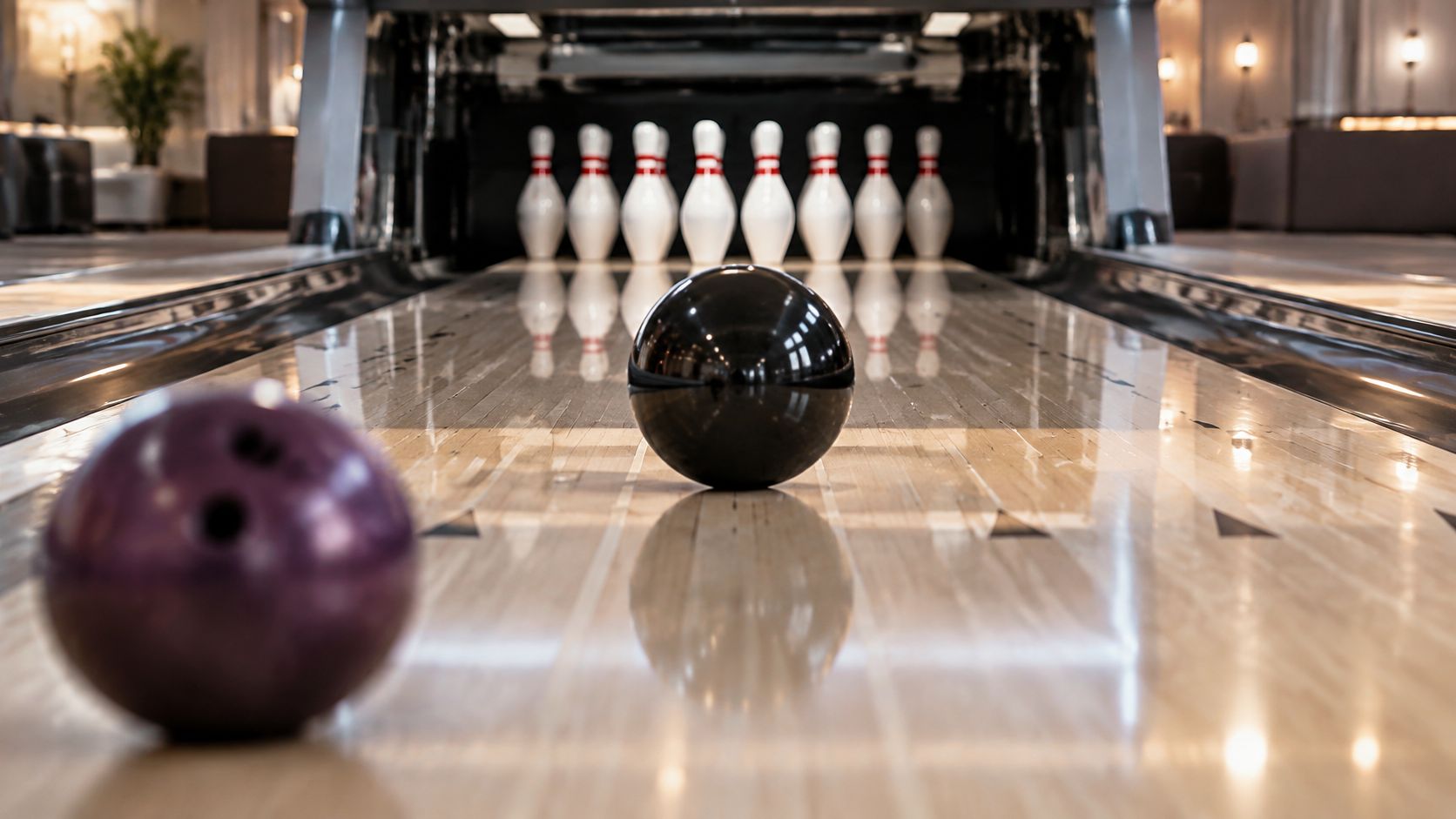
If a plastic bowling ball is supposed to go straight, why does it sometimes turn toward the gutter or drift away from your target? The missing piece is that straightness comes from the whole setup, not just the name on the ball: its surface, your release, and the lane's oil all affect its path.
A useful buying decision starts with understanding those interactions. Instead of searching for a ball that promises never to hook, look for equipment you can release comfortably and test for predictable motion.
Table of Contents
- Straight Bowling Balls at a Glance
- How Coverstock, Core and Surface Prep Control Hook
- Who Benefits Most From a Straight Ball
- Matching a Straight Ball to Lane Oil Conditions
- How to Fit and Tune a Straight Ball
- When a Straight Ball Stops Being Enough
- Choose Your Straight Ball and Buy With Confidence
Straight Bowling Balls at a Glance
A straight bowling ball is intended to travel close to a straight line toward the pocket, with little intentional side rotation and little hook. There isn't a separate official straight-ball category. Bowlers use the term to describe a low-reaction ball, a straight delivery, or both.
That distinction matters. A ball can rotate forward while traveling straight, just as a wheel rolls forward. It's the sideways component of rotation, combined with lane traction, that can make its path curve.
Ball types compared for straight delivery
Use this table as a broad shopping reference, not a guaranteed ranking for every model. Core design, surface preparation, and release can change the order, particularly for particle-filled resin balls.
| Ball type | Coverstock | Hook potential | Best fit |
|---|---|---|---|
| Polyester (plastic) | Polyester | Lowest; skids with little hook | Straight shots, spares, beginners, dry or lightly oiled lanes |
| Urethane | Urethane | Low to moderate; generally smooth, controllable motion | Bowlers developing controlled curve on suitable medium patterns |
| Particle | Particle-filled resin | Can produce a predictable transition; not reliably below reactive resin | Bowlers matching a specific traction response to medium or oilier patterns |
| Reactive resin | Reactive resin | High potential; can produce strong backend hook | Hook players seeking entry angle, with surface matched to the oil |
Polyester remains the default straight option because it generates less hook-producing friction than more aggressive covers. That makes it easier to aim directly at a spare without allowing for a large curve.
But the labels aren't interchangeable with lane recommendations. Urethane isn't automatically the best choice for medium oil, and an entry-level reactive ball isn't automatically suitable for heavy oil.
Shopping rule: Choose the motion you need before choosing the material you want.
Find the row closest to your current game, then treat it as a candidate to test. A beginner aiming directly at pins and a league bowler learning to create entry angle may need different equipment, even when they bowl on the same lane.
How Coverstock, Core and Surface Prep Control Hook
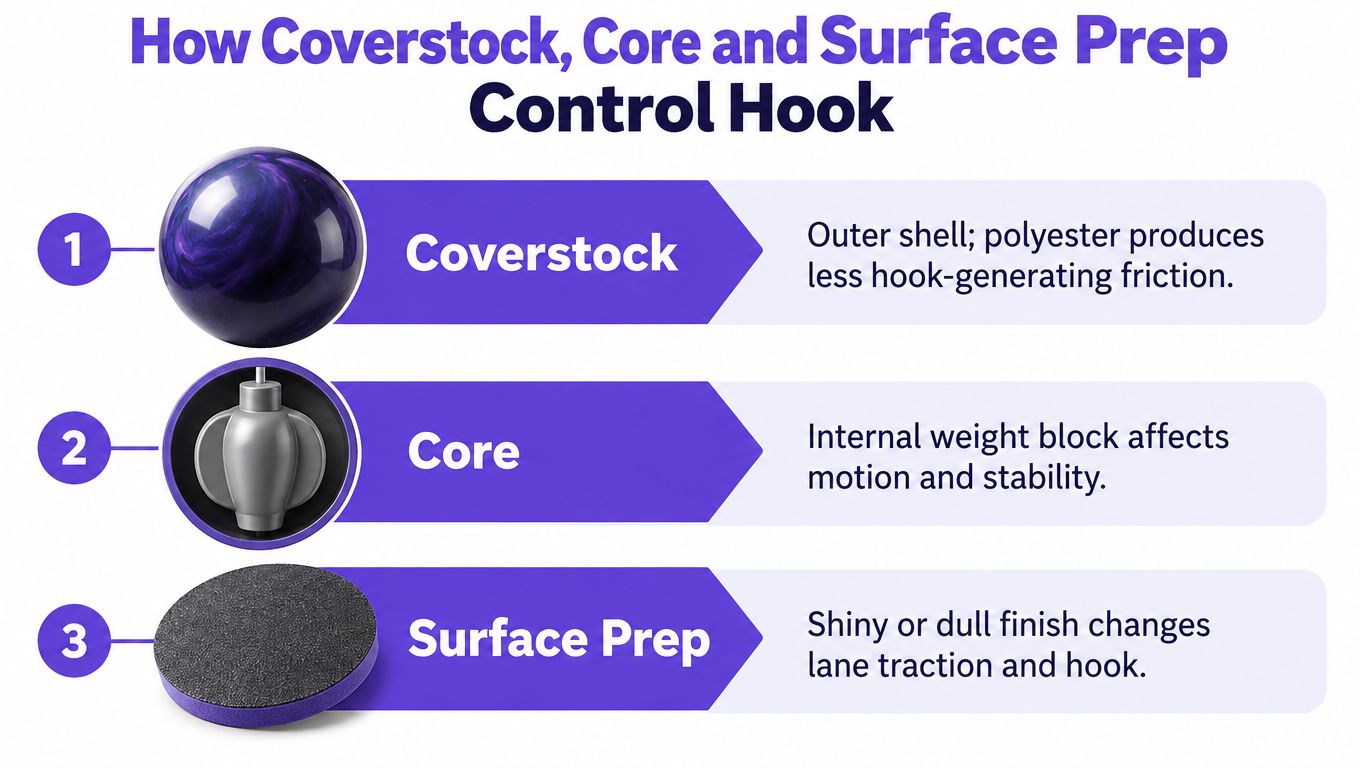
Inspect a ball from the outside inward: coverstock, core, then surface finish. These features influence reaction in different ways, and none guarantees a straight path by itself.
Coverstock determines the basic traction response
The coverstock is the outer shell that contacts the lane. Polyester creates less hook-generating friction than reactive resin, which explains its continuing role in straight shots and spare shooting; the bowling-ball equipment history dates polyester's introduction to 1959 and its dominance over rubber to the 1970s.
Say you deliver a polyester ball and a reactive ball with similar sideways rotation. When they reach boards with traction, the reactive cover generally has more capacity to turn that rotation into directional change. The polyester ball is more likely to continue close to its original line.
Our guide to bowling ball coverstocks explains the material differences to check when comparing specifications.
Core design affects flare, not just stability
The core is the internal weight structure. Its design influences how the ball rotates and how much fresh surface contacts the lane as the ball rolls, a behavior called track flare.
Don't assume that symmetric means straight. A symmetric core can still have substantial flare potential; a low-differential design is the more useful starting point when you want restrained motion.
For example, a simple low-flare plastic design and a performance ball with a stronger differential can react differently even when their published weights match. Drilling layout also affects how the core behaves relative to your release.
Surface finish changes when traction develops
A smoother, polished finish generally encourages longer skid. A rougher finish can create traction sooner, although earlier traction doesn't necessarily mean a sharper finish at the pins.
Consider otherwise identical polyester balls, with one polished and the other sanded. On the same oil pattern, the sanded ball may begin changing motion sooner. That's an illustrative comparison, not a promise that sanding plastic will turn it into reactive resin.
Take this checklist to the pro shop:
- Coverstock: Confirm the actual material, not just the marketing description.
- Core: Ask about differential and flare potential, not symmetry alone.
- Finish: Identify the current surface, including changes made after purchase.
- Release match: Explain whether you want direct spare shooting or controlled curve.
Material selection reduces unwanted reaction. Your release still determines what rotation reaches the lane.
Who Benefits Most From a Straight Ball
Beginners benefit when equipment makes their aim easier to evaluate. If the ball follows a relatively direct path, they can more clearly distinguish a targeting error from an unexpected curve.
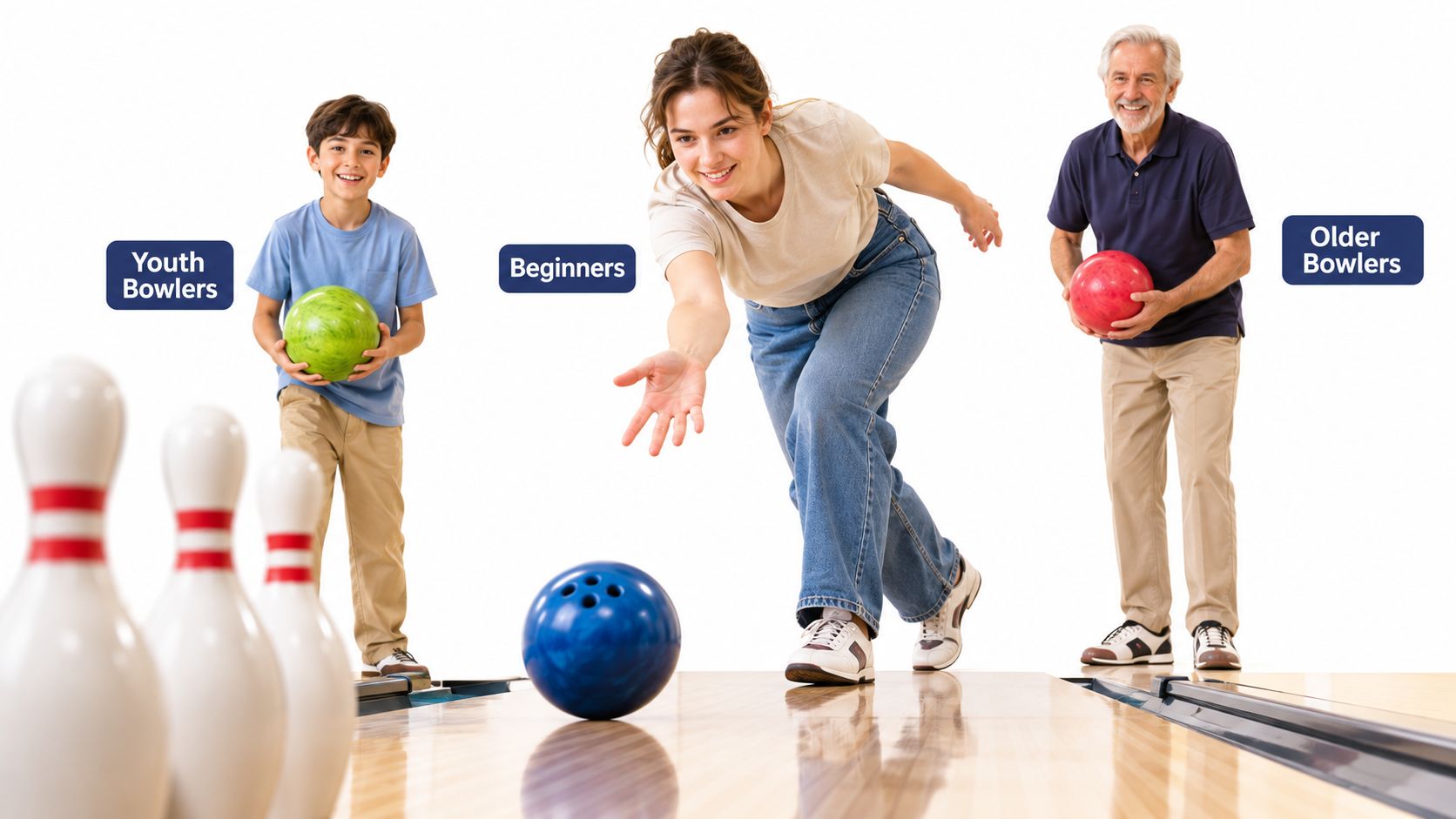
Straight bowling is also a valid long-term choice, not merely a stage to outgrow. Different ages and abilities can use the same basic approach while choosing very different weights and fits.
Match the benefit to your needs
- New bowlers: A low-reaction ball simplifies learning where the ball starts and where it finishes.
- Youth and older bowlers: A comfortable custom fit can reduce the need to squeeze or muscle a poorly matched house ball.
- Spare shooters: Direct targeting reduces reliance on judging a curved path to an isolated pin.
- Bowlers with accidental hook: A less aggressive cover can make unwanted sideways rotation less disruptive while they improve technique.
Comfort matters more than choosing an impressive weight. The USBC playing rules allow balls up to 16 pounds, with no minimum weight. Reduce weight if your swing causes strain rather than trying to force yourself to adapt.
Recognize when another approach suits you
A straight ball is less suitable as a strike ball when you need more entry angle and can already repeat a controlled hook. It also won't solve a release that changes direction from shot to shot.
For a practice check, make a short series of deliveries at the same target. Watch whether the ball leaves your hand consistently, follows a similar path, and carries pins without obvious deflection.
Use the video as a visual companion to your practice.
Decide whether your immediate need is simpler targeting, greater comfort, reliable spares, or more strike-entry angle. That answer is more useful than a beginner or advanced label.
Matching a Straight Ball to Lane Oil Conditions
Oil changes how much traction a ball can develop. A bowling-ball physics simulation uses kinetic-friction estimates near 0.20 on a completely dry lane and 0.04 when oil is present, with actual friction affected by oil thickness, lane condition, and ball surface.
Those are modeling reference values, not measurements you can assign to every dry or oily board. They explain why the same delivery can skid on fresh oil and change direction when it reaches a drier area.
Straight ball choice by oil condition
| Oil condition | Lane friction | Straight ball choice | Adjustment |
|---|---|---|---|
| Dry boards | Higher traction; modeled dry-lane reference above | Polyester for minimal reaction; urethane only if some earlier motion is wanted | Limit side rotation and avoid forcing the ball across a dry outside track |
| Medium oil | Mixed traction across the pattern | Polyester, or polished urethane if controlled curve is acceptable | Compare the path over repeated deliveries before changing your target |
| Fresh heavy oil, long pattern | Lower traction through the oiled area | Polished polyester for controlled skid, not necessarily strong strike carry | Test a small line or speed change; watch the transition onto dry boards |
The table is a starting point. Moving outward can expose the ball to more friction, while reducing speed gives traction more time to act. Either adjustment can increase movement, so neither is an automatic fix for a straight bowler.
Our guide to bowling oil patterns helps distinguish the pattern's shape from the amount of oil. A lane can have oil through the middle and much drier boards outside, making small targeting errors look like equipment problems.
Test the setup under changing conditions
Use a lane-side notebook and, where permitted, a phone positioned safely behind the approach. Choose a short practice set and repeat it under both fresh and broken-down conditions.
- Establish the release. Keep your hand behind the ball and avoid deliberately turning around its side.
- Hold the comparison steady. Use the same ball, target, and intended speed throughout each set.
- Record the path. Note where direction begins changing, how far the ball moves sideways, and its apparent pocket-entry angle.
- Repeat after transition. Compare a later session or a lane with a broken-down pattern.
- Change one variable. Try a target adjustment before combining a new line, speed, and surface.
A ball that looks straight on fresh oil hasn't yet proved that it stays controllable when the lane dries.
We test bowling gear in real bowling conditions because a specification sheet can't show every interaction. Match your lane to the closest table row, then test whether your chosen setup remains predictable before buying.
How to Fit and Tune a Straight Ball
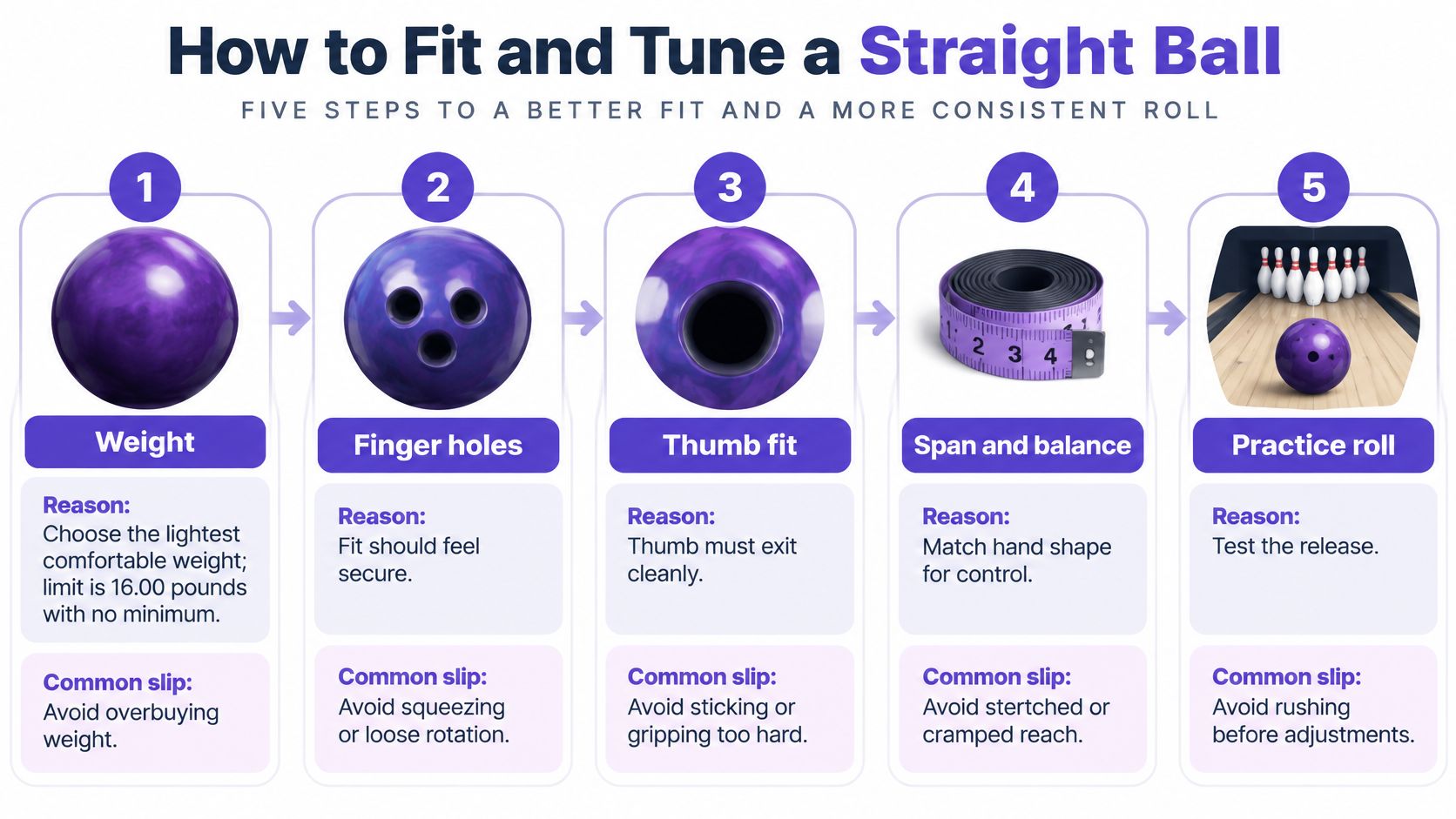
A suitable coverstock can't compensate for a thumb that sticks or a span that stretches your hand. Fit controls how cleanly you can deliver the ball, so assess it before paying for more aggressive equipment.
Work through the fit in order
Choose a manageable weight. Support the ball with your other hand while checking the grip, then make relaxed practice swings in a safe space. Reject a weight that makes you shorten the swing, raise your shoulder, or squeeze hard to retain control. Don't assume the lightest available ball is automatically best; choose one you can swing comfortably and repeatably.
Separate ball size from hand fit. The USBC equipment specifications set manufactured diameter at 8.500 to 8.595 inches and permit up to five gripping holes, subject to hole-use requirements and stated exemptions. The important buying distinction is that your pro shop fits the drilled openings to your hand, not the ball's overall diameter.
Check finger and thumb clearance. Insert your thumb fully without forcing it, then seat your bowling fingers. The thumb should exit without catching, and the fingers shouldn't pinch or rotate loosely inside their holes. A secure fit doesn't require a clenched grip; adding squeeze to compensate for oversized holes often changes release timing.
Match span to grip style. With a conventional grip, the middle and ring fingers generally enter to the second knuckle. Fingertip drilling uses a different span and insertion depth, so don't apply the conventional check to every custom ball. Your hand should rest naturally without stretched webbing or cramped fingers; our bowling ball inserts guide explains another part of the fitting conversation.
Roll, record, and reassess. Make a controlled practice set while noting target accuracy, pin carry, release feel, and any discomfort. If your thumb starts hanging up or your wrist position changes as you tire, stop and reassess instead of drilling in a compensating habit.
Tune support without hiding a fit problem
A wrist support can help maintain a chosen wrist position, but it shouldn't be used to overcome excessive ball weight or painful drilling. A wrist support is legal in all sanctioned play as long as it has no moving parts that would impart force on the ball.
Fit check: The ball should leave your hand without a last-second squeeze, tug, or twist.
A successful fit makes the release feel familiar throughout practice. Persistent pain, numbness, or catching is a reason to stop and have the fit checked, not something to bowl through.
When a Straight Ball Stops Being Enough
More hook isn't automatically an upgrade. Consider a change when you can identify a repeated performance limitation, not just because your current ball is plastic.
A consistent pocket hit followed by noticeable deflection or weak carry may suggest that a different ball motion could help. A single corner-pin leave is not enough to judge. Look at the entry position, speed, angle, and how the ball travels through the pins.
Separate a carry problem from an accuracy problem
A right-handed bowler may repeatedly reach the pocket on an oily pattern but leave the back-right corner pin. If the ball arrives with little angle and deflects noticeably, a ball that develops controlled traction may be worth considering. The result depends on the combination of coverstock, lane oil, and release, so a label alone cannot predict the motion.
Now consider a bowler whose reactive ball turns early during spare attempts. More hook would make those direct shots harder, not easier. Keeping a polyester ball for spare shooting can still make sense alongside a hooking strike ball.
Don't change balls to compensate for a problem that comes from somewhere else:
- Unstable launch direction: Work on swing direction and target alignment.
- Changing release rotation: Practice a consistent hand position.
- Uncomfortable drilling: Resolve the fit before judging ball reaction.
- Limited spare practice: Practice the direct lines your spares require.
Compare ball categories by purpose
| Ball category | Coverstock | Best suited to |
|---|---|---|
| Polyester straight ball | Polyester | Beginners and spare shooters who want a low-reaction path |
| Urethane transitional ball | Urethane | Bowlers seeking controlled curve on an appropriate medium pattern |
| Entry-level reactive ball | Reactive resin | Bowlers developing entry angle, with the ball matched to oil volume |
These categories describe general uses, not a guarantee of motion. Core design, surface preparation, lane oil, and release all affect how much a ball hooks. An entry-level reactive ball may help a bowler learn to create hook, but it may not provide enough traction on a demanding oily condition.
Before moving to reactive equipment, make sure your fit and release are consistent. If your straight ball still gives you a reliable direct line for spares, it can remain part of your setup.
Choose Your Straight Ball and Buy With Confidence
The best purchase is a setup you can explain in practical terms: this ball fits my hand, produces the motion I want, and stays manageable on my usual lane. Color and branding can break a tie, but they shouldn't decide the shortlist.
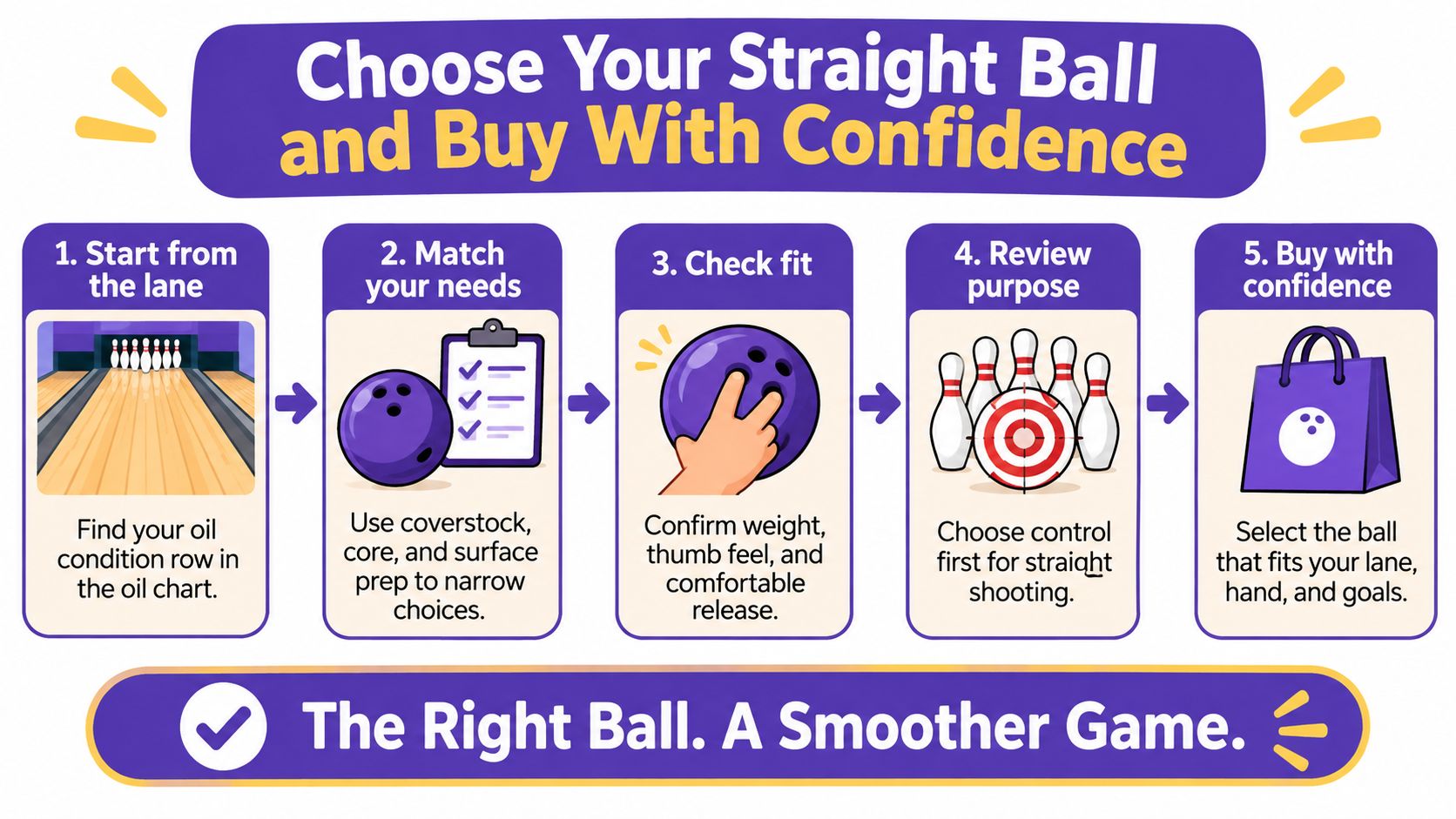
Follow a lane-to-hand decision path
Start from the lane. Identify whether your usual condition gives you prolonged skid, early traction, or a sharp transition. Use the oil-condition table to select a sensible starting material rather than guessing from the ball's appearance.
Match the job. Put polyester first for direct shooting and spares. Consider urethane when you deliberately want controlled curve, or reactive resin when you need additional entry angle and can manage it.
Clear the fit checks. Confirm comfortable weight, clean thumb exit, and an appropriate span. Don't order a more reactive ball to compensate for one that hangs on your hand.
Test a repeatable setup. Use the same target and intended speed for a short practice set. If the paths scatter, separate launch errors from lane-induced movement before deciding the coverstock is wrong.
Buy with a defined purpose. Choose the ball that passed the comparison, then record its starting surface and drilling details. Those notes give you a useful reference when its feel or reaction changes.
Know what you're paying to improve
Before committing, ask yourself whether you're buying better comfort, more predictable spares, or a different strike shape. A clear answer helps prevent a purchase that adds reaction without solving your problem.
We offer guides on choosing the right ball, weight, and style to help connect those decisions. Bowling Gear Reviews also participates in affiliate marketing programs, so some site links may be affiliate links, and we may earn a commission on purchases made through them at no additional cost to you.
Write down your lane condition, match it to a ball row, and book a fit or test session before you buy.
Visit Bowling Gear Reviews for hands-on equipment reviews, comparisons, and practical fit guidance for straight bowling and controlled hook development. Use the guides to build a shortlist, then take your lane notes to a pro shop for a fitting and practice test.
