

Most buying advice tells you to start by shopping in the women's category and picking a color you like. That's backwards. A bowling bag succeeds or fails on whether it protects heavy equipment, moves comfortably when it's fully loaded, and fits the way you get to the lanes. Gender labeling can point you toward useful sizing or organization, but it can also hide a weak base, thin padding, or a strap that punishes your shoulder. Judge women's bowling bags by measurable performance first, and let styling break ties only after the engineering checks out.
Table of Contents
- Are Women's Bowling Bags Actually Different
- What a Bowling Bag Must Actually Hold
- Roller vs Tote – A Criteria-Based Comparison
- Price Tiers and What You Get at Each Level
- Matching a Bag to Your Bowler Type
- How to Choose Based on Your Real Transport Needs
- Key Measurements and Features to Verify Before Buying
- Frequently Asked Questions About Women's Bowling Bags
Are Women's Bowling Bags Actually Different
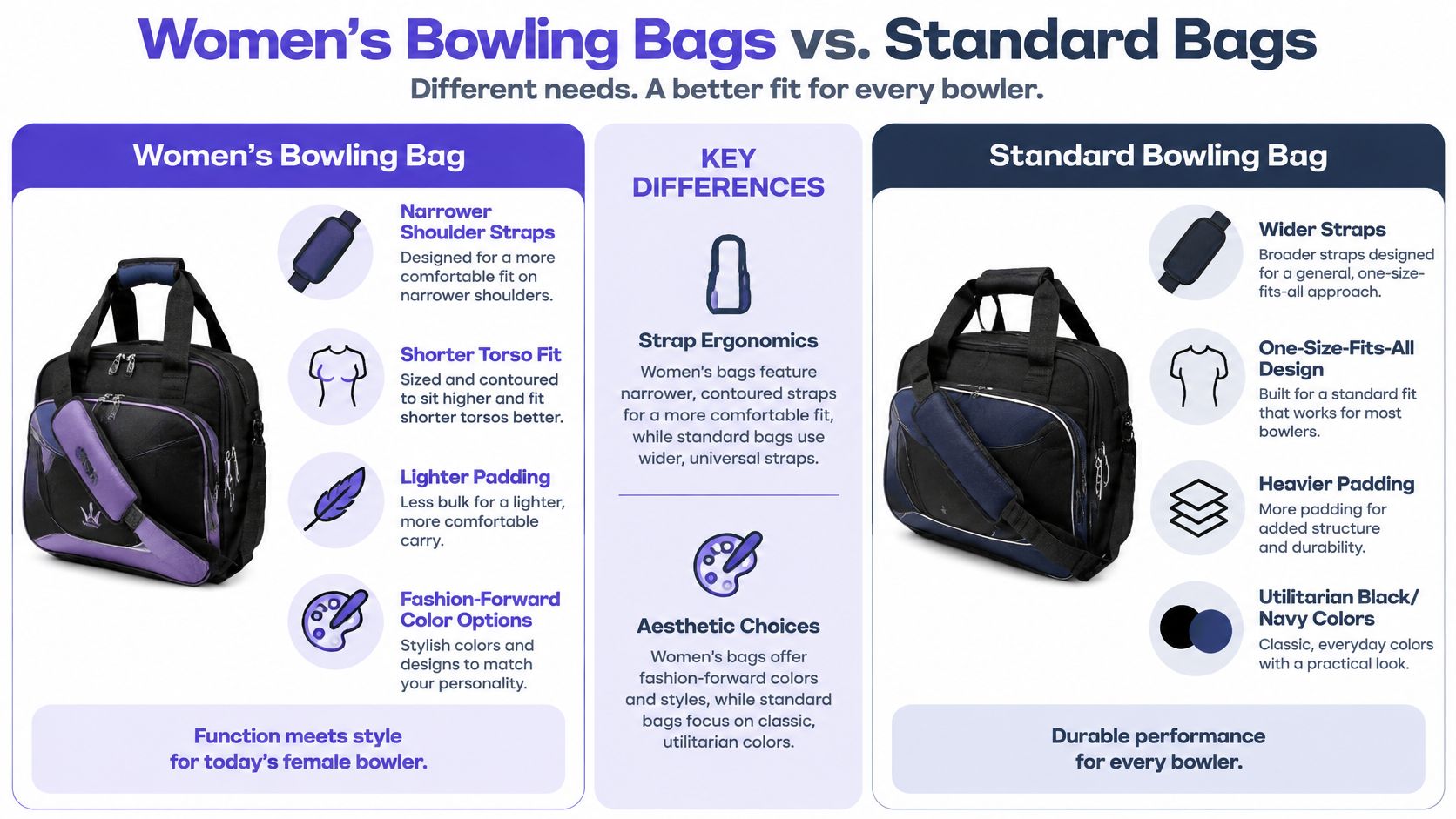
A women-marketed bag usually promises compact sizing, lighter construction, brighter finishes, and pockets for a phone or small accessories. Those features can be convenient, but none of them proves the bag protects a ball better or carries more comfortably under a real league load. In many cases, the core compartment, shell, and closure work much like a comparable unisex model. The honest question isn't whether the label says women's. It's whether a specific dimensional or ergonomic choice improves your use.
The market isn't a novelty segment that brands can treat as an afterthought. The first recorded formal women's league was organized in St. Louis in 1907, and in 1916, 40 women from 11 cities formed the organization that became the Women's International Bowling Congress, followed by the first women's national championship in 1917, according to the history of organized women's bowling in The Sport Journal. Organized league play created a practical need to move personal balls, shoes, uniforms, and accessories long before fashion-led product lines became common.
That participation remains substantial now. The 2025 USBC Women's Championships exceeded 4,000 teams, representing more than 16,000 bowlers, as noted in the market overview of bowling bowl bags. Bowlers at that scale don't need a diluted version of serious equipment. They need the same scrutiny applied to any bag that carries valuable, heavy gear.
The Criteria That Expose Marketing
Use the same scorecard for every women's bowling bag and unisex alternative. Compare loaded weight, ball restraint, padding density, base stability, zipper access, handle comfort, shoulder balance, and storage fit in your car or travel setup. A lighter empty bag helps only if it doesn't flex, tip, or let the ball shift into the zipper. A shorter handle or narrower strap helps only if it matches your reach and build without concentrating pressure.
A women's label is useful when it identifies a fit feature you can measure. It's not evidence by itself.
Body size and bowling demands matter more than assumptions. A smaller bowler may benefit from a lighter two-ball design and a handle that's easier to reach. A taller or tournament-focused bowler may need a reinforced frame and full capacity identical to any other competitor's. Don't accept reduced structure as a feminine feature, and don't reject a unisex roller, backpack, or tote if it wins on protection and carry comfort.
What a Bowling Bag Must Actually Hold
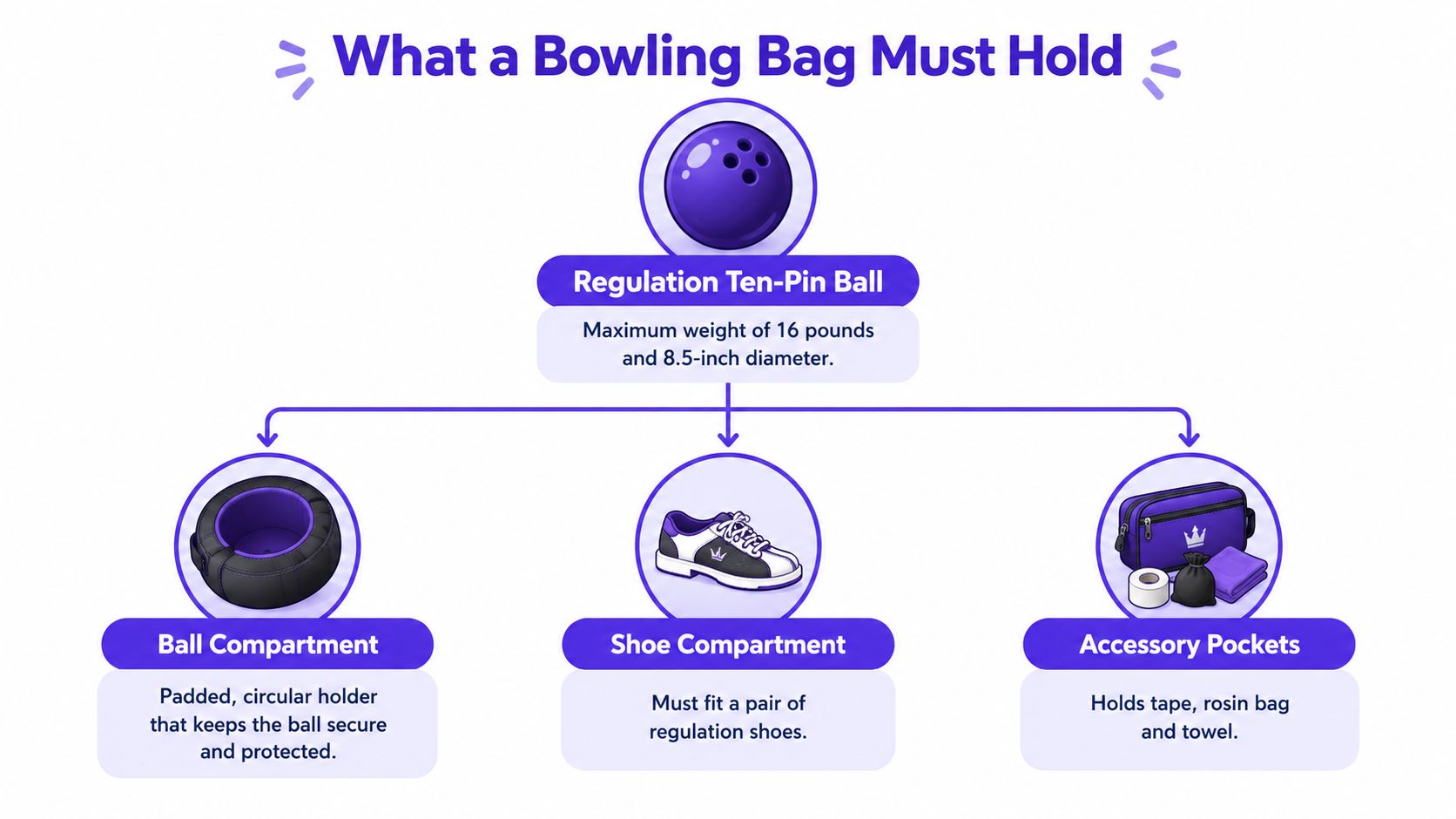
Equipment dimensions set a hard floor that styling can't negotiate. A regulation ten-pin ball can weigh up to 16 lb (7.26 kg) and measure 8.500 to 8.595 in (21.59 to 21.83 cm) in diameter, based on the ten-pin equipment specifications. Each ball bay therefore needs internal clearance above 8.6 in in every relevant direction. It also needs room for a protective sleeve and padding that won't squeeze the ball against a zipper, wheel housing, or frame edge.
The visual below separates the essential ball space from the secondary storage around it.
advertised exterior dimensions can mislead you because padding, dividers, wheel wells, and shoe pockets consume usable space. Measure the usable compartment, not the shipping box footprint. With two maximum-weight balls, the bag carries roughly 32 lb (14.5 kg) before shoes, clothing, towels, tape, and personal items enter the calculation. That load demands a rigid or semi-rigid base, dense divider padding, restrained movement, and seams built for repeated lifting rather than occasional storage.
Protection Is a System
A stable ball cup stops rolling inside the compartment. Firm side padding absorbs routine knocks, while a divider prevents two balls from striking each other when you cross a parking lot or pull a roller over a threshold. The closure matters too, since a strained zipper can become the failure point when the compartment is packed tightly. Shoes need separation from the ball surface, and small accessories need pockets that don't force sharp or bulky objects against the shell.
If you're buying your first setup, a beginner bowling bag with a separate shoe compartment shows the basic layout to expect, but you should still verify clearance with your own ball. Compact doesn't have to mean fragile. It means the designer removed wasted bulk without cutting into the bay, base, or load-bearing seams.
This walkthrough is useful for seeing how compartment access and ball placement work in practice before you judge a bag from still photos.
For one ball in the 12 to 15 lb range, a compact tote or one-ball roller can be entirely rational. Once you carry two balls regularly, wheel capacity, frame stiffness, and reinforced seams stop being premium extras. They're the structure that keeps the loaded bag predictable.
Roller vs Tote – A Criteria-Based Comparison
A roller moves weight from your shoulder to the ground, which makes it the safer default for two balls and longer walks through a center. It doesn't eliminate work. You still lift it into a vehicle, pull it over curbs, guide it through narrow doors, and control it on stairs. A tote is simpler and usually easier to stash, but every pound hangs from one side of your body. That tradeoff becomes obvious by the second or third trip from the car, not during a quick lift in a pro shop.
Roller vs Tote Performance by Criterion
| Criterion | Roller | Tote |
|---|---|---|
| Loaded weight | Heavier empty, easier once rolling | Lighter empty, harder on shoulder |
| Ball protection | Often stronger base and frame | Depends heavily on padding and cup |
| Base stability | Stable if wheelbase is wide | Can slump or tip when set down |
| Zipper access | Wide opening, more structured packing | Fast access, less internal organization |
| Handle comfort | Extending handle reduces grip strain | Carry handles must stay comfortable loaded |
| Shoulder balance | Minimal shoulder load on smooth floors | Load sits on one side and can twist |
| Car or airline storage | Takes more space, protects gear well | Easier to fit in tight spaces |
On smooth floors, a good roller has clear advantages in base stability, ball restraint, and reduced lifting strain. Wide wheels and a stiff base matter because a narrow roller can wobble, catch on thresholds, and pull sideways. The extending handle should lock firmly and let the bag track behind you without forcing your wrist into an awkward angle. If you have to muscle it straight, the design has failed at its main job.
A tote wins when your trip is short, your storage space is tight, and you're carrying one ball. Look at a specific model such as the Pyramid Path Pro Deluxe Single Tote through that narrow use case rather than expecting tournament capacity from it. The best tote keeps the ball close to your body, distributes strap pressure, and doesn't let shoes shift the center of gravity. A fashionable tote with a thin strap and soft base can be the least ergonomic option in the women's aisle.
Practical rule: Choose wheels for repeated two-ball transport. Choose a tote only when the walk is short and the loaded strap test feels balanced.
Stairs complicate the recommendation. A roller still has to be carried or bumped upward, and its empty weight becomes part of the load. Uneven sidewalks can also expose small wheels and flexible frames. A tote handles stairs without wheel drag, but it concentrates strain and can bang against your leg. Neither format wins universally. Your route, ball count, lifting tolerance, and bowling frequency should decide.
Price Tiers and What You Get at Each Level
Price sometimes buys color and branding, but it can also buy the parts that determine whether a bag survives weekly loading. Judge each tier by materials and structure, not by the number of decorative pockets. A cheap bag that protects one ball properly is a better purchase than a costly bag with weak wheels and a flashy finish.
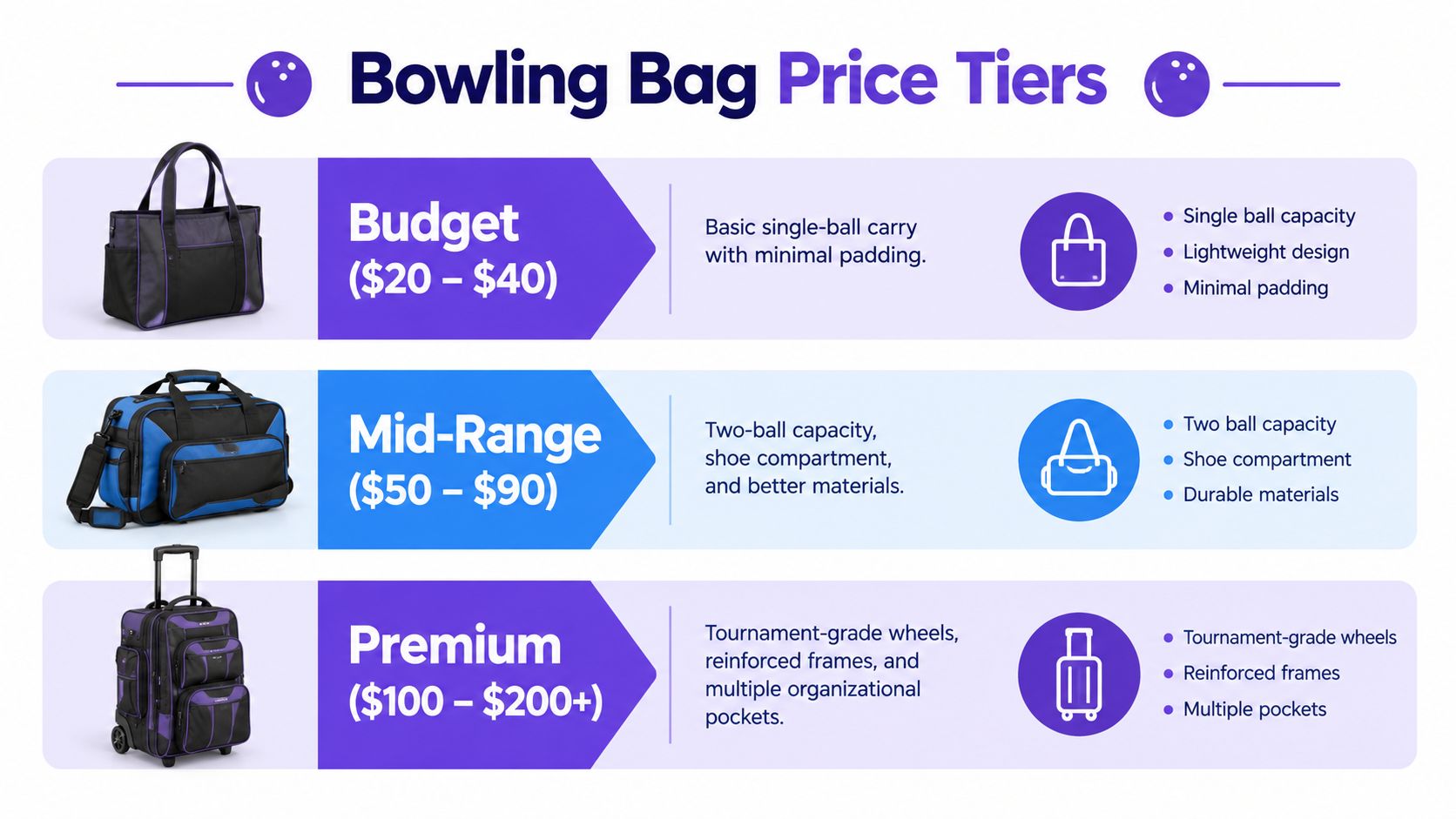
The chart below outlines how features generally change as you move from basic carry to tournament-ready construction.
What Changes as Price Rises
- Entry-level bags: Expect a basic one-ball layout, lighter shell materials, modest padding, and simple handles or straps. These suit a beginner who's still learning how much gear she'll carry, provided the ball bay and base meet the dimensional benchmark.
- Mid-range bags: Look for denser padding, reinforced seams, a more stable base, better zippers, and organization that separates shoes and accessories cleanly. This is often the sensible zone for a league regular who needs durability without tournament bulk.
- Premium bags: Pay for a rigid frame, stronger wheel assemblies, firm dividers, durable hardware, and handles designed for repeated travel. Extra capacity only counts as value if the structure controls the added weight.
Spending more is justified when you bowl frequently, carry two balls, travel for competition, or have replaced a bag because seams, wheels, or zippers failed. It's harder to justify for occasional one-ball use with a short walk from the car. The false economy appears at both extremes. Saving money by accepting a flexible base can put an expensive ball at risk, while buying maximum capacity can leave you hauling a large, heavy roller you never fill.
Inspect where the money went. Reinforced stitching at strap anchors, protected zipper tracks, replaceable-looking hardware, and a base that doesn't bow under load are functional upgrades. Extra cosmetic panels and novelty finishes aren't. For women's bowling bags, a color you love is a legitimate final preference. It shouldn't disguise a lower tier of construction sold at a higher tier of confidence.
Matching a Bag to Your Bowler Type
A beginner carrying her first custom ball needs simplicity more than capacity. A compact tote or one-ball roller reduces bulk, keeps packing obvious, and leaves room to learn whether she prefers carrying or rolling. She still needs a proper ball cup, shoe separation, and enough padding for car transport. Buying a huge bag for a future arsenal sounds prudent, but the extra size can make every early league night more cumbersome than it needs to be.
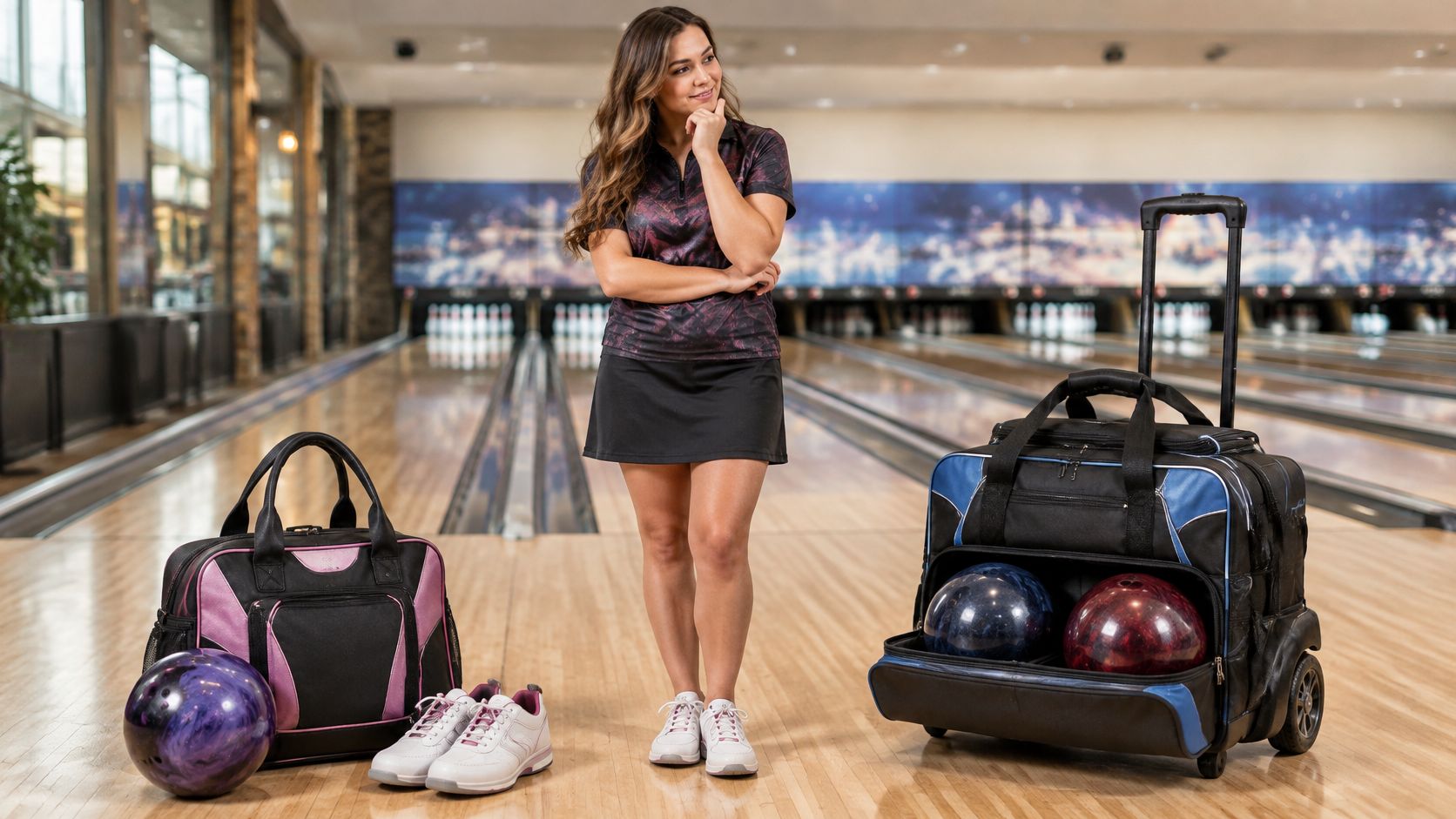
The bags below show why color choice is easy to shop for, while fit and structure require a closer look.
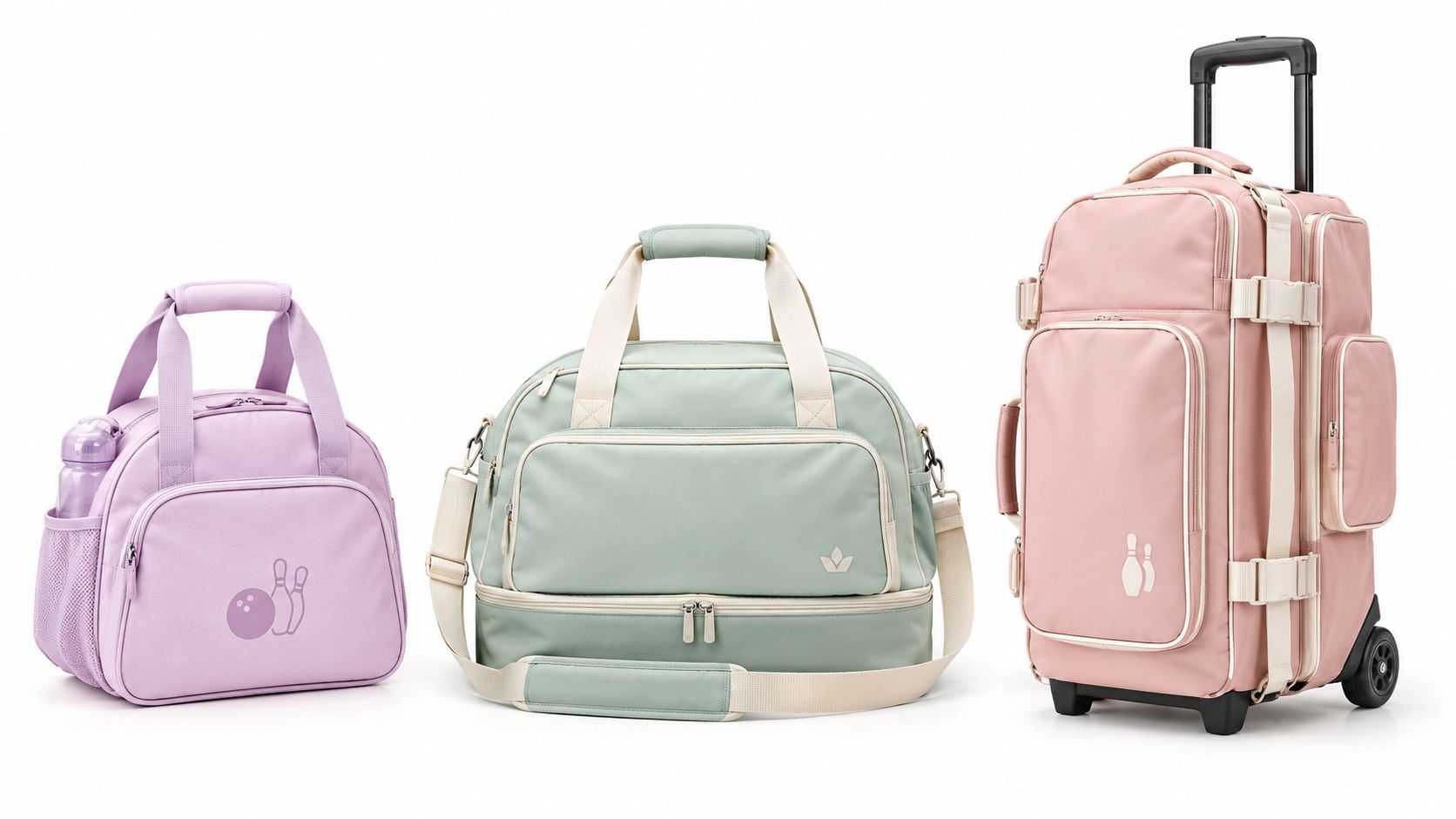
Three Realistic Profiles
The league regular has a repeatable routine and less patience for weak hardware. She may carry a strike ball and a spare ball, plus shoes, a towel, tape, and personal items every week. Two-ball capacity, reinforced load-bearing seams, stable access between games, and a base that stays upright near the settee become priorities. A roller usually fits this rhythm if the center route is smooth and vehicle loading is manageable.
The tournament competitor needs protection over longer, less predictable travel. Multiple balls, changes of clothing, shoe accessories, and tools create a heavier and more valuable load. She should favor a durable roller with firm dividers, a stiff frame, secure closures, and wheels that track cleanly under full weight. Compactness still matters, but not at the expense of ball movement or crushed padding.
The smaller or comfort-sensitive bowler shouldn't be pushed automatically toward the smallest women-marketed model. She may prefer a lighter two-ball bag, a balanced backpack for one ball, or a roller that removes shoulder load entirely. What matters is the relationship among loaded weight, handle reach, strap placement, and her ability to lift the bag safely into storage. A larger bowler may need the same reinforced frame and generous handle geometry as any other serious competitor.
Shop for your weekly routine, not the bowler a product category imagines you to be.
Notice that none of these profiles is defined by color preference. They're defined by ball count, frequency, travel distance, and physical tolerance. Once those needs narrow the format, women's bowling bags with the right strap length, handle reach, and organization can absolutely be the best match. The label becomes helpful when it reflects those details accurately.
How to Choose Based on Your Real Transport Needs
Start with the route from your front door to the lane, then work backward to the bag. Poorly shaped bags can create shoulder strain and awkward carrying positions, while backpack-style designs use adjustable straps to fit different heights and builds, according to guidance on selecting a bowling bag shape. That makes transport, not gender, the decisive design problem. A bag that's pleasant for twenty steps from a trunk may be miserable on a train platform.
Match the Format to the Route
- Driving to a local center: You have the most freedom, so prioritize capacity, upright stability, and easy loading. A two-ball roller works well if you can lift it into the vehicle without twisting.
- Walking or using public transit: Consider a well-padded backpack for one ball because two straps spread pressure more evenly than a tote. A roller can work on smooth, step-free routes, but stairs and crowded platforms reduce its advantage.
- Flying or traveling to tournaments: Prioritize firm ball restraint, strong closures, and a shell that keeps its shape when handled by other people. Confirm how the packed bag fits your vehicle and travel storage before departure, not at the curb.
- Navigating stairs at home or the center: Count the number of times the bag leaves the ground. A lighter tote or backpack may beat a roller even though the roller feels easier on flat floors.
Access speed matters after you arrive. You should be able to reach shoes, towel, and tape without unpacking the ball compartment or tipping the bag into the walkway. Narrow locker areas reward a compact footprint and a top opening that doesn't need a wide swing. Wide tournament settees give larger rollers more room to work.
The contrarian conclusion is straightforward. A women-specific tote isn't automatically ergonomic, a unisex backpack isn't automatically too large, and a roller isn't automatically easiest. Test the full route in your mind, including thresholds, stairs, weather, vehicle lifting, and storage at home. The right women's bowling bag is the one that solves the hardest part of that journey without creating a new problem.
Key Measurements and Features to Verify Before Buying
Bring your ball, shoes, and normal accessories to the evaluation whenever possible. An empty bag hides nearly every flaw that matters. Load it, close it, carry or roll it, set it down, and open it again as you would between games.
- Measure usable ball clearance: Confirm each bay exceeds the maximum ball diameter with room for its sleeve, and check that padding doesn't force the ball into the zipper or frame.
- Load the base and seams: Add every ball and accessory you'll normally carry, then lift by the handles or strap anchors and watch for bowing, twisting, or strained stitching.
- Test wheels and tracking: Roll across a threshold and turn in a tight space. The bag should follow cleanly without tipping, dragging, or pulling your wrist sideways.
- Check handles and straps loaded: Carry it long enough to feel pressure points, balance shifts, and whether the bag strikes your leg.
- Verify real storage fit: Place the packed bag in your trunk, closet, or intended travel space. A larger model, such as a 3-ball Storm bowling bag, needs this check even more than a compact tote.
If the seller gives only exterior dimensions, treat the capacity claim as unverified until you can measure the compartment yourself.
Open and close every zipper under load, especially around corners. A smooth empty zipper can bind once padding and a ball press outward. Finally, confirm the shoe area accepts your shoes without stealing ball clearance. These checks work for women's bowling bags, unisex bags, and everything in between because the equipment doesn't change with the label.
Frequently Asked Questions About Women's Bowling Bags
Is a women-marketed bag ever better than a unisex bag
Yes, when its handle reach, strap geometry, empty weight, or organization fits you better and its ball protection is equal. It's not better merely because it's smaller or more colorful. Compare the packed bag directly against a unisex alternative and keep the one that carries, rolls, and protects more effectively.
What should I do if my bag feels too heavy
Remove nonessential items first, then reconsider the format. A roller reduces shoulder load on smooth routes, while a balanced backpack may help with one ball on transit or stairs. If lifting a two-ball bag into your car is the hard part, wheels alone won't solve it.
Can I travel by air with a bowling bag
You can plan for air travel, but protection and packing discipline matter more than the bag's category label. Use firm ball restraint, secure loose accessories away from the ball surface, and confirm the packed bag's storage requirements before you leave. A soft fashion tote gives expensive equipment very little margin when other people handle it.
Is a premium bag worth it for a casual bowler
Usually not if you carry one ball occasionally and walk a short distance. A well-built entry-level or mid-range option can meet that job. Premium construction earns its place through frequent use, multiple balls, longer travel, and hardware that must survive repeated loading.
Before you buy another bag based on a label or colorway, compare loaded dimensions, protection, wheels, straps, and real transport fit with the hands-on reviews at Bowling Gear Reviews. You'll find independent bowling bag comparisons and practical fit guidance that help you choose a roller, tote, or backpack for your game, your body, and the route you travel.
