

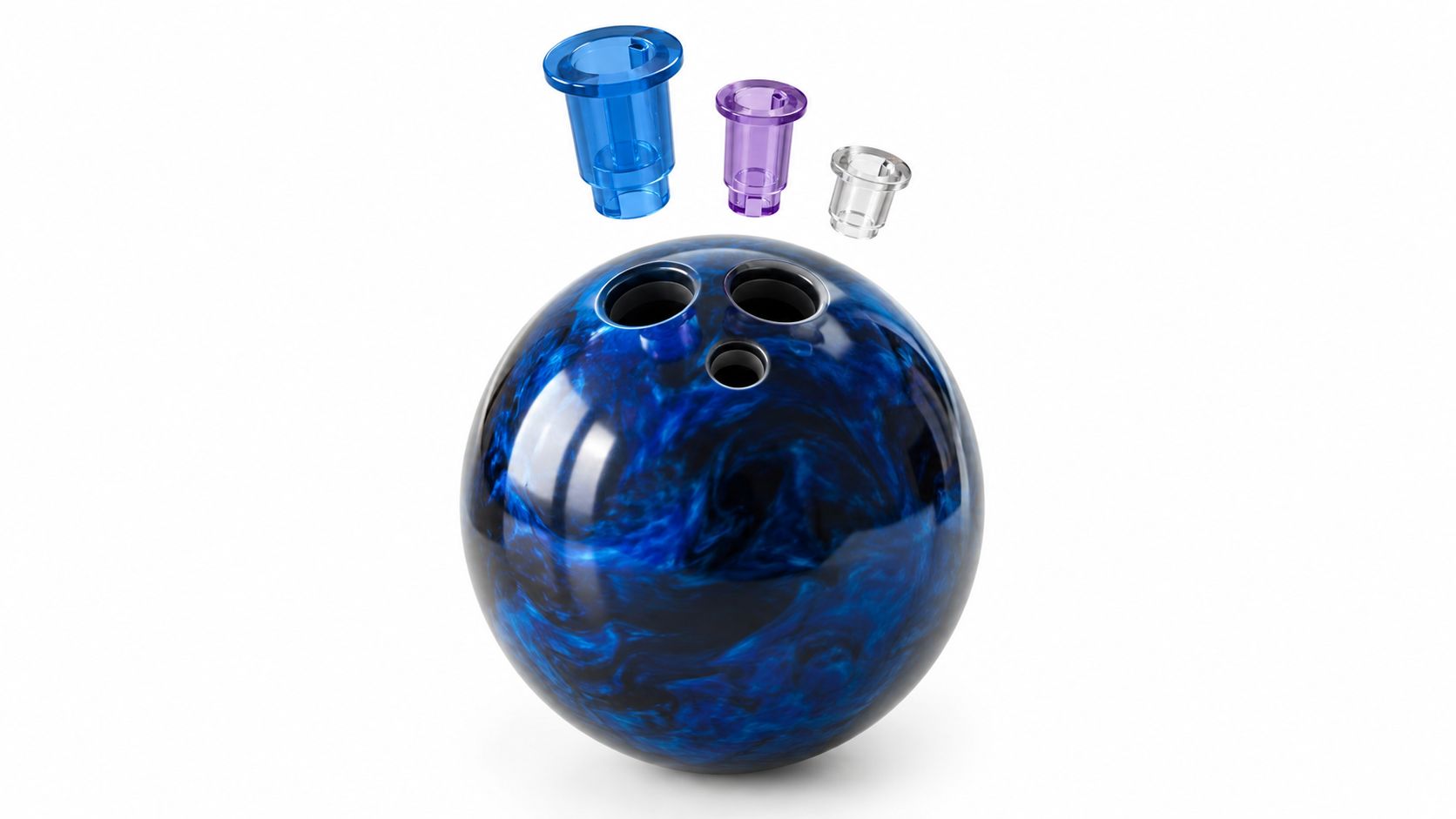
You're halfway through league night when your thumb stops clearing cleanly. The ball hangs for a fraction longer, you squeeze to keep control, and the release you trusted during practice suddenly feels unreliable. The first instinct is to blame the coverstock or the lane, but the problem may be much closer to your hand: the insert's fit, material, or seating.
Bowling ball inserts aren't just comfort add-ons. They shape the contact between your hand and the ball, affecting how securely you hold it and how freely your thumb exits. A small change can alter release feel, and an insert that fits at warm-up may feel different after your hand heats up. Knowing what you have, how it should fit, and when to inspect it can help you make better decisions at the pro shop and avoid treating every release problem as a ball-reaction issue.
Table of Contents
- Why Inserts Decide How a Ball Actually Feels
- The Short History of Bowling Ball Inserts
- Thumb Inserts, Finger Inserts, and Spacers Explained
- Getting the Fit Geometry Right
- How Insert Materials Change the Release
- Installing and Removing Interchangeable Thumbs
- The Rules Side Most Guides Skip
- Maintenance, Fit Drift, and a League-Night Routine
Why Inserts Decide How a Ball Actually Feels
A sticky thumb can change a bowler's whole night. The release gets late, the hand starts squeezing, and shots that felt repeatable at the start of league become difficult to reproduce. A bowler may adjust the target or blame the lane transition, but if the thumb is hanging in the hole, those changes won't fix the cause.
The insert is the contact surface between the hand and the ball. Its shape and fit influence whether the thumb stays stable inside the hole or moves around, and whether it exits without extra effort. Finger inserts affect how the fingers sit and turn, but a thumb-fit problem can be especially obvious because the thumb has to leave the ball cleanly during the release.
A common mistake is to treat “comfortable in the shop” as the final test. A static fitting can miss how the hand changes during play. If the thumb swells or becomes damp, a hole that felt easy at first may begin to bind. Conversely, a loose insert can let the thumb shift, prompting the bowler to grip harder to feel secure.
Practical rule: Judge an insert by what it does during repeated shots, not by how it feels while your hand is still.
That's why material, geometry, sleeve condition, and rules all matter. A replacement insert may change friction without correcting the underlying hole shape. An interchangeable thumb may make feel more consistent from ball to ball, but only if its sleeve is installed and locked correctly. And a ball that feels fine can still raise a rules issue if a hole or insert is used in a way the governing rules don't permit.
When the release goes wrong, look at the hand-to-ball interface before making a broad equipment change. The useful question isn't whether the insert feels soft or tacky. It's whether it gives you stable contact and a clean, repeatable exit as your hand and conditions change.
The Short History of Bowling Ball Inserts
The word insert covers several generations of bowling equipment, not one standardized product. Patent filings for a bowling-ball insert and a finger-hole insert date to 1950 and 1949, respectively, showing that protective and removable components were being developed well before today's interchangeable thumb systems (patent history for bowling-ball inserts).
Later designs explored different ways to alter the hand's contact with the ball. A finger-gripping insert appeared in a 1967 patent, followed by an adjustable-diameter finger attachment in 1968. In 1974, patents covered both a pliable plastic finger-hole liner and taper-lock inserts for fingers and the thumb. The recurring idea was to improve cushioning, retention, fit, or replaceability without replacing the entire ball.
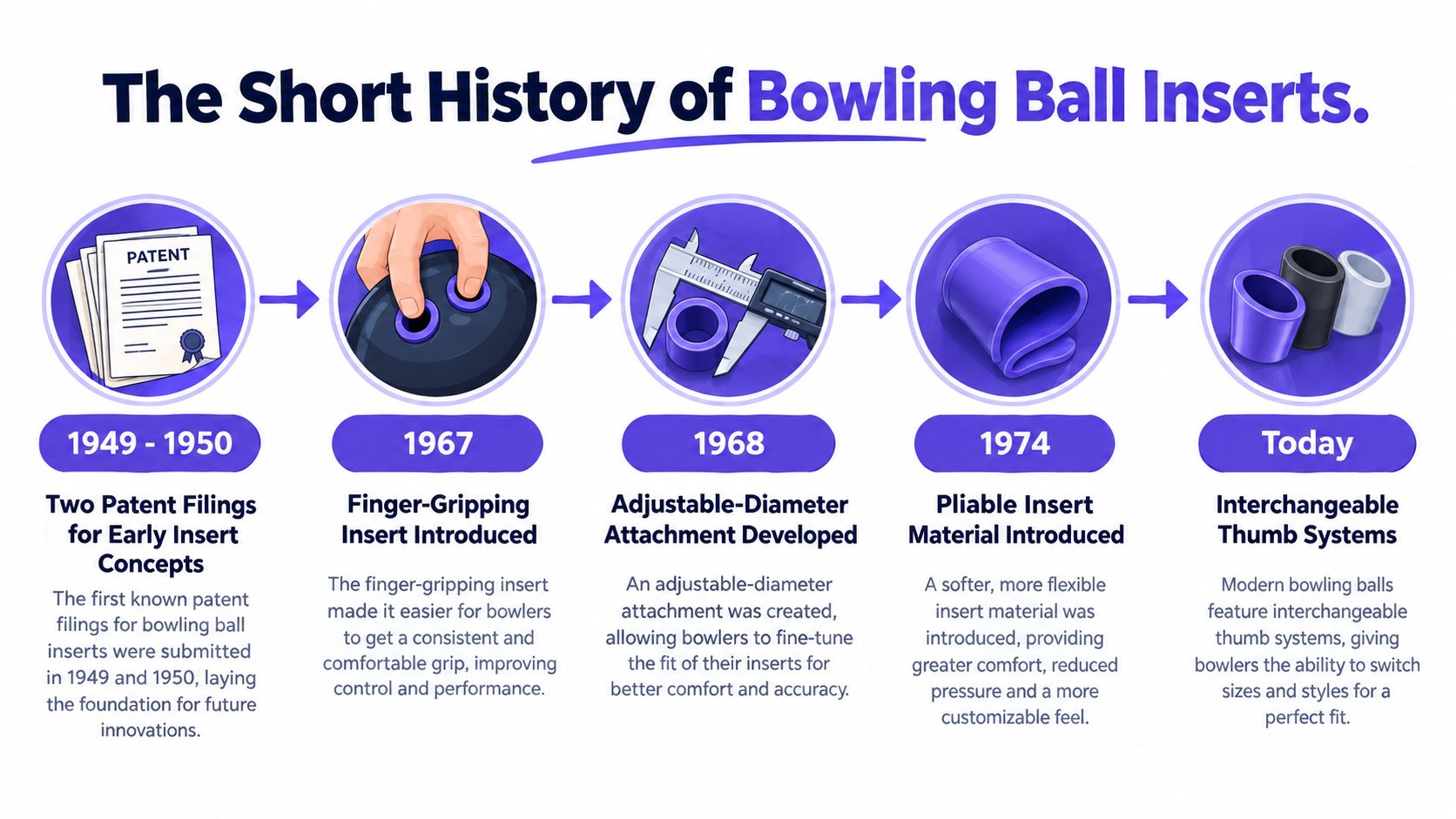
That history helps explain why a fixed liner, a finger grip, a thumb slug, and an interchangeable thumb can all be called inserts even though they work differently. Some stay in the ball; others are designed to come out. Some mainly cushion or alter contact, while others let the bowler carry a more consistent thumb fit between compatible balls.
It also makes product comparisons clearer. A urethane thumb component and a vinyl finger slug are not two materials competing for the same job. They may sit in different parts of the grip and serve different purposes. Before comparing brands, identify the component type and what it's meant to change.
Thumb Inserts, Finger Inserts, and Spacers Explained
The product name doesn't always tell you what a component does. Start with its location in the grip, then ask whether it changes finger contact, thumb fit, or the available space around the gripping holes.
| Category | Typical location | Main purpose | Usually removable |
|---|---|---|---|
| Thumb insert | Thumb hole | Shapes thumb fit and release contact | Often, in interchangeable systems |
| Finger insert | Middle and ring-finger holes | Adds a shaped contact surface for the fingers | Usually fixed |
| Spacer or slug | Within or around a gripping hole | Changes the hole's fit or construction | Depends on design |
Thumb inserts are fitted to the bowler's thumb and may be part of a removable inner component in an interchangeable system. Their fit can influence how much the thumb moves inside the hole and how readily it exits. The details matter: an insert that feels secure while stationary may still bind after several shots.
Finger inserts sit in the middle- and ring-finger holes. They provide a shaped surface for the fingers and can change how the bowler's hand contacts the ball. The right fit depends on the bowler's hand and release, so don't assume a comfortable thumb means the finger grips are also correctly sized. For an overview of how grip choices affect hand position, see this guide to bowling grip types.
Spacers and slugs are terms that shops and retailers may use loosely. A slug is a solid material installed in a drilled hole and then bored to suit the bowler; an insert is generally a separate component that changes the contact surface or fit. The names can overlap in everyday conversation, so ask what is removable, what is permanently bonded, and which hole the part is designed for.
That distinction also explains why product launches often focus on thumb systems. A removable thumb can be transferred between compatible balls, while finger inserts are commonly fitted into each ball. For a bowler whose thumb feel varies from ball to ball, the system's value lies in standardizing that contact, not in making every insert interchangeable.
Getting the Fit Geometry Right
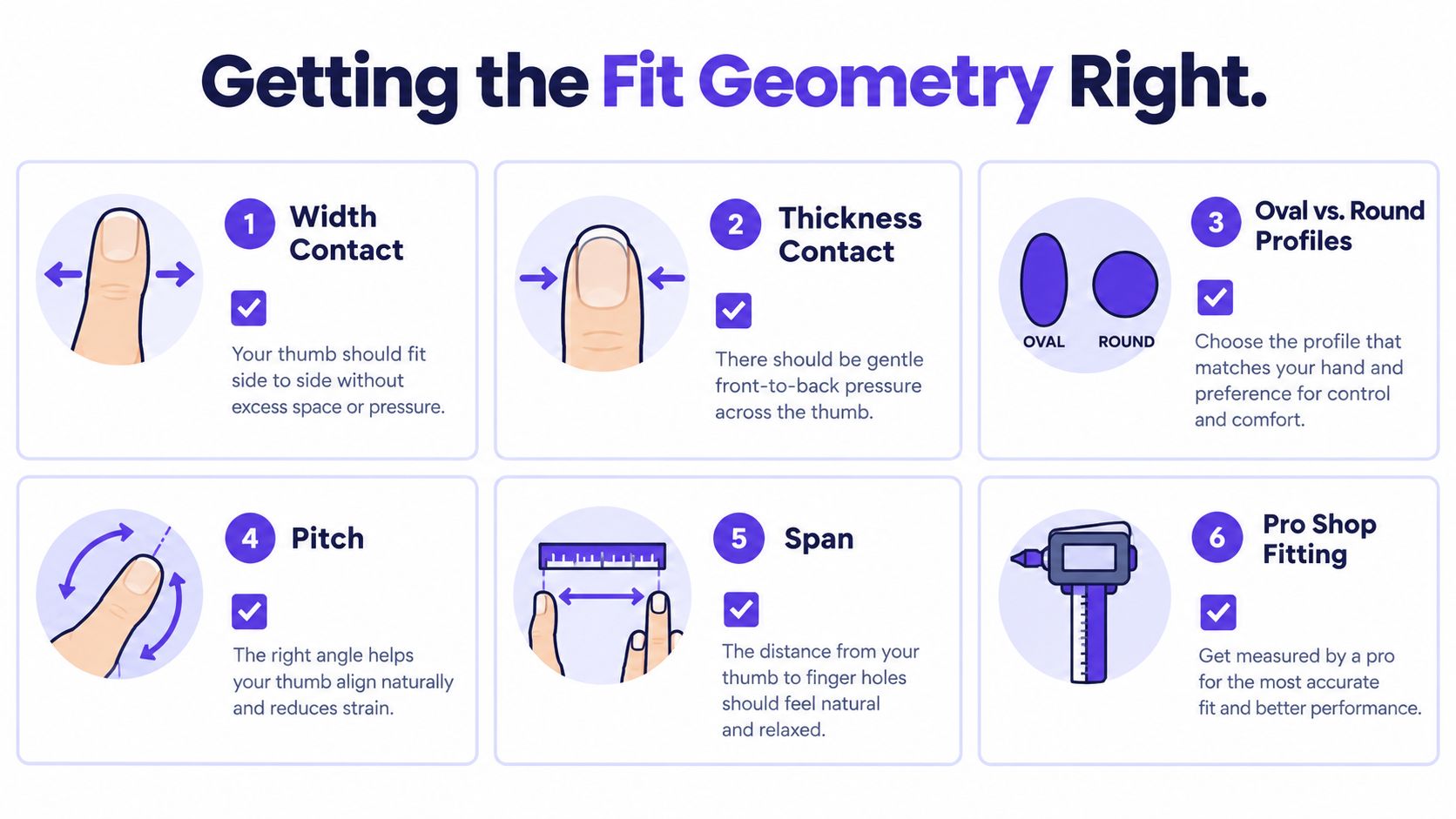
A thumb insert needs contact across both the width and thickness of the thumb. If it touches only at the sides or only front to back, the thumb can shift inside the opening. Fitters commonly slide candidate sizes over the thumb to check for uniform contact, then match the ball's hole geometry to the bowler's required profile and pitch (pro-shop oval fitting guidance).
Read the shape, not just the size
A round opening may not suit a thumb that's noticeably wider in one direction than another. An oval profile can preserve contact across the thumb without making the hole uniformly smaller. If a round insert feels loose side to side but tight front to back, ask the pro shop to assess the profile rather than reducing the diameter.
Oversizing creates room for lateral movement. That movement can encourage squeezing and delay exit because the bowler tries to stabilize the thumb during the swing. Going too tight causes the opposite trouble: pressure, rubbing, and inconsistent release as the hand swells or becomes fatigued.
Treat pitch and span as part of the fit
Pitch describes the direction the hole is drilled relative to the ball and the bowler's hand. A thumb can feel tight or catch at release because of pitch, even when the insert's size seems right. Span is the distance between the thumb and finger holes. If either is wrong, changing insert material alone won't solve the underlying geometry. A pro shop can assess those relationships alongside the ball drilling layout.
Don't judge the fit only in a stationary hand. Bowl several shots, then check whether the thumb exits without a visible squeeze, whether the skin shows irritation, and whether the thumb has been rotating inside the insert. Approved fitting tape or a replacement component can provide an adjustment option when circumference changes, but the goal is stable contact without forcing the thumb through the hole.
A good fit feels secure in the hand and uncomplicated at release.
How Insert Materials Change the Release
Ask any fitter who has swapped thumb slugs back to back: vinyl and urethane are different surfaces, and the difference shows up at the bottom of the swing. National Bowling Academy's material comparison describes urethane as the slipperier of the two. That is a real distinction worth testing, though it does not make one material right for every hand.
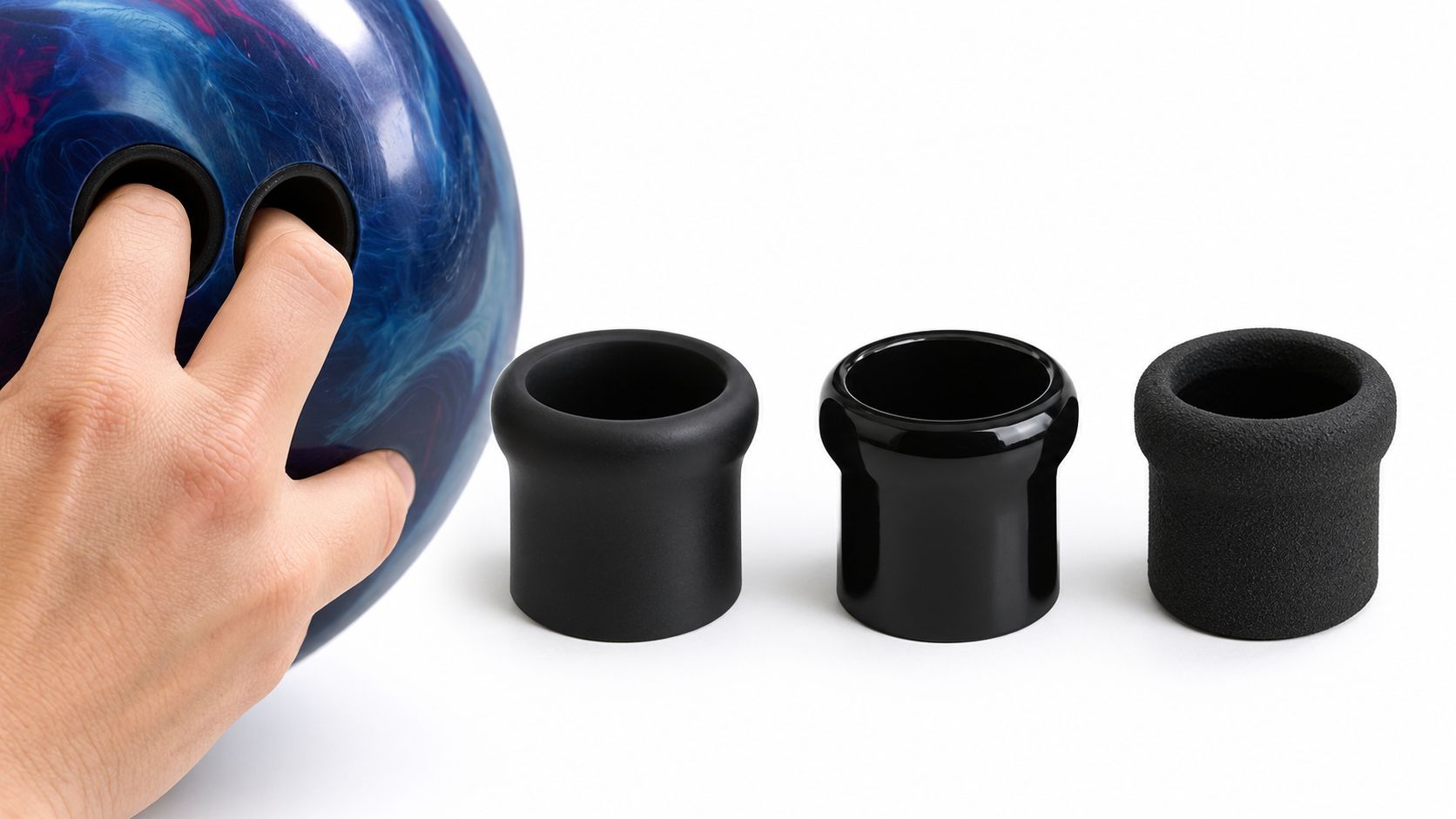
A slicker surface lets the thumb clear with less drag. For a bowler who already releases cleanly and wants a faster exit, that works. For a bowler who relies on firm thumb contact to feel stable through the swing, the same surface can feel loose and trigger the squeeze the fit was supposed to eliminate. A higher-friction surface runs the opposite risk: the thumb hangs at release, and the bowler compensates by grabbing.
Compression matters too. Vinyl and rubber components deform differently under load, and a material that feels firm in a cool fitting room can soften once your hand warms and perspires over three games. The outcome depends on the specific product, the hole geometry, and your skin.
Skepticism helps here. Product marketing sometimes ties insert material to lane conditions or bowler style, as if a urethane thumb suits dry lanes or a vinyl thumb suits strokers. Lane oil changes ball motion. The insert manages hand contact, and those are separate problems. A two-handed player using a thumb hole and a high-rev one-hander both need a surface that releases predictably, whatever the oil pattern says.
The honest way to compare materials is to hold geometry constant. Keep the same slug size, pitch, and depth, then swap the material and throw a block of shots cold and another after your hand has warmed up. Note whether you squeeze, whether the exit is delayed, and whether the surface feels different once perspiration builds.
A short video shows the accessory types and hand placement discussed here.
The right material is the one that keeps the release predictable deep into a session. A fitting room narrows the choice; the lanes confirm it.
Installing and Removing Interchangeable Thumbs
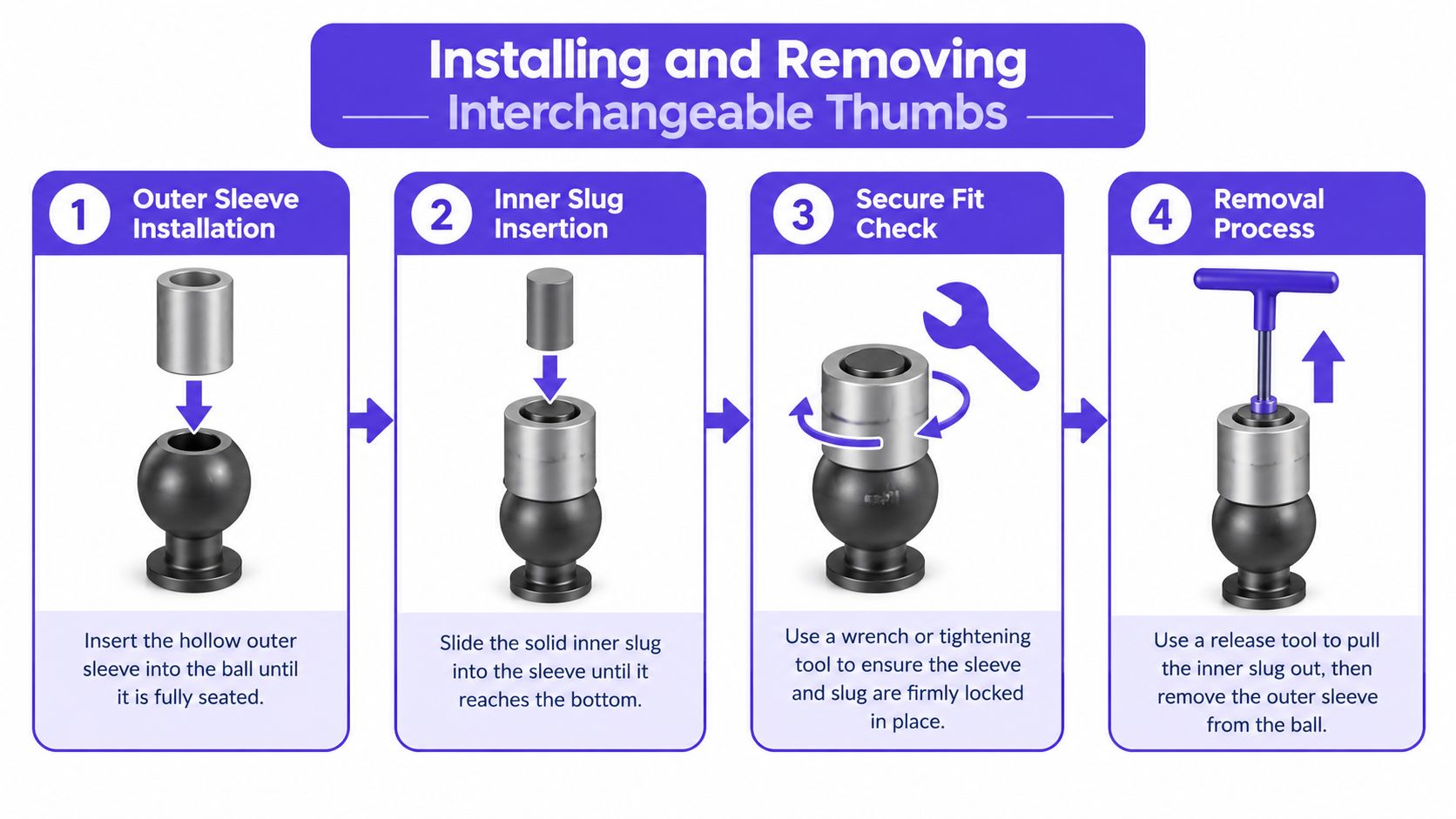
An interchangeable thumb works as a two-part system: a sleeve or outer body fixed in the ball, and an inner slug cut to your thumb size, pitch, and depth so it can move between compatible balls.
That promise only holds when the sleeves are installed identically. One documented design calls for a dedicated blind hole, controlled depth, and an inner opening that does not run past the slug length; the exact dimensions belong to that system and to a pro shop jig, not to a guess with a handheld drill. If the bore sits a little deep, the effective pitch changes. If it sits shallow or off line, the thumb can enter twisted and leave late.
A sloppy install shows up in the release before it shows up on the workbench. Too little material around the sleeve can flex under load. A bond line with a void can let the outer body shift a fraction, which is enough to make the same slug feel different from ball to ball.
Check the seat, then trust it
Before competition, press the inner piece in and confirm it seats flush, locks without rocking, and does not protrude. If it can move during delivery, treat it as an equipment fault rather than a quirk. Inspect the sleeve bond for cracks or movement and the slug for rounding, chips, or deformation. A click is not proof of fit.
Removal needs the maker's tool and method, because prying against the locking surface can scar the sleeve and turn a clean transfer into a permanent wobble. Treat the removable piece as a wear part: if it rocks, sticks, or changes the effort needed to exit, have the shop measure it before the next block of games.
The Rules Side Most Guides Skip
An insert is also a rules-governed part of the gripping hole. Under USBC equipment specifications, removable devices are permitted only when they change the span, pitch, or size of gripping holes. They must be nonmetallic, locked in position during delivery, and within density limits. Plugs, inserts, and slugs also can't extend beyond the ball surface (USBC equipment specifications).
That makes “tighter is safer” a poor rule of thumb. Too much friction can delay exit and prompt a bowler to squeeze. Too little contact can let the thumb shift, increasing the urge to grip harder and making timing less predictable. The aim is not maximum tightness. It's enough contact to keep the thumb stable while allowing a repeatable exit.
Check the fit after a few shots rather than trusting a static test. Look for a late release, visible redness, swelling, abrasion, or movement inside the insert. Those signs point to different problems, so don't solve every one by choosing a smaller insert. A smaller opening may add pressure without correcting a wrong profile or pitch.
Check how you use every hole
The rules also make delivery style relevant. USBC specifications state that every hole must be used for gripping purposes on each delivery; a thumb hole that isn't used can be treated as a balance hole, and balance holes aren't allowed (USBC rules for ball holes and delivery). A bowler who switches between thumb-in and no-thumb delivery should check whether the ball's holes remain legal for the way it's being thrown.
Fit drift and legality are connected. A component that no longer seats flush, a delivery that no longer uses the drilled holes as intended, or a removable device that isn't locked can turn a comfort concern into an equipment-check problem. If your style or setup changes, ask a qualified pro shop or league official to confirm the ball remains compliant.
Maintenance, Fit Drift, and a League-Night Routine
An insert's fit can change during play. Temperature, perspiration, tape, and fatigue all affect how your hand feels inside the hole, and a component can wear or loosen over time. Don't wait for a tournament shot to reveal that the insert has shifted or the sleeve no longer seats cleanly.
A simple routine starts before warm-up. Check for cracks, adhesive separation, deformation, or a rough edge; clean the component according to the maker's instructions, then confirm it sits flush. If the fit feels tight before play, don't force the thumb through and hope it improves. Ask the pro shop about an approved adjustment, and recheck after warming up.
Mid-session, pay attention to changes rather than making a rushed permanent alteration. If the thumb begins to stick, look for swelling, moisture, or a shift in fit. If the component feels loose, don't compensate by squeezing harder. A spare fitted insert or appropriate fitting tape can help with a planned adjustment, but it shouldn't conceal a damaged sleeve or unsecured removable part.
Replace an insert when it's cracked, deformed, loose, or no longer holds a consistent fit after cleaning and inspection. Compression or wear may show up as a changed shape or reduced contact. Adhesive failure can appear as movement at the bond or a gap around the component. There isn't a single replacement interval that fits every bowler, so base the decision on condition and performance. The bowling-ball maintenance guide can help with the broader care routine.
Keep this checklist in your bag:
- Inspect: Look for cracks, wear, adhesive separation, and deformation.
- Clean: Follow the insert or system maker's care instructions.
- Recheck fit: Notice tightness, looseness, irritation, and release delay.
- Confirm seating: Make sure a removable component locks and sits flush.
- Verify delivery: Use the ball in a way that matches its drilled gripping holes and applicable rules.
Bowling Gear Reviews publishes independent equipment reviews, comparisons, and how-to guides, including practical coverage of grips and thumb inserts. Visit Bowling Gear Reviews to compare equipment and find fit advice before your next pro-shop visit.
