

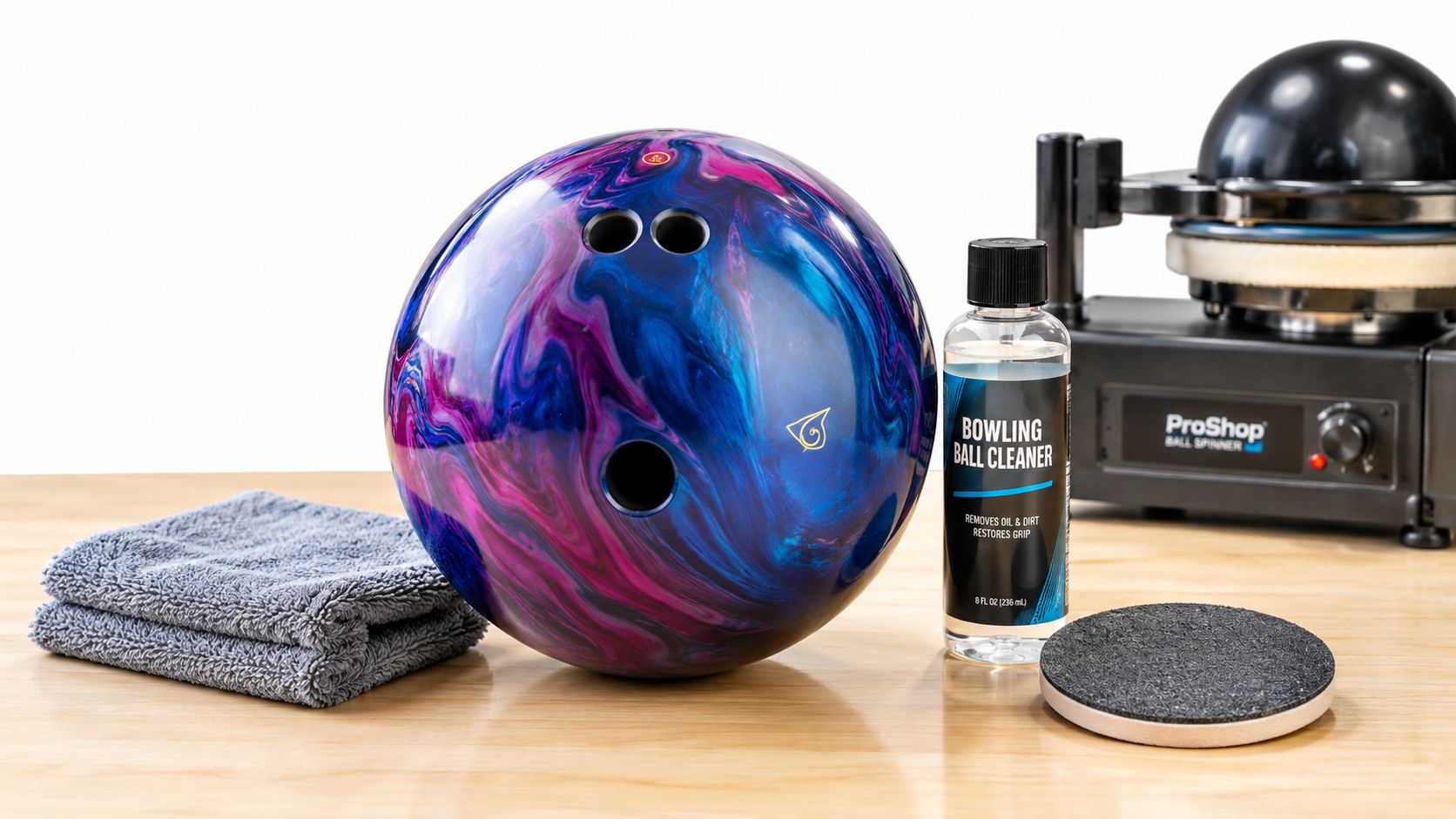
You finish league with the same ball that struck the pocket early in the night, yet now it skids through the front, changes direction late, and leaves weak corners. The lanes may have transitioned, but the ball may also be carrying a layer of absorbed oil and a surface that no longer matches its intended texture.
Bowling ball maintenance is how you separate those two problems. Reactive-resin equipment responds to coverstock condition, oil absorption, and surface texture, so cleaning and resurfacing aren't cosmetic tasks. They're part of managing the ball's reaction from session to session.
Table of Contents
- Why Bowling Ball Maintenance Dictates Your Score
- Daily and Weekly Cleaning Routines
- Deep Cleaning and Oil Extraction Methods
- Surface Management and Resurfacing Schedules
- Troubleshooting Common Ball Reaction Issues
- Seasonal Care and Long-Term Storage Checklist
Why Bowling Ball Maintenance Dictates Your Score
Modern reactive-resin bowling balls have microscopic texture that helps them create friction with the lane. Lane oil works against that texture in two ways. Some oil remains on the surface after each shot, while some enters the coverstock and changes how quickly the ball responds to friction.
That change often happens before the ball looks dirty. A ball can appear polished and presentable while losing the earlier read, midlane traction, or backend continuation that made it useful. This is why bowlers often blame a lane transition when the more immediate problem is equipment condition.
Reaction changes before visible damage
A reactive ball can begin losing reaction after 7 to 14 games, according to USBC-cited guidance summarized in this bowling ball cleaning and maintenance guide. That doesn't mean every ball needs a full restoration after that interval. It does mean a player should treat reaction changes as useful maintenance evidence rather than waiting for obvious scratches or dull patches.
The practical distinction is simple:
- Surface oil can usually be removed with a suitable cleaner and towel.
- Absorbed oil may require deeper extraction or professional treatment.
- Surface drift changes the ball's friction profile and may require sanding, polishing, or resurfacing.
- Burned track marks can represent physical wear that a routine cleaner won't reverse.
A ball that hooks too early and rolls out may be holding oil and losing the surface texture that once helped it read the lane in the correct part of the pattern. A ball that skids too far may have become too smooth, or it may have a contaminated track area. The symptom matters more than the calendar.
Practical rule: Maintain the ball according to changes in reaction, then use game count as a planning tool.
Maintenance is part of scoring consistency
Cleaning after every session gives you a more stable starting point. That matters because an inconsistent ball forces you to make larger moves with your feet, target, speed, or release. You may still need to adjust for lane transition, but you won't be solving a lane problem and an equipment problem at the same time.
By around 30 to 60 games, routine surface refreshes often become less effective at restoring the original reaction, especially when the coverstock has absorbed substantial oil and experienced repeated lane contact. The same guidance recommends cleaning after every session and refreshing the surface within that general usage range, with a full resurface also recommended after 60 games in one maintenance approach. Those figures are a starting point, not a substitute for watching ball motion.
A league bowler doesn't need to obsess over the ball after every frame. The useful habit is to record games, wipe the ball consistently, and note when the shape changes. If the ball's reaction weakens even after a proper clean, the next step isn't automatically a stronger chemical. It may be time to restore the surface.
Daily and Weekly Cleaning Routines
The most effective routine is also the least dramatic. Remove oil while it's fresh, clean the ball after the session, and inspect the track before storing the equipment. A towel alone is useful, but it isn't the entire maintenance process.
During play
Use a clean microfiber towel between shots. Wipe the track area and rotate the ball so you're removing oil from the part of the coverstock that contacts the lane, not just polishing the visible top half.
A microfiber towel works because it lifts surface oil without requiring aggressive rubbing. Keep one towel for active lane use and another clean towel for the post-session wipe. A towel that's already saturated can spread oil instead of removing it.
The microfiber bowling towel guide is useful when comparing towel materials and formats, but the core habit stays the same: wipe after every shot, especially when the lane surface is visibly oily or the ball is reading earlier than expected.
After the session
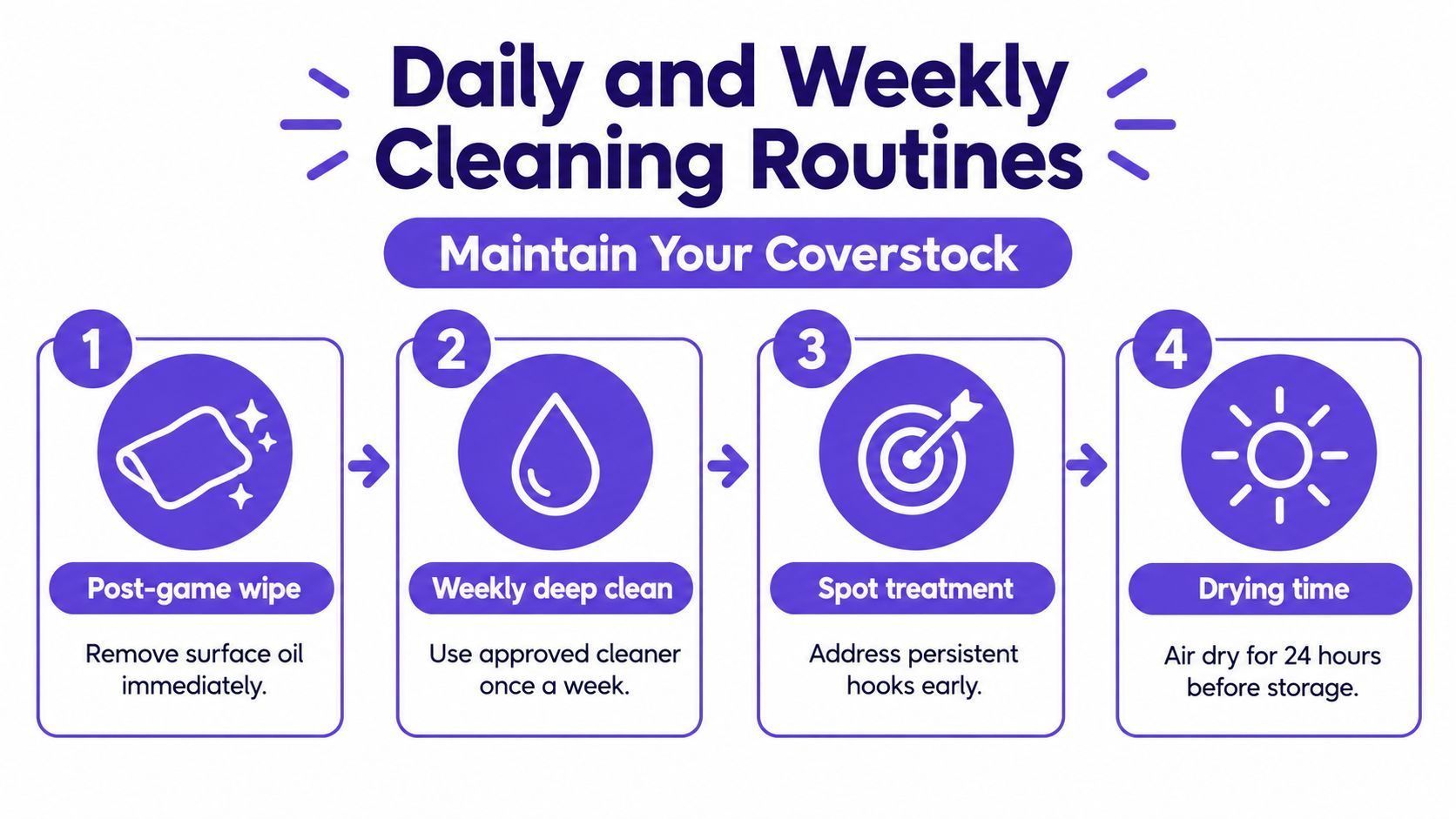
A five-minute post-league routine prevents a small maintenance task from becoming a larger restoration job.
- Wipe immediately. Remove visible oil and lane debris before the ball goes into the bag.
- Apply an approved cleaner. Use a cleaner intended for bowling-ball coverstocks, following the product's directions.
- Rotate and work in sections. Spray or apply the cleaner evenly, then wipe around the entire circumference instead of cleaning only the track.
- Check persistent marks. Track rings, dull areas, and sticky residue deserve attention before the next session.
- Let the ball dry. Store it at room temperature once the cleaner and remaining surface moisture have evaporated.
Don't use household degreasers, abrasive bathroom products, or unapproved solvents. A product that removes oil aggressively can still alter the coverstock or leave a residue that changes ball motion.
Weekly inspection
“Weekly” is best understood as a regular deeper check, not a universal chemical schedule. Players who bowl frequently may need more attention than occasional bowlers, while a ball used in heavy oil may show reaction loss sooner.
Look for these signs:
- A track that stays glossy: The surface may be carrying oil or becoming polished through lane contact.
- A ball that changes shape: Compare its current breakpoint and continuation with your normal reaction.
- Burned or discolored rings: A towel and cleaner may not be enough if the track has physically changed.
- Uneven dullness: This can indicate inconsistent contact, residue, or an uneven surface finish.
USBC guidance supports microfiber wipe-downs during play, while burned track marks may require resurfacing or pro-shop refinishing rather than more cleaner. That distinction saves bowlers from repeatedly applying chemicals to a problem that is no longer chemical.
Use a cleaner as a routine tool, not as a promise to restore factory reaction. If two thorough post-session cleans don't bring the ball's shape back, stop escalating the amount of product. Inspect the surface and ask a pro shop operator to evaluate it.
Watch the ball's track area during the next practice session after cleaning. That observation tells you more than a shiny appearance. If the ball still reads differently, deep cleaning or surface work is probably more appropriate than another towel pass.
Deep Cleaning and Oil Extraction Methods
Deep cleaning becomes relevant when routine wiping and approved cleaner no longer restore the ball's usual motion. The key question isn't whether a ball can be made to look cleaner. It's whether the treatment removes enough absorbed oil to recover useful reaction without creating a new coverstock problem.
Home methods
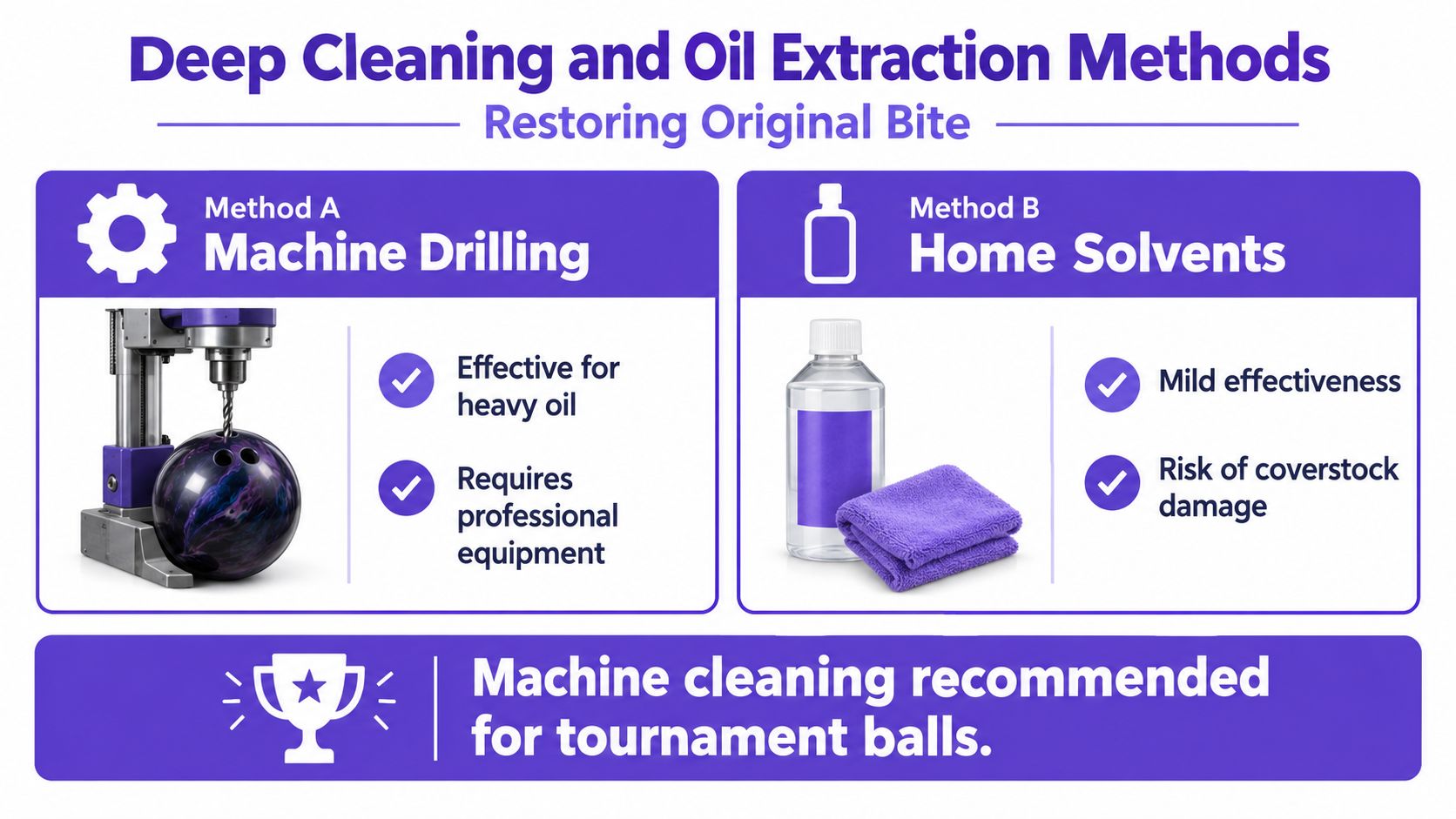
Warm-water and detergent soaks remain common home methods for bowlers who don't have access to extraction equipment. They can help remove some oil, but they require careful control. Water that's too hot can create structural risk, and prolonged soaking can expose the ball to more heat and moisture than the manufacturer intended.
The safer home approach is conservative:
- Use only a controlled warm-water method if the ball manufacturer permits it.
- Protect the finger holes from unnecessary exposure.
- Avoid boiling water and uncontrolled heating.
- Don't use harsh household solvents.
- Dry the ball completely at room temperature before returning it to the bag.
Home treatment is most reasonable when the ball has mild reaction loss, no visible damage, and the player accepts that the result may be temporary. It isn't a reliable substitute for correcting burned track wear or an uneven surface.
The broader comparison between traditional soaks, approved cleaners, and extraction methods is covered in this bowling ball maintenance resource. Existing guidance often presents soaking as a practical option, but it doesn't establish one universal method for every coverstock.
Professional extraction
A pro shop can use equipment designed to extract oil more consistently than a home towel or soak. That matters when the ball has lost reaction despite repeated cleaning, has seen substantial use, or needs a surface reset at the same time.
Professional service makes more sense when:
- Reaction remains weak after cleaning: The coverstock may have absorbed oil below the surface.
- The ball shows burned track marks: Surface refinishing may be needed.
- The ball is important for competition: Predictable restoration is worth more than experimenting at home.
- You need an even finish: A shop spinner and appropriate pads can produce a more consistent result than hand work.
- You aren't sure what the coverstock needs: A pro shop operator can separate contamination from surface wear.
Extraction doesn't fix every reaction problem. It won't repair a crack, correct an incorrect layout, or recreate a surface that has been removed unevenly. It also shouldn't be treated as a reason to skip routine cleaning. Deep service is a corrective measure, while post-session care prevents oil and residue from accumulating unnecessarily.
The practical decision is to start with the least aggressive appropriate method. Clean first. If the ball's reaction still doesn't return, seek professional assessment rather than repeatedly soaking or scrubbing it.
Surface Management and Resurfacing Schedules
A ball can look clean and still perform differently from the day it came out of the box. Resurfacing changes the physical texture of the coverstock, while cleaning removes oil, dirt, and lane residue. Treating both tasks as interchangeable leads to unnecessary work and inconsistent ball reaction.
A rougher surface usually creates earlier friction. A smoother or polished surface generally delays the response. Ball motion also depends on the coverstock, lane oil, release, speed, and layout, so sanding should follow observed reaction changes rather than a simple goal of making the ball rougher.
Read surface drift through ball motion
An independent lane-surface experiment found that rougher bowling-ball surfaces needed treatment about every three games, while smoother surfaces held up for roughly nine to 12 games before refresh was needed. The same work recorded one ball's measured finish moving from about 3893 to 5429 grit average, showing that lane contact and oil absorption can change the surface before wear is easy to see. The findings are discussed in this surface-management analysis.
Use those intervals as monitoring points, not automatic appointments. A dull, textured ball used on oily lanes may need closer inspection than a smoother ball used in conditions that produce less surface change.
Track three items in a game log:
- Starting point: Record how the ball reads the midlane and where it changes direction with a fresh surface.
- Reaction drift: Note whether the ball begins earlier, skids longer, or loses continuation.
- Correction: Clean the ball first. If its reaction remains wrong, consider a pad-based adjustment or pro-shop evaluation.
This process separates surface wear from temporary contamination. It also gives the pro shop useful information if the ball needs more than routine cleaning.
Resurfacing intervals by coverstock type
The table below combines usage-based guidance with manufacturer benchmarks. The 50 to 80 game pro-shop range is supported by manufacturer guidance summarized in MOTIV's ball maintenance recommendations. Shorter refresh intervals depend on surface condition and reaction loss rather than a fixed calendar.
| Coverstock type | Surface refresh interval | Full pro shop resurface |
|---|---|---|
| Reactive resin with a rough or textured finish | Inspect frequently, with rougher surfaces sometimes needing treatment about every 3 games | Plan around the 50 to 80 game benchmark, sooner if reaction changes |
| Reactive resin with a smoother finish | Smoother surfaces may hold their finish for roughly 9 to 12 games before refresh | Plan around the 50 to 80 game benchmark, sooner if oil absorption or wear changes motion |
| Plastic or older rubber equipment | Condition-based, clean when contaminated and adjust only if reaction or appearance changes | Professional evaluation when the surface is damaged or the ball's response changes |
| Urethane equipment | Condition-based, with surface inspection more useful than a generic calendar | Professional evaluation when track wear or inconsistent motion appears |
Home sanding fits only when you understand the intended finish, have the correct pad, and can keep pressure and coverage consistent. Abralon and TruCut pads are tools, not magic erasers. See our bowling ball sanding guide for pad grit selection and pressure technique. A partial or uneven pass can make one side of the ball react differently from the other.
Choose a pro shop when the track is burned, the ball needs full restoration, or you cannot verify its existing surface. The operator can remove the damaged layer evenly, reset the finish, and determine whether cleaning or resurfacing addresses the reaction change.
Troubleshooting Common Ball Reaction Issues
Reaction diagnosis starts with a comparison against the ball's known behavior. Don't change the surface immediately after one poor shot. Watch the ball across several shots, clean it properly, and compare the same line, speed, and release as closely as you can.
When the ball hooks early and rolls out
An early move followed by weak continuation often points to excessive friction in the front or midlane. A dull surface can create that shape, but surface contamination can also produce an unpredictable early read. Clean the track first, then check whether the ball still changes direction too soon.
If the ball improves after cleaning, the problem was likely oil or residue. If it remains early and flat, the surface may be too aggressive for the lane or uneven from wear. A pro shop can verify the finish rather than having you keep adding polish or sanding blindly.
When the ball skids too far
A late, weak response can come from oil saturation, a surface that has become too smooth, or lane conditions that no longer provide enough friction. The right fix depends on whether the ball's surface changed or the lane environment changed.
Start with a thorough approved-cleaner treatment. If the ball still misses the breakpoint or fails to continue, inspect the track for glossy wear and burned marks. The bowling ball coverstock guide can help you identify how coverstock construction influences intended motion, but no coverstock description replaces a current surface inspection.
When carry disappears
Loss of carry is harder to diagnose because it can result from equipment, release, lane transition, or entry angle. Treat the ball as one variable at a time. Confirm that the ball is clean, check whether its breakpoint has moved, and compare its shape with a known-good ball if you have one.
A dirty ball usually needs cleaning. A worn ball needs surface work. A damaged ball needs inspection.
Look for a consistent pattern rather than a single corner pin. If the ball's overall shape has changed, not just its finish, ask a pro shop operator to inspect the coverstock, plugs, finger holes, and visible structure. A cleaner won't correct physical damage, and a new surface won't solve a fit or release issue.
A simple diagnostic order
- First, clean: Remove fresh oil and residue.
- Second, observe: Throw the same line and compare shape.
- Third, inspect: Look for gloss, burned rings, cracks, or uneven wear.
- Fourth, adjust the surface: Use an appropriate pad or seek shop service.
- Finally, reassess the lane: Only after the ball's condition is known should you make a larger tactical move.
This order limits guesswork. It also protects the coverstock from unnecessary treatments that may move the ball farther from its intended reaction.
Seasonal Care and Long-Term Storage Checklist
A bowling ball can sit unused for weeks and still require attention. Storage doesn't stop coverstock changes, and extreme temperatures create avoidable risk. Keep the ball at room temperature, away from direct heat, freezing conditions, and places where temperature swings are severe.
A hot vehicle, exposed garage shelf, or damp storage area is a poor choice. Room-temperature storage is the consistent recommendation in the maintenance guidance summarized by USBC's equipment care information. The goal is to limit structural stress and keep the coverstock in a stable environment.
Before storage
Clean the ball after the final session, then inspect it under good light. Look at the track, finger holes, thumb area, logos, and any existing plugs. If you see a crack, spreading line, or unusual separation, don't put the ball away and hope it disappears. Have a pro shop inspect it.
Use a padded ball bag to protect the surface from impacts and dust. Avoid placing heavy equipment on top of the ball, and don't leave it pressed against a hard edge for long periods.
During the off-season
Check the ball periodically rather than storing it and forgetting it. Rotate how it rests if it remains in one position for an extended period, and keep the bag in a stable indoor location.
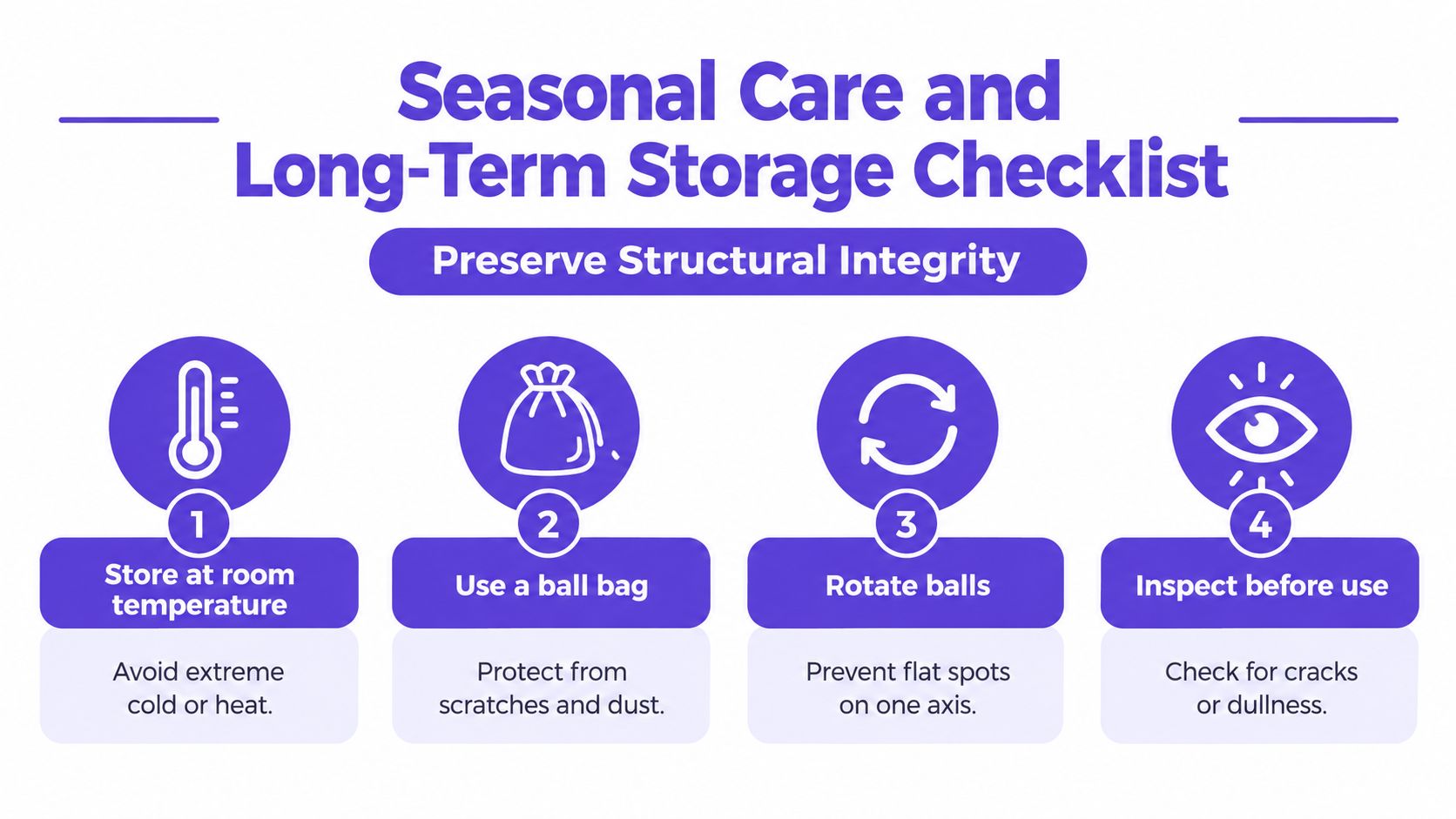
A storage checklist should include:
- Temperature: Keep the ball at room temperature and away from extreme heat or cold.
- Protection: Use a padded bag instead of leaving the ball exposed.
- Position: Change the resting orientation periodically to reduce prolonged pressure on one axis.
- Inspection: Look for cracks, new dull patches, damaged plugs, and changes around the finger holes.
- Surface: Don't add polish or protectant merely because the ball is being stored. Use a product only when it suits the coverstock and the intended return-to-play surface.
Returning to league
Before the first session, wipe the ball and inspect it again. If the reaction feels unfamiliar, don't immediately assume the lanes are different. Throw controlled shots during practice and compare the shape with your last recorded reaction.
If the ball has sat for a long time and shows reduced continuation, start with cleaning. If cleaning doesn't restore the motion, schedule a surface evaluation. A pro shop can determine whether the ball needs extraction, a finish adjustment, or a more complete resurface.
Storage care can't preserve a ball that already has structural damage, but it can prevent avoidable temperature and handling problems. Treat the off-season as part of the maintenance cycle, not as a period when equipment care stops.
Bowling Gear Reviews evaluates bowling balls, cleaners, towels, bags, and related equipment through hands-on testing and practical guides for different bowler needs. Visit Bowling Gear Reviews to compare maintenance tools and learn how to match surface care with the ball's coverstock and lane reaction.
