

You've just finished league night, and your bowling ball didn't behave the way it did during practice. It either hooked before reaching the pocket, slid past the breakpoint, or changed direction so sharply that you couldn't trust your next shot. You may be wondering whether the ball is worn out, incorrectly drilled, or just the wrong model.
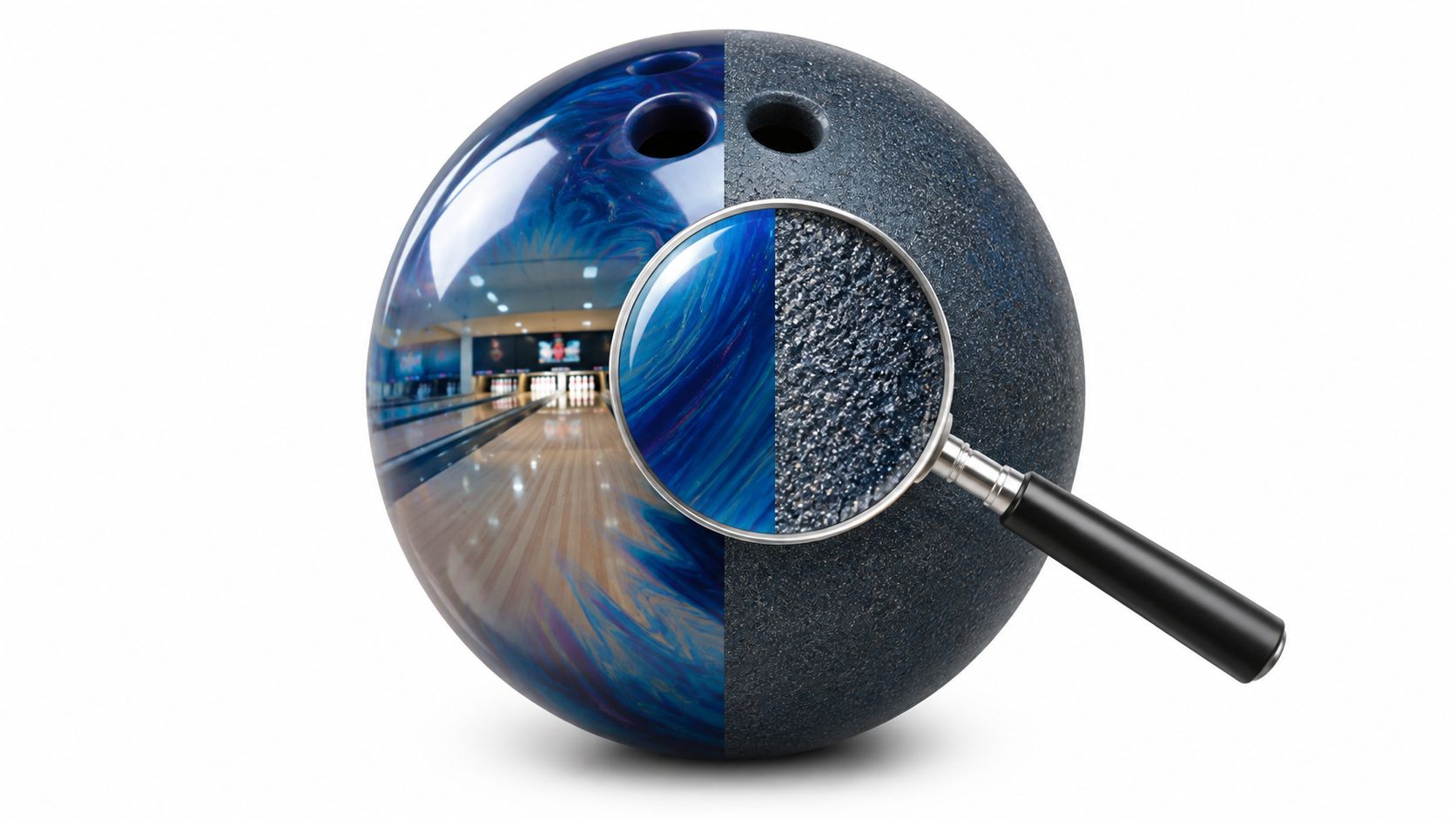
Often, the answer is closer to the lane than the core inside the ball. The bowling ball face, as many bowlers call it, is usually a reference to the ball's surface, including its coverstock and finish. Understanding that surface can help you adjust ball motion without immediately buying new equipment.
Table of Contents
- Why Your Bowling Ball Isn't Behaving
- Clearing Up the Bowling Ball Face Confusion
- The Anatomy of a Bowling Ball's Surface
- How Surface Texture Controls Ball Reaction
- Tuning Your Ball Surface for Better Scores
- A Simple Surface Maintenance Routine
Why Your Bowling Ball Isn't Behaving
A league bowler often notices the problem one frame at a time. The first game starts with the ball reading the lane nicely, but by the second game it begins to hook earlier. You move your feet and target, yet the reaction still feels unpredictable. Another night, the opposite happens. The ball skids through the front, misses the breakpoint, and arrives at the pins without enough direction change.
That doesn't necessarily mean your release has suddenly fallen apart. Lane oil moves as balls travel through it, and the friction available to the coverstock changes during the session. A ball that matched the fresh condition may no longer match the transition.
Practical rule: Diagnose the ball's reaction before diagnosing your entire game.
Many bowlers respond by shopping for a stronger or cleaner ball. Sometimes that's the right decision, but surface adjustment often solves the immediate problem more efficiently. The part of the ball that contacts the lane determines how quickly the ball begins using energy, how strongly it changes direction, and whether the motion looks smooth or angular.
Read the reaction before changing anything
Start by describing what the ball is doing in three zones:
- Front lane: Does it skid cleanly, or does it begin slowing too soon?
- Midlane: Does it read the lane smoothly, or does it continue too long?
- Backend: Does it turn decisively, or does it arrive weak and deflect?
A ball that hooks too early usually needs help getting through the front. A ball that skids past the breakpoint may need more traction earlier. Those are surface questions before they're equipment replacement questions.
The same ball can look completely different after its texture changes. That's why a new bowler should learn to recognize surface reaction instead of treating every miss as a reason to change balls or move dramatically on the lane.
Clearing Up the Bowling Ball Face Confusion
The phrase bowling ball face creates confusion because “face” has a real meaning in bowling terminology. A shot that goes through the nose, hitting the head pin directly, is described as hitting the face. Bowling terminology references define “face” as a direct hit on the head pin, so the term originally describes impact angle and pin contact, not the material on the outside of the ball.
The head pin is the 1-pin and serves as the central entry point into the rack. A direct hit can create a very different result from a pocket entry, especially when the ball doesn't enter at the angle needed to drive through the pins cleanly.
Two meanings, two different conversations
When a coach says, “You faced the head pin,” they're talking about where the ball contacted the pins. When a bowler searches for information about a “bowling ball face,” they're usually trying to understand the coverstock surface, the texture, or the finish that controls traction on the lane.
Those ideas connect, but they aren't interchangeable:
- Face at the pins: The ball hits the head pin straight on.
- Ball surface: The outer cover contacts the lane and controls friction.
- Surface finish: The texture can be dull, sanded, shiny, or polished.
- Reaction: The interaction between the ball, lane oil, and dry friction produces skid, hook, and backend motion.
This distinction matters because changing the ball's surface won't correct every nose hit. A poor launch angle, an incorrect target, or a release that sends the ball too directly toward the head pin may still create the same impact.
For the rest of this guide, the useful equipment discussion concerns the surface of the bowling ball, not the pin-contact definition of “face.” Once you separate those meanings, the adjustment process becomes much easier to follow.
The Anatomy of a Bowling Ball's Surface
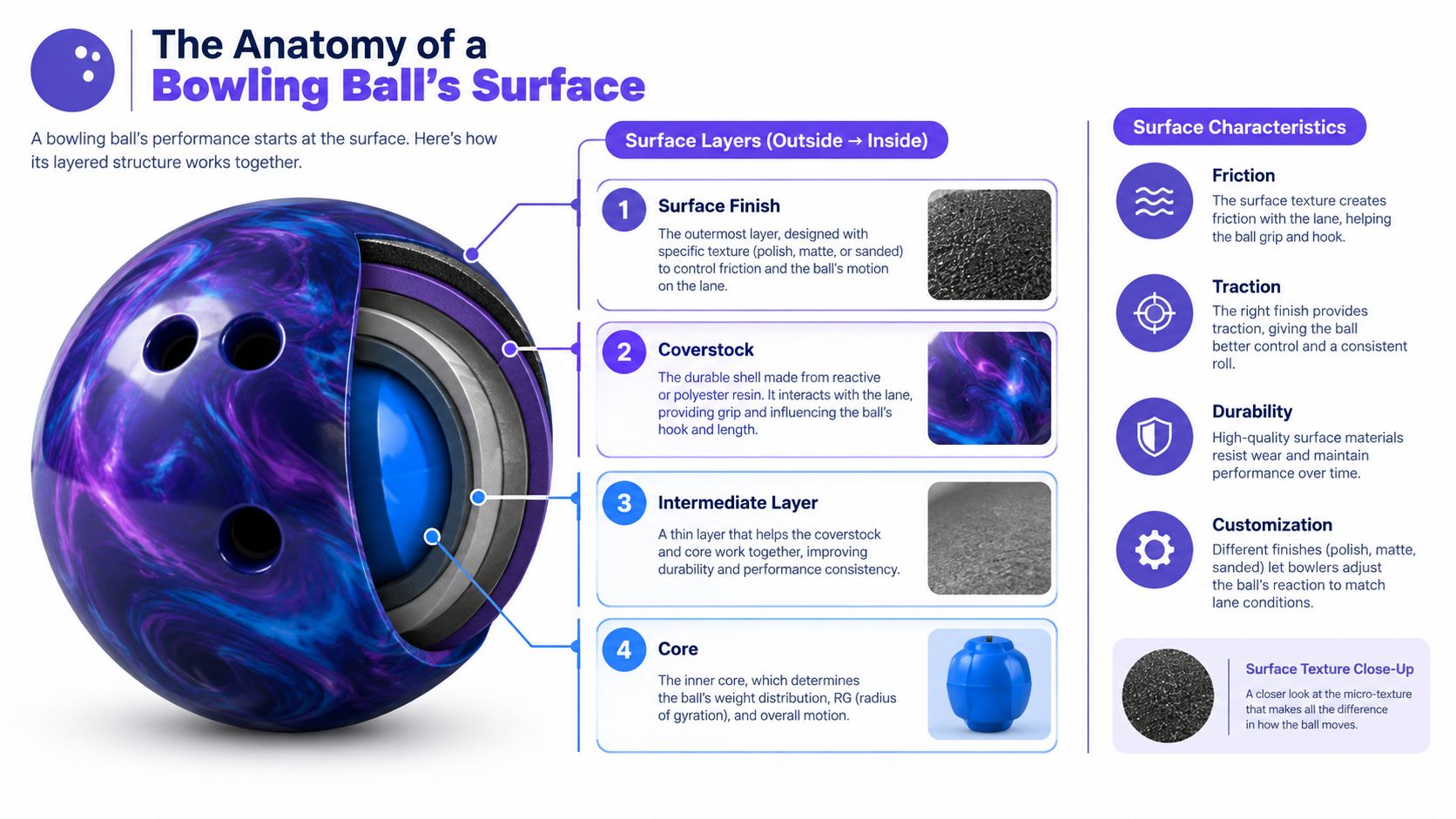
Think of a bowling ball like a car tire. The coverstock is similar to the tire's rubber compound, while the surface finish is similar to the tread. Both affect traction, but they do different jobs.
A soft, grippy racing tire and a hard touring tire don't respond the same way on the road. Likewise, a reactive resin ball and a plastic ball have different built-in tendencies before you alter their texture. Surface prep then fine-tunes how that coverstock meets the lane.
Coverstock is the compound
The coverstock is the ball's outer material. Common categories include:
- Plastic: Usually offers limited hook and a cleaner, more predictable path. It's common for beginners, spare shooting, and straight-ball control.
- Urethane: Provides a controlled response and tends to create earlier, smoother motion than many reactive resin designs.
- Reactive resin: Combines traction with stronger overall hook potential. The cover can respond aggressively to friction, especially when the surface is fresh.
- Particle or hybrid constructions: Add texture or combine material characteristics to change how the ball reads oil and friction.
These categories describe the ball's foundation. They don't tell you exactly how the ball will react on your house shot, because drilling, speed, rev rate, axis rotation, oil volume, and surface finish all influence the result.
Reactive resin changed bowling equipment significantly in the early 1990s. The history of bowling ball development and reactive resin performance connects that development with a nearly 20% increase in perfect games in a single season, showing why coverstock became such an important performance variable.
Finish is the tread
Surface finish describes how smooth or textured the cover is. A rougher finish has more microscopic texture for traction. A smoother finish reduces early friction and lets the ball travel farther before changing direction.
That's why two balls with similar cores can still behave differently. The coverstock establishes the personality, while the finish adjusts the timing. You can explore the practical differences between reactive resin, urethane, and plastic bowling balls when deciding which coverstock fits your style.
A useful mental model is simple:
The coverstock chooses the type of tire. The surface finish changes the tread.
Don't judge a ball only by its shine. A glossy reactive ball can still be strong because of its chemistry, while a duller ball may create earlier traction without producing a violent backend move. You need to evaluate the complete reaction.
How Surface Texture Controls Ball Reaction
Picture a lane where your ball changes direction before it reaches the arrows. On the next shot, it slides past the breakpoint and turns sharply near the pins. The coverstock and surface texture help explain those different shapes, because they influence when the ball begins using friction and where it spends its energy.
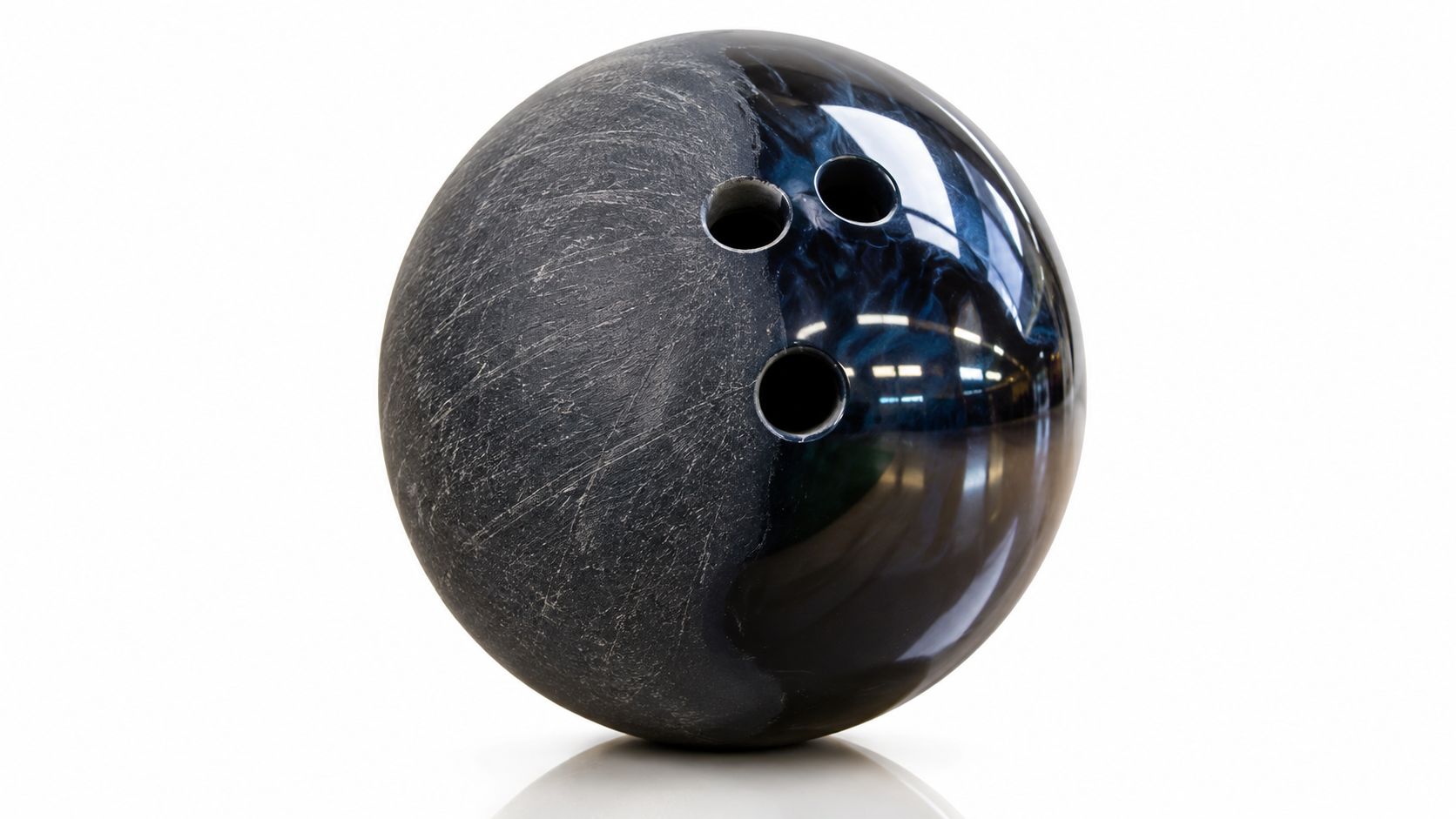
A ball surface works much like a car tire. Its texture affects how readily it grips the lane, while the coverstock and your delivery affect how that grip becomes ball motion. A duller surface may make the ball read the lane sooner. A shinier surface may help it travel farther before its direction changes. The result is a change in shape, not just a change in appearance. Surface-prep guidance explains this rough-versus-smooth cause and effect.
Read timing through ball shape
The useful question is not whether a ball looks strong. Ask where it begins to slow, change direction, and continue through the pins.
- Front-lane read: The ball should clear the front part of the lane without an abrupt loss of speed.
- Midlane read: It should begin changing direction in a controlled area, rather than rolling forward too early.
- Breakpoint response: It should turn toward the pocket without a sudden jump or a weak, delayed move.
- Pin continuation: It should retain enough energy to drive through the pins instead of deflecting.
Watch where the ball first changes direction. If that point sits in front of the arrows, the surface is gripping too soon for the condition. If the ball remains straight well beyond the intended breakpoint, it may be saving too much energy for too long. This diagnostic view helps you connect what you see to a surface decision without judging the finish by shine alone.
A rough surface can create useful traction when the lane offers substantial oil, while the same texture may lose energy quickly on early dry areas. A polished surface can clear that friction and preserve length, but it may struggle to turn the corner when downlane traction is limited. The right result depends on the lane, your speed, rev rate, axis rotation, and the ball's coverstock.
The ball's surface is the actual contact point with the lane, and technical guidance on bowling ball finish states that surface can account for about 70% of total ball motion. Treat that figure as a reminder that surface changes matter, not as a promise that every bowler will see the same reaction.
A ball that moves early and rolls out may need less friction in the front. A ball that stays in a skid too long may need more texture. Make one controlled change, then watch the same four stages again. That comparison shows whether the adjustment improved the shape or merely changed its appearance.
Tuning Your Ball Surface for Better Scores
Surface tuning should answer a specific reaction problem. If the ball starts too early, misses the breakpoint, or loses continuation, adjust the finish to address that behavior. A different shine from the box is not enough reason to sand it.
Use clean, purpose-made bowling pads such as Abralon or Siaair, following the manufacturer's instructions. If you are new to surface work, ask a pro shop operator to apply the finish evenly and check whether the coverstock needs alteration.
Match the finish to the lane
The table below maps finish to ball shape, but the best row also depends on your rev rate and speed. The same pad can produce different results for different bowlers.
| Grit level | Surface finish | Hook shape | Best for |
|---|---|---|---|
| Lower grit | Rougher and more textured | Earlier, smoother motion | Heavier oil and stronger midlane read |
| Medium grit | Balanced texture | Moderate traction and control | Changing conditions requiring versatility |
| Higher grit | Smoother and cleaner | Later, more angular response | Drier lanes or early friction |
| Polish | Glossy and very smooth | Long skid with downlane response | Bowlers needing additional length |
Coverstock and delivery still matter. A high-rev player may create plenty of friction with a smoother finish, while a lower-rev or higher-speed player may need more texture to help the ball read the lane. Surface choice works like choosing tires for a car. The tire must match both the road and the way the vehicle is driven.
Three practical adjustments
The ball hooks too early. If it changes direction before the intended breakpoint, try a finer finish. A higher-grit pad can help it clear the front more easily and retain energy for the back end. This may suit a high-rev player or a lane with early friction.
The ball skids past the breakpoint. If it travels too far and reacts weakly, add texture with a lower-grit pad. More traction can help it read the midlane sooner, particularly when oil is present and your speed keeps the ball from slowing naturally.
The motion is too sharp. If the ball changes direction abruptly, a duller finish can smooth the transition. The goal is a controllable shape, not just more total hook. Earlier, steadier motion often gives you a larger margin for error and more reliable pin carry.
For hands-on instructions, use this bowling ball sanding guide. Clean the ball first and check for lane oil or track shine, since residue can make the actual surface seem less effective.
A surface change should answer a question. If you cannot describe the reaction you want to change, do not reach for the pad yet.
Make one gradual adjustment at a time and keep notes. Record the original finish, the new finish, the lane condition, and the resulting ball shape. Those notes show how your equipment responds, helping you make the next change with purpose rather than guesswork.
A Simple Surface Maintenance Routine
A consistent routine protects reaction consistency. You don't need a complicated workshop, but you do need to remove lane oil and pay attention to changes in ball motion.
After each session, wipe the ball with a clean microfiber towel and use a bowling-ball cleaner approved for the coverstock. Cleaning won't restore a worn surface, but it removes residue that can make the ball appear less responsive than it really is.
Use reaction as your schedule
Surface maintenance shouldn't depend only on a calendar. The best time to resurface is when the ball no longer produces its intended reaction. Bowling ball surface-maintenance guidance recommends reaction-based decisions, while offering a general touch-up guideline around every dozen games and a broader restoration interval around 60 to 75 games.
Use those intervals as reference points, not guarantees. A heavily used dull ball may need attention sooner, while a polished ball may remain useful longer. Lane oil, cleaning habits, surface type, and how often the ball is used all affect the result.
A league-friendly checklist
- After bowling: Remove oil and wipe the cover thoroughly.
- Before competition: Inspect the track area for visible shine or a change in reaction.
- When motion changes: Ask whether the ball is reading too early or too late.
- For a light refresh: Use the appropriate pad or ask a pro shop to restore the intended texture.
- For a full restoration: Have the ball resurfaced when cleaning and light maintenance no longer bring back its reaction.
A product such as Storm Reacta Clean bowling ball cleaner can fit into a regular cleaning routine, provided you follow the product directions and confirm compatibility with your ball.
Surface care supports physical practice. If the ball's reaction changes from week to week, you may spend practice time compensating for the equipment instead of improving your release and targeting. Keep the cover clean, adjust only for a clear reason, and let the ball's motion tell you when it needs professional attention.
Bowling Gear Reviews offers independent bowling equipment reviews, comparisons, and practical how-to guides that examine coverstocks, surface prep, lane fit, and maintenance. Visit Bowling Gear Reviews to compare equipment and learn how to keep your ball reaction consistent.
