

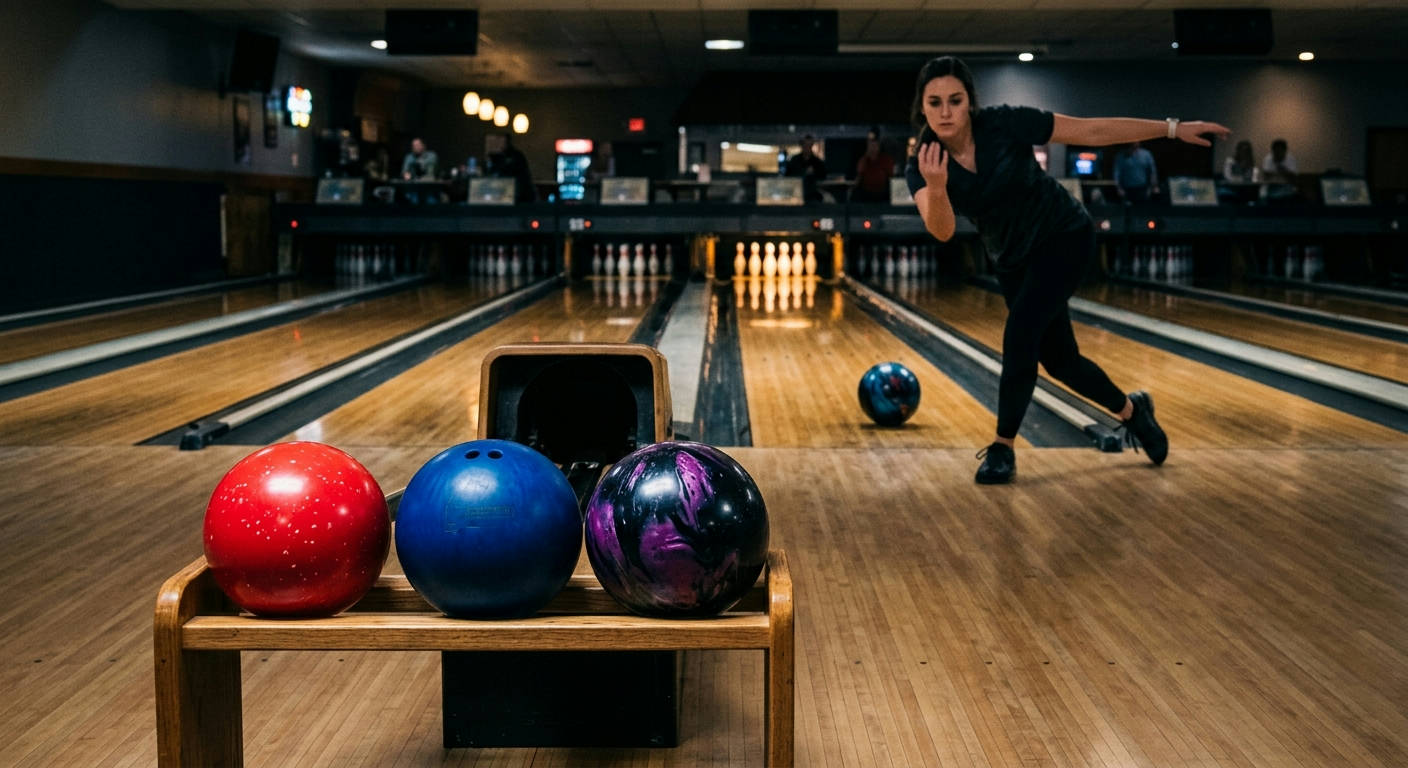
You've stepped into the pro shop, and a wall of colorful, glossy orbs stares back at you. It's overwhelming. The core of your confusion likely boils down to the ultimate bowling ball debate: Reactive vs. Urethane vs. Plastic Bowling Balls. Getting this choice right isn't just a minor detail; it's the single most important decision that will dictate how the ball travels down the lane and smashes into the pins. Here at Bowling Gear Reviews, we cut through the marketing noise to give you the hard facts, helping you choose the right tool for the job.
This isn't about which material is "best." It's about which material is best for your game, on your typical lane condition, with your specific release. Let's break it down.
The Big Three: A Fundamental Coverstock Breakdown
Before we dive deep, let's get one thing straight. The coverstock—the outer shell of the bowling ball—is responsible for about 90% of the ball's reaction. The core is the engine, but the coverstock is the set of tires that grips the road. Understanding the material is everything.
What is a Coverstock, Really?
Think of it as the ball's skin. This surface is what makes physical contact with the lane, navigates the oil, and creates the friction necessary to hook. The chemical makeup of this material determines how it interacts with lane oil, how early or late it grips the lane, and the overall shape of its path to the pocket.
A Quick History Lesson
Bowling technology didn't just appear overnight. We started with basic polyester (plastic) in the 1970s, which offered durability but minimal hook. The 1980s brought the urethane revolution, giving bowlers a controllable, arcing hook for the first time. Then, the 1990s changed everything with the invention of reactive resin, a material that absorbs oil to create incredible friction on the backend, leading to the explosive strikes you see today.
Plastic (Polyester): The Straight Shooter's Best Friend
Don't let the high-performance crowd fool you; plastic bowling balls still hold a vital place in the game in 2026. Their simplicity is their greatest strength.
Core Characteristics of Plastic Balls
Plastic coverstocks have the lowest friction potential of the three types. Their surface is non-porous, meaning it doesn't absorb lane oil. Instead, it slides over the oil with very little resistance.
This results in a ball path that is incredibly straight. Paired with simple, high RG (Radius of Gyration) cores, these balls are designed to go exactly where you throw them with almost zero deviation.
Who Should Use a Plastic Bowling Ball?
You might be surprised. Plastic isn't just for kids at a birthday party.
- Absolute Beginners: If you're just learning the four-step approach and how to release the ball, a plastic ball's predictability is perfect. You can focus on your form without a wild hook complicating things.
- Spare Shooters: This is the big one. The vast majority of professional and serious amateur bowlers carry a plastic ball. When shooting a corner pin like the 10-pin (for a righty), you want to eliminate the hook entirely. A plastic ball takes the lane condition out of play and lets you shoot straight at your target.
- Dedicated Straight Bowlers: Some players have no desire to hook the ball. They rely on precision and pin deflection. For them, a plastic ball is their primary weapon. If this sounds like you, check out our guide to Our 7 Best Bowling Balls For Straight Bowlers.
When to Leave Plastic on the Rack
A plastic ball is the wrong tool if your goal is to generate a powerful hook to increase your strike percentage. On a typical medium-oil house shot, a plastic ball will struggle to create the entry angle needed to consistently carry the pins.
"Trying to score on a fresh house shot with only a plastic ball is like trying to win a drag race on bald tires. You just won't get the traction you need."
Top Plastic Spare Ball Pick for 2026
For a reliable spare-killer, you can't go wrong with a classic like the Brunswick T-Zone or the Columbia 300 White Dot. They are affordable, come in a huge range of weights and colors, and do their job perfectly.
Find a wide selection on Amazon: Shop for Plastic Bowling Balls
Urethane: The Old-School King of Control
Urethane is back in a big way, and for good reason. It offers a unique reaction that reactive resin can't replicate, filling a crucial gap in a modern bowler's arsenal.
Core Characteristics of Urethane Balls
Urethane creates friction differently than reactive resin. It has a much earlier and smoother reaction. Instead of skidding down the lane and making a sharp turn, a urethane ball begins to gently grip the lane almost as soon as it's released.
This results in a very predictable, arcing motion. There's no violent "snap" on the backend. It's all about control and repeatability, making it a powerful tool on the right conditions.
Who Thrives with Urethane in 2026?
Urethane isn't for every situation, but when it's right, it's unbeatable.
- High-Rev Players: Bowlers with a lot of revolutions can find modern reactive balls too jumpy and unpredictable. Urethane tames their high rev rate, blending out the lane and preventing the ball from over-hooking.
- Short Oil Pattern Specialists: On professional "sport" patterns that are shorter in length (e.g., 32-37 feet), a reactive ball will hit the dry part of the lane too early and hook past the headpin. Urethane's early, smooth roll is perfect for these challenging conditions, a fact supported by its frequent use on the PBA Tour.
- Bowlers on "Burnt" Lanes: At the end of a long league or tournament block, the oil has been pushed downlane and the fronts are dry. A reactive ball will read this friction and hook uncontrollably. A urethane ball will glide through the dry heads and provide a controllable arc on the backend. This makes it a great choice for what we discuss in our Bowling Balls For Dry Lanes article.
Our Top Urethane Pick for Control
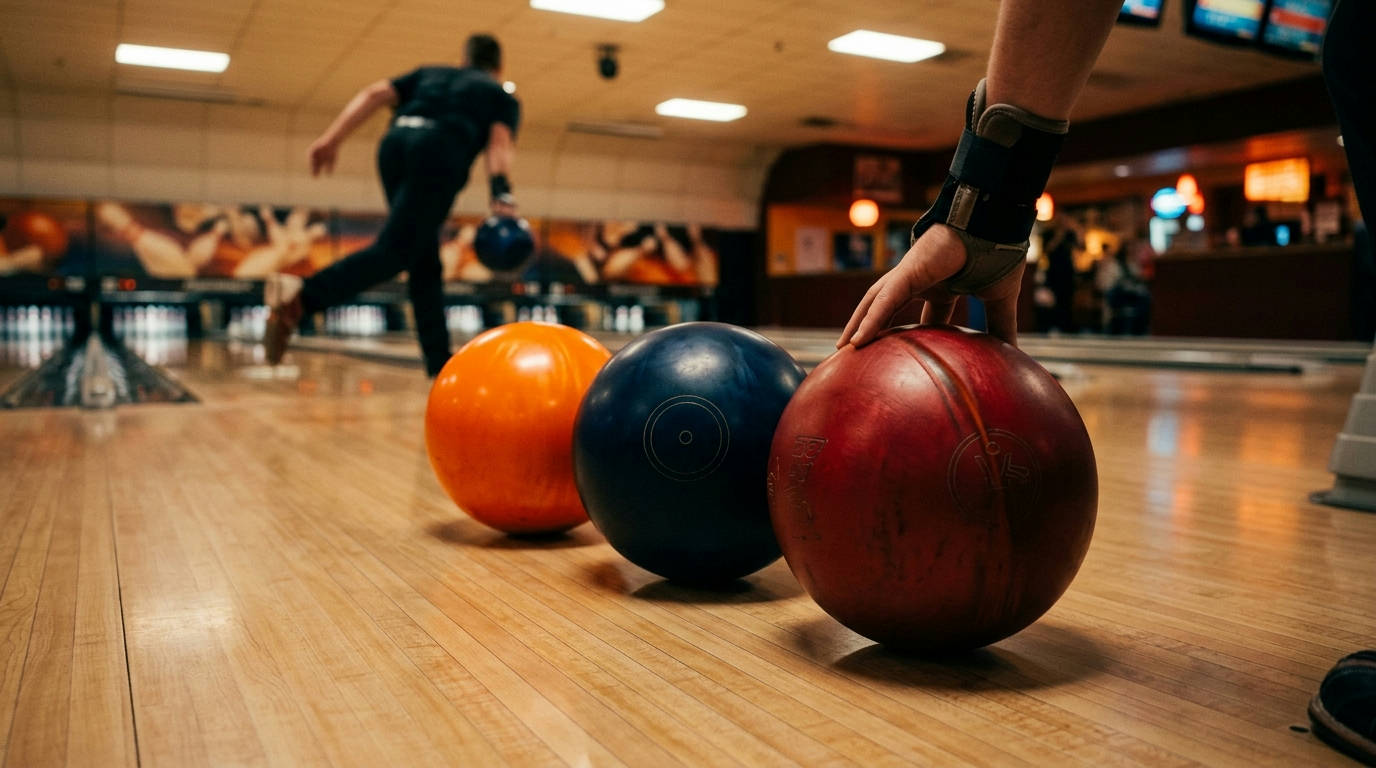
The Hammer Purple Pearl Urethane and the Storm Pitch Black have been staples for years. They are the benchmarks against which all other modern urethane balls are measured, offering that classic, controllable urethane shape.
Check them out on Amazon: Shop for Urethane Bowling Balls
Reactive Resin: The Modern Powerhouse
Welcome to the main event. The vast majority of bowling balls sold today are reactive resin. This material is what allows bowlers to create massive hook and explosive pin action.
Core Characteristics of Reactive Balls
Reactive resin is chemically designed to be porous. Under a microscope, the surface is like a sponge. As the ball travels down the lane, these pores absorb oil, allowing the ball to retain energy.
When it hits the dry part of the lane past the oil pattern, the now-tacky surface grips the lane with immense force, causing a rapid change in direction. This is the classic "skid-flip" motion that defines the modern power game.
Deconstructing the Reactive Family
Not all reactive balls are the same. They fall into three main sub-categories.
- Solid Reactive: The cover contains the highest amount of resin particles, making it the most aggressive in oil. It reads the mid-lane earliest and has the smoothest, heaviest roll of the reactive types. Ideal for heavy oil volumes.
- Pearl Reactive: Pearl particles are added to the resin, which makes the pores smaller and the surface shinier. This causes the ball to skid further down the lane, saving its energy for a very sharp, angular move on the backend. Ideal for medium-to-lighter oil.
- Hybrid Reactive: This is a blend of solid and pearl coverstock technology. The goal is to create a ball that is stronger than a pearl but more angular than a solid. It's the most versatile type and a great benchmark ball for any arsenal.
Who Needs a Reactive Ball in Their Bag?
Frankly, almost any bowler who wants to improve their strike count on a typical league night needs a reactive ball. The ability to create a strong entry angle into the pocket is crucial for maximizing pin carry. If you want to hook the ball and strike more, you need a reactive ball.
As stated by the United States Bowling Congress (USBC), the evolution of coverstock materials like reactive resin has been a primary driver of increased scoring averages over the last three decades.
Reactive Ball Maintenance is Non-Negotiable
This is the catch. Because reactive balls absorb oil, they require regular cleaning. If you don't clean the oil out of the coverstock, the pores will become clogged, and the ball will lose its hooking power permanently. Wipe it down after every shot and use a proper cleaner after every session. A good Bowling Ball Cleaning Kit is not an option; it's a necessity.
## The Big Showdown: Reactive vs. Urethane vs. Plastic Bowling Balls
Let's put it all together. The choice isn't about good versus bad, but about matching the tool to the specific situation you face on the lanes.
### Direct Comparison: Reactive vs. Urethane vs. Plastic Bowling Balls
Here's a cheat sheet to simplify the differences:
-
Hook Potential:
- Plastic: Very Low
- Urethane: Medium
- Reactive: Very High
-
Ideal Lane Condition:
- Plastic: Any (for spares) / Extremely dry
- Urethane: Short oil patterns / Dry / Burnt-up lanes
- Reactive: Medium to heavy oil
-
Typical Ball Motion:
- Plastic: Straight
- Urethane: Smooth, early arc
- Reactive: Long skid with a sharp backend turn
-
Maintenance Level:
- Plastic: Very Low
- Urethane: Low to Medium
- Reactive: High (Requires consistent cleaning)
-
Best For:
- Plastic: Beginners & spare shooting
- Urethane: Control-oriented & high-rev players
- Reactive: Most league bowlers & power players
Building a Smart 3-Ball Arsenal
A competitive bowler in 2026 rarely relies on a single ball. A well-rounded arsenal provides options to combat changing lane conditions. A classic and effective setup includes one of each:
- Benchmark Reactive Ball (Hybrid): Your go-to ball for fresh league conditions.
- Urethane Ball: Your adjustment ball for when the lanes break down and your reactive ball becomes too jumpy.
- Plastic Spare Ball: Your precision tool for picking off those pesky corner pins.
Having this versatile trio, neatly carried in a quality 3 Ball Bowling Bag, means you're prepared for almost anything the lanes can throw at you.
Your Final Decision
The debate over Reactive vs. Urethane vs. Plastic Bowling Balls is settled not by a single verdict, but by an honest assessment of your own game.
Don't buy a high-performance reactive ball if you're still learning to throw straight. Don't grab a urethane ball for heavy oil just because the pros use it on TV. And don't limit yourself to a plastic ball if you're serious about learning to hook and strike.
Analyze your needs. Are you a beginner or a spare-shooter? You need plastic. Are you a high-rev player or do you bowl on tough, dry conditions? Look at urethane. Are you a typical league bowler looking to maximize your hook and score? A reactive resin ball is your answer.
At Bowling Gear Reviews, our mission is to equip you with knowledge. Now that you understand the fundamental differences in coverstocks, you're ready to explore our in-depth reviews and find the perfect ball to elevate your performance.

6 Comments
Pingback: Bowling Balls Urethane 7 Best Picks for Control
Pingback: Hybrid Reactive Bowling Balls 7 Best Picks for 2026
Pingback: 7 Best Camouflage Bowling Balls for 2026 Reviewed
Pingback: Best Bowling Ball for All Lane Conditions
Pingback: Bowling Ball Sanding: A Practical Step-by-Step Guide
Pingback: Bowling Ball Face: What It Means for Your Game