

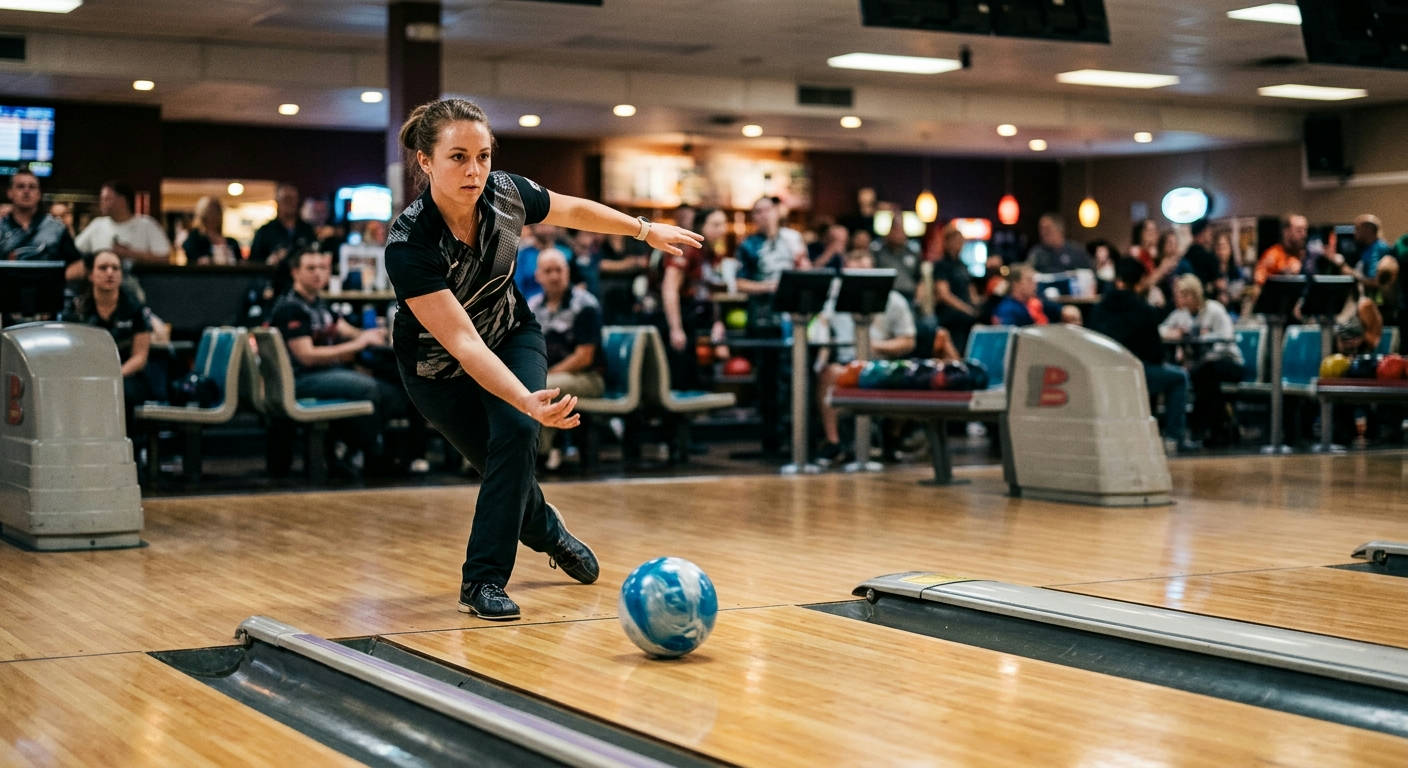
You’ve heard it a thousand times: “Strikes for show, spares for dough.” Yet, most league bowlers spend 90% of their practice time trying to smash the pocket, leaving their spare game to chance. If you’re serious about raising your average, you need to stop guessing and start executing. This is your definitive guide on how to improve spare shooting in bowling, and it’s time to get to work.
At Bowling Gear Reviews, we see players every day with high-rev hook shots who can’t pick up a simple 10-pin to save their season. It’s the single biggest leak in most amateur games. Fixing it isn’t about magic; it’s about a systematic approach, the right mental attitude, and yes, the right equipment.
Ditch the Striker’s Ego: The Spare Mindset
The first step to better spare shooting has nothing to do with your feet or your arm swing. It’s about killing the ego that tells you to hook the ball at every pin on the lane.
The Goal is Precision, Not Demolition
Your strike ball is designed to create explosive pin action. It’s engineered to hook, drive, and create chaos in the pin deck. This is your worst enemy when a single pin is standing.
For spares, your only goal is to hit the pin you’re aiming at. That’s it. You want the most predictable ball path from the foul line to the pin. Thinking you can “just flatten your hand” with your aggressive strike ball is a recipe for disaster, especially as lane conditions change.
Embrace the “Boring” Shot
A perfectly executed spare shot is often a straight, predictable roll. It’s not flashy. It doesn’t get the cheers a strike does. But it wins matches. Two spares are worth the same as a strike and a gutter ball. Let that sink in.
Get comfortable with the idea that your spare shot is a tool, not a performance. Its job is to be reliable and repeatable, nothing more.
The Geometry of Spares: Pick a System and Own It
Walking up and just “eyeballing” a corner pin is a low-percentage play. The pros don’t do it, and neither should you. You need a system that gives you a specific target for every spare leave. The key is to use the lane markings (arrows and dots) to your advantage.
The 3-6-9 Spare System
This is the most common system for a reason—it works. It’s based on adjusting your starting position on the approach while keeping your target on the lane (your mark) the same.
Here’s the breakdown for a right-handed bowler (lefties, just mirror this):
- For pins on the left side (2, 4, 7): Move your starting position 3 boards to the right of your normal strike position. Keep your eyes on the same target arrow.
- For pins in the middle (3, 6): Move your starting position 6 boards to the right. Same target.
- For pins on the right side (10 pin): Move your starting position 9 boards to the right. Same target.
The logic is simple: by moving your feet, you change the angle of your shot, allowing you to cross the lane and hit corner pins without changing your fundamental arm swing.
Cross-Lane Shooting: The Golden Rule
The core principle of any spare system is to shoot cross-lane. For a 10-pin, you should be standing on the far left side of the approach and throwing over the middle of the lane. For a 7-pin, you stand on the far right.
This creates the largest possible margin for error. Throwing straight up the side of the lane for a corner pin gives you only a board or two of room before you hit the gutter. A cross-lane shot uses the full width of the lane as your safety net.
Choose a system, practice it relentlessly, and trust it. Consistency comes from a system, not from guesswork.
How to Improve Spare Shooting in Bowling: Your Physical Game
A system is useless without the physical ability to execute it. Once you know where to stand and where to aim, you need to deliver the ball repeatably. This is where small mechanical tweaks make a huge impact.
Break Your Wrist (Figuratively)
The biggest cause of missed spares is unintentional hook. You can’t hit a 10-pin if your ball hooks left into the gutter at the last second. The fix is to flatten or “break” your wrist at the release.
Instead of your hand being behind the ball in a powerful, rev-inducing position, you want your palm to face the target more, almost like you’re shaking hands with the pins. This kills the rotation and ensures the ball travels on a straight path.
### How to improve spare shooting in bowling with a dedicated spare ball
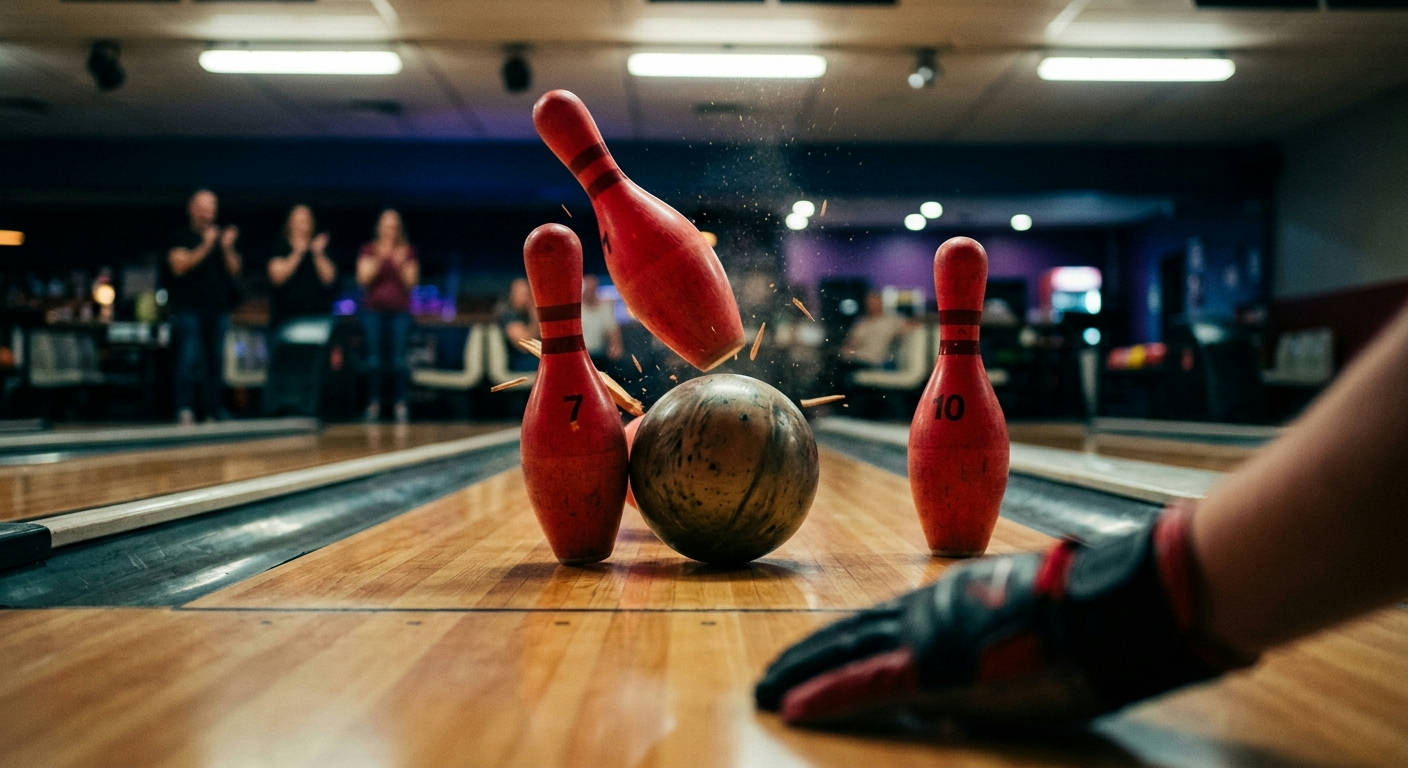
This is the ultimate cheat code. Stop trying to tame your aggressive, high-performance ball. A dedicated spare ball, typically made of polyester or plastic, is designed with one job in mind: to go straight.
Its coverstock has very little friction, so it slides over the lane oil without grabbing or turning. This makes it incredibly predictable, regardless of how burnt up or oily the lanes are. If you are truly committed to learning how to improve spare shooting in bowling, investing in a plastic spare ball is non-negotiable. It removes a massive variable from the equation.
Keep Your Feet and Swing Consistent
Your approach for a spare should be just as disciplined as your strike shot. Don’t rush it. Use the same tempo, the same push-away, and the same follow-through. The only things that should change are your starting position on the approach and your hand position at release. Any inconsistency in your footwork will translate into a missed target down the lane.
The Right Gear for the Job
At Bowling Gear Reviews, we know that equipment isn’t a substitute for skill, but the right gear can make executing that skill infinitely easier. This is especially true for spare shooting.
The Non-Negotiable Polyester Spare Ball
We’ve already touched on this, but it bears repeating. Using your reactive resin strike ball for spares is like using a sledgehammer for finish carpentry. It can work, but it’s the wrong tool and invites error.
A polyester ball offers maximum predictability. Period. It won’t overreact to dry boards or skid past your target on heavy oil.
Looking for a great starting point? Check out the Storm Ice Storm or the Brunswick Tzone. You can find options on Amazon to get a feel for pricing.
- Find a Polyester Spare Ball: https://www.amazon.com/s?k=Polyester+Bowling+Ball&tag=bowlinggear04-20
Do Your Shoes Really Matter for Spares?
Absolutely. Consistent footwork is the foundation of a repeatable shot. If your shoes are sticking or sliding unpredictably, your entire approach will be thrown off. You can’t expect to hit a target 60 feet away if your launchpad is unstable.
Investing in a quality pair of bowling shoes with interchangeable soles and heels allows you to adjust to any approach condition, ensuring your footwork is the same on every single shot, strike or spare. If you’re looking for an upgrade, we’ve reviewed some of the Best Bowling Shoes For Men that offer this kind of performance.
Drills That Build Spare-Shooting Muscle Memory
You won’t get better at spares by just bowling games. You need to dedicate practice time specifically to picking up single pins and common combinations.
The Corner Pin Challenge
This is the ultimate drill. Set up a full rack, and on your first ball, only try to take out the 7-pin. Then, reset the rack and try to only take out the 10-pin.
Do this for an entire game. It’s tedious, but it forces you to execute your cross-lane shot over and over. It trains your body and mind to hit a precise, small target. After a game of this, hitting a lone 10-pin in a real match will feel easy.
Low Ball Game
Play a game where the goal is to leave and then make a single pin spare in every frame. On your first ball, roll it slow and aim to just clip the headpin, leaving a common spare. Then, execute your spare shot under pressure. This simulates real-game scenarios much better than just practicing on a full rack.
Film and Analyze
Set up your phone on a tripod behind you and record your spare shots. You will be amazed at what you see. You might think you’re flattening your wrist, but the video could show you’re still coming around the ball. You might feel your footwork is consistent, but the video could reveal you’re drifting several boards.
According to the United States Bowling Congress (USBC), a regulation bowling lane is 41.5 inches wide. That seems like a lot of room, but when you’re trying to hit a pin that’s only 4.75 inches wide from 60 feet away, every inch of precision matters.
The camera doesn’t lie. It’s the most honest coach you’ll ever have.
Advanced Concepts for Competitive Bowlers
Once you’ve mastered the basics, there are higher-level strategies to consider that separate the good spare shooters from the great ones.
Making Smart Decisions on Splits
The first rule of splits is to go for the surest pin count. Trying to be a hero and make the 4-6-7-10 is a fool’s errand. Take a deep breath, analyze the leave, and make the smart play to get as many pins as you can. For most splits, this means sliding one pin into another. For “bucket” leaves like the 2-4-5-8, a straight shot at the 2-pin is often your best bet.
Reading Lane Transition for Spares
Even a polyester ball can be affected by extreme lane conditions. As the oil carries down and the fronts start to burn up, you may notice your straight spare shot start to hook a few boards late.
Be observant. If you see your spare ball start to move, you may need to adjust your target or your feet slightly to compensate. This is an advanced skill, but being aware of it is the first step.
Spare shooting is a skill, and like any skill, it requires dedicated, focused practice. It’s not the most glamorous part of bowling, but it’s the part that will add pins to your average and put you in a position to win. Stop making excuses for missed spares. Implement a system, get the right gear, and put in the work. Your scorecard will thank you.
