

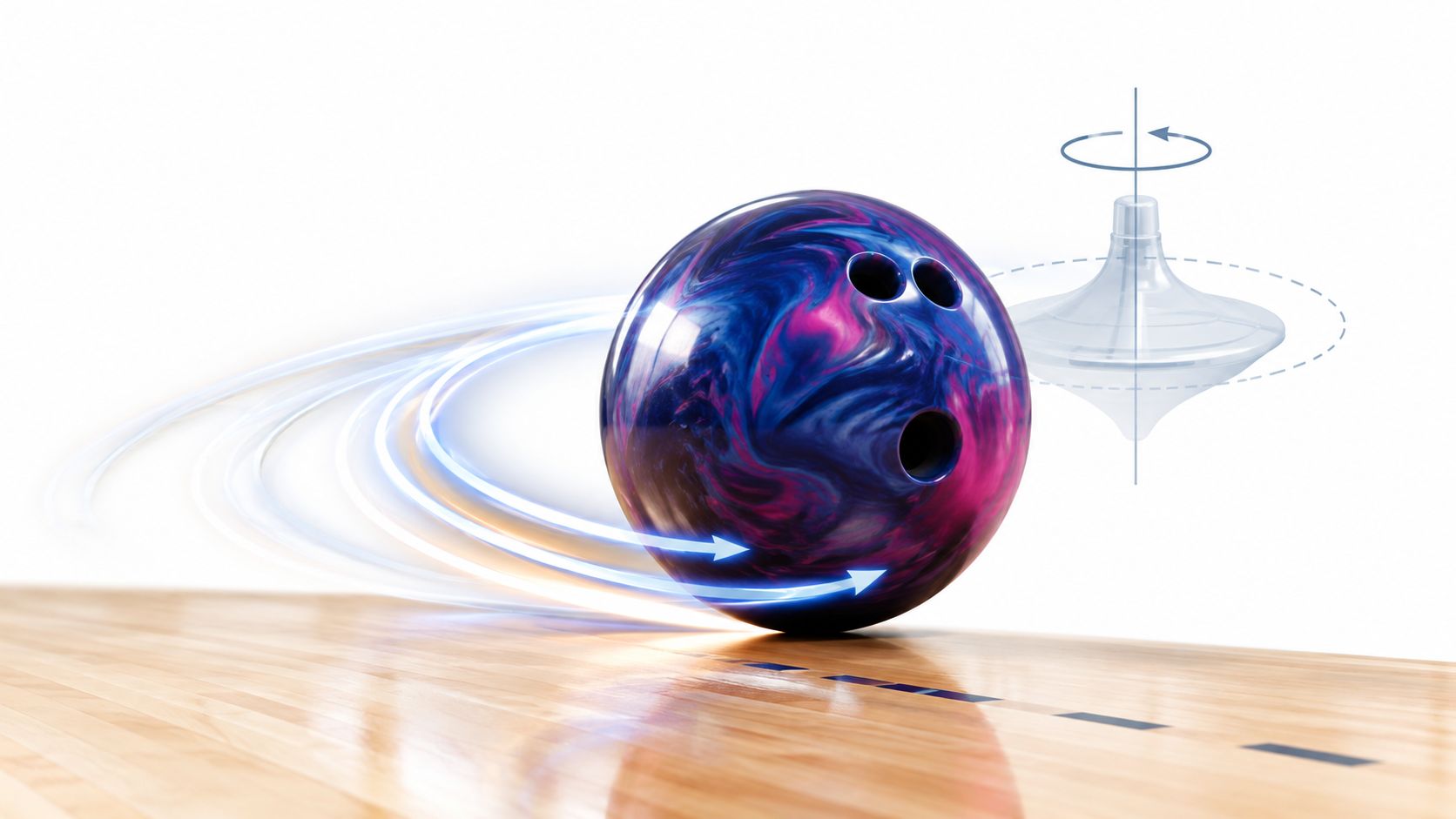
Low RG means more of a bowling ball's mass sits near its rotation axis, so the ball spins up faster. For balls weighing at least 13 pounds, USBC specifications permit an RG from 2.447 to 2.813 inches.
That answer is accurate, but it leaves out the part that causes most equipment mistakes. Bowlers often hear “low RG” and assume “strongest ball,” “most hook,” or “maximum backend.” After drilling thousands of balls and watching them move on league nights, I'd describe low RG differently: it's a rev-up timing tool. It helps determine how quickly the core settles into rotation, while the coverstock, differential, surface, release, speed, and lane oil decide what that rotation looks like.
A low-RG ball can read the midlane early and still produce a smooth, controlled shape. It can also burn up before the pins if its cover is too strong for the lane or if its differential and layout add more flare than the bowler can manage. The useful question isn't “How strong is this low-RG ball?” It's “When does this ball begin to rev, and can the rest of its design keep that motion playable?”
Table of Contents
- Why Low RG Is Not a Strength Rating
- How the USBC RG Rules Evolved
- Low RG Paired With Differential Changes Everything
- A Two Bowler Test of the Same Low RG Ball
- How Low RG Behaves Across a Session and a Pattern
- Surface Prep and Layout Choices for Low RG Balls
- Choosing Low RG for Your Game Without Overbuying It
Why Low RG Is Not a Strength Rating
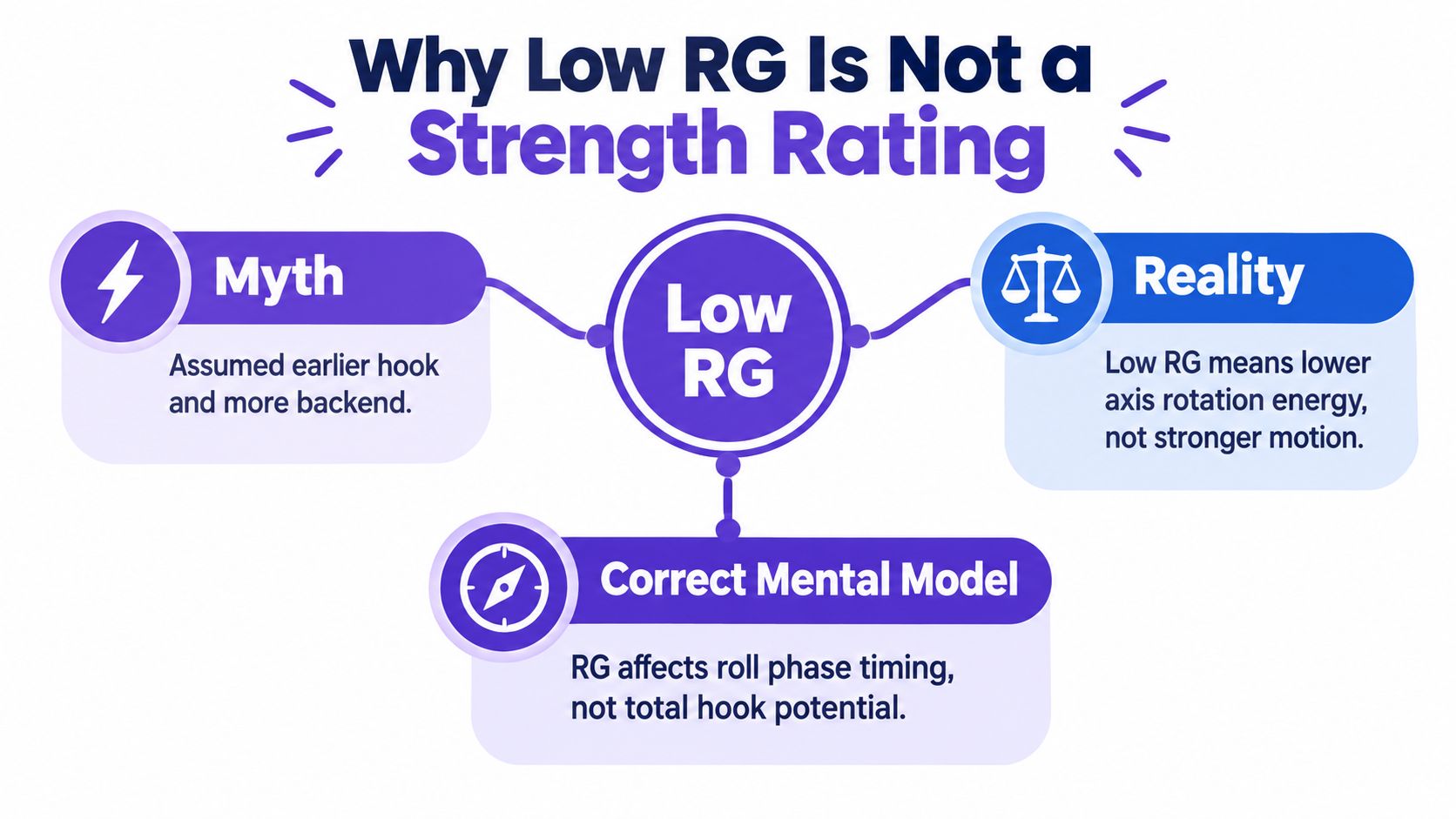
Low RG is one of the most misunderstood numbers on a bowling-ball specification sheet. It describes mass distribution, not a complete hook rating. A lower RG means more mass is concentrated closer to the axis of rotation, so the ball requires less effort to begin rotating once it leaves the hand.
A spinning-top analogy makes the physics easier. A top with more of its mass close to its center can spin up readily. A ball with a lower RG behaves in a similar way. It tends to enter its roll phase sooner, but that doesn't tell you whether its breakpoint will be smooth, sharp, continuous, or weak.
The USBC explanation of core properties defines RG as the distance from the rotation axis where the ball's mass could theoretically be concentrated without changing its moment of inertia. Under current USBC specifications, a ball weighing at least 13 pounds must have an RG between 2.447 and 2.813 inches.
What the RG number can tell you
Within the legal range, a lower value generally points toward faster rev-up and earlier traction. That can help a bowler who needs the ball to pick up in the midlane instead of skidding too long.
It doesn't tell you how much friction the coverstock creates. A polished cover may delay visible lane read, while a rougher surface may create earlier traction. It also doesn't tell you the ball's flare potential. That comes primarily from differential RG, which measures the difference between the ball's highest and lowest RG axes.
Pro shop rule: Treat RG as a timing clue. Never treat it as a complete prediction of hook.
A low-RG bowling ball with a low differential may rev early but shape gradually. A low-RG ball with a high differential may rev early and expose more fresh coverstock through flare, creating a larger overall change of direction. The same RG number can therefore produce very different lane pictures.
That distinction matters for buying and drilling. If your current ball already reads too early and loses energy, a lower RG may worsen the problem even if the new ball has a less aggressive cover. If your ball skids too far and never establishes a reliable midlane read, lower RG may solve the timing issue without requiring maximum total hook.
How the USBC RG Rules Evolved
A low-RG comparison only makes sense when you know which rules applied when the ball was certified. The legal window has changed, and differential limits have changed with it. Older equipment shouldn't be judged by current numbers alone.
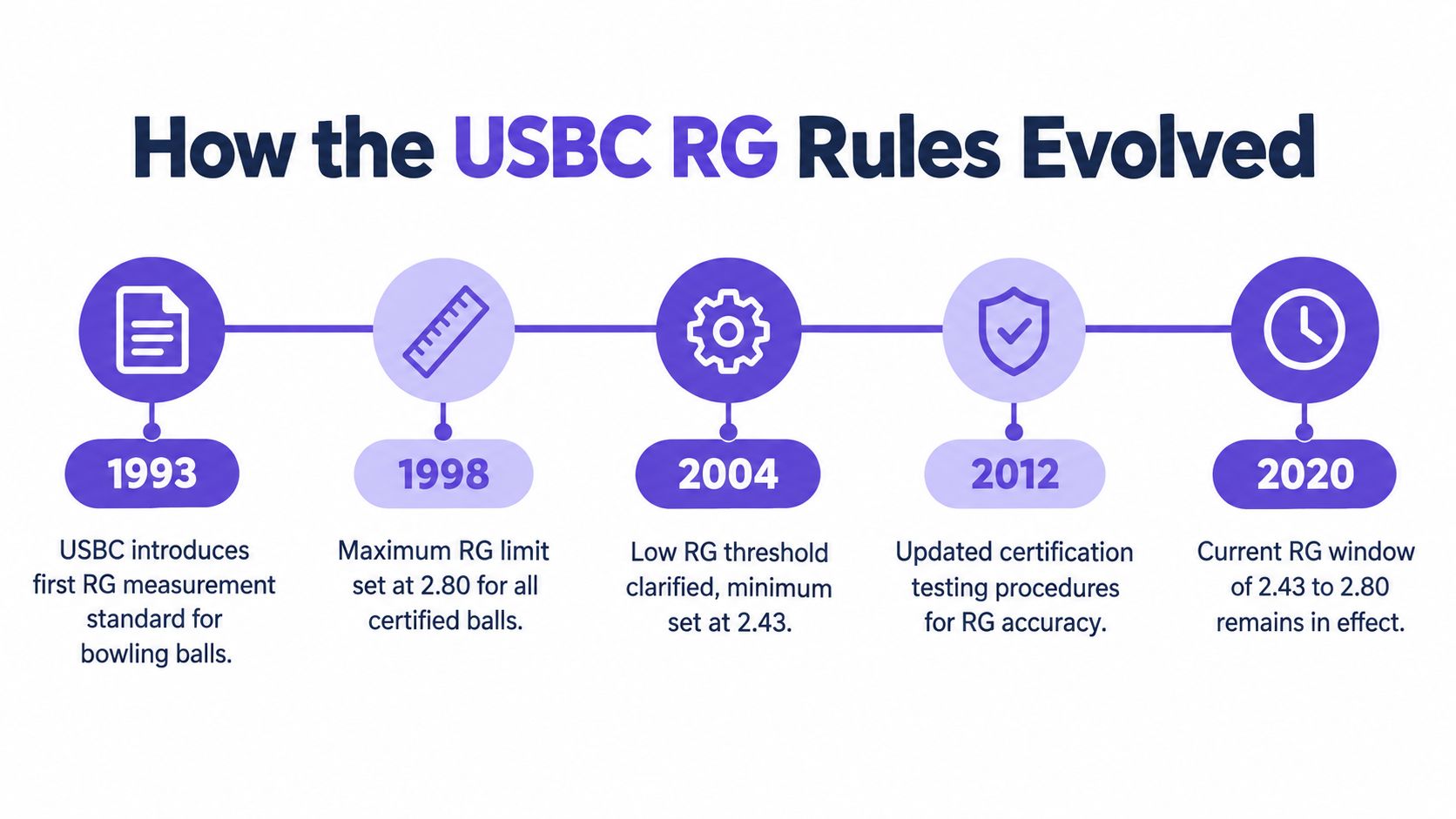
The historical timeline documented in the USBC equipment specifications manual begins in 1993, when the American Bowling Congress introduced an RG range from 2.430 to 2.800 inches. That established a formal boundary around how far a bowling-ball core could move toward faster or slower rev-up behavior.
The important milestones
- 1993: RG specifications were first implemented, with a permitted range of 2.430 to 2.800 inches.
- 2005: The maximum differential RG was reduced from 0.080 to 0.060 inches to help control flare and entry angle.
- 2010: The minimum RG increased from 2.430 to 2.447 inches.
- Current specifications: Balls weighing at least 13 pounds remain within an RG range of 2.447 to 2.813 inches, with maximum differential RG capped at 0.060 inches.
The 2005 change is especially important because it separates two ideas bowlers often blend together. RG influences rev-up timing, while differential influences flare potential. A tighter differential limit reduced how far equipment could push flare and entry-angle behavior, even when the ball's RG still suggested early rotation.
The 2010 minimum also changed the bottom of the legal design range. A very old ball with an RG near the earlier minimum isn't automatically equivalent to a current ball with a similar marketing description. Its core, coverstock, differential, drilling, and certification rules all belong to a different equipment context.
When comparing older and newer balls, write down more than the RG. Record the rule era, differential, coverstock type, surface finish, and layout. That simple habit prevents a specification-sheet comparison from becoming a misleading reaction prediction.
Low RG Paired With Differential Changes Everything
RG starts the conversation, but differential determines how much the ball's axis can migrate as it rolls. In practical terms, low RG sets the rev-up clock, while differential helps set the flare budget.
A low-RG, low-differential ball can begin rotating early without creating a dramatic amount of track migration. That usually produces a more orderly shape, useful when you want the ball to read the middle of the lane but avoid a violent change of direction.
A low-RG, high-differential ball combines early rev-up with greater flare potential. As the track migrates, the ball can expose more fresh coverstock to the lane. That can produce stronger traction, a more visible direction change, and more total hook, although the result still depends heavily on surface and coverstock friction.
The USBC technology study provides a useful controlled comparison. A low-RG ball with high differential reached its breakpoint at around 43 feet, while a low-RG ball with low differential traveled approximately 46 feet before reaching its closest point to the channel. Among the tested designs, the low-RG and high-differential combination hooked the most. These figures come from the USBC core technology study.
RG and Differential Combinations at a Glance
| RG Level | Differential | Rev-Up Timing | Flare Potential | Best Use |
|---|---|---|---|---|
| Low | Low | Early | Lower | Controlled midlane read and smoother continuation |
| Low | High | Early | Higher | Stronger traction, more flare, and a larger direction change |
| Higher | Low | Later | Lower | Length and predictable control |
| Higher | High | Later | Higher | Delayed rev-up with more downlane shape |
This is why a bowler shouldn't ask for “the lowest RG available” without describing the desired motion. If you want early traction with a calm shape, low RG and lower differential may be the better pairing. If you need the ball to rev early and create more visible flare, low RG and higher differential may make sense.
You can learn more about how internal designs affect reaction in this guide to bowling-ball weight blocks. The important point is that the core properties work as a combination. One number rarely explains the whole lane picture.
Layout decision: Choose low RG with lower differential for earlier, smoother control. Choose low RG with higher differential when early rev-up must be paired with more flare and stronger direction change.
Coverstock can override the expected shape. A rough solid may read so early that even a low-differential core loses continuation. A cleaner pearl may let the same general RG profile store energy longer before responding. Compare balls at the same surface finish whenever possible, otherwise you're testing several variables at once.
A Two Bowler Test of the Same Low RG Ball
Two bowlers can throw the same low-RG ball on the same lane and come away with opposite opinions. One may call it smooth and dependable. The other may say it rolls out before it reaches the pins.
For a practical comparison, give a low-rev stroker and a high-rev cranker identical equipment, the same surface finish, and the same oil pattern. The stroker usually benefits from the quick rev-up. The ball establishes an earlier midlane read, creates a controlled arc, and reaches the pocket without needing an exaggerated angle.
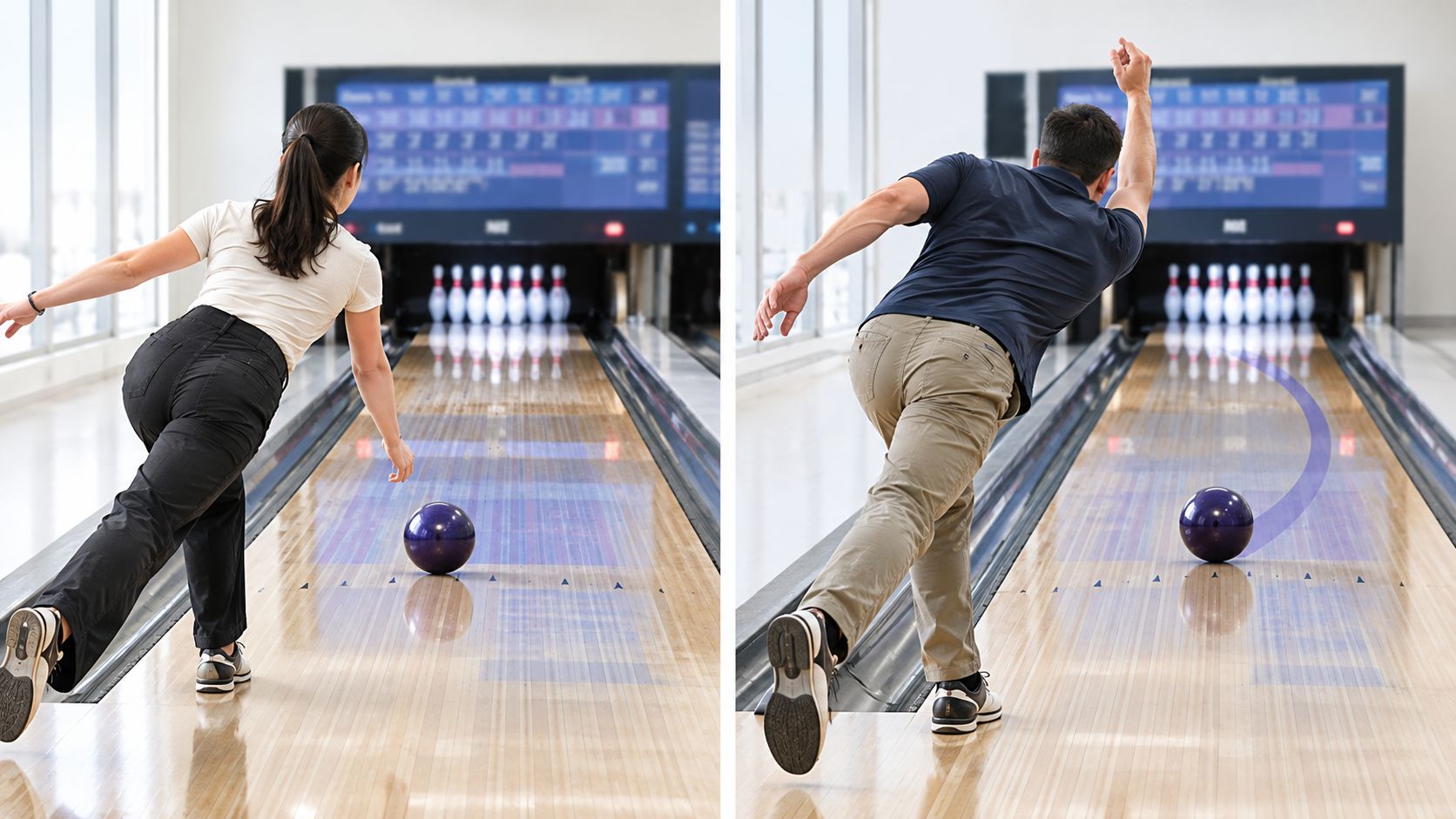
The high-rev cranker gives the same core more rotational input. Instead of helping the ball reach a stable roll, the low RG may cause it to read too soon. If the coverstock also creates substantial friction, the ball can spend too much energy in the front and middle of the lane. The bowler sees an early move, then weak continuation through the pins.
That contrast isn't a failure of the ball. It shows why equipment must match the release. The USBC full technology study found that a typical 300-RPM bowler could experience about a 37-RPM difference between extremely low- and extremely high-RG balls of the same weight. RG can influence rotation rate, but it can't guarantee that the extra rotation will produce better entry angle or carry.
What I watch during the test
- Front-lane read: Does the ball begin responding before the bowler reaches the intended breakpoint?
- Midlane stability: Does it continue through the middle, or does it stand up and lose energy?
- Breakpoint shape: Is the change of direction gradual enough for the bowler to repeat?
- Pin energy: Does the ball retain enough motion to drive through the pins?
A low-rev bowler often gains the most from faster rev-up because the ball needs help establishing traction. A high-rev or speed-dominant bowler may need a cleaner cover, smoother surface, or lower differential instead of an even lower RG.
The release decides how much work the core must do. Don't copy another bowler's ball choice without copying the conditions, surface, speed, and release that made that choice successful.
Here's a useful visual reference for observing ball motion and release differences:
How Low RG Behaves Across a Session and a Pattern
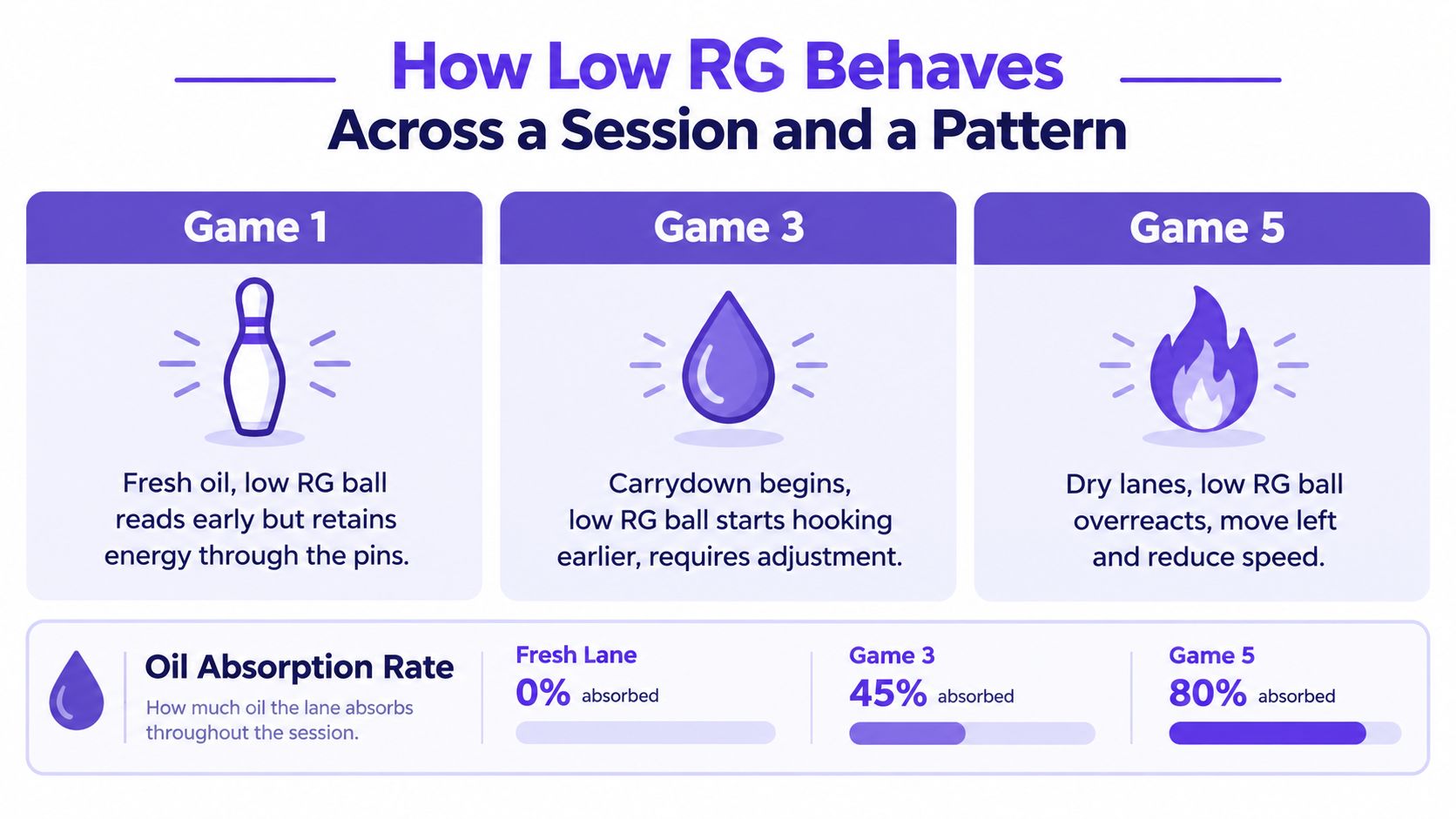
Lane conditions change while you bowl, so a low-RG ball can be useful in the opening game and troublesome later in the session. Dry-lane friction, oil absorption, and the core's rev-up timing all influence the path. USBC technology research identifies those factors among the leading influences on ball motion and explains that fast oil-absorbing covers can push bowlers deeper inside as transition develops. The findings are discussed in USBC research on continued ball-track studies.
A low-RG solid often makes its strongest case on a fresh lane with enough oil to support its friction. It can read the front and midlane without forcing the bowler to manufacture shape. As oil moves and the front begins to lose protection, that same early read may become an overreaction or turn into roll-out.
Three coverstock choices
Low-RG solid: On a heavier fresh condition, a solid can give the core enough friction to establish an early, readable arc. If the lane dries quickly, reduce surface friction or move inside before the ball starts using its energy too soon.
Low-RG hybrid: A hybrid can occupy the middle ground. It may provide earlier traction than a pearl while preserving more length than a dull solid, making it a practical option as the pattern begins to transition.
Low-RG pearl: A pearl can help a bowler keep the ball cleaner through the front while retaining the core's quick rev-up once it reaches friction. That can be useful on drier or broken-down lanes when a rough solid would read too early.
Don't treat coverstock labels as automatic lane-condition instructions. Surface preparation can make a pearl respond earlier, and lane friction can make a solid look surprisingly angular. The best comparison holds the pattern and release constant while changing one equipment variable.
Maintenance also changes the answer. Cleaning and resurfacing affect friction, so they change how much of the low-RG advantage you see. The practical details of bowling-ball sanding matter because an altered surface can make an otherwise familiar ball read earlier, later, smoother, or sharper.
Session check: If the ball reads earlier every game but reaches the pins with less continuation, the issue may be transition and surface friction, not a need for even more hook.
Surface Prep and Layout Choices for Low RG Balls
Surface is the first adjustment I consider when a low-RG ball is close to the right shape but not quite playable. Start with a finish appropriate for the intended oil volume, then make controlled changes rather than jumping between extremes. Small, consistent adjustments are easier to read than a completely different surface.
A rougher finish generally increases early traction. A higher finish can help the ball clear the front and preserve energy for the breakpoint. Adjusting in 500-grit steps gives you a repeatable way to fine-tune that balance, provided the ball is cleaned and prepared consistently each time.
The core and surface are connected controls. A low-RG ball at a high finish may behave later and cleaner than expected. A similar core with a rougher surface may read so early that it resembles a much stronger overall shape. The bowling-ball drilling layouts guide can help explain how layout choices change the timing and shape created by the same core.
Layout questions worth asking
- Pin distance: A shorter pin-to-PAP distance can encourage earlier, smoother roll, while a longer distance can preserve more energy for the back end.
- Mass bias orientation: On asymmetric equipment, orientation can influence how quickly the ball transitions and how strongly it changes direction.
- Pin position: Moving the pin closer to the fingers may increase the sense of early read, but the result depends on the bowler's PAP and release.
- Surface and layout together: A layout that is manageable at a cleaner finish may become too early after sanding.
Avoid stacking every early-motion variable into one ball. Very low RG, high differential, rough surface, and an aggressive layout can combine into a shape that reads too soon and loses continuation. If you need more traction, change one control first and observe the result before changing another.
The right drilling conversation starts with your PAP, axis rotation, speed, rev rate, and typical lane condition. A layout that works for a lower-rev player may be too early for a high-rev player using the same cover and surface.
Choosing Low RG for Your Game Without Overbuying It
Low-RG bowling balls make the most sense when your release needs help creating an earlier, stable roll. Look more closely at low RG if you have a low-to-moderate rev rate, controlled speed, or a recurring need for midlane traction on oilier conditions.
A lower RG is less likely to be the priority if you already create abundant rotation, throw with very high speed, bowl mostly on dry or burned lanes, or regularly see early roll followed by weak continuation. In those cases, a cleaner cover, higher finish, lower differential, or higher RG may solve the actual problem more directly.
Use this short decision check:
- Need earlier midlane read: Low RG may fit.
- Need more flare and direction change: Pair the timing with appropriate differential.
- Need more length: Consider coverstock and surface before choosing a different core.
- Already rolling too early: Don't automatically buy a stronger low-RG design.
Bowling Gear Reviews publishes hands-on equipment reviews, comparisons, and buying guides that evaluate bowling balls alongside coverstock, surface, lane condition, and bowler fit. Use those resources to compare a potential purchase with the ball already in your bag, not just with its marketing description.
If you're comparing low-RG bowling balls, visit Bowling Gear Reviews for equipment reviews and practical guides that connect RG, differential, surface, and layout to real lane conditions. Bring your current ball reaction and typical lane pattern into the comparison, then choose the equipment that widens your playable window rather than chasing the lowest RG.

1 Comment
Pingback: Types of Oil Patterns Bowling: Length, Volume and Balls