

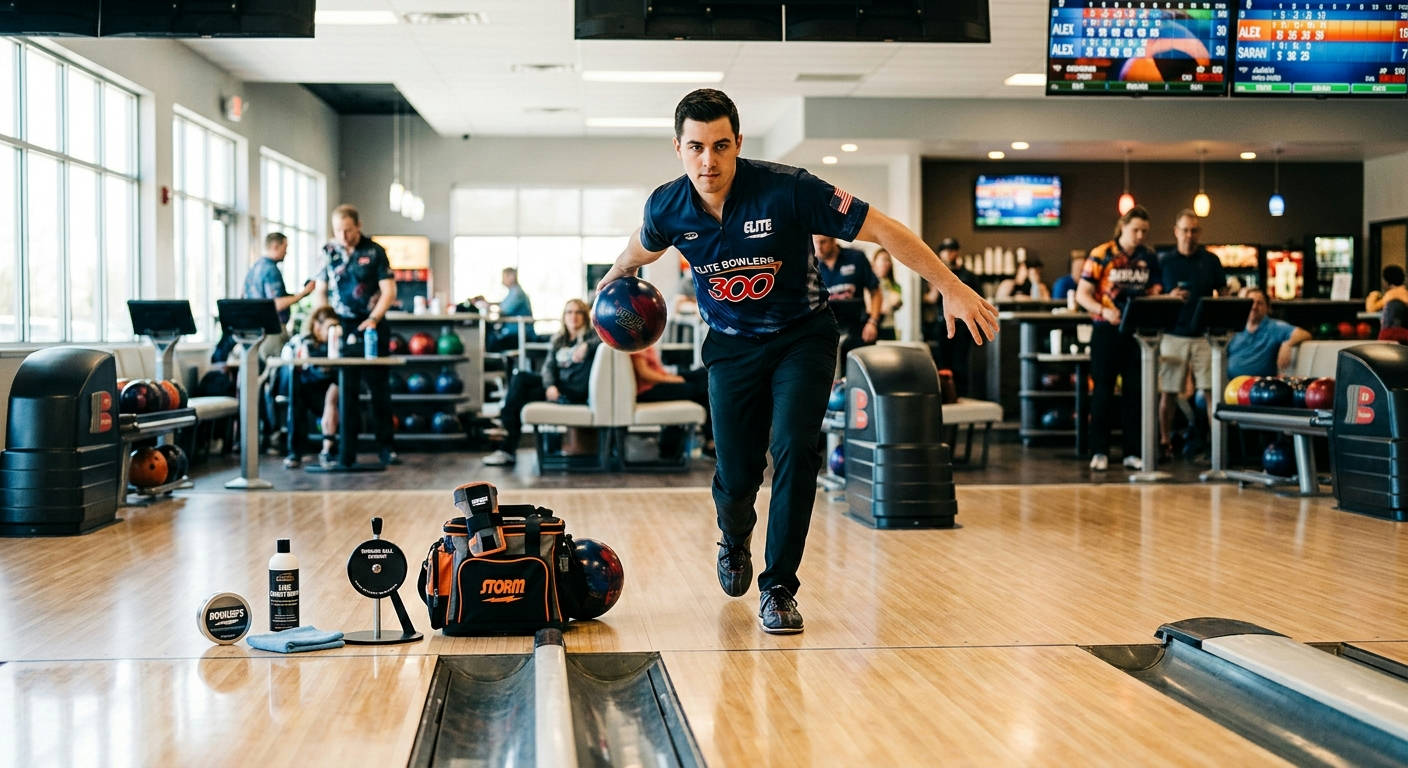
Ready to stop leaving pins on the table? If you think showing up for league night is enough to boost your average, it's time for a reality check. True improvement happens when you're not at the alley, working on the small, repeatable mechanics that build a killer shot. We've dug through the gimmicks to find the gear that actually delivers results, creating this definitive guide to the best bowling practice tools you can buy in 2026.
These aren't toys; they're specialized instruments designed to isolate and perfect specific parts of your game. From your release to your slide, the right tool can turn frustrating plateaus into your new personal best. Let's break down the gear that will transform your practice sessions and your scoresheet.
Why Your Game Needs More Than Just Lane Time
Spending hours a week throwing balls down the lane without a plan is a great way to burn money and reinforce bad habits. To truly get better, you need to think like a pro and deconstruct your game.
The Myth of "Just Bowling More"
Repetition is only useful if you're repeating the right things. Mindlessly bowling game after game often just ingrains your existing flaws deeper into your muscle memory. If your timing is off, bowling 10 more games with bad timing won't magically fix it.
The solution is targeted practice. That’s where specialized tools come in. They force you to focus on a single element—like your wrist position or your slide—without the distraction of the final score.
Isolating Skills for Faster Improvement
Think of it like a golfer using a putting green or a baseball player in a batting cage. They aren't playing a full game; they're isolating a core skill for intense, focused repetition. The best bowling practice tools allow you to do the same thing for your form, release, and accuracy.
By breaking down the complex motion of a bowling delivery into smaller parts, you can diagnose and fix the specific issues holding you back. This method is far more efficient than the "hope for the best" approach of simply playing another game.
Practice at Home, Dominate at the Alley
Some of the most effective training doesn't even require a bowling alley. Many of the top practice aids are designed for your living room, garage, or backyard. This convenience means you can put in the reps on your own schedule.
Consistent, short practice sessions at home are often more beneficial than one long, exhausting session at the lanes once a week. You build a stronger foundation so that when you do get on the lane, your body already knows what to do.
Our Top Picks: The 2026 List of the Best Bowling Practice Tools
We've tested, analyzed, and reviewed the equipment that offers the biggest bang for your buck. These are the tools that will give you a tangible edge over the competition.
#1: The Release Trainer – Master Your Spin & Rotation
A powerful, consistent release is the engine of your shot. It dictates ball speed, rev rate, and axis rotation. A release trainer is a small, often football-shaped device that you hold like a bowling ball to practice your release without needing a 60-foot lane.
This is arguably the most important at-home practice tool. It helps you develop the muscle memory for a clean, powerful "snap" at the bottom of your swing. It's essential for anyone struggling to generate hook or for experienced players looking to refine their hand position.
Our Recommendation: The MOTIV Rev-Trainer or similar spiral-shaped aids are fantastic. They provide immediate visual feedback on your rotation.
Find it on Amazon: https://www.amazon.com/s?k=Bowling+Release+Trainer+Tool&tag=bowlinggear04-20
#2: The Foul Line Slider – Perfect Your Approach
Consistency starts from the ground up. An inconsistent slide is a game-killer, leading to pulled shots, poor balance, and lost power. A simple slide sock or powder bag that you can use at home on a smooth surface helps you perfect this crucial final step.
These tools allow you to practice your slide over and over, building a smooth, reliable motion. You can work on staying low, keeping your trail leg in position, and finishing in a balanced "power" stance—all from the comfort of home.
Our Recommendation: Look for a simple, durable slide sock that fits over your regular athletic shoes. Brands like KR Strikeforce and Brunswick make reliable options.
Find it on Amazon: https://www.amazon.com/s?k=Bowling+Shoe+Slide+Sock&tag=bowlinggear04-20
#3: The Balance Board – Build a Rock-Solid Foundation
All power in bowling is transferred through your legs and core at the foul line. If you're off-balance, you're leaking energy and accuracy. A wobble or balance board is a phenomenal tool for strengthening the stabilizer muscles critical for a solid finish.
Spending just a few minutes a day on a balance board can dramatically improve your stability. Practice standing on one leg to mimic your slide position. This training directly translates to better posture and more power when you release the ball.
Our Recommendation: A simple wooden wobble board is all you need. You don't need a high-tech electronic version; the classic design has been trusted by athletes for decades.
Find it on Amazon: https://www.amazon.com/s?k=Wooden+Wobble+Balance+Board&tag=bowlinggear04-20
#4: The Video Analysis Tripod – Your Personal Coach
You can't fix what you can't see. Recording your shot is one of the most powerful and underutilized practice tools available. A simple, flexible smartphone tripod lets you become your own coach.
Set it up behind you to check your swing path and follow-through. Place it to your side to analyze your timing and knee bend. Watching your own form in slow motion is an eye-opening experience that reveals flaws you never knew you had.
Our Recommendation: Look for a tripod with flexible legs that can wrap around objects and a secure mount for your smartphone. UBeesize and Joby GorillaPod are popular choices.
Find it on Amazon: https://www.amazon.com/s?k=Flexible+Phone+Tripod&tag=bowlinggear04-20
Choosing the Right Practice Tool for Your Game
Not every bowler needs every tool. The key is to be honest about your weaknesses and invest in the gear that will address them most directly.
Identifying Your Weakness: Are You a Drifter or a Topper?

Take a moment for some self-scouting. Do you frequently drift left or right on the approach? A foul line slider and balance board are your new best friends. Do you struggle to get revs on the ball, or does it "top out" and roll end-over-end? A release trainer should be your first purchase.
If your issue is missing your target, start with video analysis. You might find your swing plane is off or you're pulling your head at the last second. The camera doesn't lie.
Budget vs. Impact: Where to Invest First
If you're on a tight budget, the highest-impact purchase is a release trainer. Mastering your hand position is fundamental to everything else in modern bowling. The second priority should be a tripod, because free, honest feedback is priceless.
Slide socks and balance boards are excellent but address more specific issues. Prioritize the tool that tackles your biggest problem area first.
"Average bowlers practice until they get it right. Great bowlers practice until they can't get it wrong. The right tools make that second part possible."
A Deeper Look at the Release: Why Spin Trainers Work
The moment of release lasts for a fraction of a second, but it determines the entire journey of the ball. This is where high-rev players separate themselves, and a release trainer is the key to unlocking that potential. For a deeper dive into what works for high-rev styles, check out our guide on the Best Bowling Balls For High Rev Players.
The Mechanics of a Powerful Release
A powerful release involves uncocking the wrist and rotating the fingers to impart spin. It's a "yo-yo" motion, not a "suitcase" lift. Many amateur bowlers struggle with this, lifting the ball with a straight, weak wrist.
A spiral-shaped release trainer forces your hand into the correct position. As you practice the motion, it provides instant visual feedback. If the spiral wobbles, your release was weak. If it spins cleanly like a bullet, you're doing it right.
### Drills You Can Do at Home with the Best Bowling Practice Tools
You don't need a lane to improve. Grab your release trainer and try these drills:
- Kneeling Release: Kneel on a carpeted floor. Swing the trainer like a pendulum and focus on snapping your wrist and fingers at the bottom.
- One-Step Drill: Stand a few feet from a couch or bed. Take one step, simulate your slide, and release the trainer onto the soft surface. This connects the release to your footwork.
- Slow-Motion Swings: Stand in front of a mirror. Go through your entire swing in slow motion, watching your hand and wrist position all the way through.
The Unsung Hero: Why Your Approach Matters
You could have the best release in the world, but if you arrive at the foul line off-balance and out of time, it’s all for nothing. Your approach is the platform for your shot.
As legendary coach Dick Ritger often emphasized, consistency in footwork is the bedrock of a repeatable shot. Investing in tools that improve your balance and slide pays massive dividends in accuracy and power.
Using Slide Socks to Diagnose Issues
Practice sliding on a kitchen floor or in your garage (make sure it's clean!). Does your slide shoe stop short? You might be putting too much pressure on your heel. Does your foot twist open or closed? That's a sign of an alignment issue that will send your ball off target. A simple slide sock makes these problems immediately obvious.
Integrating Balance Board Training
Start simple. Try to stand on the balance board with two feet for 30 seconds. Once that's easy, try it on one foot—your slide-leg foot. When you can do that consistently, try performing slow, controlled squats on one leg. This builds incredible strength and stability that will make you feel glued to the floor at the foul line.
"You can't shoot a cannon from a canoe. Your body is the cannon platform, and a wobbly approach is a canoe in a storm. Lock it down."
Beyond the Gear: Essential Practice Habits
The best bowling practice tools are only effective if you use them correctly. Combine this equipment with smart practice habits to accelerate your improvement.
The Power of Deliberate Practice
Don't just go through the motions. "Deliberate practice" is a concept that involves focused attention and specific goals for every single shot or drill. As detailed in research on expert performance, it's about quality, not just quantity.
Before each drill with your release trainer, set an intention: "This time, I will focus on keeping my wrist firm." When you record yourself, look for one specific thing to improve. This targeted approach is how pros refine their game.
Keeping a Bowling Journal
Track your progress. After a practice session (at home or at the alley), jot down a few notes. What did you work on? What felt good? What was a challenge? What did you notice on the video playback?
Over time, this journal becomes an invaluable record of your development, helping you spot patterns and identify what works for you.
Don't Neglect Your Equipment
Part of a good practice routine is maintaining your gear. A dirty, oil-soaked ball will not react consistently, making it impossible to know if a bad shot was your fault or the ball's. Regularly cleaning your equipment is a non-negotiable part of practice. A proper kit makes this easy, and we have the latest recommendations in our Bowling Ball Cleaning Kit 2026 review.
Frequently Asked Questions
Can these tools really replace a coach?
No. These tools are supplements, not replacements. A good coach can provide personalized feedback that a tool cannot. However, these tools allow you to execute the drills a coach would give you with more frequency and precision, making your coaching sessions more productive.
How long until I see results from using these tools?
It depends on your consistency. If you use a release trainer for 10-15 minutes, 3-4 times a week, you'll likely feel a noticeable difference in your release within a month. Balance and slide improvements can also be felt quickly. The key is consistent, short sessions.
Are bowling practice tools suitable for two-handed bowlers?
Absolutely. Two-handed bowlers can benefit immensely from nearly all of these tools. A release trainer helps with the dominant hand's rotation. Balance boards and slide socks are crucial for the athletic "hop-step" approach. And video analysis is arguably even more important for the complex timing of a two-handed shot.
