

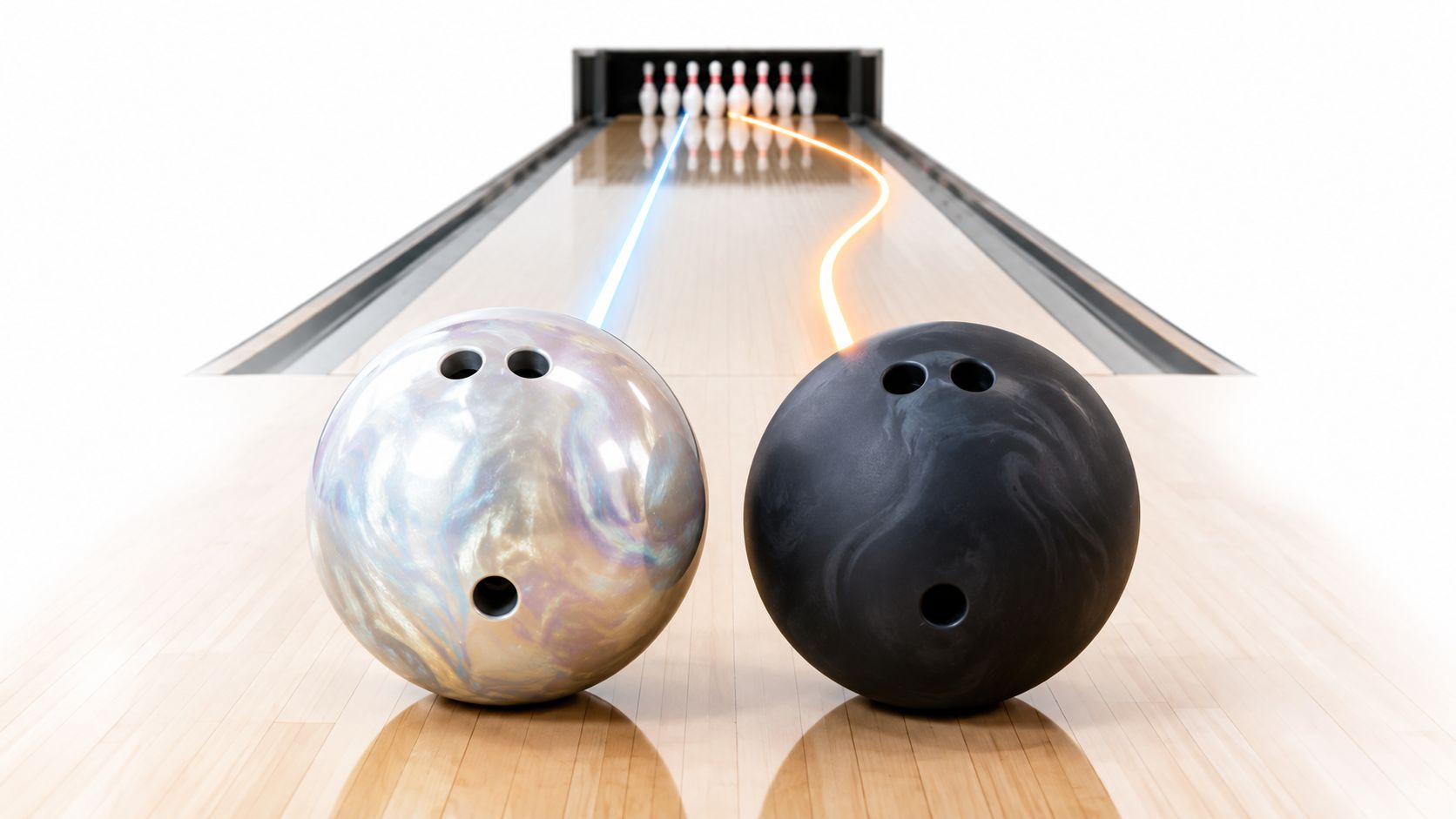
Tuesday league night is already moving when your team reaches the tenth frame. Jess sends a benchmark ball toward the pocket, but the hit comes in weak and leaves a 4-6 combination. Marcus follows with a high-hook resin ball, sends it wider, and watches it drive through the pins for a strike. In a team-best-frame format, Marcus's count is the one that matters, and your team finishes the game two pins ahead.
That small difference captures the whole strategy. Jess chose a predictable line that gave her a manageable spare option. Marcus accepted more risk because one strong ball could cover the frame for the team. Best ball rewards that kind of coordination, but only when bowlers understand which shots should protect the score and which shots can chase a higher ceiling.
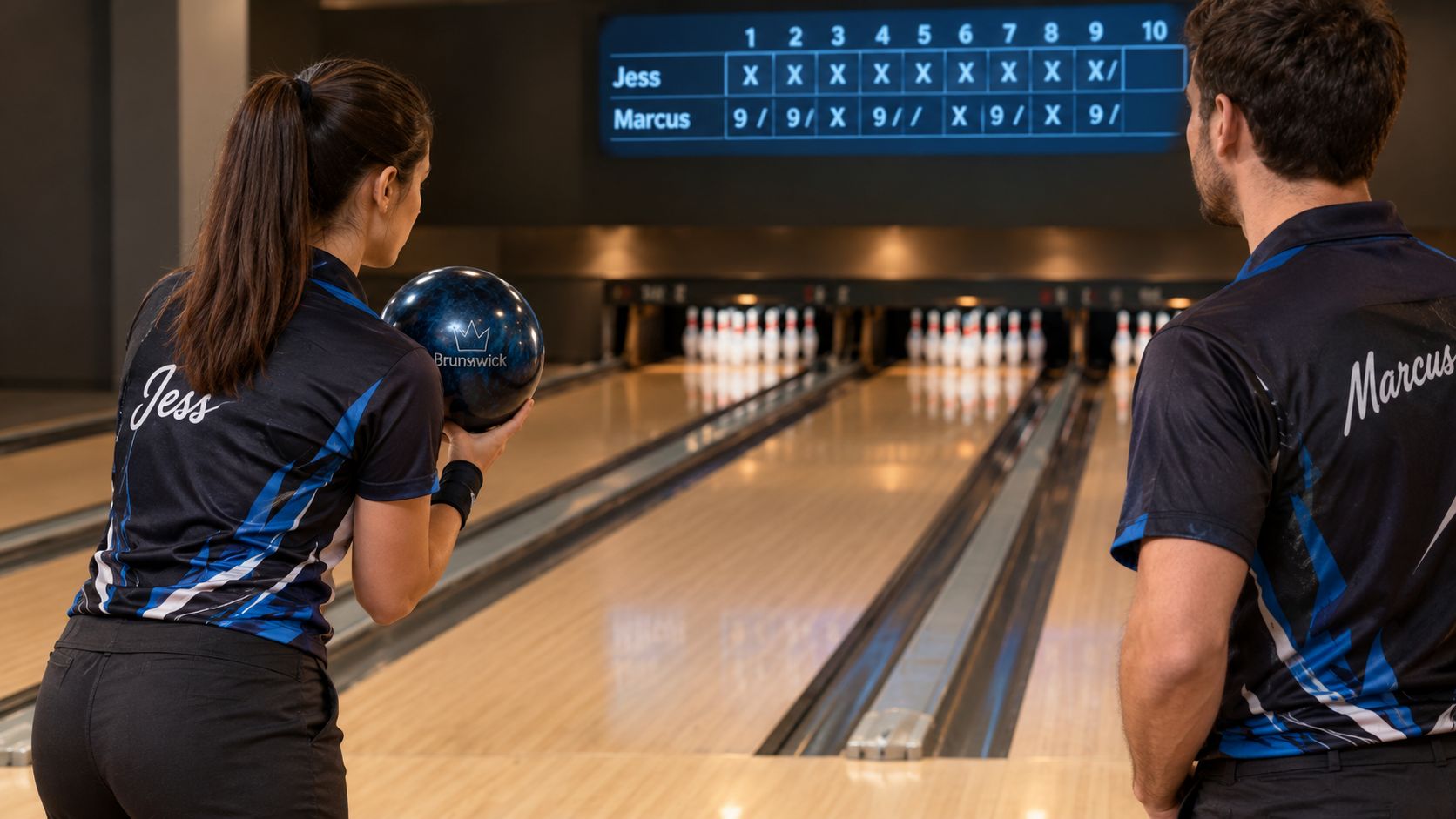
Table of Contents
- A League-Night Scenario That Shows Why the Format Matters
- What Best Ball Format Means in a Bowling Context
- How Ball Motion and Fit Shape Your Options
- Reading Lane Conditions and Picking a Line
- How Team Play Changes Ball Selection Strategy
- Matching Ball Format to Your Bowling Style
- Putting It All Together Before Your Next Set
A League-Night Scenario That Shows Why the Format Matters
Jess and Marcus aren't throwing the same shot, and that's the point. Jess's benchmark ball clears the front part of the lane cleanly, makes a controlled move toward the pocket, and leaves a difficult but familiar spare combination. Her ball motion is readable. If the team needed her individual score, that predictability would be valuable.
Marcus chooses a different assignment. His stronger resin ball creates more angle, and he sends it farther toward the outside before it returns sharply. The miss would be expensive if Marcus were carrying the whole frame, but the team doesn't need every bowler to produce the same result. It needs the best available count.
One frame, two jobs
In a best ball frame, bowlers can divide responsibility without making the decision complicated:
- The anchor shot: One teammate uses a controlled line designed to keep the ball near the pocket and avoid a large miss.
- The attacking shot: Another teammate uses a stronger motion or more open angle to seek the strike.
- The team decision: The group evaluates the highest count, not which bowler looked most technically perfect.
That arrangement resembles the broader team principle described in best-ball tournament guidance from the SCGA, where the lowest individual result is selected for the team score in golf's related format. Bowling uses pins rather than strokes, but the strategic idea is similar: teammates don't have to duplicate one another when the scoring system keeps the strongest result.
Coaching rule: If one teammate has a reliable pocket shape, the other bowler can take a calculated risk. That risk should be deliberate, not reckless.
Jess's shot still matters even though Marcus strikes. Her controllable line gives the team a backup count and tells Marcus how the lane is responding. Marcus's wider shape may produce the higher result, but Jess's shot helps keep the frame from depending entirely on one high-variance attempt.
The format also changes the emotional pressure. A bowler doesn't need to force a strike after seeing a teammate miss. A solid count can be the correct team play, especially when the lane is breaking down or the stronger ball is starting to overreact. The best teams make those choices before stepping onto the approach, then communicate clearly after each shot.
What Best Ball Format Means in a Bowling Context
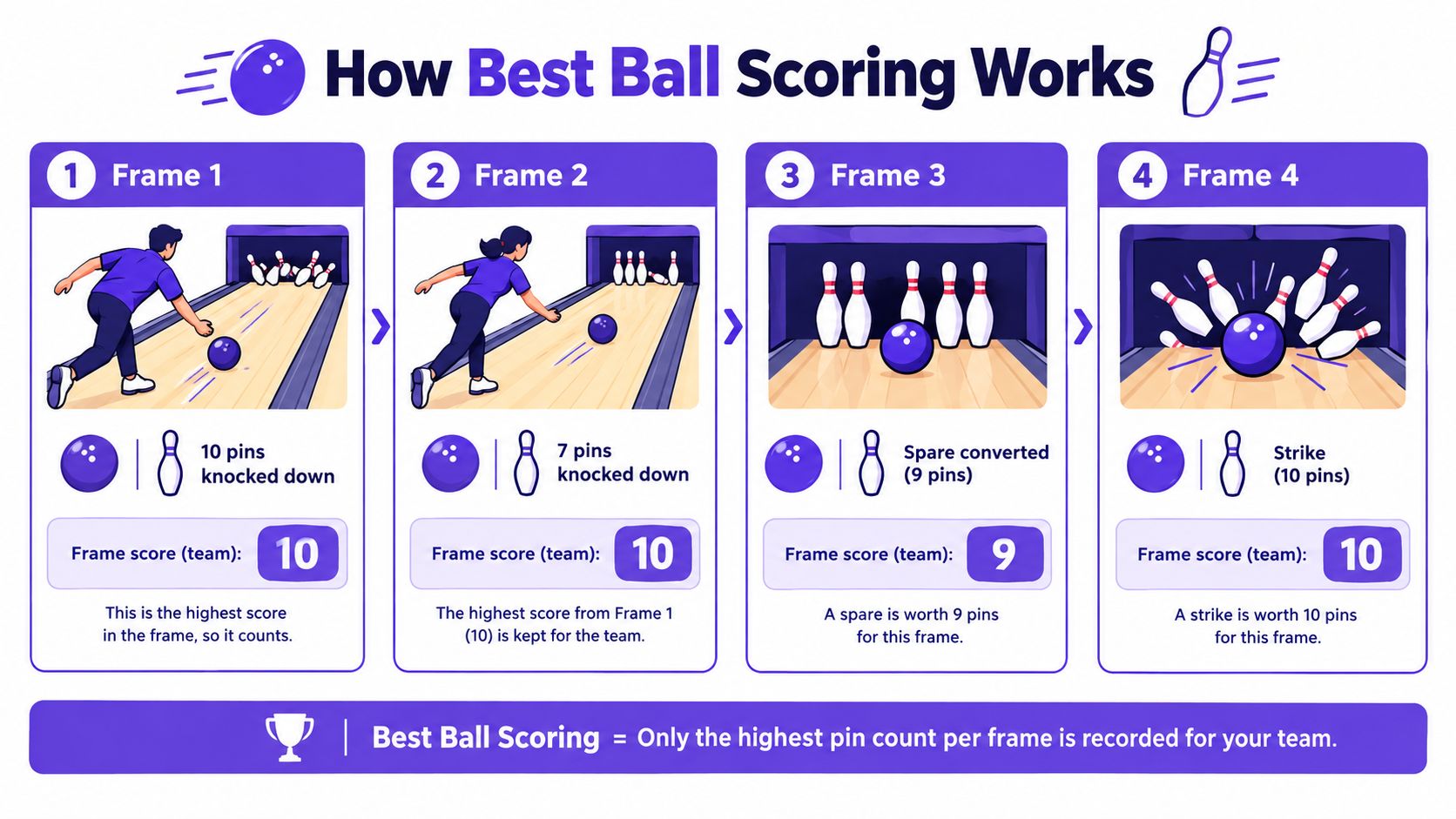
The term best ball format can describe different sports, so establish the local rule before league play begins. In bowling's team-best-frame version, each bowler throws one ball for the frame, and the team's recorded count is the highest pin count produced by a teammate.
The process is simple:
- Every team member throws one ball.
- The team compares the pin counts.
- The highest count becomes the team's score for that frame.
- The frame ends after those first-ball results are recorded.
Suppose three bowlers produce 7, 9, and 10 pins. The team records 10 pins for the frame. The bowler who threw 7 doesn't continue to shoot a spare for the team, and the bowler who threw 9 doesn't need to finish the frame either. The format selects the best first-ball result and moves on.
Why the spare rule causes confusion
A scramble generally keeps the team working from a shared best shot, with subsequent attempts continuing until the team completes the frame or hole. Best ball is different because every bowler plays an individual first ball, then the team selects the strongest result. You aren't combining the best parts of several shots, and you aren't continuing every bowler's spare attempt.
All-events is different again. It tracks each bowler's individual totals across the competition rather than creating one team count from each frame. A bowler can contribute to an all-events result even when another teammate's score is better, while that lower personal count might disappear from a best-ball team frame.
The format therefore changes what “good bowling” means. A guaranteed solid count from one teammate can make another teammate's aggressive attempt worthwhile. Spare shooting remains an important individual skill, but it isn't automatically part of the team frame after the first-ball comparison.
The practical scoring question
Before competition starts, ask three things:
- What counts: Is the team selecting the highest pin count from one ball per bowler?
- When the frame ends: Does the team stop after the first-ball results?
- How ties work: Does the league use a stated tiebreak or just record the shared count?
A written rule prevents arguments at the scorer's table. It also tells bowlers whether they should prepare a conservative spare-minded line or a more aggressive strike line. The scoring rule isn't a minor detail. It determines the shot each teammate should bring to the approach.
How Ball Motion and Fit Shape Your Options
Ball selection starts with motion, not brand names. Three equipment features shape what the ball does on the lane: the coverstock, the surface finish, and the core dynamics.
Coverstock controls how the ball grips the lane. Plastic usually creates limited traction and a straighter shape, urethane reads the lane in a controlled and predictable way, and reactive resin creates more traction and recovery. Pearl reactive covers often clear the front more easily before making a stronger move downlane.
Surface finish changes when that cover begins to read the lane. A polished surface tends to conserve energy and move later, while a sanded or matte finish begins traction earlier and produces a smoother arc. Core dynamics influence how the ball flares and changes direction. Symmetric cores tend to offer a more even motion, while asymmetric designs can create stronger changes in direction when matched correctly to the bowler and lane.
| Coverstock | Surface Finish | Typical Ball Motion |
|---|---|---|
| Plastic | Polished | Straight, low-hook motion with a late reaction |
| Urethane | Matte or controlled polish | Early, predictable read with a rounded shape |
| Reactive resin | Sanded or matte | Earlier traction and a smoother arc |
| Pearl reactive | Polished | Longer skid with a sharper backend move |
Match the shape to the release
A high-rev cranker can create plenty of rotation without help from the ball. A sanded reactive may give that release an earlier read and prevent the ball from skating too long before making its move. A lower-rev stroker often needs more length and angle, so a polished or pearl reactive can help the ball reach the pocket with useful energy.
Axis tilt matters too. A release with more side rotation can make a ball travel farther before it changes direction, while a more forward release can make the same cover read sooner. The right fit isn't “the strongest ball available.” It's the combination that produces a controllable shape for your release.
For a plain-language look at how internal weight affects this motion, use this guide to bowling ball weight blocks. The core doesn't replace a good release, but it can change how quickly the ball transitions from skid to traction to recovery.
Practical rule: Choose the ball whose miss still reaches a useful part of the lane. A strike shape is valuable, but a predictable pocket shape is often more valuable in team play.
Fit also includes the physical drilling. Thumb pressure, finger span, pitches, and grip comfort affect whether you can repeat the intended line. A ball that looks ideal on paper won't help if it forces you to squeeze the thumb or slow your feet. Test the motion with your normal tempo, not with a release you can't repeat under league pressure.
Reading Lane Conditions and Picking a Line
Start by watching the lane before changing equipment. Look for shine in the heads, visible color changes farther downlane, and the point where the first few shots begin to hook. The ball's reaction tells you more than the pin you want to hit. A ball that skids past the breakpoint may need friction sooner, while a ball that jumps early may need a cleaner path or a move inside.
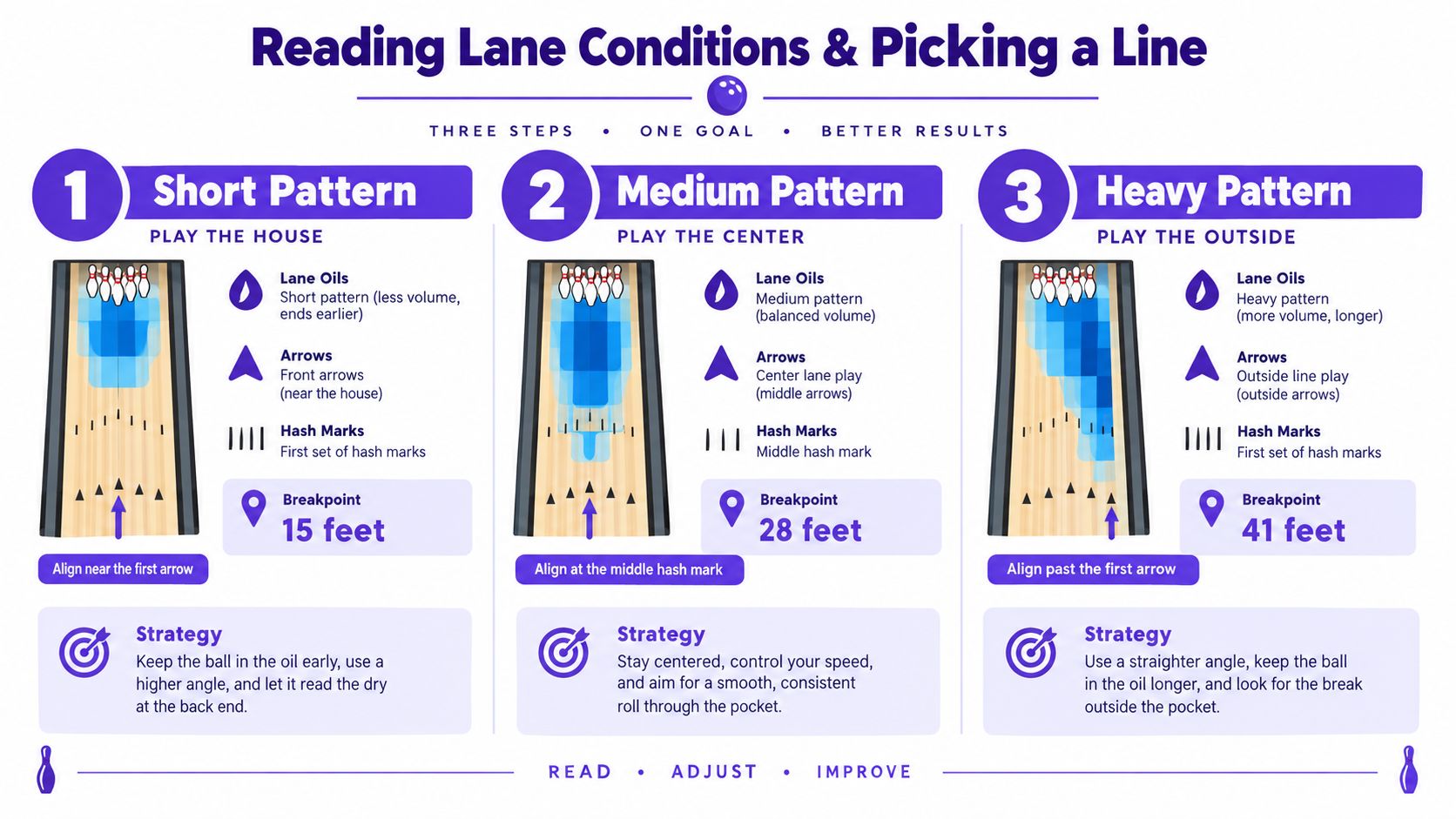
A useful starting estimate is the pattern-minus-31 rule. Subtract 31 from the oil-pattern length to estimate a workable breakpoint board. A 42-foot pattern, for example, suggests an exit around board 11, as explained in this overview of bowling oil patterns. Treat that result as an alignment reference, not a guarantee.
Turn the estimate into a playable line
A medium pattern usually gives you room to blend the lane. A neutral benchmark ball and a smooth shape can help you see whether the breakpoint is stable. Start with a target that lets the ball move through the oil without forcing it to jump off the dry.
A heavy pattern generally offers less friction outside, so a stronger cover or a more direct entry through the oil may be appropriate. Keep your speed steady and watch whether the ball reads the middle of the lane. If it never makes the corner, the breakpoint may be too far outside or the cover may be too clean.
A short pattern requires restraint. The ball encounters friction sooner, so a straighter line, more forward roll, or cleaner cover can prevent an early hook. The pattern-minus-31 estimate moves the breakpoint closer to the foul line as the pattern gets shorter, which helps you avoid projecting a long downlane shape onto a short lane condition.
Watch the ball's shape rather than chasing the arrows. A clean move at the breakpoint can still produce a high hit if the entry angle is wrong, while a modest-looking shape can carry well when it enters the pocket correctly.
Use this beginner's guide to reading bowling lane oil patterns for more practice with lane observation. During a best-ball set, make feet adjustments before replacing the ball, change coverstock only after confirming the line, and trust the breakpoint more than the pin you happen to be watching.
How Team Play Changes Ball Selection Strategy
Solo bowling gives you one result for every shot. If your ball misses the pocket, your score absorbs the consequence. Best ball gives the team another option, so ball selection can divide into a high-percentage shape and a high-ceiling shape.
Consider a pair of teammates on a medium-oil house shot. One uses a benchmark reactive ball with a smooth move toward the pocket. The other chooses a stronger piece and opens the lane from the outside. The benchmark player protects the team count, while the stronger-ball player searches for the strike that raises the frame's ceiling.
That doesn't mean the benchmark ball should always be used. It means the strongest ball should have a job. If the lane doesn't provide enough friction for it to recover, the aggressive choice becomes a liability rather than an advantage.
| Priority | Solo Play | Best Ball Format |
|---|---|---|
| Miss management | Protect your own score | Let a teammate cover a weaker result |
| Ball shape | Match one ball to the full assignment | Divide controlled and aggressive roles |
| Risk level | Keep variance manageable | Permit one calculated high-risk attempt |
| Anchor equipment | Use the best ball for your line | Keep a repeatable benchmark or spare option |
Give each teammate a clear assignment
The first bowler can establish the lane with a neutral benchmark shape. The second bowler can then decide whether the lane supports a stronger cover, a wider launch, or a straighter projection. If the first shot leaves a light hit but the ball motion is stable, the second player shouldn't abandon the line just because the pins didn't fall.
A symmetrical spare ball can serve as the team anchor when a spare opportunity matters to the individual rules or when the lane becomes too dry for reactive equipment. Its predictable motion makes it easier to control, especially for bowlers who need a dependable straight shot.
For broader equipment comparisons, consult this guide to the best bowling ball for all lane conditions. The useful question isn't which ball hooks the most. Ask which ball gives your team a reliable count when your first choice doesn't match the lane.
Team decision: Keep one player close to the pocket and give the other player permission to attack only when the lane provides a repeatable recovery window.
Matching Ball Format to Your Bowling Style
Your release determines how much help the ball needs. Rev rate, speed, axis rotation, and tilt all affect whether the same coverstock reads early, travels long, or changes direction too sharply.
| Bowler Style | Core Type | Coverstock | Surface Finish |
|---|---|---|---|
| Stroker | Symmetric | Polished reactive | Polished or lightly tuned |
| Tweener | Moderate-differential asymmetric | Mid-strength reactive | Controlled sanded finish |
| Cranker | Strong asymmetric | Solid reactive | Rougher, porous finish |
| Two-handed | High-RG symmetric | Controlled reactive | Dull finish for traction management |
Start with the release, then choose the line
A stroker usually creates a smoother release with moderate rotation. A symmetric core and polished reactive cover can give that player length without demanding a dramatic move at the breakpoint. The best line is often one that keeps the ball in front of the bowler and lets the cover create a controlled turn.
A tweener sits between a stroker and a cranker in speed and rev rate. A mid-strength asymmetric core with a controlled sanded finish can blend the lane, giving the bowler enough traction without forcing an abrupt backend reaction. This combination can support an inside line as the track area opens.
A cranker creates substantial rotation and angle. Stronger asymmetric equipment with a rougher reactive surface can read earlier and use that stored energy through the pins rather than skidding too far. The bowler still needs to manage speed, because added traction won't fix a release that is too fast or too slow for the lane.
Two-handed players often produce high rev rates and significant axis rotation. A high-RG symmetric shape with a dull finish can help control the transition from skid to hook. Depending on speed and lane friction, that player may need to keep the breakpoint tighter and avoid opening the lane too soon.
These categories are starting points, not labels you must obey. If your ball rolls too early, change the surface or move your feet. If it skids past the breakpoint, try more traction or a line that finds friction sooner. In team play, choose the style-ball combination that leaves your teammate a useful backup option.
Putting It All Together Before Your Next Set
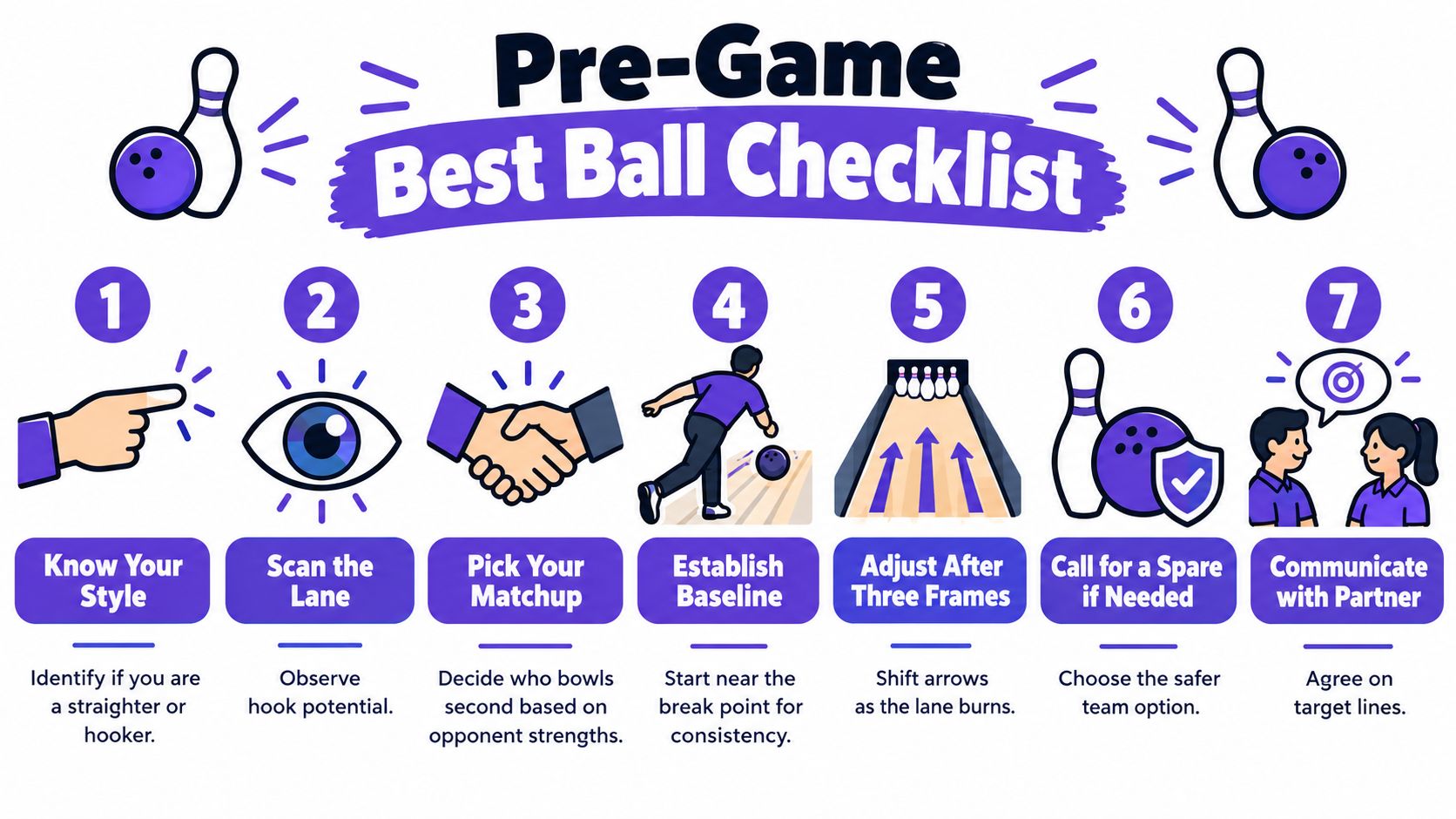
Before you start, confirm the exact team-best-frame rule. Make sure everyone knows whether the frame ends after the first ball and whether the team records the highest count.
Then run a short observation routine:
- Watch the lane: Notice where the first shots begin to hook and where they stop responding.
- Establish a baseline: Start with a benchmark shape that gives you a readable breakpoint.
- Assign roles: Let one bowler protect the pocket while another tests a higher-ceiling line.
- Judge the miss: Keep the ball whose weak shot still leaves a manageable result.
- Adjust with your feet: Move your stance or target before reaching for the strongest ball.
- Communicate: Tell your teammate whether the lane is holding, drying, or jumping.
- Log the result: Record the ball, surface, starting line, and useful adjustment for the next set.
The strongest ball in your bag isn't automatically the best team choice. A benchmark shape that repeats, gives the pocket a chance, and leaves room for a teammate's attack can produce a better result than two bowlers forcing the same aggressive line.
Bowling Gear Reviews offers hands-on reviews, comparisons, and practical guides for bowling balls, shoes, bags, and accessories. Use its lane-condition and equipment advice to refine the ball choice and breakpoint plan you bring to your next best ball set, then visit Bowling Gear Reviews to compare your options.
