

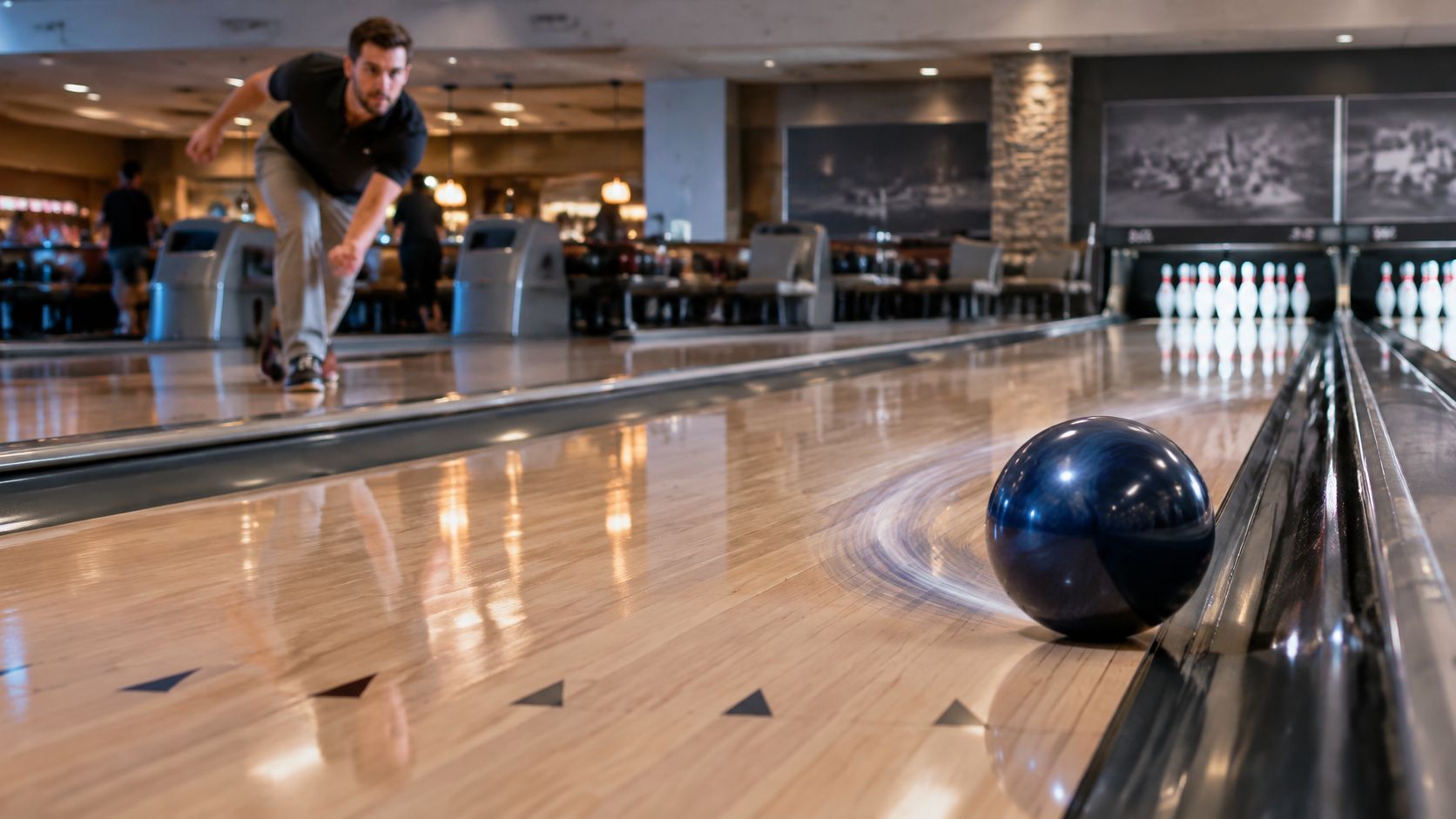
You hit your target at the arrows, the ball looks clean through the front, and then it takes off. It crosses high, leaves a nasty split, or runs through the nose for the third frame running. By game two you're moving left every few shots, slowing down, speeding up, and wondering if you bought the wrong ball.
Don't spend money yet. A bowling ball hooking too much is rarely proof that the ball itself is defective. It's usually a mismatch among lane friction, surface finish, and release rotation, and those three look different on the lane. I would rule out the lane and your release with a logged test first, then change equipment only if the log says the ball is the problem.
Table of Contents
- Match the Hook Symptom to Its Cause
- How to Run a 20-Shot Hook Test
- Fix Lane Friction and Surface Before Changing Release
- Release Errors That Make a Ball Hook Too Much
- Choose Your Adjustment by Miss Direction
- Decide Between Resurfacing and a Ball Swap
Match the Hook Symptom to Its Cause
Start with shape, not guesses. Where the ball starts to change direction, and how sharply it does it, tells you more than the final pin count. Match your last few sessions to one row below before you touch speed, surface, or your hand position.
| Symptom | Likely cause | First fix to test |
|---|---|---|
| Early, smooth hook from the first boards | Too little oil left or too much surface grip | Clean the cover, then test a smoother surface |
| Skid, then sharp turn near the breakpoint | Polished cover meeting dry boards | Check the dry track, then adjust target or speed |
| Hooks more in later games | Oil removed by traffic or dry track built up | Check oil on the target line, then move target |
| Hooks hard only on misses right | House-shot oil pattern with less oil outside | Move feet and target inside, then test again |
| Hooks and misses high | Excess side rotation or rev dominance at release | Reduce axis rotation and keep the wrist stable |
| Hook changes shot to shot | Inconsistent release or speed | Lock speed and target for a 10-shot block, then fix the release |
What Each Shape Is Telling You
An early, smooth hook usually means the cover is grabbing before it should. That happens when there's too little oil for the finish you're using, or when a fresh resurface left the surface rougher than the lane can handle. The ball doesn't snap. It reads, arcs, and keeps arcing until it's high.
A skid followed by a sharp turn points the other way. A polished cover can hydroplane through the front, store its energy, and then react hard when it finds dry boards near the breakpoint. That ball isn't necessarily too strong overall. It's too clean up front and too abrupt when friction finally appears.
The USBC Bowling Technology Study, begun in 2015 and released in 2018, examined oil absorption, core properties, and lane-transition effects, and it explains that modern bowling balls can absorb lane oil and move it downlane or remove it from the surface. Once oil is displaced or absorbed, more of the ball contacts the lane directly, increasing friction and hook. The same work identifies the ball's microscopic surface spikes and pores, the friction difference between oiled and dry lane sections, and oil-absorption rate as major contributors to ball motion.
That mechanism explains the later-game row. A ball that's perfect in game one can start reading sooner in game three because traffic has dried the front and your own shots have built a track. Hook potential rises when less oil remains, so the condition changed even if your release didn't.
Pattern and Release Look-Alikes
Hooking hard only on misses right is often the pattern talking, not the ball. Most house shots put more oil in the middle and less outside, so a right-handed miss right finds friction early. If you want the full picture of how oil is laid out, read up on the different types of oil patterns in bowling and compare your center's typical shot to what you're seeing.
Hooking and missing high, especially when the shape changes shot to shot, points closer to home. Excess side rotation, a squeezed grip, or drifting ball speed can make the same ball look wild one frame and fine the next.
Practical rule: Write down which table row matched your last three sessions. If you can't pick one row consistently, your first problem is repeatability, not equipment.
How to Run a 20-Shot Hook Test
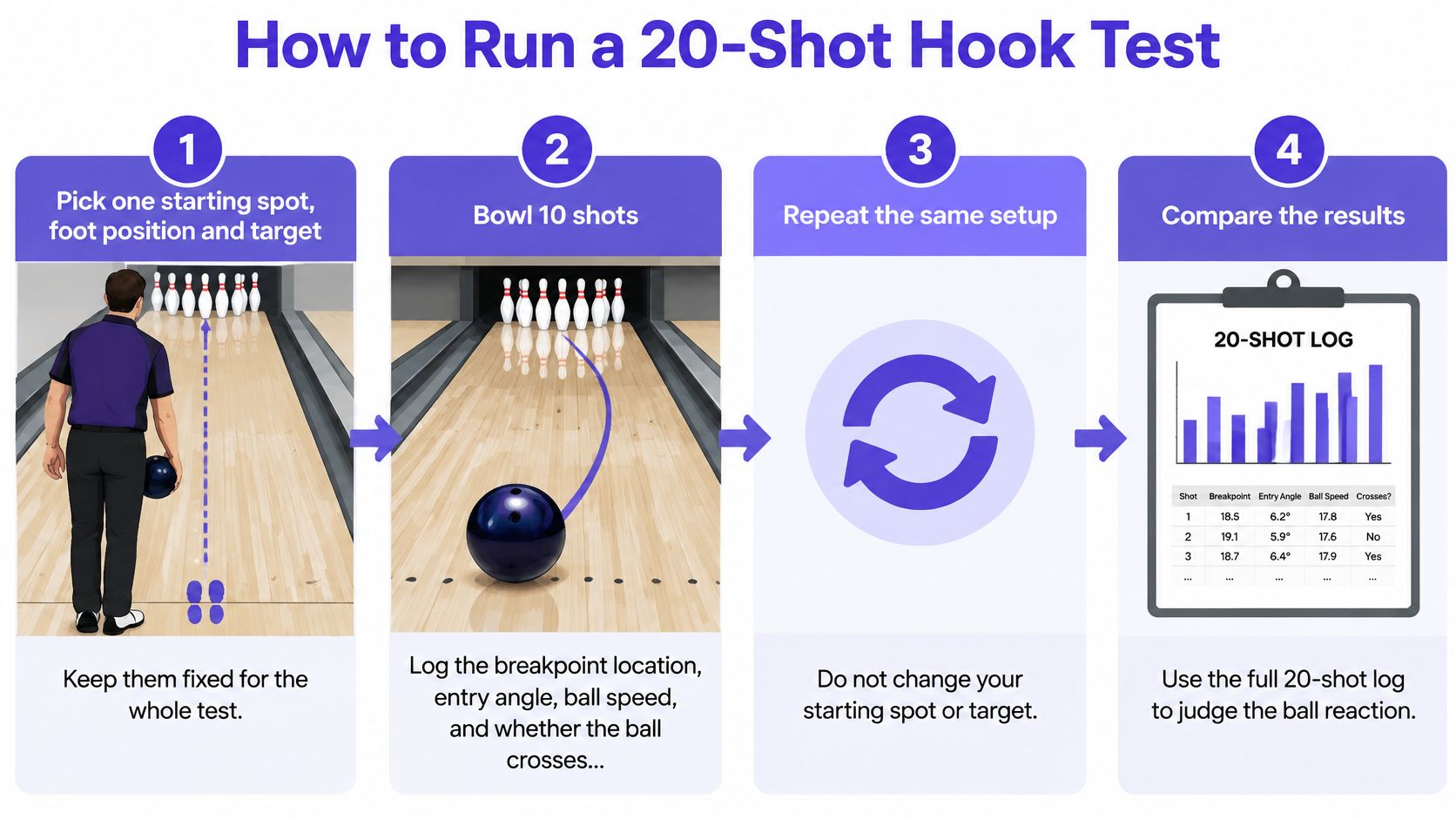
One shot proves nothing. Two controlled blocks of ten, with only one change between them, will separate a lane-friction error from a release error and save you from buying a ball to fix a targeting problem.
The visual below summarizes the sequence you'll follow on the lane.
The Six Steps
- Pick one starting spot: Choose your foot position and target, then keep both fixed for the whole first block, because a moving baseline makes every later comparison meaningless.
- Bowl 10 shots and log each one: Note breakpoint location, entry angle, ball speed, and whether the ball crosses high or quits early, since those four details show where the hook starts.
- Check the oil on your line: Look at the oil rings on the ball and note whether a dry track has formed, because depleted oil raises friction on its own.
- Change only one variable: Pick cleaning, surface, speed, or target, and change nothing else, so you can credit or blame that single change.
- Bowl another 10 shots: Use the same log columns and the same intended breakpoint, even if the first few shots tempt you to adjust again.
- Judge the block, not the best shot: Count pocket entries that didn't cross high, because carry on one lucky shot hides a pattern that will cost you in league.
The USBC Ball Motion Study summary identifies surface roughness, on-lane coefficient of friction, dry-lane coefficient of friction, and surface-roughness measures as dominant motion variables, with higher roughness and friction producing earlier transitions and greater total hook. That's why the test isolates surface and friction before you rebuild your release.
How to Score the Result
Use a clear pass mark. If at least 7 of 10 shots reach your intended breakpoint and enter the pocket without crossing high, the change worked well enough to keep testing in league. Treat that as your personal testing criterion for comparing blocks, not as a guarantee for every house and pattern.
A passing block looks boring on paper, and that's good. Breakpoints cluster within a couple of boards, speeds stay tight, and misses are mostly light or flush rather than through the nose. A failing block scatters. You'll see early reads, high crossings, and speeds wandering as you unconsciously try to save shots.
Don't change speed, hand position, target, and surface at once. You'll feel busy and learn nothing, because you won't know which change helped or hurt.
If two blocks fail after one controlled change each, stop adjusting equipment for that session and move to a release review. More surface work won't fix an inconsistent launch.
Bring a spare ball for corner pins if you want, but don't let spare attempts break your count. Log only first shots thrown at your chosen line with the ball you're testing. If the lane gets reassigned or freshly oiled mid-test, start the block over.
Fix Lane Friction and Surface Before Changing Release
A ball that starts hooking early can be reacting to lane friction, a dirty cover, or an overly aggressive surface. Check those conditions before changing your release or buying another ball. Surface adjustments are reversible, but they still need a controlled test.
Clean First, Then Resurface
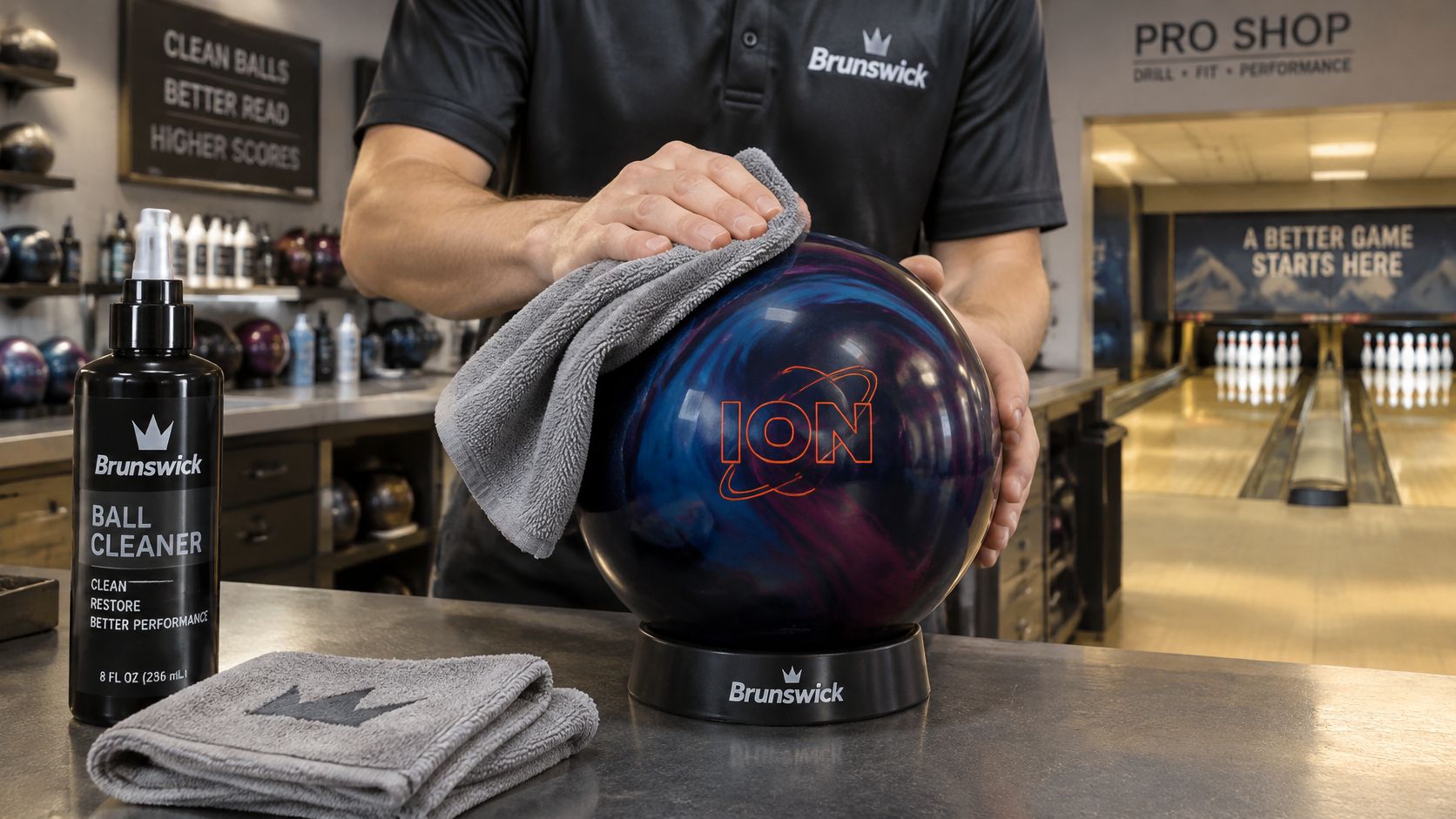
After your session, clean the ball with a dedicated ball cleaner and a microfiber towel. Spray the cleaner, let it sit briefly, wipe in small circles, and rotate the ball until the towel stops picking up grime. Retest before changing the grit: oil and residue on the cover can make its reaction less predictable.
If a clean ball still reads the midlane too early, ask a pro shop to make the finish smoother. Common sanding finishes range from about 500 to 4000 grit, with polish at the slick end. Moving to a higher grit generally reduces the cover's bite in the front and delays the hook. The guide to bowling ball sanding grits and surface changes explains how to discuss a specific finish with your pro shop.
Make one small change at a time. If the ball is at 1000 grit and jumps early, try 2000 before going straight to polish. You may give up some midlane traction, but retain a more controlled read.
The USBC Ball Motion Study summary reports findings from a study conducted from 2005 to 2008: surface-related factors, including friction and oil absorption, had a stronger effect on ball motion than several core characteristics. The USBC equipment specifications manual states that the coefficient of friction for a bowling ball weighing 13 pounds or more must not exceed 0.320 under specified test conditions of 30% to 50% relative humidity.
Watch for Overcorrection
Smoother surfaces can help a ball clear the front, but polish may make it skid farther and turn sharply when it reaches dry boards. The trade-off is a later, sometimes less controlled reaction.
For example, a league bowler polishes a strong solid to reduce early hook. The ball reads cleaner at first, then snaps off the dry outside and crosses high. Stepping back from polish to a smooth 3000 or 4000 finish may restore a more readable arc. Retest before making another change.
The video below shows surface work in practice and how small finish changes can alter ball reaction.
Retest after each change using the same feet and target. Log a 10-shot block: if at least 7 of 10 shots reach the pocket without crossing high, keep testing with that finish. If the block still shows early hook, don't keep sanding in circles. Recheck the lane and your release before deciding the ball is wrong for the condition.
Release Errors That Make a Ball Hook Too Much
A correctly matched ball can look uncontrollable when your hand creates the extra motion. Film settles this faster than feel does. Prop a phone behind the approach, throw your normal shot, and watch your hand position at release and the ball's first direction off your hand.
Compare what you see with the faults below. Each one adds rotation, kills speed, or changes launch angle in a way that shows up as extra hook downlane.
| Release error | Effect on the hook | Correction to test |
|---|---|---|
| Thumb squeezed or stuck | Adds side rotation and a sharper turn | Relax the grip and let the thumb exit first |
| Excess side turn at release | Larger axis tilt and an earlier hook | Reduce the turn and let fingers rotate through the ball |
| Muscled downswing | Revs dominate, so the ball skids and then snaps | Smooth the swing at the same or slightly faster speed |
| Wrist collapse at impact | Shifts launch angle and rotation | Keep the wrist firm and stacked through release |
Corrections in the Right Order
Keep your wrist stable and stacked behind the ball through the swing. A collapsing wrist dumps the ball into the lane with inconsistent rotation, while a firm position lets the same release repeat. If your fit forces you to squeeze, that's a drilling conversation, and understanding the main bowling grip types and how they affect release helps you explain the problem to your pro shop.
Let your thumb exit before your fingers. When the thumb hangs up, you'll often turn the ball early to get out of it, adding side rotation you didn't intend. A clean thumb exit lets your fingers rotate through the ball naturally instead of yanking it sideways.
Reduce the visible turn at the bottom. You don't need a huge lateral rotation to create hook with modern reactive covers. Stay behind the ball longer, project it toward your target, and let the cover and core do the work they were built for.
If the ball is still too angular after those changes, test a slightly faster, more direct projection with the same release. Add speed by moving back a touch on the approach and letting the swing stay free, not by muscling the downswing harder.
The USBC high school bowling coaching guide describes ball motion as skid, hook, and roll, noting that greater revolutions shorten skid and create an earlier hook, while axis rotation affects the direction and shape of the transition. That sequence is why a rev-dominant release on a drying lane produces such a violent move.
Pitfalls That Make It Worse
- Squeezing after a high miss: Tension usually adds turn and slows the ball, which gives friction more time to work.
- Slowing down to be careful: A slower ball hooks earlier and more overall, so cautious shots often cross higher.
- Judging one shot: One flush strike after a grip change proves nothing if the next six scatter.
Judge any correction with two blocks of 10. Log pocket-hit percentage, breakpoint consistency, and high versus low misses. If the ball becomes controllable without losing pocket entry, the problem was launch and rotation, not coverstock strength, and you've just saved the price of a ball.
Choose Your Adjustment by Miss Direction
Miss direction is diagnostic information. A ball that only misbehaves on certain misses is telling you about the oil pattern and your breakpoint, not begging for a replacement.
According to BOWL.com's guide to understanding oil patterns, house shots generally place more oil in the middle and less on the outside, so a right-handed bowler's miss right encounters less oil and more friction, producing extra hook, while a miss left sees more oil and tends to hold. Left-handed bowlers see the mirror image on their side of the lane.
Pattern length matters too. Longer patterns reduce the hooking distance available after the ball exits the oil, so an early move or excessive entry angle leaves almost no room to recover. On a short, dry house shot you have friction to burn. On a longer pattern, every board of early hook is expensive.
Three Adjustments, in Order
| Adjustment | What it changes | Use it when |
|---|---|---|
| Add speed without forcing it | Delays the hook point | Misses are consistently right and the ball hooks early |
| Reduce axis rotation | Makes the arc smaller | The ball hooks too far past the breakpoint |
| Move the breakpoint farther downlane | Needs more target distance | Long patterns leave too little recovery room for an early move |
Add speed first when the ball reads early but your line is basically right. A modest speed increase pushes the hook phase downlane and keeps the ball from crossing high, without forcing you into a weaker angle. Get that speed from footwork and a free swing. Forcing it with your shoulder usually adds rotation and cancels the benefit.
Reduce axis rotation next when the ball reaches the right area but turns too much from there. Staying behind the ball longer shrinks the arc and softens the backend, which preserves pocket entry better than moving so far left that you're throwing across drying fronts.
Move the breakpoint downlane when the pattern demands it. Aim at a farther target, keep your launch tighter, and let the ball change direction later. This beats moving left on longer patterns, because moving left alone can send the ball into the dry too soon with even more angle to recover from.
The Dry Track Trap
Don't assume heavy oil protects you. If you hit the same boards shot after shot, your own ball removes and absorbs oil there, building a dry track that hooks harder as the night goes on. Moving your feet and target inside together, while keeping a sensible breakpoint, gets you back into oil without giving up entry angle.
Use the miss pattern to decide. If misses are consistently right and hooking hard, adjust line, speed, or breakpoint before you blame the ball. If misses are consistently left and holding, the ball probably isn't over-hooking at all. Your launch direction needs work, and a new coverstock won't aim for you.
Decide Between Resurfacing and a Ball Swap
Here's the decision rule I would use. If a clean ball with one sensible surface change still can't get 7 of 10 shots to your intended breakpoint without crossing high, and your release blocks look repeatable on film, the ball is probably wrong for that lane condition.
That rule protects your wallet in both directions. It stops you buying a ball to fix dirty coverstock, and it stops you resurfacing forever when the core and cover combination is too strong for your house.
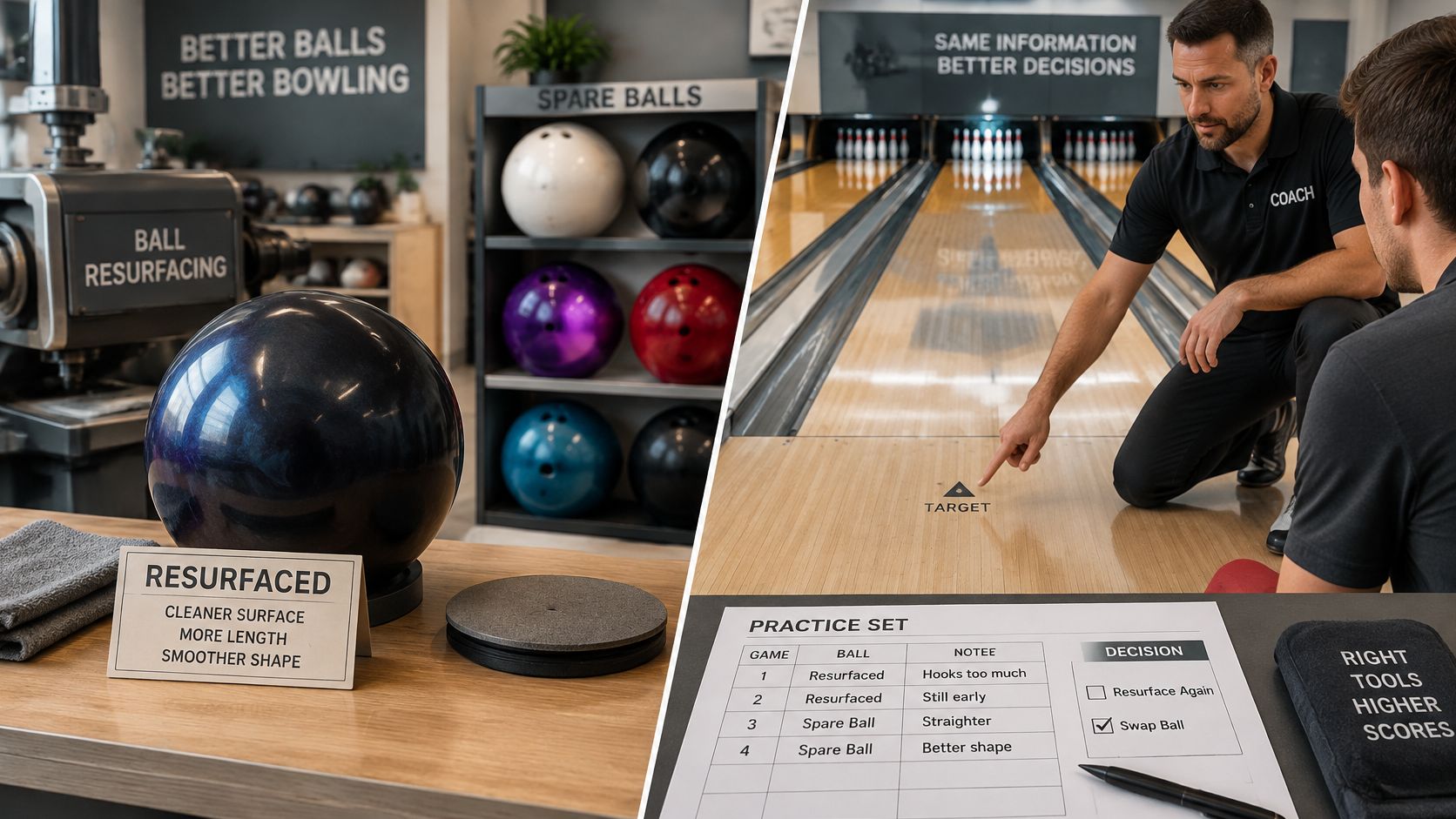
Bring your log when you talk equipment. A good pro shop conversation starts with evidence, not with whatever arrived in this week's shipment, as the coaching discussion below illustrates.
Apply Your 20-Shot Log
- Keep the ball: It reaches the intended breakpoint and holds pocket entry after cleaning or one surface step, so your money is better spent on practice games.
- Resurface again, once: The reaction is early and rough but improving, so step the finish up one more grit and run another block before deciding.
- Consider a swap: A polished ball still hooks sharply off dry boards while your speed and rotation stay steady on film, which suggests the cover is too responsive for your typical friction.
- Change ball strength: The same early, uncontrollable pattern persists after resurfacing, pointing to a less aggressive coverstock or a core that revs up later.
Take the full log to your pro shop, including speeds, breakpoints, and which surface you tried. Staff can match surface and core to your oil pattern instead of guessing from one watched shot. If you're researching options first, our site offers guides on choosing the right ball, weight, and style, and our bowling gear is tested in real bowling conditions rather than judged from spec sheets alone. We only recommend products we believe offer value to readers, which matters when a cheaper surface change would do the job.
Test the New Ball the Same Way
Don't declare victory after one strike with a borrowed or newly drilled ball. Bowl the same 10-shot block from the same starting position, log the same four details, and compare pocket entry and breakpoint against your earlier blocks.
Say your old ball managed four clean pocket entries from ten, all crossing high on misses. A weaker ball that produces seven or eight controlled entries from the same line has earned its place. A new ball that looks spectacular twice and scatters eight times hasn't, no matter how good those two shots felt.
Spending rule: Equipment money follows a confirmed diagnosis. If you can't point to the log entry that proves the ball is the problem, you're not ready to buy.
Keep the old ball if it still fits a heavier condition you see in tournaments or other houses. A ball that's too much for your dry Thursday league may be exactly right on fresh oil elsewhere. Swapping means matching strength to condition, not admitting the first purchase was a mistake.
If your log points to a weaker cover, a different weight, or a smoother shape, visit Bowling Gear Reviews for hands-on ball reviews, surface and maintenance guides, and clear comparisons built around real lane conditions. Bring your 20-shot results, match them against our tested recommendations, and buy only the change your diagnosis calls for.
