

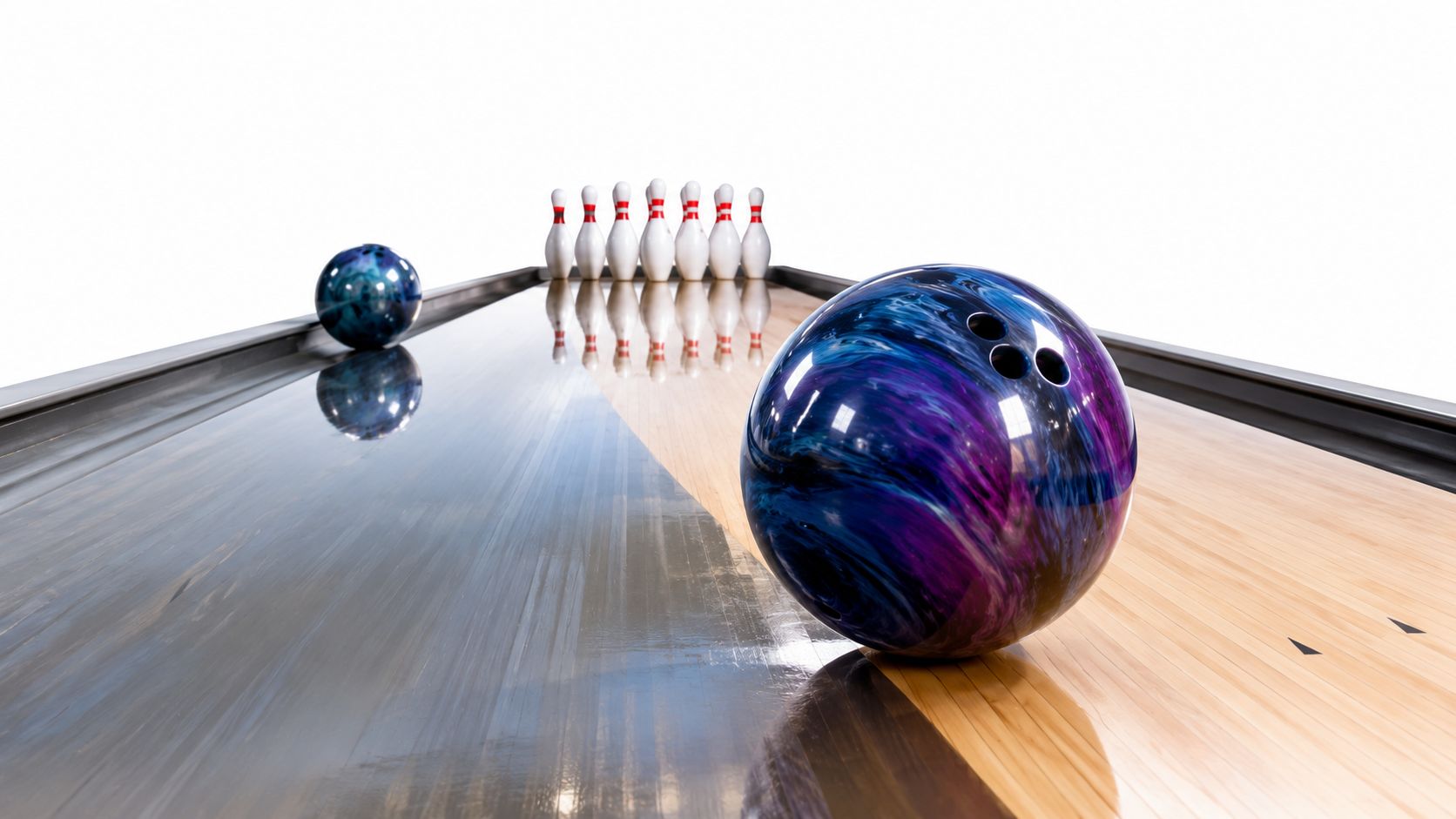
Forget the advice to buy the highest hook rating you can find. That's the fastest way to get a ball that turns too early, burns up its energy, and leaves weak pocket hits on the shots you throw. If you're looking for the best bowling ball for curving, you don't need the most aggressive ball on the wall. You need the ball that repeats the same path at your speed, on your lanes, through three full games.
That changes the ranking completely. A strong ball that hooks beautifully on fresh oil can become uncontrollable after transition. A moderate ball that looks tame in a video can outscore it because it holds its breakpoint and carries. I would start by matching coverstock and surface to your oil, then use the core numbers to set timing, then test the shortlist before you pay for drilling.
Table of Contents
- Best Bowling Balls for Curving at a Glance
- Why Lane Oil Decides How Much Your Ball Curves
- Coverstock and Surface Prep as the Strongest Hook Lever
- Core RG and Differential Set the Timing
- Matching Ball Type to Speed, Rev Rate and Skill
- Test and Confirm Your Curving Ball Before You Buy
Best Bowling Balls for Curving at a Glance
The strongest hook claim does not guarantee the most repeatable curve. Use these six balls as distinct motion profiles, then judge each against your speed and lane conditions. All listed specifications are for 15-pound balls. The hook notes describe the models relative to one another here, not a universal score across brands or years.
| Ball | Year | RG | Total differential | Hook profile |
|---|---|---|---|---|
| Brunswick Mesmerize | 2024 | 2.510 | 0.056 | High hook potential; listed as discontinued |
| Brunswick Ethos | 2023 | 2.481 | 0.053 | Reactive resin pearl; no hook rating listed |
| Radical Outer Limits Black Hole | 2023 | 2.499 | 0.051 | Strong down-lane motion; intermediate differential 0.014 |
| Hammer Hazmat | 2023 | 2.479 | 0.055 | Mid-lane pickup, continuous down-lane motion |
| Track Theorem | 2023 | 2.473 | 0.046 | Hybrid reactive cover; intermediate differential 0.017 |
| Hammer Envy Tour | 2023 review | 2.469 | 0.034 | Smoother arc; intermediate differential 0.013 |
How to Read These Numbers
Lower RG generally means a ball revs up sooner. Higher differential generally means more track flare and a stronger change of direction at the breakpoint. The Hazmat, with an RG of 2.479 and a differential of 0.055, looks like the earliest and most aggressive option in this group. The Mesmerize's higher RG of 2.510 suggests later timing, while its 0.056 differential supports strong flare. The Envy Tour's lower differential of 0.034 points toward a smoother arc, though coverstock and surface can change how any of these balls respond on a given lane.
Read the specs alongside the listed motion descriptions. The Ethos has no hook rating listed, so that row offers no headline hook number for comparison. The Mesmerize appears in discontinued listings. Confirm 2026 availability and current pricing for every model before shortlisting it; a discontinued ball is only a practical option if your pro shop can obtain your weight at a fair price.
Buying rule: Choose the profile whose timing fits your speed and oil, then judge whether its path repeats over three games. A bigger hook claim alone is not a reason to choose it.
Why Lane Oil Decides How Much Your Ball Curves
A ball's curve depends on where the lane gives it friction. It skids through oil with little grip, then begins to hook as it reaches drier boards. That friction redirects its side rotation. Finally, it rolls toward the pocket when its direction and rotation align, setting up the entry angle that affects carry.
The USBC educational STEM material explains that lanes are commonly oiled from the foul line to approximately two-thirds of the lane length. A modeling resource cited there gives a coefficient of friction of about 0.04 in oiled areas versus 0.20 in dry areas. That fivefold difference helps explain why a ball may travel nearly straight through the oil, then turn sharply as it reaches friction.
The Two Outputs That Matter
Track breakpoint and entry angle on every shot, not just strikes. The breakpoint shows where friction took over; entry angle shows how the ball reached the pocket. A ball can cover many boards yet turn too early and roll out flat, leaving little useful angle at the pins.
Small irregularities in the lane surface beneath the oil can also affect friction and ball path. Modern high-response equipment is especially sensitive to those differences. The same ball may therefore respond differently across lane pairs, so one session on one pair is not enough to establish how repeatably it hooks.
A ball has no fixed curve, only a curve on a specific lane.
Matching Traction to the Oil You Actually Meet
On a fresh house pattern, moderate traction can help a ball skid cleanly, break predictably, and enter the pocket at a steady angle. As play wears down the pattern, the breakpoint can shift. The same ball may then skid too long, and a rougher surface may help it read the lane sooner.
Dry backends present the opposite trade-off. A highly aggressive ball can read too early and lose energy before reaching the pins, while a polished or pearl cover may retain length and respond later. Choose for repeatable motion on the oil you bowl on, not the strongest advertised hook. If you bowl at several centers, compare the common types of oil patterns in bowling before deciding how much traction your ball needs.
Coverstock and Surface Prep as the Strongest Hook Lever
Buy the coverstock first and the core second. Reactive resin, introduced in 1991, added microscopic oil-absorbing pores to a urethane-based cover and raised tackiness and traction, according to the history of bowling ball coverstock technology, which also notes polyester balls arrived in 1959 and polyurethane followed in the early 1980s. That history explains why modern curving balls usually carry reactive or hybrid covers rather than polyester.
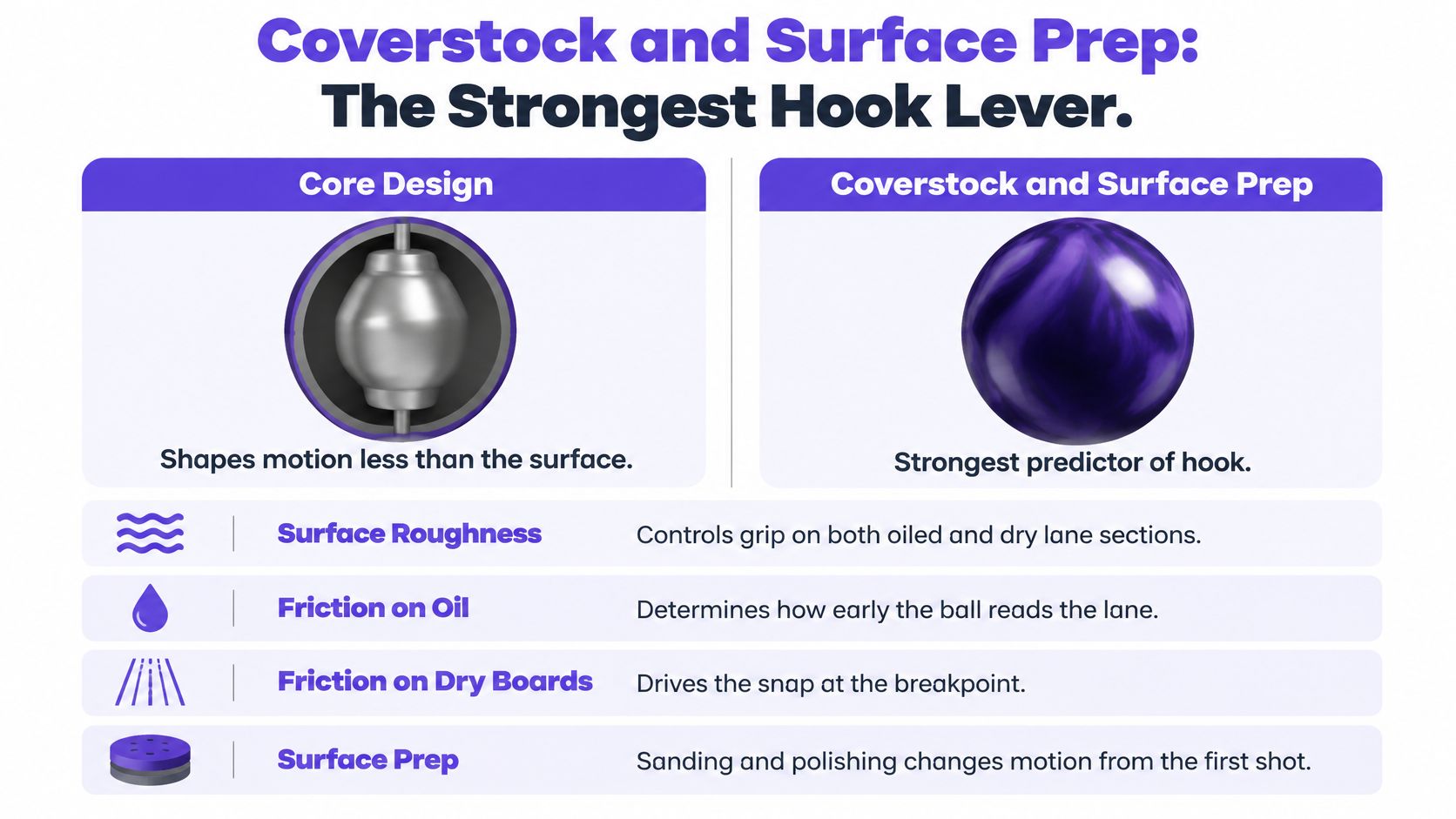
The priority isn't marketing, it's measured. The USBC ball motion study summary identifies coefficient of friction, oil-absorption rate, and radius of gyration as the three most influential measurable variables in ball motion, with the strongest predictors being coverstock-related, including surface roughness and friction on both oiled and dry sections. In practice, sanding or polishing changes your ball motion more, and more cheaply, than switching layouts.
| Coverstock | Traction | Oil absorption | Best lane condition | Main risk |
|---|---|---|---|---|
| Polyester | Low | Low | Light oil or straight-line control | Little backend motion on heavy oil |
| Urethane | Moderate | Moderate | Medium oil, moderate speed | Less backend energy than reactive covers |
| Solid reactive resin | High | High | Medium-to-heavy oil | Early read on dry lanes or at lower speed |
| Pearl reactive resin | High, smoother than solid | Moderate-high | Medium oil and house shots | Less backend motion than solid covers |
| Hybrid reactive | High mid-lane traction | Moderate | Transition lanes | Overreaction if surface is too rough |
Reading the Trade-Offs
Polyester is the control option, useful for spares and straight lines, but it won't produce much curve on oil. Solid reactive gives you the strongest early traction for medium-to-heavy oil, while pearl reactive, like the Ethos in the shortlist, gets through the front part of the lane more cleanly with a smoother response. Hybrid reactive, like the Track Theorem's cover, splits the difference with mid-lane traction that suits transition. For a fuller breakdown of families and finishes, see this guide to bowling ball coverstocks and how they react.
More friction isn't automatically better. Excessive roughness on dry or transitioning lanes makes a ball read too early and lose energy before the pocket, which looks like weak hook even though the actual problem is too much grip, too soon.
A Surface Protocol That Works
- Match surface to oil volume first: rougher for heavier oil, smoother or polished as lanes dry out.
- Change one variable at a time: clean and restore the manufacturer's intended finish before you change layout or weight.
- Judge across several games: oil absorption and lane friction shift during a session, so one shot tells you almost nothing.
I would choose the strongest cover that still stores enough energy through the front of the lane for your speed and rev rate. That's the benchmark that separates usable hook from hook that only looks good for half the lane.
Core RG and Differential Set the Timing
RG and differential shape when a ball revs and how much it flares. They help predict motion, but they do not determine total hook by themselves. The USBC technology study describes low RG designs as rotating more readily and producing earlier, more arcing motion. High RG designs retain axis rotation longer and travel farther before responding to friction. USBC sets limits for bowling ball RG and differential; check its equipment specifications for the applicable requirements rather than treating a core profile as a legality check.
Differential works through flare. A larger differential exposes more fresh coverstock to the lane on successive revolutions, increasing hook potential and breakpoint change. A smaller differential produces a smoother, more controlled arc because less of the surface rotates into contact. Two balls with the same cover can still shape their curves differently, so compare core specs alongside the lane and your delivery.
| Core profile | Motion timing | Typical fit |
|---|---|---|
| Low RG, high differential | Revs early, strong flare and breakpoint change | Higher-rev players on oil |
| Low RG, moderate differential | Early arc, smoother and more controllable | Players who need repeatable entry |
| Mid RG, moderate to high differential | Balanced timing and moderate flare | Mixed oil and house shots |
| High RG, any differential | Holds axis rotation longer, later response | Check against rev rate before drilling |
Putting the Shortlist Into These Bands
These are working categories, not official USBC classes. The Hazmat, at RG 2.479 and differential 0.055, sits in the low RG, high differential group, matching its described mid-lane pickup. The Envy Tour, at RG 2.469 and differential 0.034, revs early but flares less, so its strong total hook comes more from cover traction than flare. The Mesmerize pairs the set's highest RG, 2.510, with its highest differential, 0.056. Expect a later response than the lower-RG options, with substantial flare.
For a closer look at how bowling ball weight blocks and core design relate to ball motion, remember that specs describe design, not a guaranteed reaction. The same core can respond differently as speed, rev rate, lane friction, and surface change. A ball that hooks repeatedly at your speed and on your usual lane is a better match than one chosen for its advertised hook potential.
The Rev Rate Connection
Higher-rev players on oil often suit low-to-moderate RG and higher differential, because the ball revs early and keeps continuing. Slower or lower-rev bowlers should be cautious with an aggressive low RG core: it can hook before the breakpoint and lose useful motion downlane. A more controllable design can make the curve easier to repeat.
RG sets the timing, differential sets the flare, and coverstock friction decides whether that motion becomes pocket entry.
Test core, surface, and layout together. Changing core numbers while ignoring surface prep can leave you with several balls that react similarly, but still miss the right shape at your speed.
Matching Ball Type to Speed, Rev Rate and Skill
Here's the question most buying guides dodge. Does the most aggressive, highest-hook ball really help a beginner or a lower-rev bowler curve the ball? Usually it doesn't, because ball motion comes from coverstock, core, surface, speed, rev rate, and lane friction interacting, not from one rating printed on a box.
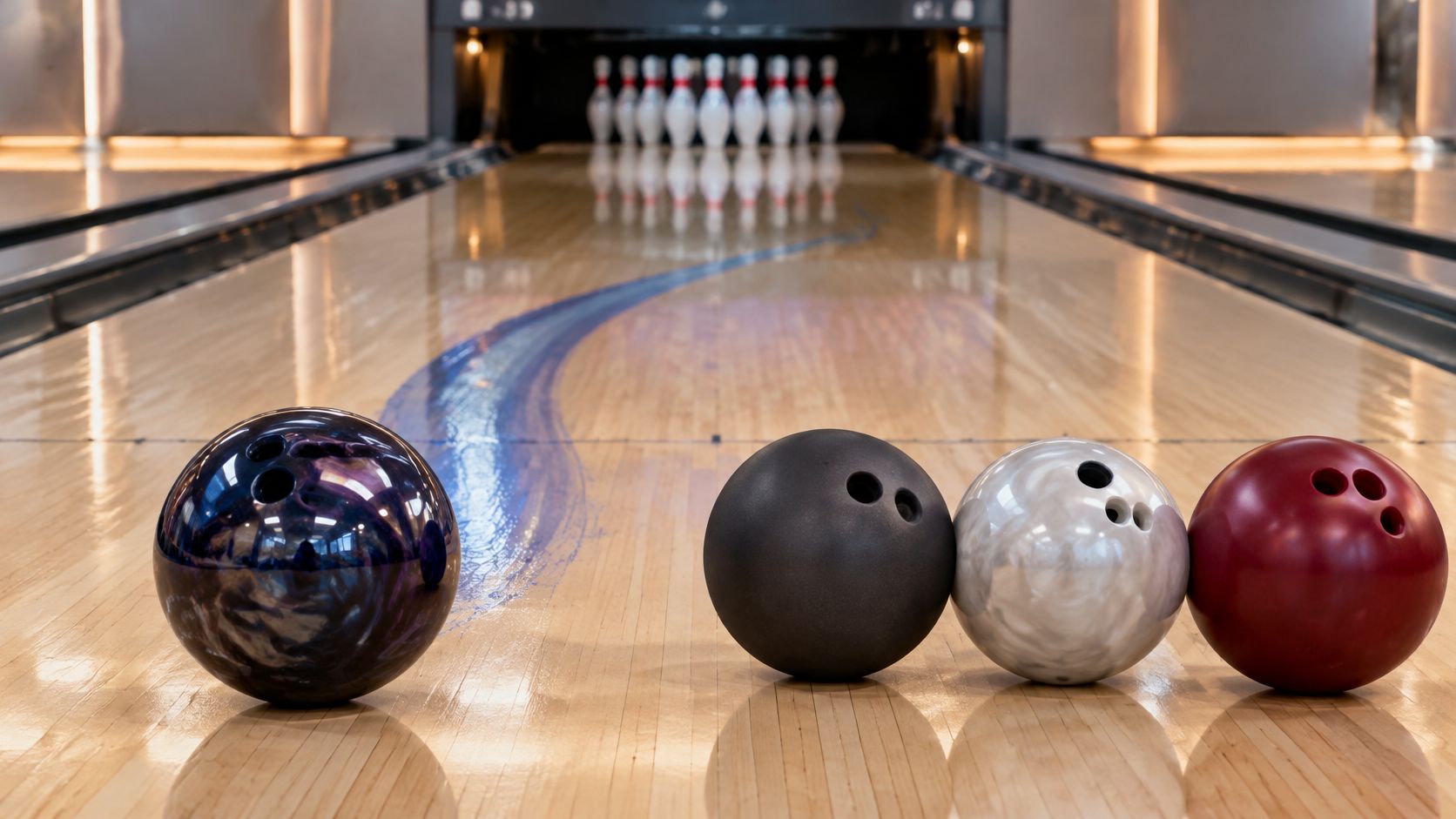
The USBC ball motion study identified dry-lane coefficient of friction, oil absorption, and low RG as the three leading factors affecting the path of aggressive bowling balls, not a single hook rating. It also notes that oil-absorbing covers can deplete oil and force deeper lines as play progresses, so the strongest ball can actively make your later games harder.
| Bowler profile | Speed and rev pattern | Ball direction | Mistake to avoid |
|---|---|---|---|
| Beginner, first custom ball | Moderate speed, low-to-moderate rev | Controllable midlane traction, moderate RG and differential | Buying a maximum-hook model for house shots |
| League intermediate | Moderate speed, medium-high rev | Reactive resin cover at moderate differential | Solid polyester on heavy oil |
| High-rev competitor on heavy oil | Higher speed, high rev | Low RG with higher differential, adjusted for dry backend | Using it unchanged on dry or transitioned lanes |
| Lower-rev bowler needing length | Slower speed, lower rev | Asymmetric or higher-differential design with enough traction | Low-RG core that hooks before the breakpoint |
Start With the Beginner Case
A first custom ball needs controllable midlane traction, not maximum backend motion. On typical house shots there's already plenty of friction outside the oil, so a very strong ball overreacts, crosses over, and teaches you bad adjustments. Say you're learning a fingertip release at moderate speed. A moderate reactive ball will show you a readable arc you can repeat, while a maximum-hook ball will punish every small miss in speed or target.
League intermediates with medium-high revs are the easiest fit. A reactive resin cover at moderate differential gives a usable, repeatable curve on house oil without demanding constant surface changes. Polyester at the other extreme just won't read heavy oil, so it skids through the breakpoint and washes out.
Where Maximum Hook Earns Its Place
High-rev competitors on heavy oil are the group that can make use of low RG with higher differential, because their speed and rev rate push the ball through the front before it revs up. Even then, the ball needs adjusting for a dry backend, or it'll stand up too early in game three. Lower-rev bowlers who need length sit at the opposite end. They need an asymmetric or higher-differential design with real surface traction, but not a core so eager that it burns up before the breakpoint.
I'll say it plainly, a moderately strong reactive resin ball often produces a more repeatable curve than an extremely aggressive one that hooks early, loses energy, or magnifies release errors. Sort your options by release speed and rev rate first. Then judge them on breakpoint shape, continuation, and pocket entry, which are things you can see and score with.
Test and Confirm Your Curving Ball Before You Buy
A ball that hooks hard on one shot may not be the right choice. Test for a repeatable line on your lane, at your normal speed, and as the oil changes. Change one variable at a time so you can identify what affects the ball's motion.
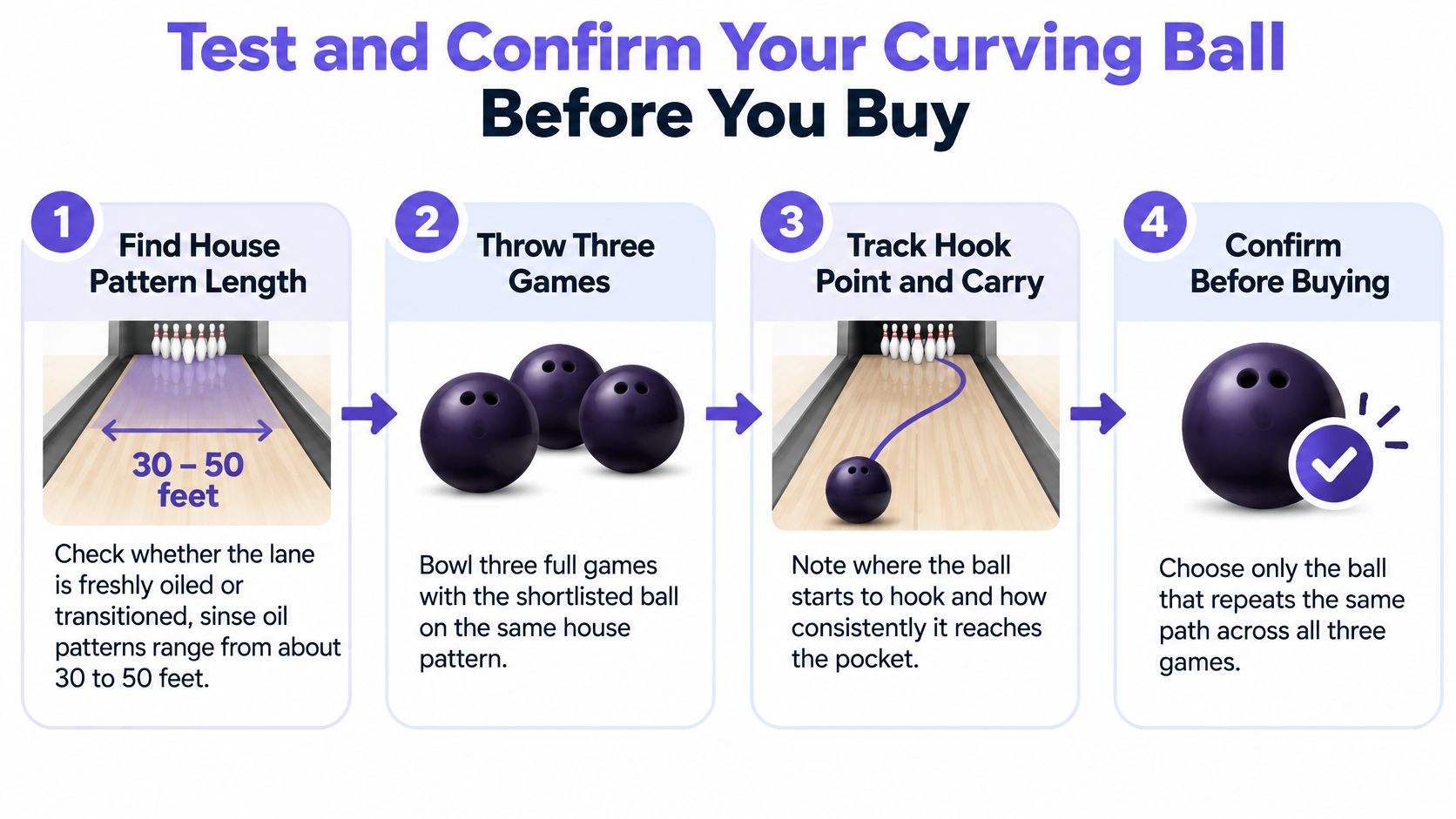
- Find the house pattern length: ask the counter or check the league sheet, and note whether the lanes are freshly oiled or have transitioned. Oil patterns are roughly 30 to 50 feet, a range that affects when a ball moves from skid to hook to roll, as explained in the USC Illumin article on bowling physics.
- Throw three games at your normal speed: use the same line and target for a fair comparison. Changing your delivery during the test makes it harder to tell what the ball is doing.
- Record the breakpoint and entry angle for each shot: pin count alone cannot show whether the ball reaches the pocket with energy. Note where it changes direction and how it enters the pocket.
- Track pocket hits and pin carry across all three games: oil absorption and friction change as play progresses. If the ball works in game one but loses its shape by game three, account for that when choosing it.
- Repeat with a second ball that differs in one variable: change the coverstock or differential, not both. That makes it easier to connect a change in motion to a specific design feature.
- Confirm availability and pricing before committing: at least one model in the shortlist is listed as discontinued, so check that the weight you need is obtainable before settling on a layout.
- Check current USBC equipment specifications for your events: some urethane balls that are legal in league play may be restricted at nationally conducted tournaments. Confirm the rules that apply before buying.
- Have the pro shop drill to your measurements: ask for a layout based on your pin-to-PAP distance and preferred setup. An undrilled or house-drilled test ball will not flare or read like a ball fitted to you.
Compare the breakpoint shape as well as the boards covered. Raw hook alone does not show whether the ball enters the pocket with useful motion.
A fresh house shot can make a ball look impressive, then prove difficult to control after the lanes transition. A ball may also be unsuitable for the events you plan to bowl. Retest after cleaning or resurfacing, since changes to the surface can shift the breakpoint.
Final test: the best bowling ball for curving is the one that repeats its path on your lane, at your speed and rev rate, in game three as well as game one.
Choose the repeatable curve over the biggest hook rating on the box. Bowling Gear Reviews evaluates bowling balls on real lanes across dry, medium, and oily patterns, with attention to coverstock, surface prep, breakpoint shape, and carry. Use its reviews and lane-condition guides to compare options before your pro shop visit.
