

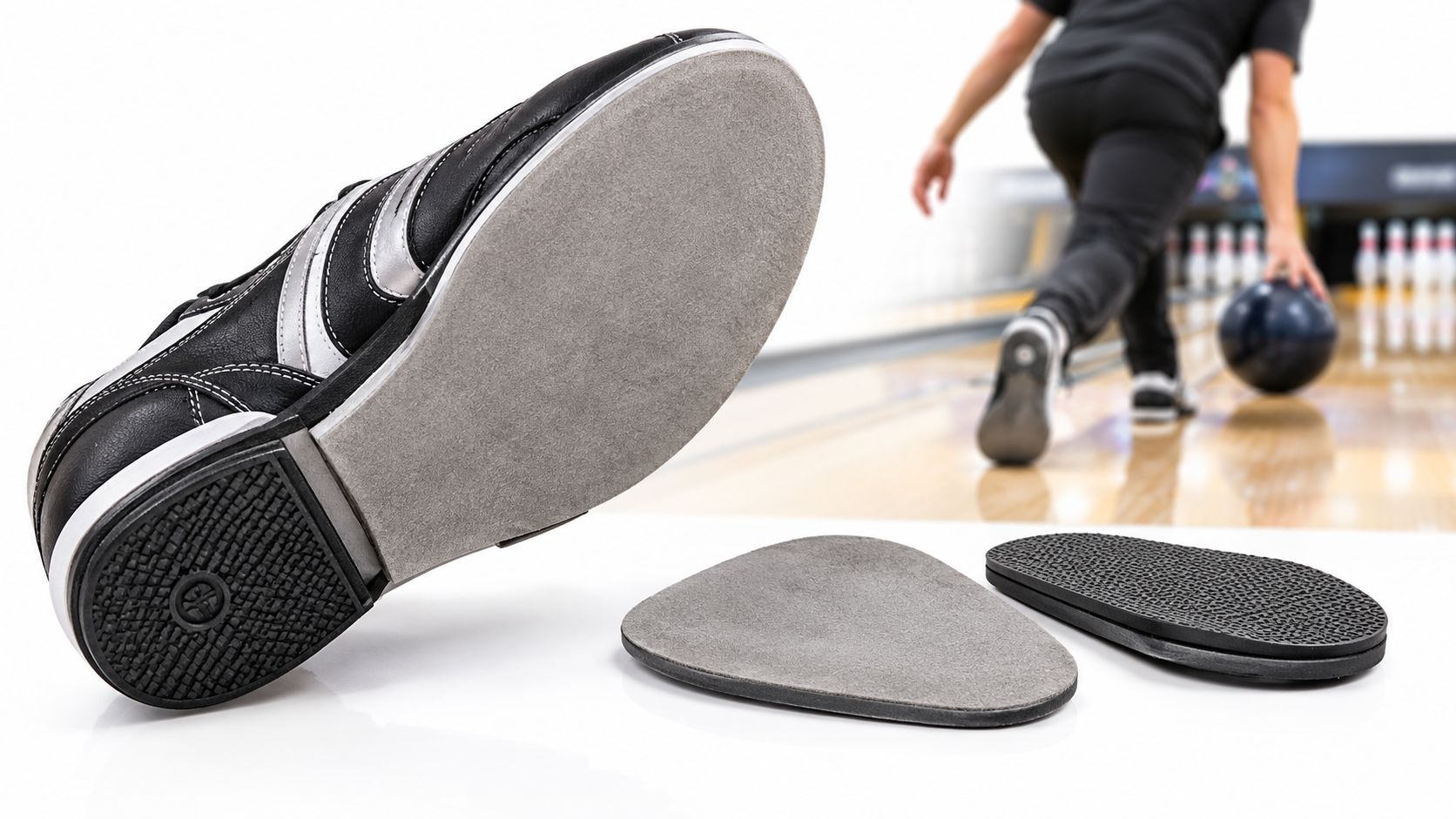
You're midway through a league night, your timing feels right, and then your final step betrays you. One frame the slide foot stops dead well short of the foul line, the next it keeps drifting and you're off balance as the ball leaves your hand. That's not really a timing problem. It's a bowling shoes sole problem, and until you separate the slide sole, the braking heel, and contamination on the approach, you'll keep guessing at the wrong fix.
Table of Contents
- Why Your Bowling Shoe Sole Matters More Than You Think
- How Bowling Shoe Soles Control Slide and Traction
- Leather, Synthetic and Replaceable Bowling Shoe Soles
- Choosing the Right Sole for Your Approach and Fit
- Maintaining Your Bowling Shoe Soles Between Sessions
- Testing Whether the Sole, Heel or Approach Is at Fault
- Your Next Step Toward a More Consistent Approach
Why Your Bowling Shoe Sole Matters More Than You Think
Every bowler knows the stick. You commit to the delivery, set the slide foot down expecting a smooth glide, and the shoe grabs instead. Your knee bends early, your shoulders tip forward, and you muscle the ball to save the shot. The over-slide is quieter but just as damaging, because you arrive at the line still moving and post the shot with no stable base.
The upper, laces, and colourway get the attention in the pro shop. None of them touch the approach. The sole is the only engineered contact surface between you and the floor during the most loaded part of the delivery, which makes it the biggest controllable variable in whether you repeat that final step.
What a sole controls that nothing else does
A good sole determines how far you slide, how predictably you stop, and how balanced you feel when you release. A poor match forces compensations you'll blame on your swing, your target, or the lane condition. I've watched league bowlers change balls twice in a night when the issue was a glazed slide pad they'd never brushed.
- Slide length: Too little and you brake early, too much and you can't post.
- Stopping control: The heel and traction zones decide whether deceleration feels gradual or abrupt.
- Consistency: A sole that's fine on your home approach may grab or drift somewhere else.
Once you understand how slide and traction share the work, the differences between leather, synthetic, and replaceable systems make practical sense. From there, matching a sole to your handedness, body, and local approaches becomes a decision rather than a gamble, and diagnosing a bad night becomes a matter of isolating one variable at a time.
How Bowling Shoe Soles Control Slide and Traction
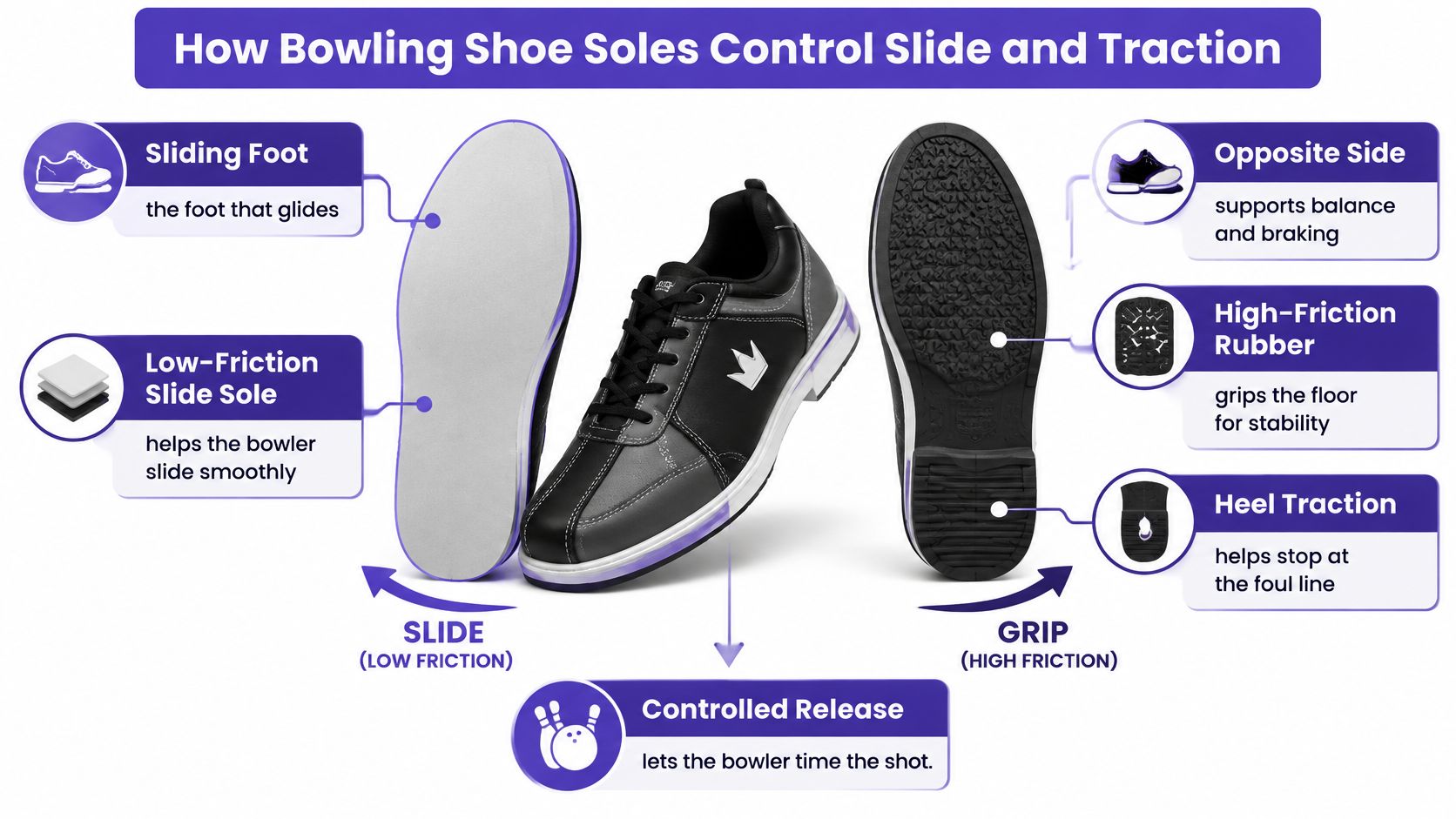
Think of a bowling shoe as a deliberately mismatched pair. One foot wears something close to a ski, smooth and low friction, built to glide. The other foot wears a brake pedal, grippier rubber built to drive you forward and then help you stop. That asymmetry isn't a styling choice. Traditionally, the shoe on the sliding foot used leather while the opposite shoe used hard rubber for braking and a leather toe tip, a split described in the 1961 bowling shoe sole patent filing.
The diagram below maps how those zones divide the work between gliding and gripping.
Why the last step is biomechanically strange
Walking has a clean sequence of heel strike, roll, and toe-off. Your final bowling step has none of that. The front foot has to slide and decelerate nearly simultaneously, acting as both a sliding and braking platform with no normal toe-off or push-off. Research on bowling footwear describes the sliding outsole area as typically microfiber, while the traction pad uses a higher-friction material such as rubber, a distinction covered in the AUT study of bowling shoe design and ground reaction force.
That same research context notes that modified footwear with an E-TPU midsole reduced vertical ground-reaction force in static and dynamic testing, although the summary doesn't provide a precise percentage. The practical point is that cushioning and friction are separate jobs. A sole can feel soft in your hand and still grab at the foul line.
A bowling sole is a control surface, not just the bottom of a shoe. You're choosing how friction gets distributed across zones, not picking a material you like the look of.
Friction isn't spread evenly. The front of the slide shoe carries the low-friction pad, the heel carries higher-friction rubber for the final stop, and the opposite shoe carries traction for the drive steps. When those zones work in sequence, you glide, transition onto the heel, and stop in balance. When one zone is wrong, the whole sequence collapses, usually in the last foot of travel.
Watch some deliveries at full speed and you'll see why the transition zone matters as much as the slide itself.
Stability is the real output
Bowlers talk about slide length, but what they feel is stability at release. A sole that stops you in the same place, at the same speed, every frame lets the rest of your delivery repeat. That's why slide consistency, stopping control, and lateral stability over a full session matter more than how slick a sole feels when you rub it with your thumb in the shop.
Leather, Synthetic and Replaceable Bowling Shoe Soles
Most bowlers meet these three sole families in order, starting with whatever the rental counter hands them and upgrading as their approach develops. Each family answers the slide-versus-brake problem differently, and none of them suits everyone.
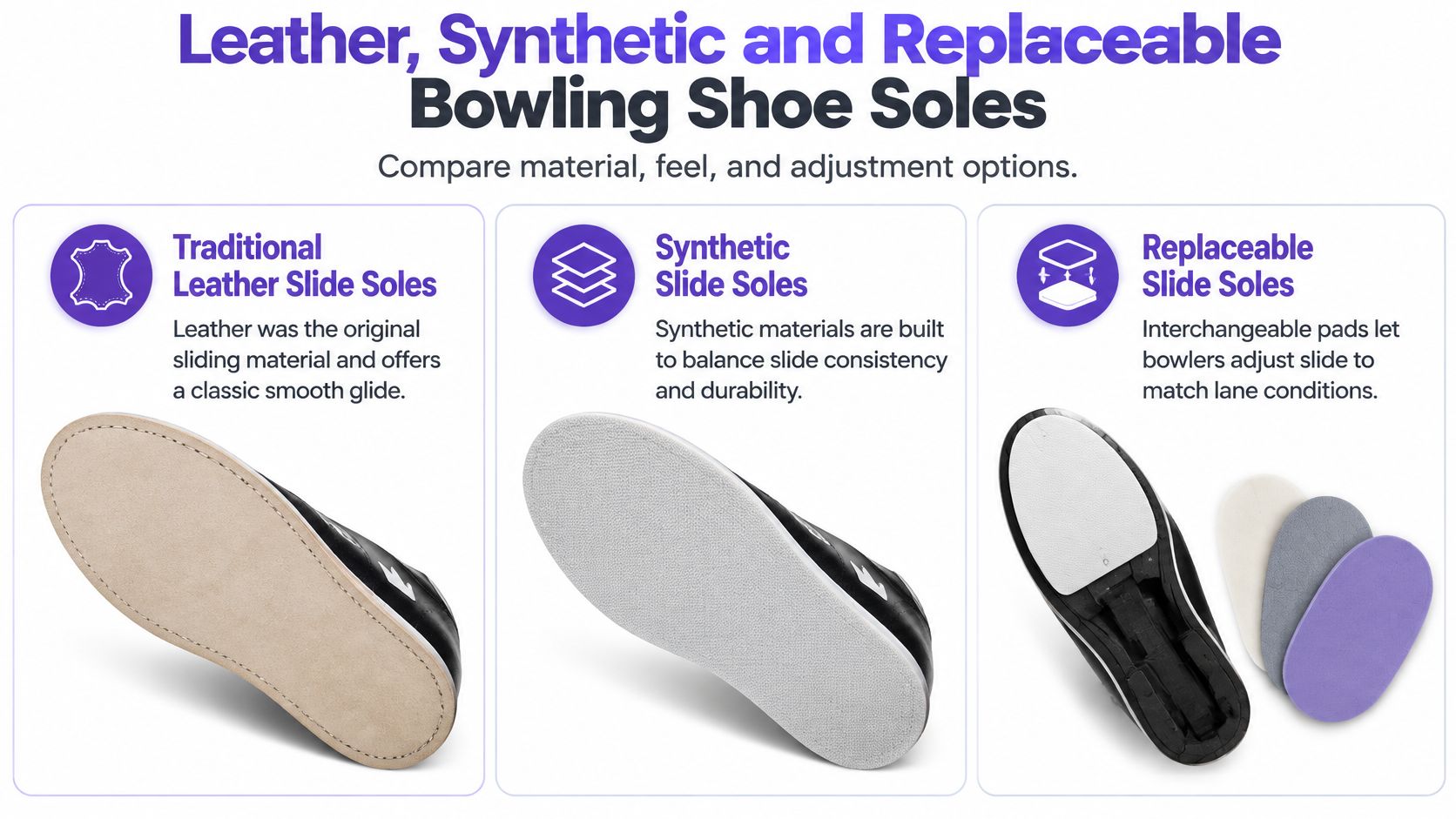
The comparison below shows the three families side by side before the detail on each one.
Traditional leather slide soles
Leather was the original sliding material for good reason. On a clean, dry approach, it gives a smooth, progressive glide that many long-time bowlers still prefer, and it tends to break in rather than wear out quickly. The trade-off shows up when conditions shift. Leather reacts to humidity and picked-up moisture, so a leather sole that slid beautifully in your home center can drag on a tacky approach somewhere else.
Leather suits bowlers with a controlled, feet-under-them finish who bowl mostly in one center and maintain their soles. It punishes neglect.
Microfiber and synthetic slide soles
Microfiber and other synthetics took over because they're more predictable across varying conditions. The surface texture stays consistent longer, brushing restores it reliably, and manufacturers can produce distinct friction levels from the same basic material family. This is what most modern interchangeable pads are made from, and it's also the fixed slide surface on many mid-range shoes.
- Microfiber: Consistent friction, easy to brush back to life, the default in numbered pad systems.
- Felt and blended synthetics: Usually at the slicker end of a range, best for bowlers who need a long slide.
- Sawtooth designs: Alternate materials across the pad so part of the sole slides while part controls, useful on borderline approaches.
Replaceable soles, heels, and universal soles
Replaceable systems attach pads with hook and loop so you can change friction without changing shoes. Designs using interchangeable pads made from materials with different friction characteristics are well established, as shown in the patent for interchangeable bowling shoe soles. Dexter's SST range and Brunswick's numbered pads both follow this logic, with numbering running from least slide to most slide within each brand's own scale. Treat those numbers as relative steps inside one system, not as a universal standard across brands.
The history here is instructive. Soles evolved from that fixed leather-slide, rubber-brake split toward tunable systems, and the 1961 patent milestone already framed sole design around controlling the slide and reducing leg strain rather than comfort. Performance was always the point.
Universal soles sit at the other end. Rental and many entry-level shoes put a slide surface under both feet so either hand can use them. That's convenient for a first pair or a shared household, but you give up the dedicated traction shoe, and the push-off step never feels as planted. For a beginner learning the approach, that compromise is fine. For a league bowler chasing repeatability, it becomes the ceiling.
Choosing the Right Sole for Your Approach and Fit
Start with handedness, because it's the detail beginners miss most often. Your sliding foot is opposite your bowling hand. Right-handed bowlers slide on the left foot, left-handed bowlers on the right, and on a performance shoe only that foot gets the slide surface. Buy a right-handed model as a left-hander and no amount of practice fixes it.
Variables that change how much slide you need
Two bowlers in the same shoe can need different soles. Approach condition and humidity come first, because a dusty or humid approach plays tackier while a freshly cleaned synthetic approach can play slick. Body weight matters next, since heavier bowlers load the pad harder and often stop shorter on the same sole. Delivery speed and finish matter too. A bowler who walks fast and plants aggressively needs braking capacity, while a slow, gliding finisher needs the pad to release easily.
Comfort concerns deserve honesty here. Coverage of footwear for foot pain notes that bowling footwear can provide less shock absorption than entry-level athletic shoes and that the slide foot is intentionally low-friction, points discussed in the Michigan Foot Doctors guide to bowling shoes for plantar fasciitis. Cushioning reduces heel impact, but it doesn't change the horizontal forces you manage while decelerating. If you have plantar-fascia pain, limited ankle mobility, or balance concerns, maximum slide may be unsafe rather than desirable, and a shorter, more controlled slide with supportive fit is the sensible target. Individual medical advice still beats general shoe guidance.
Fit decides whether the sole can work
A perfect sole in the wrong width still fails. Too narrow, and your foot rolls to the edge of the pad during the slide. Too wide, and your heel lifts, so braking happens late and unevenly. Bowling Gear Reviews tests slide and traction systems plus narrow and wide fit profiles in its shoe evaluations, and you can check your measurements against the bowling shoe size and fit guide before you order anything.
Matching Sole Setups to Bowler Profiles
| Bowler Profile | Slide Sole Choice | Traction Setup | Fit Notes |
|---|---|---|---|
| First-shoe beginner, one center | Fixed microfiber or universal slide | Standard rubber heel | Prioritise snug heel, room at the toes |
| League bowler, several centers | Replaceable mid-range pad with one step each side | Interchangeable heel options | Confirm width, since travel means longer sessions |
| Fast feet, aggressive plant | Lower-slide pad or sawtooth design | Higher-friction braking heel | Avoid heel lift, which delays braking |
| Slow, gliding finisher | Higher-slide microfiber or felt | Moderate heel for a gradual stop | Stability through the midfoot matters most |
| Foot pain or limited mobility | Shorter-slide, controlled pad | Strong, predictable heel brake | Wide option and cushioning, slide kept modest |
Use the table as a starting point, then adjust one step at a time based on how your foul-line finish feels.
Maintaining Your Bowling Shoe Soles Between Sessions
Most sole problems I see on league night aren't wear. They're contamination. Lane maintenance guidance identifies transferred materials and moisture on footwear as common contamination sources, and the fix is boring, fast, and effective if you do it every session instead of only when something feels wrong.
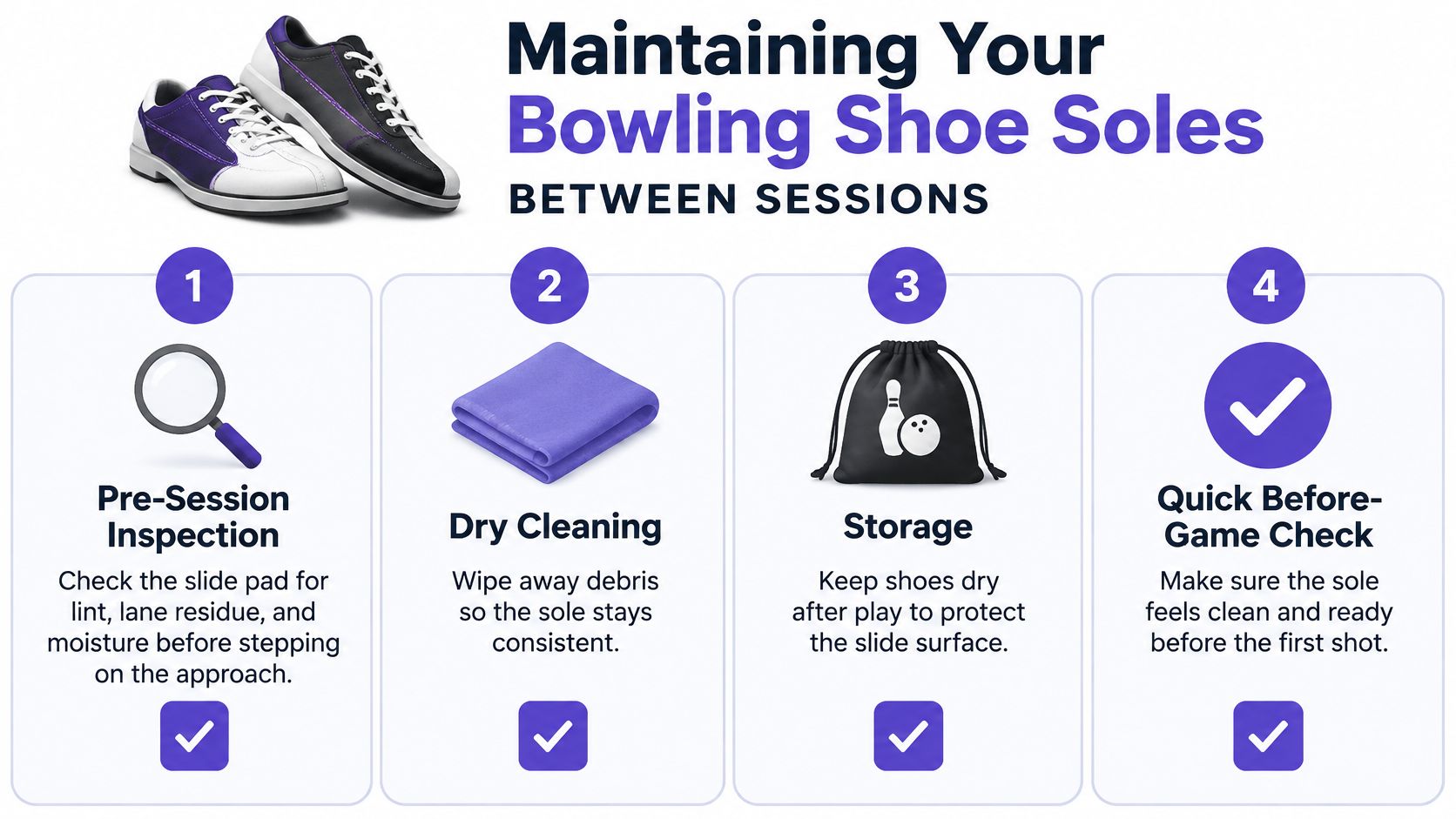
The checklist below condenses the routine into the checks that matter most.
The routine that actually works
Start before your first practice ball. Inspect the slide pad for lint, lane residue, and damp spots, and check that the hook and loop base is holding the pad flat with no lifting corner. A pad that's peeling at the front edge will catch mid-slide no matter how clean the surface is.
Restore the surface dry. A wire brush or fine sandpaper removes foreign material and renews the nap on microfiber, which is what keeps friction consistent. Brush in one direction, check the feel with your palm, and repeat between games if the pit area is dusty. After the session, brush again, let the shoes dry fully, and store them in a separate shoe bag away from your ball. For the full upper and sole process, see the guide to cleaning bowling shoes properly.
Two habits that ruin soles
Never wash slide soles with soap or detergent. Residue stays in the surface and changes braking behavior, so the sole you cleaned on Sunday grabs unpredictably on Tuesday.
The second habit is reaching for loose slide powder when you're sticking. Lane-care guidance advises against applying such products to shoes or the approach because they alter approach friction and contaminate the surface for every bowler after you. If you're sticking, the answer is brushing, drying, or stepping down a sole, not powder.
Two more rules round out the basics. Wear shoe covers whenever you leave the bowling area, because a trip to the restroom or snack bar loads the pad with exactly the moisture and grit you're trying to avoid. And remember that clean rubber or plastic can become grippy enough to act as a brake, which surprises bowlers who assume a clean sole always slides more. Cleanliness restores the intended friction. It doesn't remove it.
Testing Whether the Sole, Heel or Approach Is at Fault
When your slide goes inconsistent, the expensive instinct is to buy a different numbered sole. The cheaper instinct, and usually the correct one, is to figure out which of three variables changed. Bowlers conflate them constantly, then replace parts that were never the problem.
A repeatable way to log what happened
A repeatable test protocol has bowlers record approach conditions, lane-area cleanliness, sole model, heel type, and whether the slide feels short, normal, or excessive, then separate the slide sole, the braking heel, and contamination on the sole or Velcro base, as set out in the Bowling.com guide to interchangeable soles and heels. You don't need a spreadsheet. A phone note after each game works.
- Conditions: Note humidity, dust, and whether the approach felt tacky or slick in practice.
- Setup: Record which sole and heel combination is installed.
- Result: Mark each game's slide as short, normal, or excessive, and note your balance at the line.
- Surface state: Write down whether you brushed, and whether it changed anything.
Isolate one variable at a time
Run a full league-length session changing only one thing. If you stick early in the slide, suspect the pad surface or contamination first, brush it, and shoot again before swapping anything. If the slide feels fine but the stop is abrupt or late, suspect the heel, because changing only the sole won't solve inconsistent stopping if the heel is worn. If the whole team is sticking, suspect the approach and keep your setup alone.
A higher-numbered sole is not automatically the experienced bowler's choice. Extra slide reduces braking control on a dusty, humid, or unusually slick approach, and control is what experienced bowlers actually need.
Replacement signals are clear once you're looking. A slide pad that stays shiny or inconsistent after brushing has lost its nap. A heel with a rounded or unevenly worn edge brakes differently on every shot. Uneven left-right wear after a league-length test tells you the fit or your finish position needs attention before new parts will help. Cleaning or brushing may restore performance without replacement, so exhaust that option first.
Your Next Step Toward a More Consistent Approach
Every bowling shoes sole, from a fixed leather rental sole to a numbered replaceable pad, is engineered around the same tension. It needs low friction while you slide and high friction while you brake, delivered in the right order, on the correct foot, in a shoe that fits your width and your finish style. The most expensive system doesn't win that balance by default. The setup you can repeat, maintain, and adjust deliberately does.
One concrete session plan
Before your next league night, do three things. Confirm which foot slides and check that the slide surface is on that shoe. Inspect the pad and heel closely, brush the pad, and make sure everything is dry and firmly attached. Then bowl your session changing nothing, and log whether the slide felt short, normal, or excessive.
If something's off, change one variable next time. Brush more aggressively, step one sole number in the direction you need, or swap the heel, but never all three at once. That's how you learn what your delivery responds to, and it's how you stop buying parts to fix problems that live in the approach.
When you're ready to compare shoes against that standard, the hands-on testing in the guide to bowling shoes built for sliding covers slide and traction systems, replaceable soles and heels, and narrow and wide fit profiles over league-length sessions. Match those observations to your log, your sliding foot, and your local approaches, and the right sole stops being a guess. It becomes the part of your game you control best.
If sticking, over-sliding, or a worn heel has you second guessing your final step, the hands-on shoe evaluations, fit guidance, and sole maintenance advice at Bowling Gear Reviews can help you match a slide system to your foot profile and delivery style before you spend on replacements. Visit Bowling Gear Reviews, compare the tested options against your session log, and pick the setup you'll trust at the foul line next league night.
