

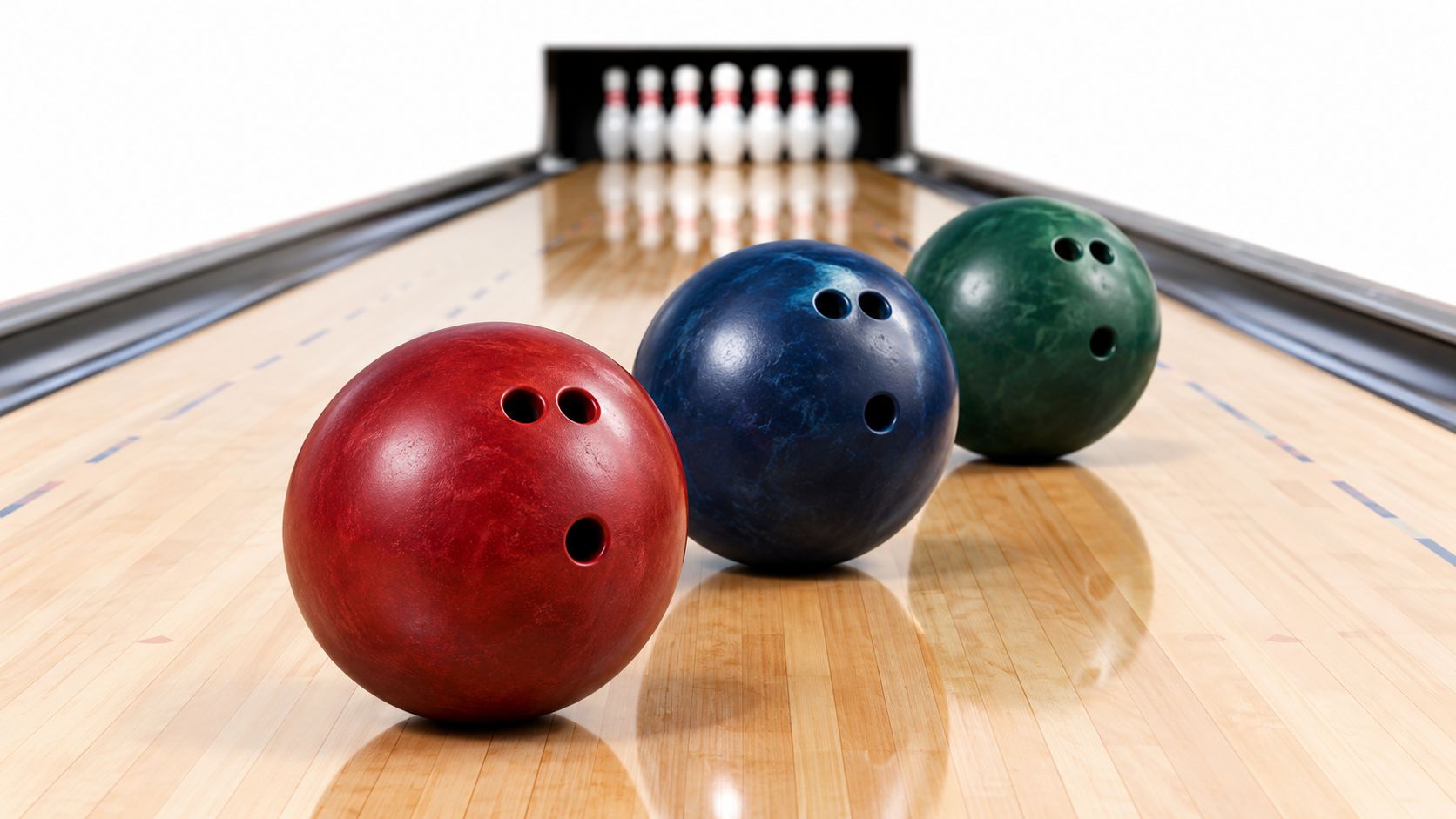
You know the night already. The fronts are hooking sooner than they did in practice, your benchmark piece is reading too late, and the pocket feels like it moved three boards left between game one and game two. That's the spot where solid reactive bowling balls earn their keep, because they don't chase backend fireworks, they create earlier traction and a calmer read through the middle of the lane.
Table of Contents
- Why Solid Reactive Bowling Balls Dominate Heavy Oil
- What a Solid Reactive Coverstock Actually Does
- RG, Differential, and Surface Prep Explained
- Solid vs Pearl vs Hybrid vs Urethane
- Matching a Solid Reactive Ball to Oil Patterns
- 7 Best Solid Reactive Bowling Balls You Can Buy Now
- Surface Prep and Maintenance for Longer Ball Life
- Choosing Your Solid and Knowing When to Switch
Why Solid Reactive Bowling Balls Dominate Heavy Oil
On league night, a ball that looked reliable the previous week can go flat when the pair carries fresh oil and the heads have not broken down. The shot leaves cleanly, holds the line long enough to look promising, then skids past the breakpoint or turns too late to carry. For heavy volume and longer patterns, a solid reactive gives you a more useful starting point because it creates traction earlier and keeps the motion readable.
The motion you buy is control first
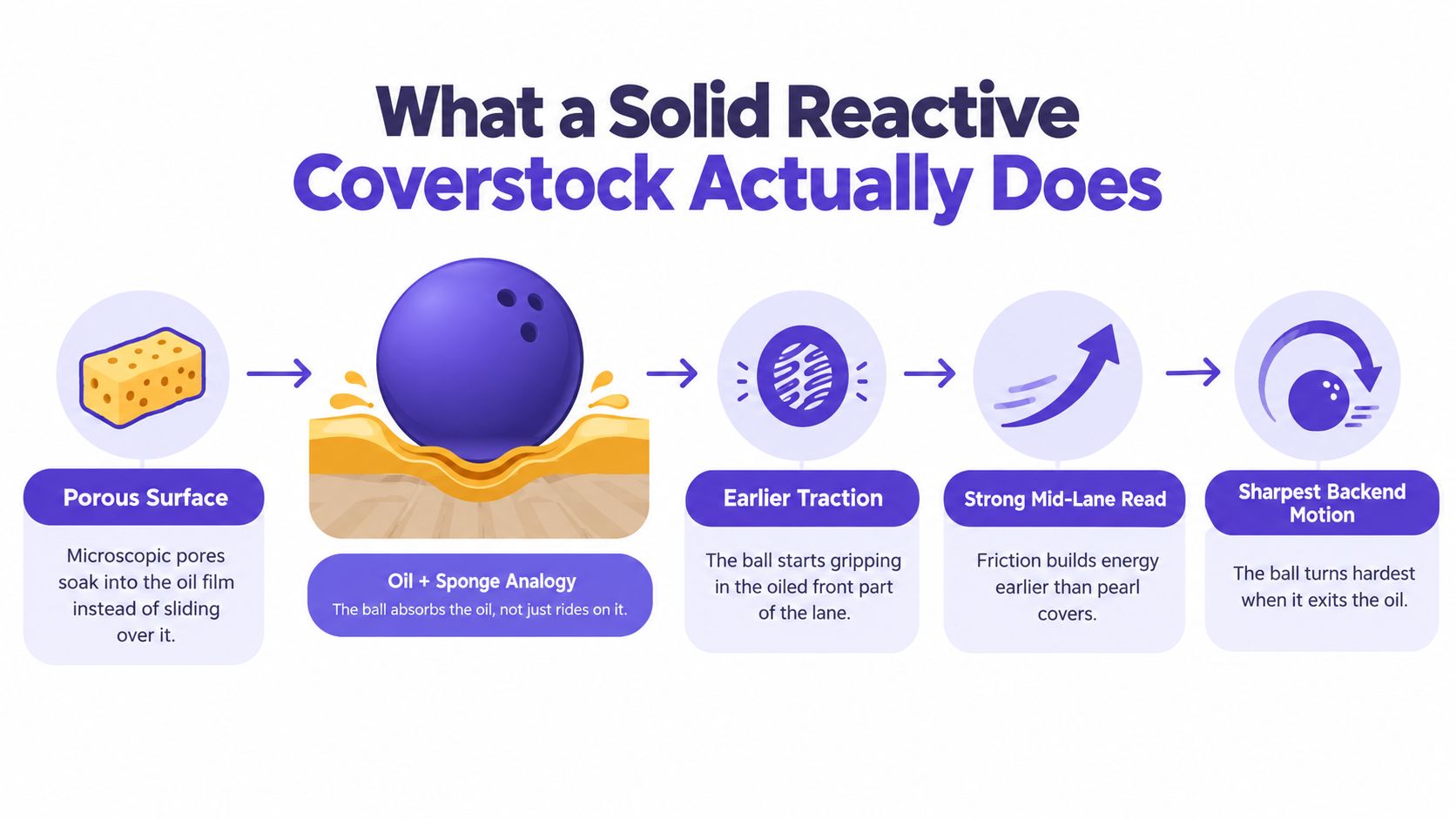
A solid reactive coverstock absorbs lane oil and produces friction earlier in the shot. That earlier traction creates a smoother mid-lane read instead of a violent skid and flip. USBC materials describe oil absorption as a measurable reactive-coverstock property, which explains why solids remain benchmark choices when you need the ball to read sooner and continue through the breakpoint USBC technology study.
On a fresh 40-foot house shot, a solid that reads around 35 feet can hold the pocket where a pearl may skid to 42 feet and leave flat tens. That is the practical reason I start with a solid in game one when the fronts are fresh. It gives me a controllable read before I decide whether the lane needs more length or less traction.
Practical rule: If your ball clears the fronts but quits at the breakpoint, change to more cover traction before adding speed or reaching for a sharper hook shape.
Where solids earn their lane value
Heavy oil, longer patterns, and fresh tournament conditions suit solid reactive balls best. USBC lane-condition guidance classifies sport patterns at 4:1 or lower, challenge conditions at 4:1 to 8:1, and typical house patterns at 8:1 or higher. It also describes house patterns as averaging around 40 feet in length USBC lane conditions. Those conditions reward earlier read and a controlled change of direction.
Solids still need a clear exit rule during league play. Once the heads show enough friction that the ball begins hooking before the intended breakpoint, move to a pearl or hybrid with the same general shape. If the solid starts burning energy and leaving flat corners on lighter volume, the issue is cover fit, not a defective ball. Surface changes can help, but switching to a cleaner option is often the faster adjustment.
What a Solid Reactive Coverstock Actually Does
Think of a solid reactive coverstock like a sponge with a purpose. Instead of sliding over the oil film, the porous surface grabs into it, pulls some of that conditioner into the shell, and starts creating friction before a pearl or hybrid cover would. That early grab is what gives the ball its roll shape.
Surface texture decides how soon the ball wakes up
A matte or sanded finish increases total friction and helps the coverstock start reading sooner, while a polished solid keeps a little more length and delays hook Bowling.com coverstocks guide. That's why two solids with the same core can feel like different pieces once a pro shop changes the finish.
The useful way to think about it is simple. More surface means more traction in the front part of the lane. Less surface means more push through the heads and a later move.
Core motion still decides the shape
Coverstock doesn't do the whole job by itself. Technical references define RG as the distribution of mass relative to the rotation axis, while differential points to flare potential and how much fresh cover meets the lane on each rotation Bowling ball technical reference. Lower RG helps the ball rev up sooner, and higher differential creates more flare and stronger hook potential, which is why strong solids often pair a sanded cover with a high-differential core.
That combo is what gives you the classic benchmark read. The cover gets the ball into traction, then the core keeps the motion alive through the mid-lane and toward the pocket.
If you want a broader coverstock breakdown, the Bowling Gear Reviews coverstock guide is a useful companion reference for comparing motion families.
RG, Differential, and Surface Prep Explained
A solid's reaction depends on how its core and shell work together. On a fresh heavy-oil pattern, the goal is an early read that still retains enough energy to continue through the pins. On a medium-heavy pattern, the same specification can become too early once the heads start to go away.
Read the specs like a lane player
RG and differential matter most when you compare complete ball setups. A 2.48 RG with a 0.050-plus differential under a 1000-grit solid finish gives you one of the earliest reads in a typical bag. A 2.55 RG with a 0.030 differential can create more length without changing the cover family. The Bowling ball technical reference provides the underlying terminology, but the lane decision comes from how those numbers combine with surface and your release.
Higher differential increases flare, and flare keeps exposing fresh shell to the oil pattern as the shot progresses. That can preserve traction deeper into the lane, although too much flare or surface can make the ball burn energy before the breakpoint.
| Spec | Typical Heavy-Oil Solid Range | Lane Use |
|---|---|---|
| RG | Lower to mid RG | Earlier rev-up and earlier read |
| Differential | Mid to high differential | More flare and stronger continuation potential |
| Surface prep | Sanded, matte, or lightly polished | Controls how soon the cover responds |
Surface prep is the adjustment most bowlers can make without changing balls. A rougher finish increases front-lane traction and suits fresh, higher-volume conditions. Smoothing the shell adds push through the heads and delays the move, which helps when the ball reads too soon on a transitioned pair.
A high-differential or asymmetrical core under a sanded solid is useful when the pattern demands traction without sacrificing continuation. The cover reads the front, while the core shapes the mid-lane and retains motion toward the pocket. For a practical explanation of how weight-block design affects that motion, see the Bowling Gear Reviews weight block guide.
Shop-floor truth: If a solid looks too early after several league games, change the surface before replacing the ball. If it still burns up after the fronts have been opened, move to a cleaner piece with more length.
Solid vs Pearl vs Hybrid vs Urethane
The coverstock choice should match what the lane is giving you, not what feels hottest on social media. Solid, pearl, hybrid, and urethane all have a lane role, but they don't solve the same problem.
Four motion families, four different jobs
Solid reactive is the earliest-reading reactive option of the group. It's the answer when the pattern is fresh, the fronts are slick, and you need the ball to start rolling before the breakpoint gets away from you. Pearl reactive is the opposite end of that feel, cleaner through the heads and more responsive off the spot on drier or broken-down lanes.
Hybrid sits between them. It blends a solid base with pearl additives, which makes it the natural medium-oil workhorse when you want some traction without killing all the length. Urethane is its own lane entirely, with a predictable, arcing look that reads the mid-lane but can give away too much energy for modern high-rev players on a lot of house shots.
| Coverstock | Best Oil Volume | Backend Motion | Rev-Rate Sweet Spot | Weakness |
|---|---|---|---|---|
| Solid Reactive | Heavy oil | Smooth, continuous | Medium to higher rev players who need early read | Can burn up on dry fronts |
| Pearl Reactive | Medium-light to dry | Sharper backend | Slower to moderate rev players on cleaner patterns | Skids too far on fresh heavy oil |
| Hybrid Reactive | Medium oil | Balanced and versatile | Broad fit, especially league play | Can be too soft for true flood conditions |
| Urethane | Light to medium-light | Predictable arc | Bowlers who want control over shape | Burns too little energy on modern higher-rev looks |
Matching the cover to the player
A high-rev bowler can make a pearl look great on the right pattern, but that same bowler may need a solid to stop the hook from starting too late and leaving flat tens. A speed-dominant player often benefits from a more controlled solid because the lane doesn't get away from them as fast.
If you want a midpoint option, Bowling Gear Reviews has a separate hybrid reactive guide that's useful for comparing how hybrid pieces split the difference.
Matching a Solid Reactive Ball to Oil Patterns
The mistake most bowlers make is treating every solid as a fresh-oil ball only. The better question is which pattern shape needs the earliest traction, and how much surface you need before the ball becomes too early.
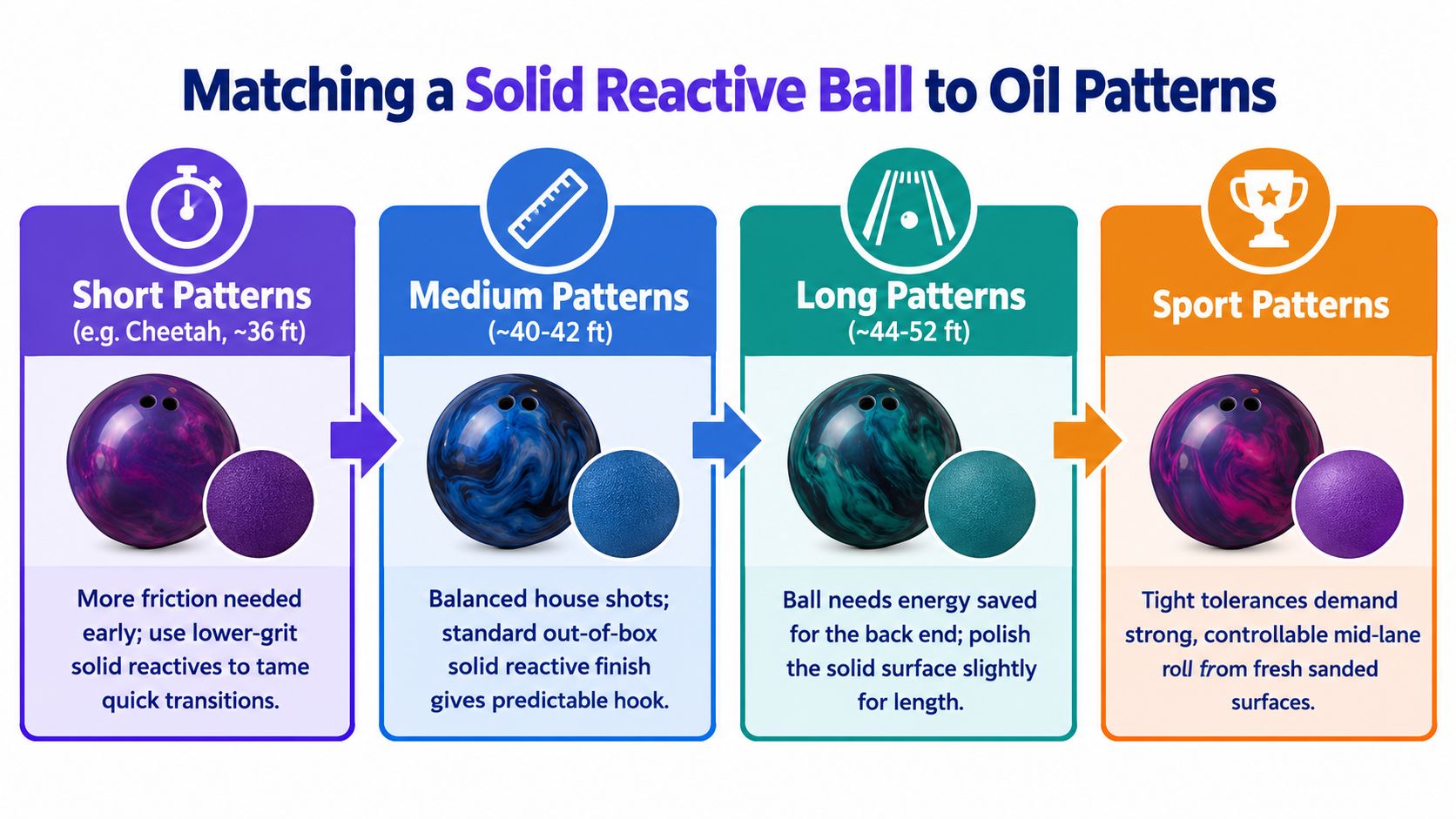
Short, medium, long, and sport call for different surfaces
Short patterns need help getting the ball to read before the dry boards grab it. A sanded solid with more traction can keep the motion round and continuous instead of skidding too long and making a violent move. Medium patterns are where a standard solid finish often lives most comfortably, because it gives you enough early read without running out of energy too soon.
Long patterns ask for earlier traction but still need continuation. That's where a controlled solid, often with a smoother surface than your heavy-oil look, can help the ball store enough energy to finish. Sport conditions are the most demanding because the wet/dry ratio leaves less room for error, so a controllable solid with enough differential to recover is usually the safest motion.
The practical rule on league night is straightforward. Start the solid on fresh oil, then stay with it until you've seen 3 to 4 consecutive misses outside. That's when the lane is telling you the fronts have gone, and the ball is no longer matching the pattern. Swap, but don't panic-swap before the ball has lost its window.
Transition rule: When the solid starts missing left and the heads look burnt, move to the next piece after the pattern, not before the carry dies.
What to do when the shape changes
If the first game looks tight and the second game opens up, don't chase the same line with more hand. Move the feet, move the target, and keep the solid in play until it stops reading in the correct part of the lane. Once it's rolling too early, that's the cue to hand off to a smoother pearl or hybrid.
7 Best Solid Reactive Bowling Balls You Can Buy Now
These are use-case picks, not a fake ranking from one perfect night on one pair. Each one fits a different oil pattern window, different speed/rev profile, and different surface need.
Heavy oil and fresh house volume
Storm IQ Tour Ruby Solid fits the bowler who needs a strong but controlled heavy-oil shape on a typical house shot when the fronts are still fresh. Buy this if you want a solid that reads the middle without feeling like a sledgehammer.
Motiv Tank Rampage Solid is the obvious call when the lane is flooded and you need the cover to keep digging. Buy this if your tournament block includes fresh, high-volume conditions and you want more traction from the start.
Hammer Obsession Solid suits two-handed bowlers and anyone who creates enough revs to make a strong solid really work. Buy this if your problem is not lack of hook, but too much skid before the breakpoint on heavier oil.
Medium-heavy and transition-friendly shapes
Ebonite GB 4.0 Solid belongs on medium-heavy sport patterns where control matters, but you still need the ball to recover with authority. Buy this if your league or tournament environment rewards a predictable mid-lane roll instead of a fast sideways move.
Storm Phaze II Solid in a solid finish is a smart transitional sport option when the lane is starting to open up but still asks for readable mid-lane motion. Buy this if you want a benchmark piece that can stay in play after the first move on the pair.
Earlier control and entry-level step-up options
Columbia 900 Global Zen Solid fits shorter patterns or tighter league looks where you need strong mid-lane read more than flashy backend. Buy this if the shot gets away from cleaner coverstocks and you want the ball to settle the lane sooner.
Brunswick Rhino Black is the step-up ball for bowlers leaving plastic behind and learning what a reactive ball does on real oil. Buy this if you want an entry-level choice that introduces earlier hook without feeling overwhelming.
| Ball | Surface Finish | Best Oil Pattern | Buy This If |
|---|---|---|---|
| Storm IQ Tour Ruby Solid | Controlled solid finish | Heavy house volume | You want a benchmark heavy-oil shape |
| Ebonite GB 4.0 Solid | Solid reactive finish | Medium-heavy sport | You need readable mid-lane control |
| Hammer Obsession Solid | Strong solid finish | Heavy oil | You're a higher-rev player needing earlier grip |
| Brunswick Rhino Black | Entry-level reactive finish | Medium house shot | You're stepping up from plastic |
| Columbia 900 Global Zen Solid | Mid-strength solid finish | Shorter patterns | You want earlier read without excess flare |
| Motiv Tank Rampage Solid | Aggressive solid finish | Fresh heavy oil | You bowl tournaments on high volume |
| Storm Phaze II Solid | Transition-ready solid finish | Transitional sport | You need a benchmark ball that keeps its shape |
Surface Prep and Maintenance for Longer Ball Life
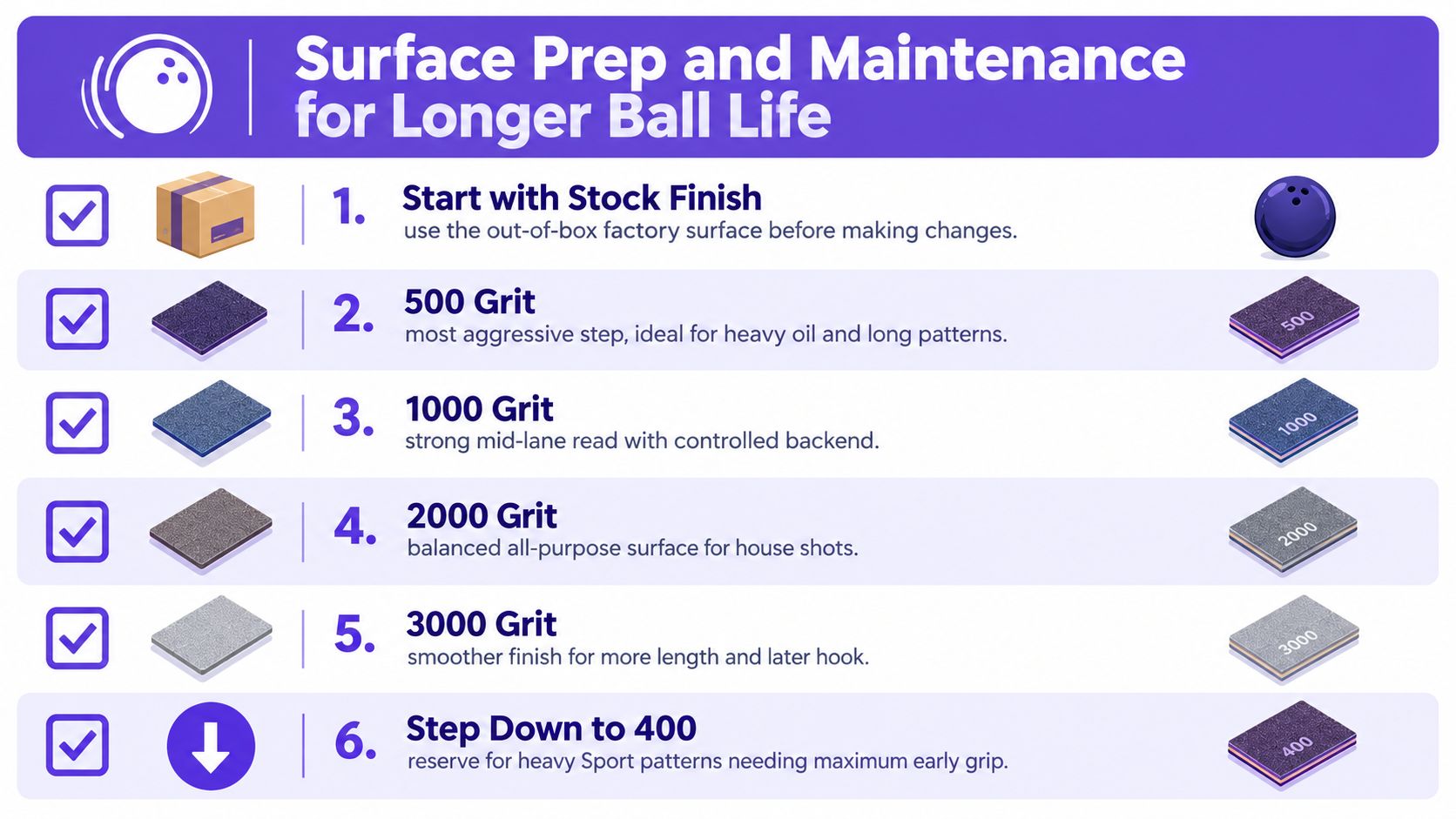
Factory finish is just the starting point. Most solid reactive balls show up somewhere around a 1500 polish or 2000 feel out of the box, but the useful reaction for your lanes usually comes from the first surface change, not the box label.
Build a surface routine you can repeat
A common prep ladder runs through 500, 1000, 2000, and 3000 grit, with 400 reserved for heavy sport patterns that need maximum early grip. Dropping to 500 grit on a strong core can add noticeable hook, but it also gives away some recovery downlane, so use that move when the lane clearly asks for it.
After every session, wipe the shell with a towel and clean it with isopropyl alcohol or a proper ball cleaner. Store the ball in a bag that stays around 70 degrees so the cover and core aren't sitting in heat swings that can shorten life.
Know when the ball is asking for service
Resurface the ball every 40 to 60 games, or sooner if you notice the backend losing snap or the ball reading too early. Don't use a household oven or a belt sander. Those shortcuts create more problems than they solve.
- Start with stock finish: Test the box surface before you touch grit.
- Move to 500 only when needed: Use it for heavy oil and long patterns.
- Use 1000 for controlled read: Good when you want more mid-lane without full drag.
- Settle at 2000 for balance: A solid everyday surface for many house shots.
- Polish to 3000 for more length: Helpful when the ball is too early.
- Reserve 400 for the heaviest sport looks: Use only when early grip is essential.
Choosing Your Solid and Knowing When to Switch
The right choice depends on how you create shape, not just how much hook you want on paper. Higher rev-rate strokers usually do better with stronger differentials because they need the ball to keep carrying through the roll, while two-handers and speed-dominant players often benefit from earlier-rounding solids around 500 grit when the lane is demanding early read.
Match the bowler to the motion
A stroker with moderate speed can live comfortably in the benchmark range, especially with a solid that reads the lane without overcooking the front. A two-hander often sees the lane get tight faster, so earlier traction and a firmer surface make the ball more playable before the pair breaks down. That's why the same solid can feel perfect in one hand and too much in another.
| Bowler Profile | Recommended Surface Grit | Pattern Fit | When to Swap Out |
|---|---|---|---|
| Higher rev-rate stroker | 1000 to 2000 | Heavy house or sport | When the ball hooks too early and misses the pocket high |
| Two-hander | 500 to 1000 | Fresh heavy oil | When the fronts start burning and the ball checks up early |
| Speed-dominant player | 500 to 2000 | Medium-heavy or heavy | When carry drops because the ball is skating past the breakpoint |
| Beginner stepping up from plastic | 2000 to 3000 | Medium house shot | When the line gets too dry and the ball jumps off the spot |
A solid stays in the bag when the pattern is short enough or dry enough that earlier traction becomes a problem. It becomes essential on fresh oil, on 40+ foot looks, and in any environment where the lane needs control more than shape.
Bowling Gear Reviews tests bowling gear on real lanes and turns that work into practical fit advice, which is exactly what solid reactive selection needs. If you're sorting through coverstocks, surfaces, and transition rules for your next ball, visit Bowling Gear Reviews and use the comparisons there to narrow the right solid reactive fit for your lane conditions.
