

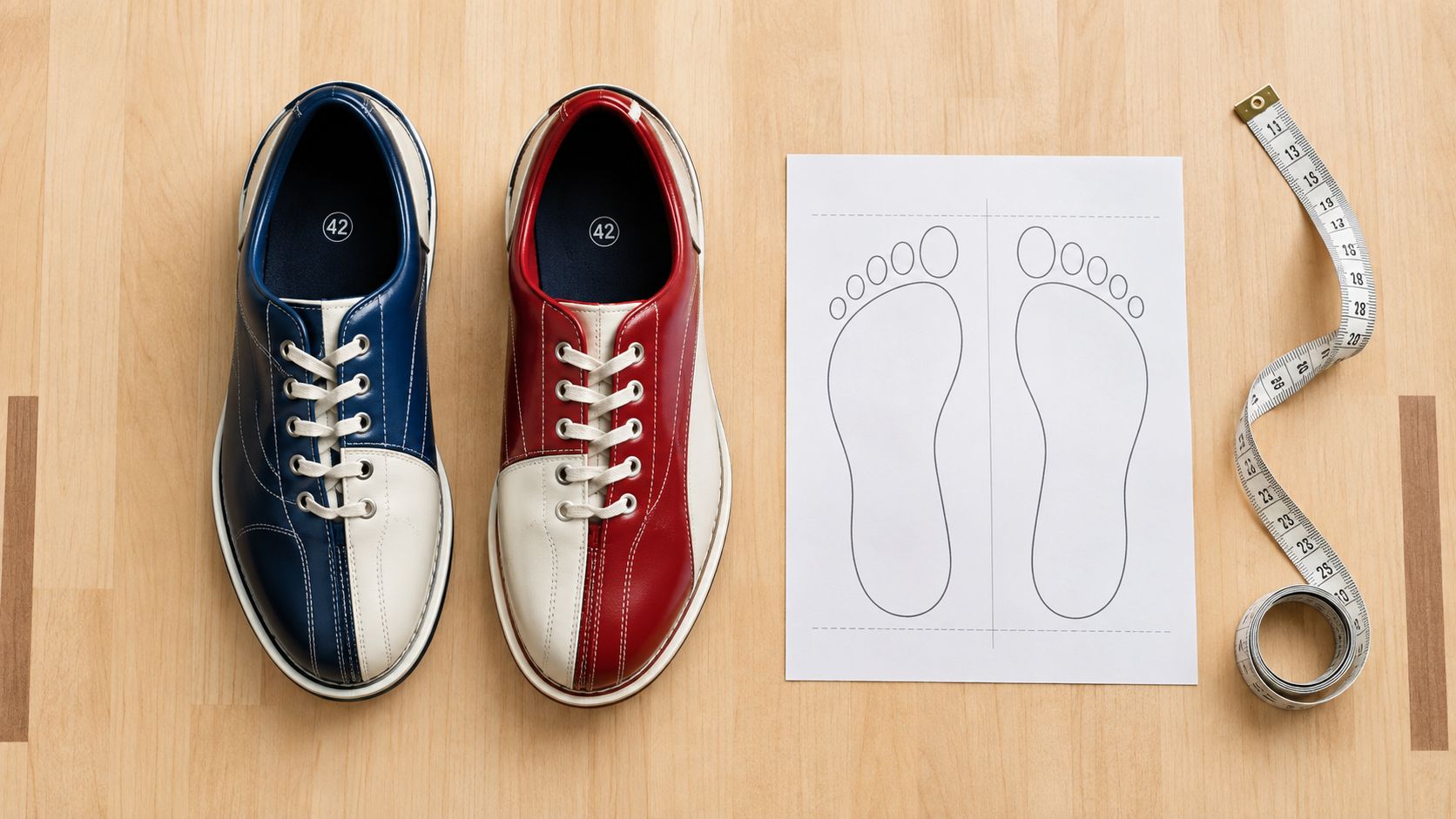
You've just stepped out of the rental counter with shoes that feel either painfully snug or strangely loose. During the first few steps, the slide foot catches, the plant foot shifts, and the approach suddenly feels less predictable than it did in your sneakers. That discomfort usually isn't random. Bowling shoe sizes depend on length, width, toe clearance, and the job each foot performs during delivery.
A bowling shoe has to let one foot glide while the other supports and brakes your movement. This guide shows you how to measure both feet, convert between US, EU, UK, and JP sizing, identify the right width, and test a pair according to what your feet do during the approach.
Table of Contents
- Why Bowling Shoe Sizes Deserve More Thought Than Your Sneaker Size
- Measuring Your Feet the Right Way at Home
- Bowling Shoe Size Conversion Across US, EU, UK, and JP
- Width Profiles and How to Tell Which One You Need
- Matching Fit to Slide and Plant Foot Demands
- Practical Fit Checks Before You Commit
- FAQs and Final Fit Checklist
Why Bowling Shoe Sizes Deserve More Thought Than Your Sneaker Size
You step onto the approach in a familiar sneaker size, then notice the slide foot catching while the plant foot shifts during the final steps. The printed size may be close, yet the shoe can still fail because bowling asks each foot to do a different job.
A sneaker mainly supports walking and running. A bowling shoe must let the slide foot move predictably across the approach, while the plant foot stays stable as your body rotates and releases the ball. Fit therefore depends on more than length. Width, heel hold, midfoot control, and toe clearance all affect how the shoe behaves under your bodyweight.
If the shoe is too short, your longest toe may press against the front as your weight moves forward. If it is too long or loose, your foot can shift inside the upper, making the slide inconsistent and reducing lateral support. A correct-looking number cannot compensate for a forefoot that is too narrow or an internal shape that does not match your foot.
Practical rule: Judge bowling shoes by what happens under your bodyweight, not by the size printed on the box.
The approach reveals small fit errors quickly. A cramped toe box may cause you to shorten your final steps without realizing it. Extra space can let the heel lift, so your foot moves before the sole begins to slide. On the plant side, a loose heel or soft midfoot can let the shoe roll instead of giving you a firm base.
Why a half-size decision matters
A small length change can alter both toe clearance and heel security. Your longest toe should stay clear of the front during the release, while the heel and midfoot remain controlled as the shoe transitions through the approach. More room is not automatically better. The useful space is the space that prevents contact without allowing the foot to drift.
Width is often the key lever when a size feels almost right. If the toes are crowded but the heel already fits, moving up in length may create unnecessary heel movement. A wider profile can solve the forefoot problem while preserving control for both the slide and plant foot.
Bowling footwear also uses international sizing systems. A US number can map to a different EU, UK, or JP label, and men's and women's conversions may not match at the same nominal US size. Use the Finish Line sizing chart only as a regional reference, then compare the result with the bowling brand's own chart.
Start with the foot itself: measure length and forefoot width, use the larger foot as the baseline, and test the pair in your normal stance and slide.
Measuring Your Feet the Right Way at Home
A shoe can match your usual sneaker size and still fail on the approach. Measure both feet first, then use the result to judge whether the slide foot has room to extend and whether the plant foot stays supported.
A reliable length measurement
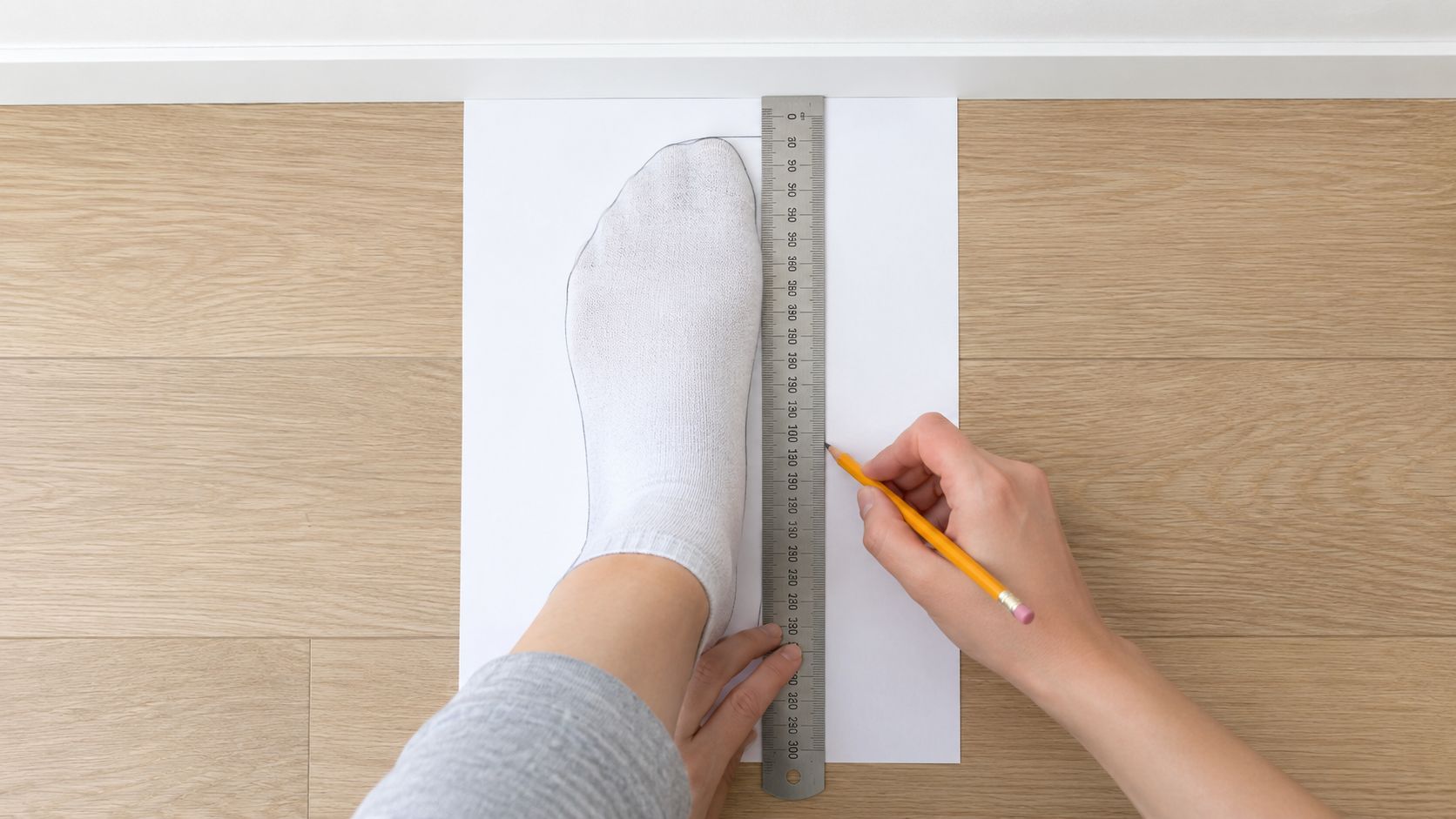
Gather paper, a pencil, and a rigid ruler. Put on the socks you will wear for bowling, place the paper against a wall, and stand with your heel lightly touching it. Keep your weight evenly distributed. Standing shows the foot under load, while sitting can make its usable length and width appear smaller.
Trace around the foot, or mark the back of the heel and the end of the longest toe. Measure between those marks in millimeters. Repeat for the other foot and use the larger measurement as your starting point. A small difference between feet is common, and fitting only the shorter foot can leave the longer one pressing into the front during the slide or release.
Measure later in the day, after normal activity has given your feet their usual volume. Use the same sock thickness you expect to wear during bowling. Thick socks should not compensate for a shoe that is too loose, and thin socks should not hide a cramped fit.
Width starts at the ball of the foot
Length describes only one part of the fit. While standing, measure across the widest part of the forefoot, usually around the ball of the foot and metatarsal area. This is the section that needs room as you load the slide foot and push against the plant foot.
If your length falls between listed sizes, begin with the larger size, then check the heel. Extra length is useful only if it preserves toe clearance without letting the heel lift or the foot shift inside the shoe. Aim for a snug forefoot with clear space ahead of the longest toe. Too little room can bring the toe into contact during release, while excess room can reduce control.
Width is often the better correction when the toes feel crowded but the heel already fits. A wider profile can relieve the forefoot without creating the heel movement that a longer size may cause.
Treat your measurements as a starting reference, not a guarantee. Shoe lasts, uppers, liners, and available width options change how the same nominal size feels. Compare your figures with the specific manufacturer's chart, then test the shoe in your normal stance and slide.
This short visual guide can help you check your measuring setup and foot position:
Bowling Shoe Size Conversion Across US, EU, UK, and JP
A size label can look familiar while describing a different fit. Bowling shoes sold in the US, Europe, the UK, and Japan use related but different systems, so match the region on the product page with the region used by your measurement reference.
One conversion chart lists US men's 10 as EU 44, UK 9.5, and JP 28 cm, or 280 mm. For women's sizing, US women's 10 is EU 41, UK 7.5, and JP 27 cm. The same US number therefore cannot move between men's and women's rows without checking the correct category. Use the international chart noted earlier for the full conversion and width information.
A practical reference point
| US Men's | US Women's | EU | UK | JP (cm) |
|---|---|---|---|---|
| 10 | 10 | 44 / 41 | 9.5 / 7.5 | 28 / 27 |
Read the men's and women's entries separately. In the table, the men's value comes first in the EU, UK, and JP cells, followed by the women's value. This compact example helps decode a label, but the shoe's own chart remains the final reference.
Adult conversion charts commonly cover a broad span, roughly US 4 through US 20. That range shows the scope of the sizing system, not the inventory of every bowling model. A shoe may use the same regional labels while being unavailable in some sizes, so confirm the model's listed options before ordering.
How to use the conversion
Begin with your measured heel-to-toe length and the product's stated sizing region. If the seller lists US sizing, compare your measurement with the US column. If the shoe ships from Europe, read the EU column directly instead of converting from a sneaker label. JP sizing is expressed in centimeters, making it useful for comparing the chart with your measured foot length.
The number still has to support the approach. Leave enough space for the longest toe during the slide and release, while keeping the heel stable so the shoe does not shift as the plant foot brakes. If the toes feel crowded but the heel already stays in place, width is usually a better fit adjustment than adding length.
Half sizes and youth sizing can vary by brand and category. Bowlingball.com's shoe sizing guide emphasizes measuring heel to toe and using the larger foot, but the appropriate label still depends on the model's chart. Treat conversion as translation, then judge the shoe by toe clearance, heel security, and control through the slide.
Width Profiles and How to Tell Which One You Need
Width is often the missing variable when a bowler says, “The length is right, but the shoe feels wrong.” Bowling footwear has traditionally used width classifications alongside length. A manufacturer-converted guide identifies standard men's bowling shoes as D width and standard women's bowling shoes as B width, as shown in this bowling shoe sizing document.
Those letters describe the shoe's intended forefoot volume, not a quality grade. Narrow, medium, wide, and extra-wide options allow a bowler to keep the correct length without squeezing the metatarsal area or allowing the foot to float inside the upper.
| Width Letter | Typical Foot Profile | Best Starting Move | Common Brands Offering It |
|---|---|---|---|
| AA or B | Narrow heel and lower forefoot volume | Start with a narrow or women's standard-width chart where applicable | Dexter, Storm, KR |
| D | Average men's forefoot volume | Use the standard men's width as the first comparison | Dexter, Storm, KR |
| E or 2E | Fuller ball of foot or broader metatarsal spread | Check wide-fit models before increasing length | Dexter, Storm, KR |
| EEE or 4E | Extra-wide forefoot or high-volume fit | Search specifically for extra-wide construction | Selected bowling footwear lines |
The available classes vary by model, so don't assume every BRS, Dexter, Storm, or KR shoe uses identical internal dimensions. Independent guidance from Bowlers Paradise also recommends fitting the larger foot and considering the socks worn during play.
Three checks at the fitting lane
Press gently near the big-toe side and the widest part of the forefoot. If the upper bulges sharply or the material wrinkles because there's too much unused volume, the shoe may be too wide. If the material stretches tightly over the metatarsal area, the width is probably too narrow even if the toe reaches the correct position.
Next, check the heel. You want a secure grab without pinching. A heel that lifts repeatedly during walking or the first part of the approach can make the shoe feel longer than it is and can disrupt the plant foot.
Finally, stand with your weight forward over the ball of the foot. The shoe's widest seam or flex area should line up with the widest part of your foot. If length is borderline, adjust width before automatically moving up or down, because changing length can create new problems at the heel and toe.
For bowlers whose forefeet need a narrower shape, compare options in this guide to bowling shoes for narrow feet.
Matching Fit to Slide and Plant Foot Demands
The slide foot and plant foot don't ask the shoe to do the same work. In a typical right-handed delivery, the left foot slides and the right foot plants. A left-handed bowler generally reverses those roles. Your shoe setup should follow your delivery, not the hand you write with or the side printed on the product page.
The slide foot travels forward while your knee stays flexed and your body moves toward the foul line. It needs a sole that releases smoothly and a forefoot that doesn't force the toes into the front. The plant foot acts as the braking pillar. It needs a secure heel and midfoot so your body can rotate over a stable base instead of rolling the shoe outward.
The slide foot needs controlled freedom. The plant foot needs controlled resistance.
Dedicated and interchangeable systems
A casual right-handed bowler may find a universal right-hand slide sole adequate, especially if the shoe has a clear distinction between the slide and traction sides. That setup becomes limiting for left-handed bowlers, bowlers who switch hands, or players who need different slide responses as approaches change.
Dedicated shoes assign the slide construction to a specific foot. Interchangeable systems let you change soles and heels, which can make the fit more adaptable without replacing the whole shoe. You can compare how these designs affect approach control in this guide to a bowling shoe slider.
Should the slide shoe be longer?
Some league bowlers prefer the slide side to feel slightly more relaxed through the forefoot, but that doesn't mean buying a randomly oversized shoe. Extra length can increase toe clearance while also creating heel movement, so width, upper structure, and sole material should be assessed together.
A better approach is to keep the measured length as the anchor, then choose a model with suitable slide material, a comfortable toe box, and enough forefoot volume. A firmer heel counter is valuable on the plant side because it keeps the base from shifting as you rotate. A softer upper can make the slide side feel less restrictive, but it must still hold the foot during the final step.
If you're unsure, perform a gentle slide rather than judging comfort while seated. The correct bowling shoe size is the one that lets the slide foot move predictably and the plant foot remain quiet under load.
Practical Fit Checks Before You Commit
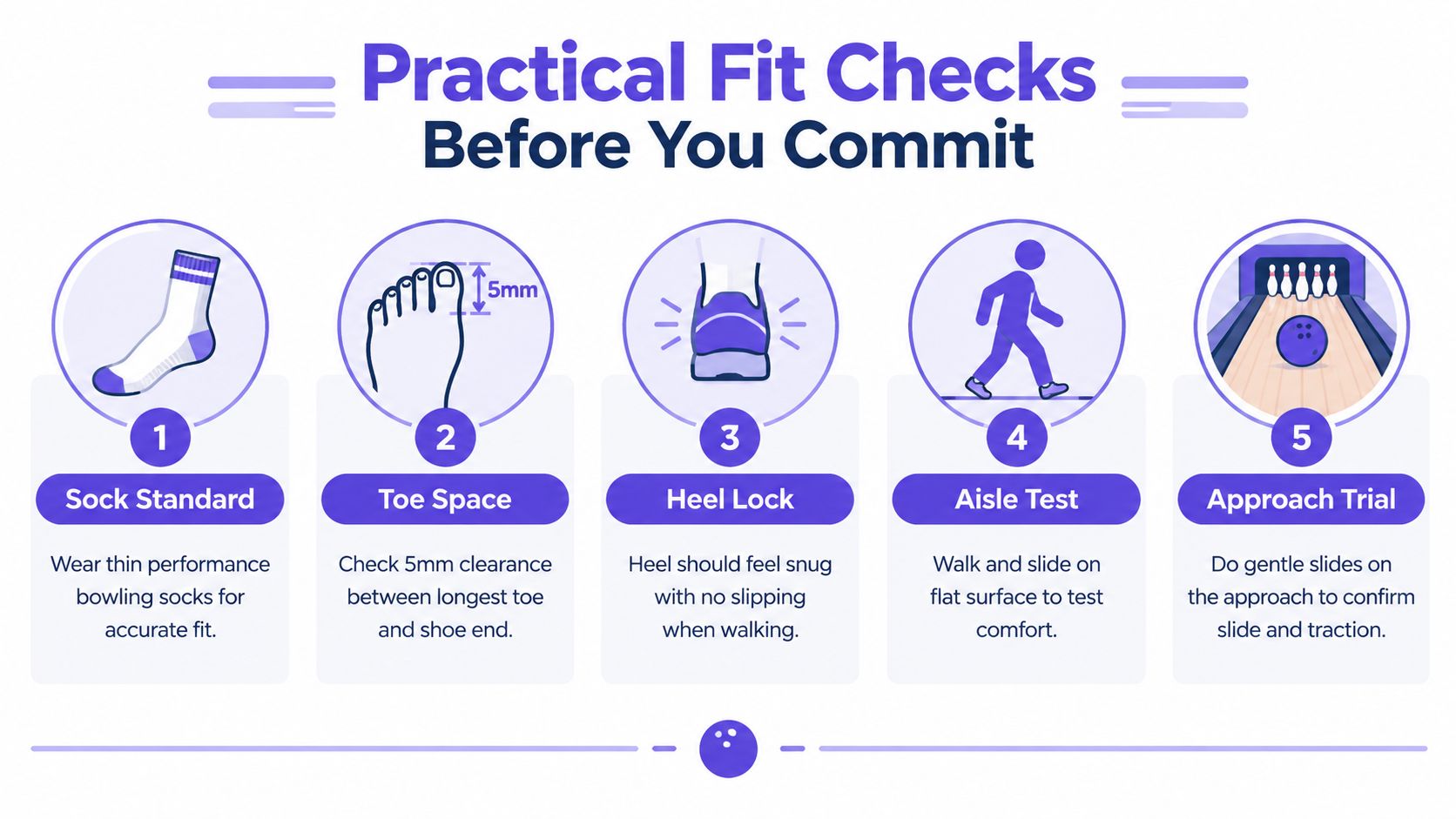
Test bowling shoes in the socks you will wear on the lanes. A thin performance sock gives you a consistent baseline. A thick sock can conceal a width problem and make the shoe feel shorter. Socks should not compensate for excess length or a loose heel.
Test the fit in sequence
- Stand fully loaded. Put on both shoes and distribute your weight evenly. Check for about 5 mm of space between the longest toe and the inside front of the shoe. Your toes need room to extend during the approach and release.
- Walk naturally. The heel should stay secure rather than lifting repeatedly. Toes should remain relaxed, without clawing, curling, or striking the front.
- Rock forward. Shift weight toward the ball of the foot. The forefoot should bend at the shoe's natural flex point, with no hard seam pressing across the metatarsals.
- Try a controlled slide. On a clean, flat surface, make a gentle bowling-style movement. The slide foot should travel smoothly, while the plant foot should stay stable as you transfer weight.
- Repeat the movement. Several controlled steps can expose crowding, heel movement, or an unstable sole that feels acceptable during a brief try-on.
Width is often the better adjustment when length feels correct but the forefoot feels tight. Structured uppers may relax across the width as they break in, but length does not shrink. A snug forefoot can become comfortable when the toes have suitable clearance and pressure is spread evenly. A shoe that presses the longest toe against the front is already too short.
At home, use a clean hardwood or vinyl strip and wear the bowling shoe being tested. Keep the motion gentle. Watch for catching near the ball of the foot, and check whether the heel remains connected as your weight moves forward. If you are comparing fixed and adjustable designs, review bowling shoes with interchangeable soles to understand how sole changes can affect slide control.
FAQs and Final Fit Checklist
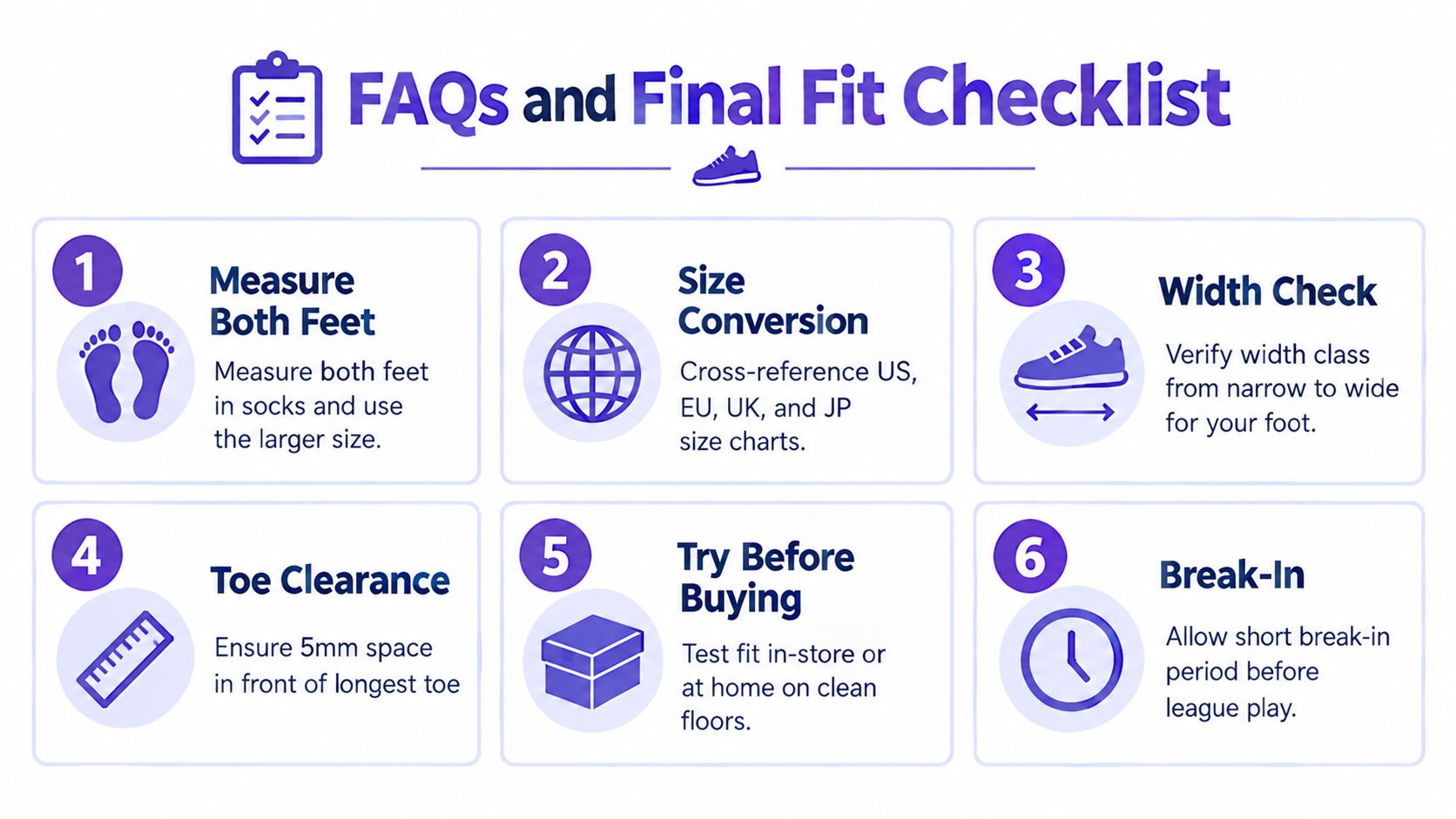
A pair can match your measured length and still fail during the approach. Use the checklist before ordering or leaving the pro shop, then connect each answer to what your foot must do while sliding and planting.
- Measure both feet in the socks used for bowling.
- Let the longer and wider foot guide the starting fit.
- Cross-reference US, EU, UK, and JP labels with the maker's chart.
- Confirm the shoe's width class.
- Check toe clearance while standing.
- Rehearse the slide and plant-foot transfer before committing.
Should bowling shoes match sneaker size?
Your sneaker size provides a starting reference. Bowling shoes may use different lasts, widths, and regional labels, so compare your measured foot with the manufacturer's chart. Then test three things in order: a secure heel, even forefoot pressure, and a slide that remains smooth without the foot shifting inside the shoe.
Should you size up or down?
If your measurement falls between options, begin with the larger size and check heel security. Do not choose the smaller pair merely to reduce heel movement if it crowds your longest toe. A width adjustment often solves forefoot pressure while preserving the length needed for forward loading.
How much toe room is correct?
Aim for about 5 mm of clearance between the longest toe and the inside front of the shoe while standing, as described in the Bowlio sizing guide. That space allows the toes to remain relaxed as weight moves forward during release. Excess room is also a problem because the foot can slide inside the shoe and make the slide foot harder to control.
Why does one foot feel tighter?
Feet can differ in length and width. Measure both and let the larger foot guide the selection, then check whether the tighter side needs a wider profile rather than extra length. The longer shoe may leave unnecessary space in front without relieving pressure across the forefoot.
Do rental sizes translate directly to owned shoes?
Rental labels can identify a starting range, but they do not guarantee the same fit in a performance model. Owned shoes may differ in width assumptions, liners, heel structures, and slide soles. Recheck heel hold, toe clearance, and movement instead of copying the rental number.
How should break-in affect the decision?
A structured upper may feel more comfortable as it settles. Break-in should not excuse toe pressure, numbness, or a heel that slips from the first walk. The right pair keeps the heel connected, leaves the toes clear, supports the plant foot, and lets the slide foot move consistently.
Bowling Gear Reviews publishes independent bowling equipment reviews, comparisons, and how-to guidance, including evaluations of fit profiles, slide systems, and replaceable soles. Visit Bowling Gear Reviews to compare options using the measurements and approach checks from this guide.
