

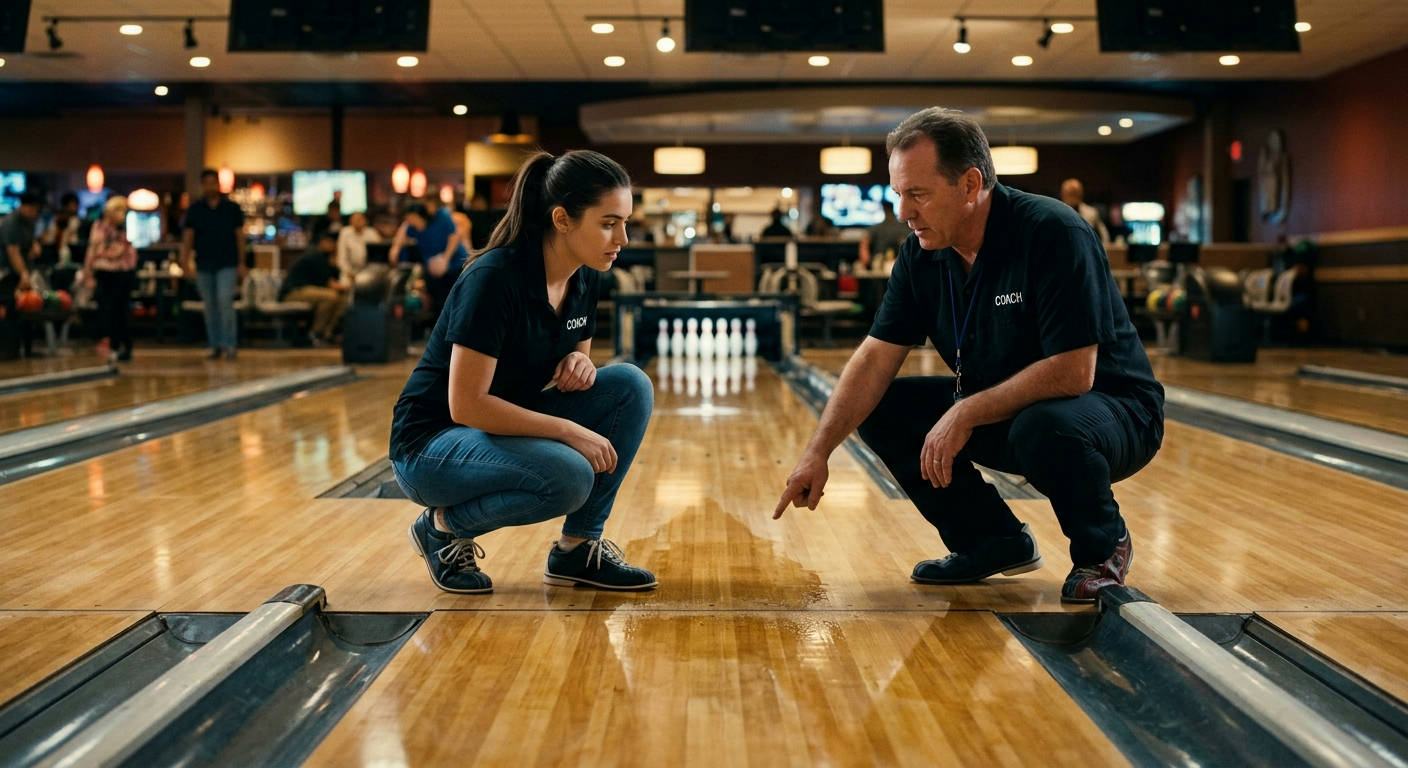
You’ve unboxed that brand new ball, laced up your shoes, and you’re ready to dominate. But after a few frames, your perfect hook shot is either sliding into the gutter or breaking way too early. The problem isn’t you—it’s the invisible opponent on every lane: the oil pattern. This is your definitive beginner’s guide how to read bowling lane oil patterns, the one skill that separates casual bowlers from serious competitors. Forget guesswork; it’s time to learn the language of the lane.
At Bowling Gear Reviews, we know that the right equipment is only half the battle. Understanding how your ball interacts with the lane surface is what truly elevates your game. Let’s break down exactly what you need to see, feel, and understand to turn those invisible patterns into a clear roadmap for striking.
What Even Is Lane Oil? (And Why You Should Care)
Lane oil isn’t just there to make the lanes shiny. It’s a highly engineered fluid with a specific job, and understanding its purpose is the first step in learning how to read bowling lane oil patterns.
The Dual Purpose of Lane Oil: Protection and Challenge
First, conditioner (the technical term for lane oil) protects the lane surface. A 16-pound bowling ball creates an immense amount of friction and heat upon impact. Without a protective layer of oil, lanes would be destroyed in weeks. This is the part your bowling center owner cares about most.
Second, the oil creates a challenge for the bowler. The way the oil is applied—its volume, length, and shape—dictates how a bowling ball will react. It creates areas of low friction (more oil) where the ball will skid, and areas of high friction (less oil) where the ball can grab the lane and hook towards the pocket.
A Quick Look at Oil Viscosity and Volume
Not all oil is the same. Modern lane conditioners come in various viscosities (thicknesses). A thicker, higher-viscosity oil will cause the ball to skid more, delaying its hook. A thinner oil will allow the ball to read the lane and hook sooner.
The volume of oil is also a huge factor. A “heavy” oil pattern simply means more total units of oil are applied to the lane, which will require specific ball choices and adjustments. A “light” or “dry” pattern has less oil, making the ball hook much more aggressively.
Why House Shots Are Deceiving
Most bowling alleys use what’s called a Typical House Pattern (THP), or “house shot.” This pattern is designed to be forgiving. It features a high volume of oil in the center of the lane and very little oil on the outside boards (near the gutters).
This design funnels the ball toward the pocket. If you miss your target to the inside, the heavy oil holds the ball online. If you miss to the outside, the dry boards create massive friction to bring the ball back. It builds confidence but creates bad habits. When you bowl a tournament on a “Sport” pattern, that safety net is gone.
The Anatomy of an Oil Pattern: Key Zones Explained
An oil pattern isn’t a uniform sheet. It’s a complex application with distinct zones that influence your ball’s journey from the foul line to the pins.
The Heads: The First 15 Feet
This is the front part of the lane, right after the foul line. The heads are typically where the highest concentration of oil is applied. The goal here is for the ball to skid smoothly, retaining its energy for the back end of the lane. If your ball starts hooking in the heads, you’re in for a long, frustrating day.
The Mid-Lane: Where Transition Happens
The mid-lane is the critical zone where the ball begins to slow down and transition from its initial skid phase into its hook phase. The oil volume starts to taper off here, allowing the coverstock of your ball to begin creating friction with the lane surface. How your ball travels through the mid-lane is a primary indicator of a good or bad matchup.
The Back End: The Friction Zone
This is the final 15-20 feet of the lane before the pins. In most patterns, the back end is nearly or completely dry, meaning there’s very little oil. This is where the magic is supposed to happen. The sudden increase in friction causes the ball to change direction sharply, creating the powerful hook that drives into the pocket. A ball that “dies” or doesn’t finish has lost too much energy before reaching the back end.
“Reading the lanes isn’t about seeing the oil; it’s about seeing what the oil does to your bowling ball. Every shot is a piece of data.”
Oil Pattern Length: The Rule of 31
One of the most valuable tricks for a quick analysis is the “Rule of 31.” To use it, you take the length of the oil pattern (which you can get from a pattern sheet) and subtract 31. The result is the board number where your ball should ideally exit the oil pattern on its way to the pocket.
For example, on a 41-foot pattern: 41 – 31 = 10. Your target breakpoint should be around the 10th board. It’s not a perfect law, but it’s an incredibly effective starting point.
Your Ultimate Beginner’s Guide How to Read Bowling Lane Oil Patterns
Okay, theory is great, but how do you apply it in real-time? Reading the lanes is an active process that starts before you even throw a ball.
Pre-Game Recon: Getting the Pattern Sheet
If you’re bowling in a league or tournament, always ask for the oil pattern sheet. In 2026, most competitive events provide this digitally or on paper. This sheet is your treasure map. It shows you the length of the pattern, the volume of oil, and the ratio of oil from the center to the outside. This information from the United States Bowling Congress (USBC) is invaluable for creating an initial game plan.
The First Shot is a Test Shot: What to Watch For
Your first few shots, especially during practice, aren’t about striking. They are about gathering information. Throw your normal, comfortable shot and watch your ball intently as it travels down the lane.
- Where does it start to slow down?
- At what point does it make its move toward the pocket?
- Does it finish strong through the pins or does it seem weak?
Pay no attention to the pinfall. Focus solely on the ball’s motion through the three lane zones.
The Essential First Step in a Beginner’s Guide How to Read Bowling Lane Oil Patterns: Analyzing Ball Reaction
Your ball’s reaction can be broken down into three phases: Skid, Hook, and Roll.
- Skid: The initial part of the ball’s motion where it slides on the oil, retaining its axis rotation and energy.
- Hook: The transition phase where the ball encounters friction, causing it to change direction. This is where you see the “curve.”
- Roll: The final phase where the ball has achieved a stable forward roll, driving through the pins.
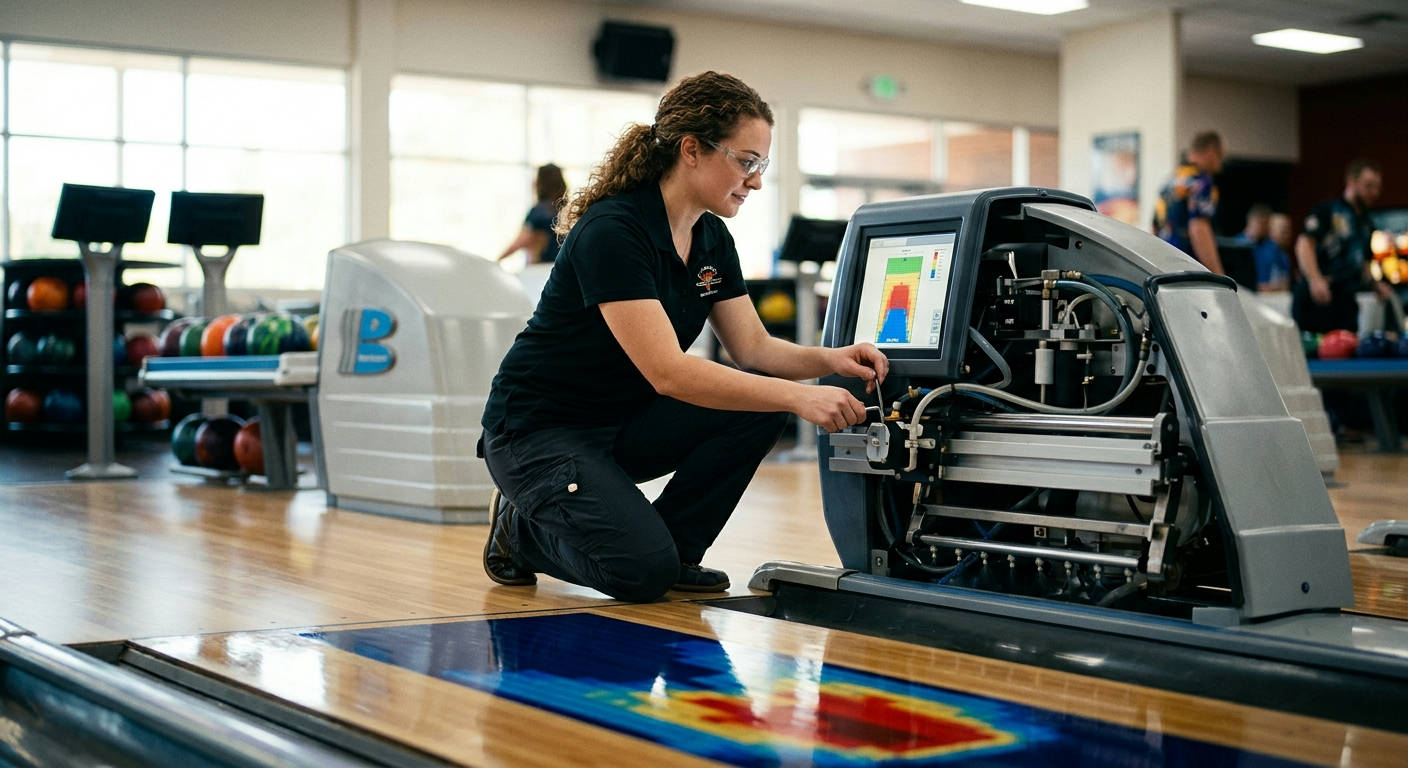
A perfect shot has a balanced amount of all three. If one phase is too long or too short, you know the lane is telling you something.
Reading the Signs: How Your Ball Communicates with You
Your bowling ball is constantly giving you feedback. Learning to interpret this feedback is the core of reading the lanes.
The Ball Hooks Too Early
If your ball is grabbing the lane and making a violent, early turn, it’s encountering friction too soon. This usually means you are playing in a part of the lane with less oil than your ball and release style can handle. The ball burns up its energy too fast and will often hit the headpin high (a “Brooklyn” hit for right-handers) or leave a split.
The Ball Skids Too Far and Won’t Hook
The opposite problem is a ball that seems to sail endlessly down the lane, only making a weak, late turn or not hooking at all. This means your ball is in too much oil. It can’t generate enough friction to make its move. The result is a light pocket hit or a complete miss to the right (for a right-hander). This is a common challenge on lanes that require special Bowling Balls For Oily Lanes.
Observing Other Bowlers (Ethical Spying)
Watch how other bowlers’ balls are reacting, especially those with a similar style to yours. Where are they standing? What’s their target? If everyone is playing the same line and scoring well, that’s a huge clue. If you see someone struggling, analyze why. Is their ball hooking too early or too late? Use their shots to confirm or deny what your own ball is telling you.
Common Oil Patterns You’ll Encounter in 2026
While there are hundreds of possible patterns, you will most often encounter two main categories.
The “House Shot” (Typical House Pattern – THP)
As mentioned, this is the most common pattern in recreational leagues. It’s characterized by a high volume of oil in the middle (roughly boards 11 through 29) and very little on the outside. The ratio of oil in the center versus the outside is often 8:1 or higher, creating that “funnel” effect.
Sport Patterns: The Cheetah, Scorpion, and Shark
These are patterns used in competitive tournaments. They are designed to be difficult. Unlike a house shot, the oil is distributed much more evenly across the lane. The ratio of center oil to outside oil might be 3:1 or less. This means there is no “free” hook to the outside. Accuracy and making precise adjustments are paramount. Each named pattern (Cheetah, Scorpion, etc.) has a different length and volume, presenting a unique test of skill.
“A house shot lets you get away with mistakes. A sport shot exposes every flaw in your game. That’s why practice on tough patterns is essential for growth.”
Adjusting Your Game Based on What You Read
Reading the lane is pointless if you don’t do anything with the information. Once you’ve diagnosed the ball’s reaction, it’s time to make a move.
Footwork Adjustments: Moving Left or Right
This is your primary adjustment. A common rule of thumb is the “2-and-1” move. If you want your ball to reach the breakpoint 1 board further down the lane, you move your feet 2 boards in the same direction on the approach.
- Ball hooking too early? Move your feet left (for right-handers) and keep your target the same. This forces the ball into the heavier oil, delaying the hook.
- Ball not hooking enough? Move your feet right (for right-handers) and keep your target the same. This moves the ball toward the friction, encouraging an earlier hook.
Target Adjustments: Changing Your Mark on the Lane
Sometimes, a footwork adjustment isn’t enough. You may also need to adjust your target (the arrows or dots on the lane). Moving your target right or left will change the entire trajectory of your shot. This is a more significant move and should be done when a small foot adjustment isn’t fixing the problem.
The Critical Role of Equipment: When to Change Your Ball
Sometimes the lane condition is simply a bad match for the ball you are throwing. An aggressive, high-performance ball with a dull surface will hook way too much on a dry lane. Conversely, a pearlized, polished ball designed for length will struggle on a flood of heavy oil.
Having a versatile arsenal is key. If the lanes are drying out, switching to a weaker ball designed for friction, like one you’d find in our guide to Bowling Balls For Dry Lanes, can be a game-changer. Don’t be afraid to switch equipment when the lane tells you to.
Adjusting Speed and Loft
Advanced players can also make adjustments to their physical game. Increasing your ball speed will make the ball skid further and hook later. Decreasing your speed will allow it to read the lane sooner and hook more. Adding “loft” (throwing the ball further out onto the lane) can help it get past the early part of the pattern before it has a chance to hook. These are difficult skills that require lots of practice.
Lane Transition: The Unseen Opponent
The oil pattern you start on is not the same pattern you will be bowling on an hour later. This is called “lane transition,” and it’s a critical concept to grasp.
What is Carry-Down and How Does It Affect Your Shot?
As bowling balls travel down the lane, their surfaces pick up oil in the front and middle of the lane and deposit it further down in the normally dry back end. This process is called “carry-down.”
Carry-down reduces the amount of friction on the back end, which can cause your ball to not hook as much as it did earlier. If your perfect strike shot suddenly starts leaving corner pins, carry-down is a likely culprit.
Recognizing and Adapting to Break Down
“Break down” is the opposite. As bowling continues, the oil in the heads and mid-lane gets pushed around and absorbed by the balls. This creates more friction in the front part of the lane, causing the ball to hook earlier. If you find your shots starting to go high on the headpin, the pattern is breaking down. You’ll need to “chase the oil” by moving inside.
The Importance of a Good Bowling Ball Cleaning Kit
A huge part of managing lane transition is keeping your equipment consistent. Oil soaks into the coverstock of a bowling ball, changing its reaction over time. Using a quality cleaner after every session removes this oil and restores the ball’s intended performance. Our review of the best Bowling Ball Cleaning Kit 2026 is a great place to start finding the right product. A clean ball is a predictable ball.
Mastering how to read bowling lane oil patterns isn’t an overnight process. It’s a skill built through conscious observation, deliberate practice, and a willingness to adjust. Stop throwing the ball and just hoping. Start watching, analyzing, and making informed decisions. Your average will thank you for it.

1 Comment
Pingback: Bowling Ball Drilling Layouts: Affect Your Ball Motion