

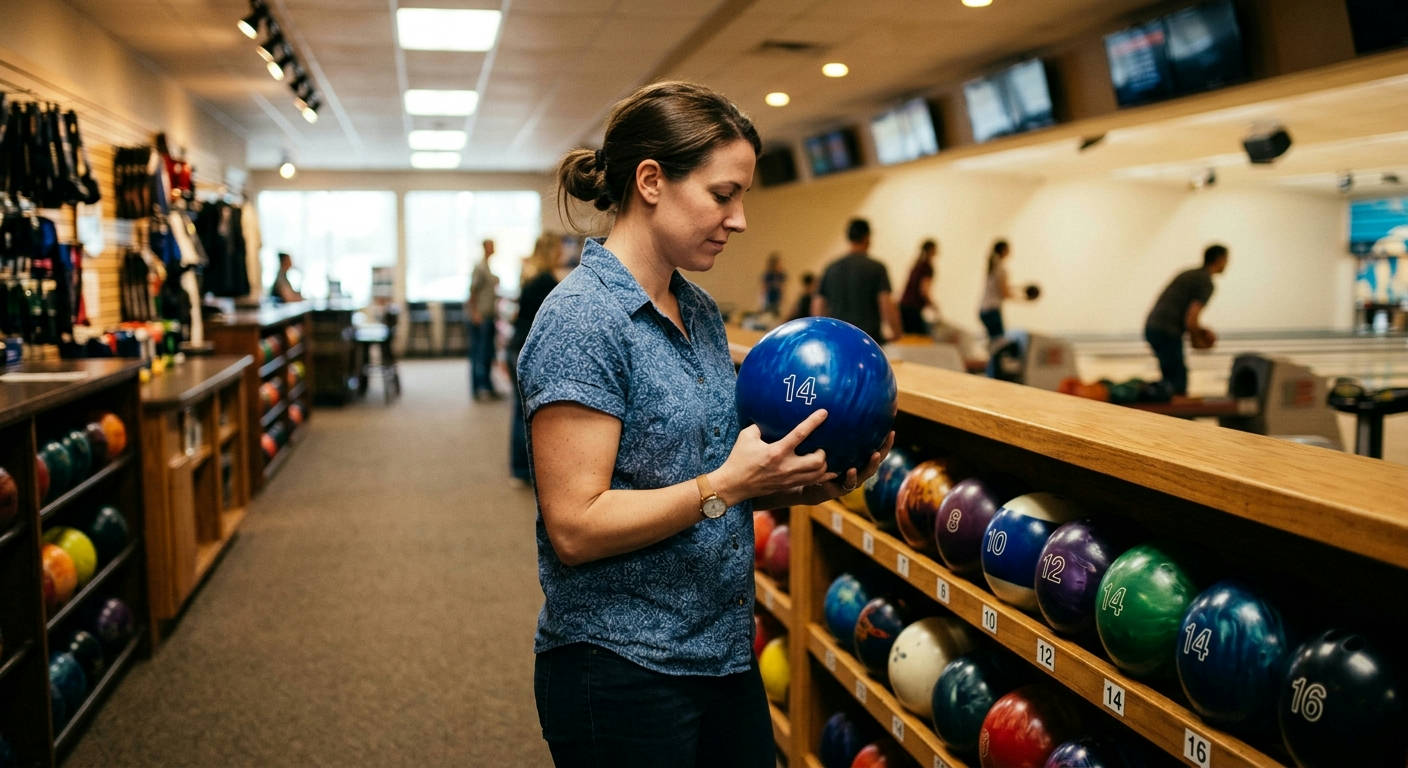
Stop guessing and start striking. The single most common question we hear at Bowling Gear Reviews is, “What bowling ball weight should you use?” It’s the foundational decision that impacts everything from your hook potential to your endurance over a three-game series. Choosing wrong can lead to injury, bad habits, and a plateau in your scores. Let’s cut through the noise and get you fitted with the perfect weight for your game.
The Old Myths vs. Modern Reality of Ball Weight
For decades, bowling alleys echoed with the same tired advice. It’s 2026, and bowling ball technology has evolved dramatically. It’s time our thinking about ball weight evolved with it.
The Debunked “10% of Your Body Weight” Rule
Let’s get this out of the way immediately: the “10% of your body weight” rule is outdated and often incorrect. This old guideline suggests a 150-pound person should throw a 15-pound ball. It completely ignores a person’s actual strength, fitness level, flexibility, and bowling style.
A 200-pound person who never lifts weights might be better suited for a 14-pound ball, while a 160-pound athlete could comfortably handle 16 pounds. This rule is a relic from an era of simpler ball technology and should be treated as such. It’s a rough starting point at best, and terrible advice at worst.
Why Lighter Isn’t Always Weaker: The Core Tech Factor
In the past, a heavier ball meant more hitting power. Period. That’s no longer the whole story. Modern performance bowling balls are built around sophisticated dynamic cores—the engine of the ball.
Manufacturers have spent millions engineering cores that create immense energy transfer and pin action, even in lighter weights. A well-engineered 14-pound ball with an asymmetric core can often outperform a poorly matched 16-pound ball. The core’s design, not just the raw mass, dictates how the ball drives through the pins.
A Practical Guide: Finding Your Starting Weight
Forget the generic formulas. Finding your ideal weight is about a hands-on assessment of your unique physical characteristics. You need to be honest about your strength and comfort.
The Strength & Comfort Test
Walk into a pro shop and perform this simple test. Pick up a ball with your non-bowling hand under it for support. Hold it in your bowling hand with your arm extended straight out in front of you, parallel to the floor.
Can you hold it comfortably for at least five seconds without shaking or straining? If you can, try the next pound up. If you’re struggling, drop down a pound. This gives you a realistic baseline for what your arm can handle repeatedly throughout a game.
The Age and Physical Condition Consideration
Your physical reality dictates your equipment choices. There’s no room for ego here.
Younger bowlers who are still growing need lighter balls (typically 6 to 12 pounds) to develop proper mechanics without risking injury. As they get stronger, they can gradually increase the weight.
For older players, maintaining good form and avoiding strain is paramount. Many senior bowlers find great success by dropping to a 12 or 13-pound ball. This allows them to maintain ball speed and accuracy without taxing their joints. Our guide on the Best Bowling Balls For Seniors dives deeper into specific models that excel in these lighter weights.
The Swing Test: Is the Ball Controlling You?
A proper arm swing should be a smooth, gravity-assisted pendulum motion. If the ball is too heavy, you’ll see immediate red flags. You might drop your shoulder on the backswing, or you might have to “muscle” the ball forward instead of letting it swing freely.
If the ball feels like it’s pulling you off-balance or forcing your movements, it’s too heavy. The right weight feels like an extension of your arm, not an anchor dragging you down.
“Control and repeatability are the keys to scoring. You sacrifice both when you try to muscle a ball that’s too heavy for you. It’s the fastest way to kill your consistency.”
## What Bowling Ball Weight Should You Use? The Performance Breakdown
Different weight classes are designed for different purposes and different bowlers. Understanding the “why” behind each range is crucial for making an informed decision that will elevate your performance.
The 14-16 Pound Range: The Power Zone
This is the sweet spot for the vast majority of physically able adult league and tournament bowlers. Balls in this weight class offer the optimal combination of momentum and energy transfer. According to the principles of physics, momentum (mass times velocity) is key to pin carry. A 15 or 16-pound ball, thrown with adequate speed, is less likely to deflect when it hits the pocket, allowing it to drive through the pins more effectively.
Most professional bowlers on the PBA and PWBA tours use 15-pound balls, with a few opting for 16. This is because these weights provide the maximum hitting power and are required by regulation for professional competition, as outlined by the United States Bowling Congress (USBC). For serious amateurs looking to maximize their strike potential, 14, 15, or 16 pounds is the target. You can find excellent options in this range on Amazon, like the popular 15 pound bowling ball selections.
The 12-13 Pound Range: The Sweet Spot for Control
This weight class is perfect for bowlers who may not have elite-level strength or who prioritize pinpoint accuracy and ball speed. A lighter ball is easier to accelerate, which can be a huge advantage for players with naturally slower speeds.
However, be aware of a critical technical detail. Many manufacturers use a generic, less dynamic core shape in balls under 14 pounds. A high-performance ball model might have a powerful asymmetric core in its 14-16 pound versions but a simpler, symmetrical core in its 12-pound version. Always check the tech specs on our reviews at Bowling Gear Reviews before buying a lighter performance ball.
The 6-11 Pound Range: Youth and Specialty Use
This range is almost exclusively for children or very new bowlers learning the basic mechanics of the sport. These balls are designed to be manageable for small hands and developing muscles. You’ll find a great variety of youth bowling balls that are perfect for getting kids started.
Adults might also use a ball in this range as a dedicated spare ball, especially a very light one (10-11 pounds) for shooting corner pins where hook is undesirable.
How Weight Impacts Ball Dynamics and Your Game
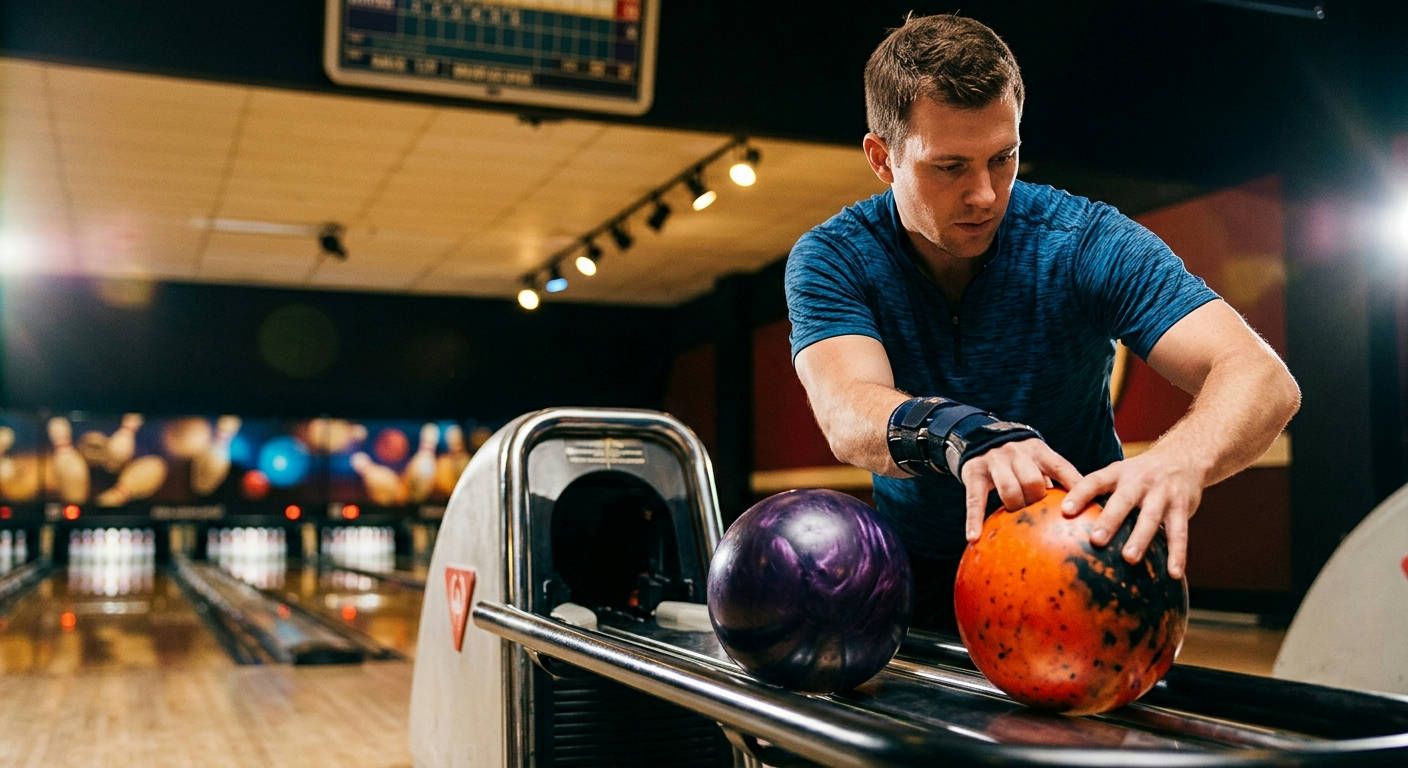
A pound or two might not seem like much, but it creates a cascade of effects that ripple through your entire game. From your physical approach to the ball’s reaction on the lane, weight matters.
Ball Speed and Its Relationship to Weight
There’s an inverse relationship between ball weight and ball speed. A heavier ball is harder to accelerate, naturally leading to a slower speed for most bowlers. A lighter ball is easier to get moving down the lane.
This isn’t just about raw speed; it’s about matching your speed to your rev rate. A speed-dominant player might benefit from a heavier ball to slow their speed down and give the ball more time to hook. A rev-dominant player might need a lighter ball to generate more speed to keep it from hooking too early.
Core Dynamics: The “Engine” of the Ball
As mentioned, the core is everything in a modern bowling ball. The RG (Radius of Gyration) and Differential numbers, which dictate how a ball revs up and flares, are often different in lighter weight versions of the same ball.
A 15-pound Storm Phaze II will have a different core and produce a different on-lane reaction than a 12-pound Storm Phaze II. This is a crucial point many bowlers miss. You aren’t just getting a lighter ball; you may be getting a ball with an entirely different performance profile.
Endurance and Consistency Over a Full Series
Can you throw your ball with the same speed, revs, and accuracy in the 10th frame of the third game as you did in the first frame of the first game? If the answer is no, your ball might be too heavy.
Fatigue is a score killer. It causes you to slow down, drop the ball, or pull your shots. A slightly lighter ball that you can throw consistently for an entire night of league bowling is infinitely better than a heavier ball that tires you out after one game.
Special Considerations: When to Deviate from the Norm
Standard advice covers about 80% of bowlers. But what if you’re in the other 20%? Certain styles and situations call for a unique approach to ball weight.
The Two-Handed Bowler Factor
Two-handed bowlers generate significantly more revolutions and often more ball speed than their one-handed counterparts. Because they use two hands to support the ball, they can often handle heavier weights with less strain.
Many two-handed bowlers thrive with 15-pound equipment, as the extra mass helps the high-revving ball retain energy and avoid “burning up” before it reaches the pins.
### What Bowling Ball Weight Should You Use? For Your Spare Ball?
Your strike ball and your spare ball serve two completely different functions. Your strike ball needs to hook. Your spare ball needs to go straight. For this reason, many bowlers use a polyester (plastic) spare ball.
It’s perfectly acceptable, and often recommended, to use a spare ball that is a pound or two lighter than your strike ball. This can make it easier to flatten your wrist and throw the ball straight at tricky corner pins like the 7 or 10. The goal is accuracy, not power.
The Pro Shop: Your Most Valuable Resource
You can read articles and watch videos all day, but nothing replaces the hands-on expertise of a certified pro shop operator (PSO).
Why a Professional Fitting is Non-Negotiable
A good PSO will watch you bowl. They will assess your strength, your swing, your ball speed, and your goals. They are the doctors of the bowling world, and their diagnosis is essential for prescribing the right equipment. They will provide the final, definitive answer to “What bowling ball weight should you use?”
Your relationship with your pro shop operator is one of the most important in your bowling career. Trust their expertise. They’ve seen it all and can prevent you from making a costly mistake.
The Importance of a Custom Drill
A ball that is drilled specifically for your hand will feel significantly lighter than an undrilled ball of the same weight. A proper fit distributes the weight across your hand and forearm, reducing grip pressure and strain.
Bowling with a poorly-fitted “house ball” is like running a marathon in shoes that are two sizes too big. A custom drill is not a luxury; it’s a fundamental requirement for performance and injury prevention.
Common Mistakes to Avoid When Choosing Your Ball Weight
We see the same correctable errors time and time again. Avoid these common pitfalls to put yourself on the fast track to improvement.
Ego Lifting: Picking a Weight to Look Strong
Don’t be the person who insists on throwing a 16-pound ball just to look tough, only to post a 140 score because you can’t control it. Bowling is a sport of finesse, not brute force. The right weight is the one that allows you to be the most accurate and consistent, regardless of what the number on the ball says.
Sticking with Your First Ball’s Weight Forever
As you bowl more, you get stronger and your mechanics improve. The 12-pound ball that was perfect when you started might be holding you back now. Re-evaluate your ball weight every year or two, especially if you feel your game has evolved.
Ignoring Pain or Discomfort
This is the most important rule. If your wrist, elbow, or shoulder hurts after bowling, it’s a massive red flag. Pain is your body’s way of telling you something is wrong. In most cases, the culprit is a ball that is either too heavy or drilled improperly. Listen to your body and downsize if necessary.
Choosing the right bowling ball weight is a balance of science, feel, and honest self-assessment. By ditching the old myths and focusing on comfort, control, and repeatability, you can select a weight that truly complements your game. This single decision will unlock your potential for higher scores and a more enjoyable experience on the lanes. For in-depth reviews on specific models at every weight, check out our latest analysis at Bowling Gear Reviews.
