

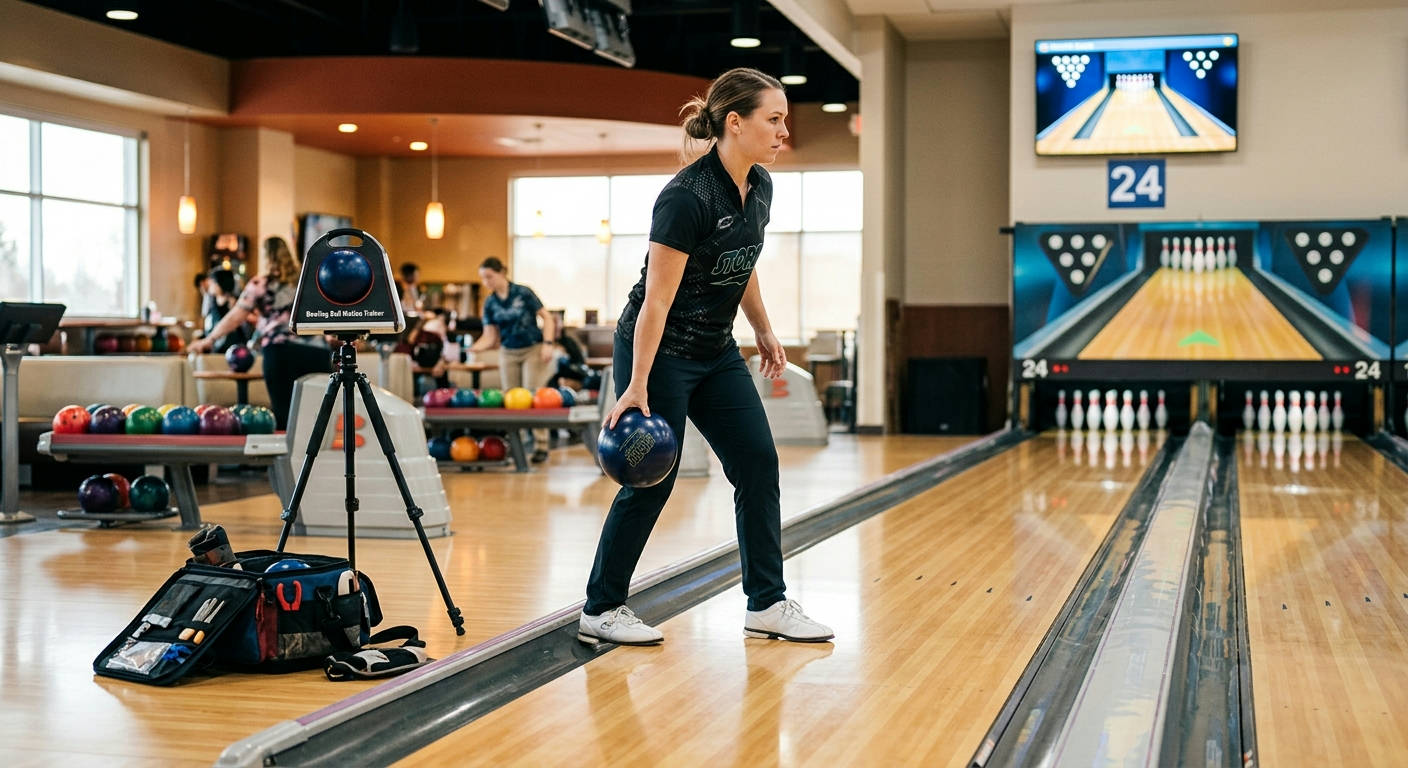
Tired of hitting a wall with your average? Throwing endless games and seeing the same numbers on the screen is a classic sign of a practice plateau. To break through, you need more than just lane time; you need targeted feedback and muscle memory reinforcement. That’s where the best bowling practice tools come in, transforming aimless repetition into deliberate, score-boosting training. These devices are designed to isolate and perfect the individual components of your game, from your arm swing to your release.
At Bowling Gear Reviews, we dissect equipment to find what truly works. Let’s break down the tools that will actually move the needle on your performance.
Why Your Game Needs More Than Just Reps on the Lane
Simply bowling more games often just reinforces bad habits. If your swing has a flaw or your release is inconsistent, throwing another 100 balls just ingrains that flaw deeper into your muscle memory. True improvement comes from isolating the weak points in your physical game and targeting them with specific drills.
Practice tools provide what your own senses can’t: objective, immediate feedback. You might feel like your arm is straight, but a swing trainer will tell you the truth instantly. You might think your timing is perfect, but video analysis will reveal the split-second hitches holding you back. This is how you stop guessing and start building a mechanically sound, repeatable shot.
The Best Bowling Practice Tools for Honing Your Physical Game
The core of a great shot is the physical execution. Your approach, swing, and release need to be a symphony of controlled movements. When one part is off-key, the whole performance suffers. These tools are designed to tune each part of your physical game to perfection.
Arm Swing & Release Trainers
A clean, straight arm swing is non-negotiable for accuracy. Any lateral movement introduces variables that kill your consistency. Swing trainers are designed to eliminate that.
- Swing Guides: Devices like the Eileen’s Bowling Buddy or similar trainers force your arm into a pendulum-like path. By providing a physical guide, they teach your body what a correct swing plane feels like, building the muscle memory for a perfect downswing and follow-through.
- Wrist Positioners: Your hand position at the moment of release dictates ball rotation and hook potential. A quality wrist support, like a Robby’s Revs, does more than just prevent injury; it’s a training tool. It locks your wrist into a consistent, powerful position, preventing it from breaking back at the top of your swing and ensuring you get behind the ball for maximum leverage. Players learning to generate more power will find this especially useful, as it forces the correct mechanics needed for a high-rev delivery. If you’re looking to master that, see our guide on the Best Bowling Balls For High Rev Players.
You can find a wide variety of these aids by searching on Amazon.
Check pricing for bowling arm swing trainers on Amazon: https://www.amazon.com/s?k=bowling+arm+swing+trainer&tag=bowlinggear04-20
Balance and Footwork Aids
Power and accuracy start from the ground up. If your approach is unstable, your shot will be too. A balanced finish is a hallmark of an elite bowler.
- Balance Pads: Using a simple foam balance pad or disc at home can dramatically improve your core strength and stability. Practice standing on one foot in your finishing “post” position. This strengthens the small stabilizer muscles in your legs and core, leading to a rock-solid slide at the foul line.
- Slide Socks: While technically apparel, a quality slide sock or a shoe with interchangeable soles is a critical practice tool. It allows you to practice maintaining your timing and balance on different approach conditions, from “sticky” to “slick,” so you’re never caught off guard in a tournament.
The Power of the Simple Foul Line Towel
You don’t always need to spend big money. One of the most effective practice tools is already in your bag: a microfiber towel. The “towel drill” is a classic for a reason. Place a folded towel on the lane about 6-8 feet past the foul line. Your goal is to slide and release the ball so it rolls cleanly over the towel without lofting.
This drill is brilliant for two reasons. First, it forces a lower, more powerful release point. Second, it helps you synchronize your slide and your release, a key component of good timing.
Visual and Targeting Aids: See Your Line, Hit Your Mark
Bowling is a target sport. If you can’t see your line or consistently hit your mark, even a perfect physical game won’t save you. These tools sharpen your visual accuracy and help you truly understand your ball path.
“Consistency is not about throwing a strike every time. It’s about hitting your target every time. The pins will fall.”
Laser Targeting Devices
These gadgets, which often attach to your wrist or sit on the approach, project a laser beam down the lane. This gives you an undeniable visual reference for your intended line. You can trace the path from your feet, over your target arrows, and out to your breakpoint. It’s an invaluable tool for understanding how your setup on the approach affects where the ball ends up 40 feet down the lane. It removes all guesswork from your alignment.
Video Analysis: Your Unblinking Coach
The single most powerful practice tool available in 2026 is the slow-motion camera on your smartphone. You need a simple, inexpensive tripod to make it work. Set your phone up to record from behind and from the side of your approach.

Review the footage in slow motion and look for:
- Timing: Is your foot hitting the foul line at the exact same moment you are releasing the ball?
- Posture: Are you staying down through the shot, or are you pulling up at the last second, robbing yourself of power?
- Swing Path: Is your backswing straight? Are you “muscling” the ball or letting gravity do the work?
This raw, objective feedback is better than any coach’s opinion because it’s undeniable data.
Get a reliable tripod to start your analysis:
Tools for Understanding Your Arsenal and Lane Conditions
A great bowler isn’t just a shot-maker; they’re a master of their equipment and environment. These tools help you understand how to match your bowling ball to the lane conditions.
The Best Bowling Practice Tools: Your Surface Kit
Your bowling ball’s coverstock is its engine. Changing the surface texture (grit) is how you tune that engine. A surface adjustment kit is one of the best bowling practice tools you can own.
- Abralon/Siaair Pads: These high-quality abrasive pads come in a range of grits (from 500 to 4000). During practice, throw a few shots, then change the ball’s surface with a pad and see how it alters the reaction. This hands-on experience is the only way to truly learn how to make your ball read earlier or go longer.
- Ball Scanners: For the serious competitor, a digital surface scanner provides a precise measurement of your ball’s surface grit. This allows for perfect replication of a surface that worked well, taking all the guesswork out of your surface prep.
Understanding surface is crucial for navigating different oil patterns, a topic we cover in our guides on Bowling Balls For Oily Lanes and dry lanes.
The Ultimate Practice Tool: A Dedicated Spare Ball
Stop practicing your spares with a reactive resin ball. It’s building horrible habits. Your high-performance ball is designed to hook. When you flatten your wrist to throw it straight at a 10-pin, you’re practicing a compromised, weak release.
A polyester or urethane spare ball is an essential practice tool. It will go where you throw it, forcing you to be accurate. Practicing with a dedicated spare ball teaches you to trust your line and hit your target without any “help” from the ball’s core or coverstock.
Data-Driven Improvement: The Tech Behind the Strikes
The evolution of bowling tech has brought pro-level analytics to more bowlers than ever. Using data is the fastest way to identify and fix hidden flaws.
Smart Lanes and Sensor Technology
Advanced training centers are now equipped with systems like Specto or Bowler ID. These use high-speed cameras and sensors to track every aspect of your shot in real-time. You get instant, precise data on:
- Ball Speed: Measured at the release, mid-lane, and at the pins.
- Rev Rate: The exact RPMs you generate.
- Axis Rotation & Tilt: The key variables that define your ball’s motion.
- Launch Angle: The precision of your targeting.
Booking a few practice sessions at a center with this technology can provide a complete diagnostic of your game. The data doesn’t lie. According to a 2025 study from the International Bowling Pro-Shop and Instructors Association (IBPSIA), bowlers who trained with sensor feedback improved their average by 8% more than those who didn’t over a six-month period.
“Data-driven practice isn’t about replacing feel. It’s about validating it. When what you feel matches what the data says, you’ve found a repeatable shot.”
Integrating Practice Tools Without Overthinking It
Owning a garage full of tools won’t build a house. You have to know how and when to use them. The goal is to integrate these tools into your routine to build skills, not to become dependent on them.
Follow the 80/20 Rule of Practice
A great way to structure your sessions is with the 80/20 rule. Spend the first 20% of your practice time (say, 15 minutes of an hour session) using a specific tool to work on a specific weakness. For example, use a swing trainer for 15 minutes to groove your swing path.
Then, for the remaining 80% of the session, put the tool away and just bowl. Focus on integrating the feeling you just developed into your normal game. This prevents you from over-analyzing every shot and allows the new muscle memory to become natural.
A Quick Diagnostic Guide
Not sure where to start? Here’s a simple cheat sheet:
- If you’re inconsistent and missing your target left and right: Start with video analysis and an arm swing trainer. The problem is likely your swing path or timing.
- If your ball reaction is weak or unpredictable: Focus on a wrist positioner and practice with surface pads. Your release is the issue.
- If you feel off-balance or are losing power at the line: Work with a balance pad at home and do towel drills at the alley. Your foundation is shaky.
Ultimately, the best bowling practice tools are the ones that address your specific weaknesses. By moving beyond simple game-play and embracing deliberate, tool-assisted practice, you can systematically deconstruct your flaws and rebuild a stronger, more consistent game. Explore our other guides at Bowling Gear Reviews to find the equipment that will complete your journey to a higher average.
