


You hit your usual target, watch the ball sail past its breakpoint, and wait for a turn that never comes. It might even be the same ball that was driving into the pocket last week. Before you change your release or buy something stronger, work out where the ball stops doing what you expect.
A bowling ball not hooking can mean several different things: sliding through oil, losing traction as the cover gets dirty, rolling too early, or leaving your hand without enough effective rotation. The cheapest useful fix starts with identifying which reaction you're seeing.
Table of Contents
- Symptom, Cause and Fix at a Glance
- Check Lane Oil and Ball Surface First
- Run the Hook Test and Speed-Rotation Comparison
- Match Ball Choice and Fit to Your Lanes
- Decide Whether to Adjust Your Ball or Replace It
Symptom, Cause and Fix at a Glance
| Symptom | Likely cause | First fix | Time to test |
|---|---|---|---|
| Skids long past the breakpoint and never turns | Too much lane oil or an oil-contaminated cover | Clean before play, test a line toward available friction, and compare repeatable shots | Same practice session |
| Hooks early, then rolls out | Cover or surface too aggressive for the pattern | Try a cleaner line through oil or a less aggressive finish before competition | A controlled practice session |
| Hooked when new, now feels dead | Oil absorption, surface wear, or both | Arrange proper de-oiling, then retest before resurfacing | Maintenance followed by practice |
| Goes straight at normal speed | Speed too high relative to rev rate | Compare your normal delivery with a slightly slower delivery | Same practice session |
| Reaction changes from game to game | Oil moving toward the breakpoint or changing along your track | Log breakpoint position and target accuracy | Across comparable games |
| Late thumb exit or wrist collapse | Excess squeeze, unsuitable fit, or release timing | Check thumb clearance, span, and wrist position | Fit appointment followed by practice |
A ball that doesn't hook may lack friction where it needs to change direction, or it may have encountered too much friction early and already spent its useful motion. A release that doesn't supply enough effective rotation can produce a similarly straight-looking result.
Read the whole path, not just the finish
Long skid means the ball keeps traveling downlane without establishing a clear turn. Don't automatically add more hand. First determine whether your intended breakpoint gives the ball somewhere to grip.
Early hook followed by weak continuation needs a different response. Slowing down or adding more texture can make that reaction worse by making the ball read even earlier. A polished surface generally delays traction, so it isn't the default explanation for an early-reading ball.
A ball that gradually lost its original reaction deserves a maintenance check before a replacement decision. A ball that reacts differently between games calls for observation of the lane, not immediate changes to the drilling.
Practical rule: Name the motion before choosing the fix. Long skid and early roll-out aren't the same equipment problem.
For a late thumb exit or collapsing wrist, separate fit from technique. You can't reliably practice a relaxed release while fighting a hole that traps your thumb or a span that makes you squeeze. Note your closest matching symptom and test that first fix before spending money.
Check Lane Oil and Ball Surface First
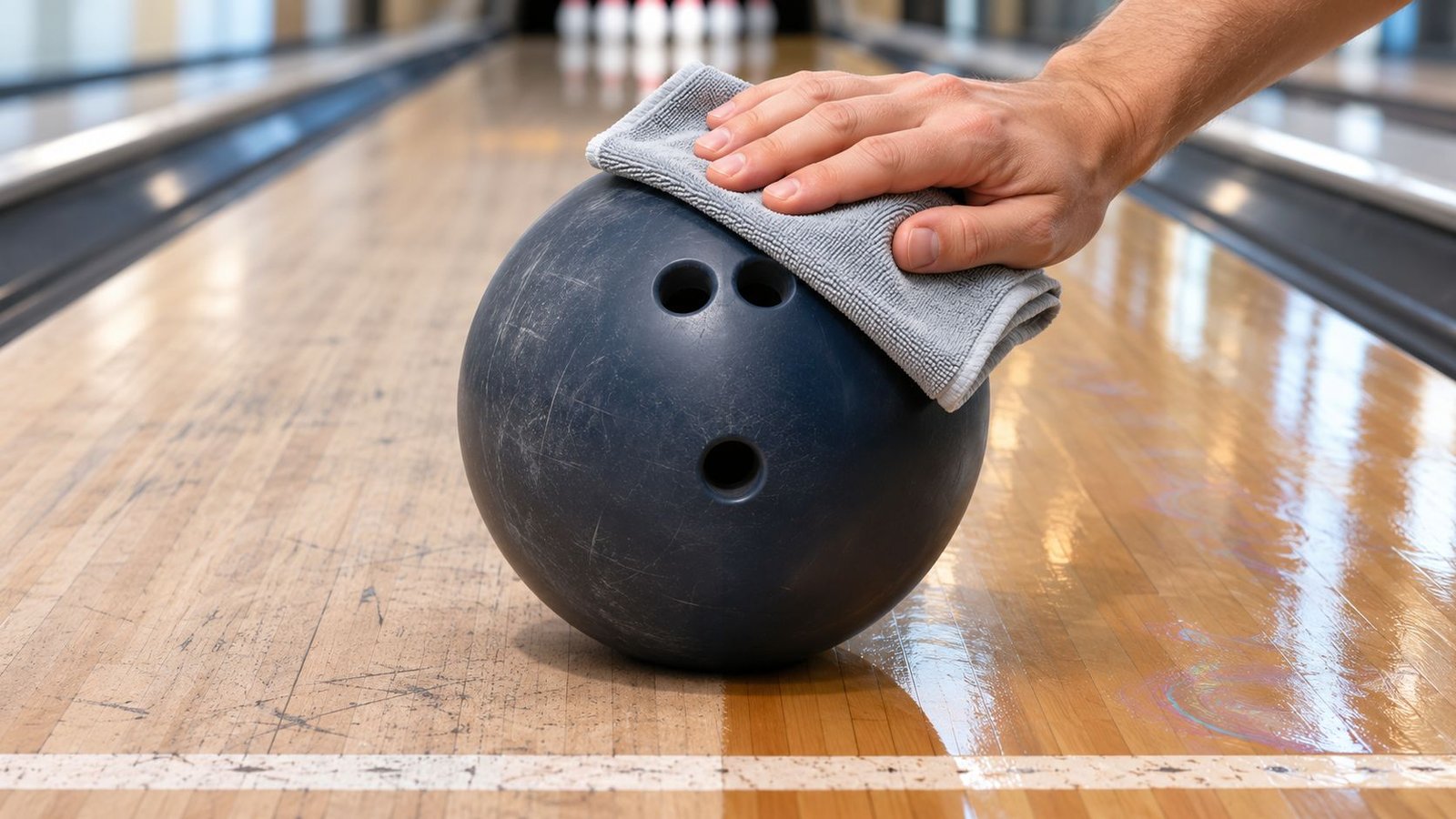
A reactive ball that used to hook but now slides deserves a ball-condition check, not an automatic release overhaul. Oil remaining on its surface can lubricate the contact patch, while accumulated contamination can interfere with the reaction you're trying to restore, as explained in the USBC technical paper on bowling-ball performance and ball life.
Start by inspecting the surface you're sending downlane.
Oil on the lane matters just as much. A competitive-bowling physics simulation described in BowlingDigital's technical coverage used approximate kinetic-friction coefficients of 0.20 on a completely dry lane versus 0.04 with oil applied. Those aren't measurements of your league pair, but they explain why the same delivery can slide much farther on a different condition.
You usually can't judge oil distribution by looking at the boards alone. Use the pattern information, your ball reaction, and our guide to types of bowling oil patterns to distinguish available friction from a breakpoint that remains inside the oil.
Separate contamination from surface mismatch
Run these checks before competition, when cleaning and surface work are permitted:
- Wipe and inspect: Use a clean microfiber towel and an appropriate bowling-ball cleaner. Look for oily residue, persistent rings, and a shiny track area.
- Compare the cleaned reaction: Keep your delivery and line steady. An immediate improvement suggests surface contamination contributed to the problem.
- Arrange controlled de-oiling: If ordinary cleaning doesn't restore a previously reliable reaction, have a pro shop assess oil extraction. Don't improvise with household ovens or uncontrolled heat.
- Retest before sanding: Record whether the ball still skids, begins reading earlier, or now rolls too early.
Coverstock sets the limits of what maintenance can accomplish. Metrology News' explanation of bowling-ball technology describes polyester as the lowest-hook option and identifies cover chemistry, oil absorption, and friction as important reaction factors. Rougher surfaces generally read earlier; smoother, polished surfaces generally retain skid longer.
The distinction to watch during any demonstration is when traction begins, not just how sharply the ball turns.
Sanding an oil-contaminated cover can add texture without solving the contamination. Conversely, adding too much texture to an already early-reading ball can reduce backend continuation. Restore a known condition first, then decide whether the finish needs changing.
Run the Hook Test and Speed-Rotation Comparison
A ball that skids past its intended breakpoint can be reacting to the lane, its surface, or your delivery. Separate those causes with a controlled practice test before changing equipment. Bring a microfiber towel, an appropriate cleaner, your phone for video, and a simple shot log. Keep the test focused on ball motion, not on trying several adjustments at once.
Establish a repeatable baseline
Use five-shot samples, speed reductions of about 0.5–1.0 mph, and a final five- to ten-shot verification to compare repeatable motion rather than a single result. The basic test depends on holding your target and delivery steady while changing one variable at a time.
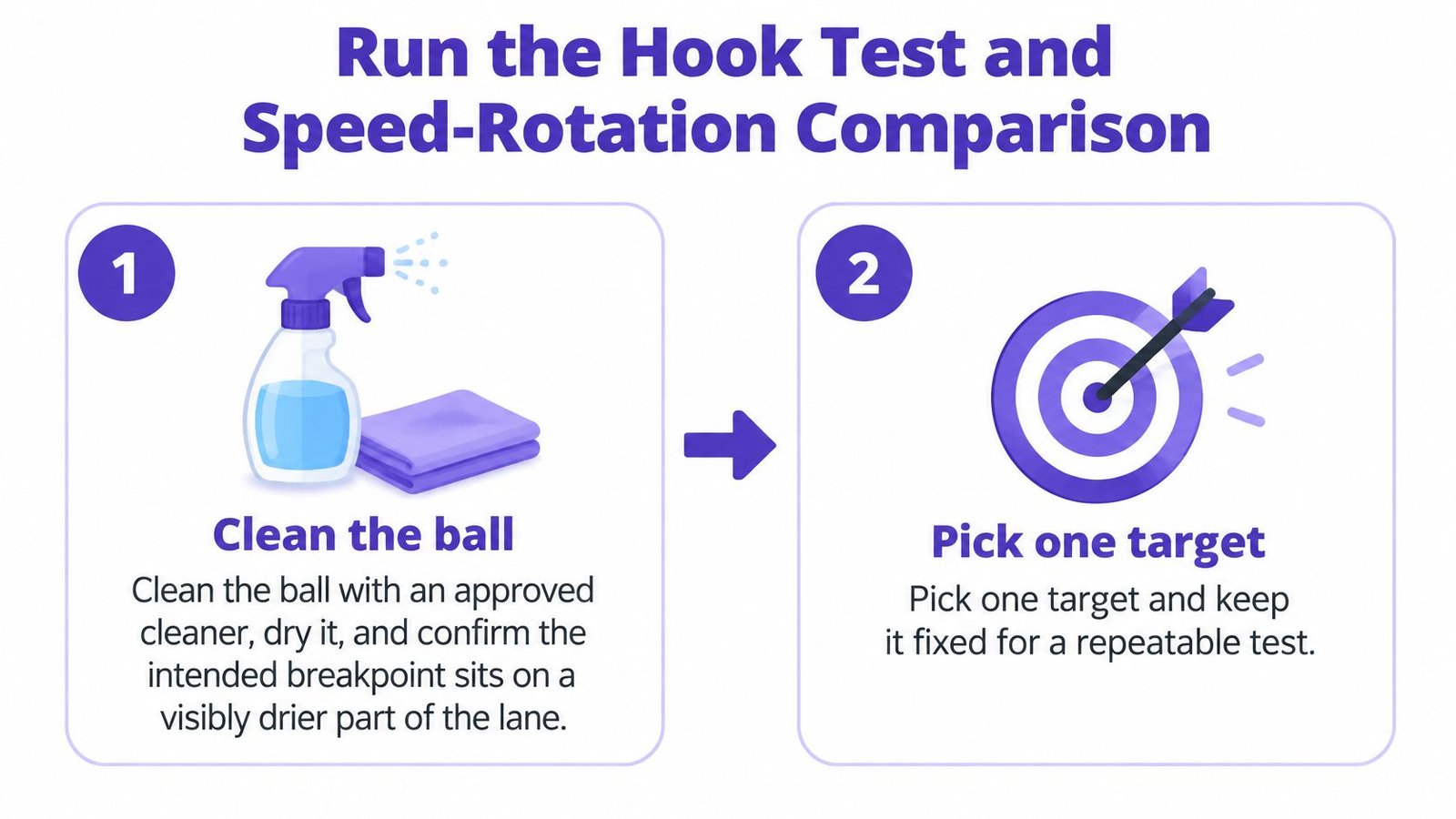
- Clean and dry the ball before testing. Choose a line whose intended breakpoint reaches available friction. If you are unsure where that friction is, make controlled line changes first, then settle on a target for the comparison.
- Fix your target and delivery. Keep stance, loft, and breakpoint intent consistent. Changing your feet while changing speed makes the results difficult to interpret.
- Record the baseline group. Log displayed speed, approximate rotation, breakpoint position, and pocket entry. Mark clear target misses so they are not mistaken for evidence about the ball.
- Test a modest speed reduction. If the baseline skids beyond the intended breakpoint, reduce speed within the range above and repeat the same target.
- Try a small rotation adjustment only if needed. Keep speed steady and change your hand position modestly. Avoid combining more rotation, more loft, and a new line.
Set your preparation and target before comparing shots.
A scoring monitor's speed reading helps compare shots, but it may not represent launch speed. Record it as displayed speed unless you know where the system measures the ball. If you cannot measure rev rate reliably, use video and a consistent description of the rotation rather than guessing an RPM figure.
Watch the path from release to pins. A large sideways move is not automatically a useful reaction, and a smooth arc does not prove the ball needs more hook. Look for a readable transition and continuation through the pocket.
Compare speed against rotation
Use three shots at normal speed, three at approximately 1 mph less, and three at normal speed with modestly increased rev rate or axis rotation. Keep a change only if at least two-thirds of comparable shots improve without more missed targets. Treat that two-thirds rule as a practical testing criterion, not a published success statistic.
Compare the groups by identifying what changed:
- Slower shots establish a breakpoint: Your normal speed may be more than your current rotation and available friction can support. Keep the slower delivery only if your timing and accuracy remain comfortable.
- The rotation group improves entry: A release adjustment may help. Distinguish additional revolutions from additional axis rotation, since they are not interchangeable.
- Every group skids through: Reconsider the lane line and ball condition. Forcing your hand farther around the ball is not a dependable substitute for traction.
- Slower shots read early and quit: More hook is not the answer. Look for a reaction that preserves useful motion rather than turning earlier.
If you need help understanding delivery variables, read this guide to how to increase ball speed. During this test, the goal is a controlled comparison, not maximum speed.
Keep an adjustment that improves pocket access without making your target harder to hit. A dramatic shot is not useful if you cannot repeat it.
Know when to stop changing your hand
Adding side rotation on heavy oil can produce a delayed, abrupt response instead of dependable pocket entry. If the comparison shows no clear improvement, stop trying to manufacture a bigger hook. Return to the results and identify whether the lane, ball condition, or delivery best explains the motion.
Use this log for your next practice session:
| Shot information | What to record |
|---|---|
| Delivery | Displayed speed, loft consistency, and release intention |
| Accuracy | Intended target and whether you hit it |
| Motion | Breakpoint board, approximate downlane location, and early or late transition |
| Finish | Pocket entry, continuation, and pin carry |
| Ball condition | Cleaned state, current finish, and visible oil accumulation |
If target misses dominate the notes, work on delivery consistency before drawing equipment conclusions. If comparable, on-target shots still go straight with a maintained ball on a suitable line, check fit and release next.
Match Ball Choice and Fit to Your Lanes
| Lane condition | Suited coverstock | Surface finish | Expected behaviour |
|---|---|---|---|
| Heavy oil, long pattern | Reactive resin | Rougher, dull finish | Earlier traction and a stronger read than a slicker surface on the same condition |
| Medium oil, mixed pattern | Hybrid or other suitable reactive cover | Mid-level finish | Balanced skid, transition, and roll |
| Light oil or dry breakpoint | Smoother cover; polyester when minimal hook is intended | Polished or lightly textured finish | Longer skid with less directional change |
Treat these as starting combinations, not guarantees. Hybrid describes a reactive-cover formulation, not a separate promise of medium-lane performance. A plastic spare ball may be useful for controlling excessive hook, but it isn't the obvious choice when your goal is more pocket-entry angle.
Compare your actual lane condition with your equipment before shopping.
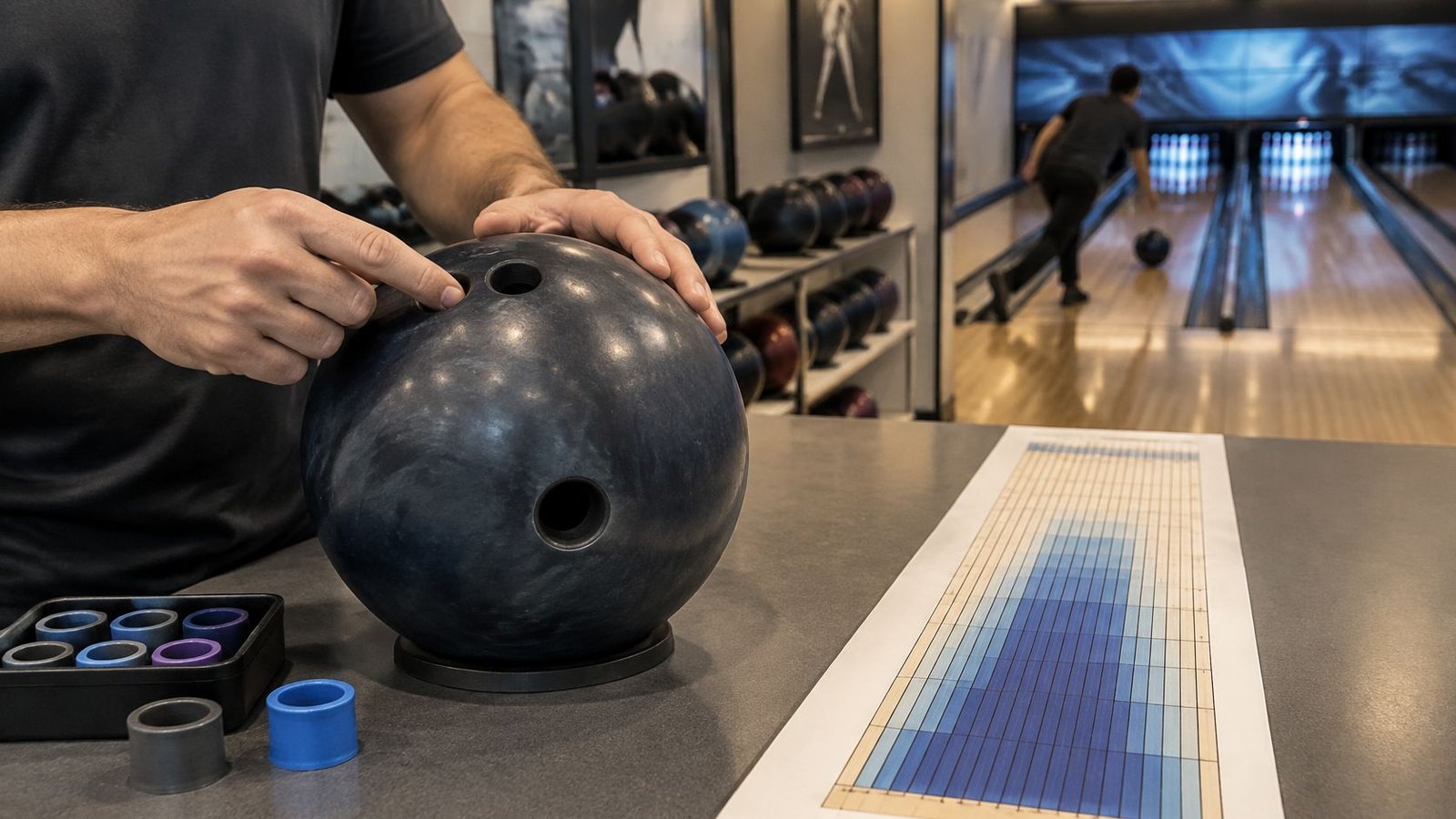
A rougher reactive ball on a long, oily pattern should establish traction sooner than a slicker option, but it won't necessarily produce a dramatic turn after your chosen breakpoint. The oil must still allow the ball to transition. On a dry condition, that same aggressive combination may read so early that you mistake weak continuation for a lack of hook.
Check fit independently of ball strength
A stronger core or cover can't correct a thumb that hangs up. For a thumb-in delivery, the thumb needs to clear cleanly so the fingers can contribute to the release without a forced grab.
Have a pro shop check these separately:
- Span and pitches: Your hand shouldn't feel stretched across the ball or forced into an awkward wrist position.
- Thumb clearance: Check for sticking, rubbing, and changes as your hand warms up. Don't accept excessive squeeze as normal.
- Finger inserts: Look for worn, loose, or overly tight inserts that change how securely you hold the ball.
- Total ball weight: Choose weight you can swing and release without muscling. Core layout is a motion consideration, not a remedy for an unmanageable ball.
Bring release video and your shot log to the fit appointment. A late thumb exit, visible squeeze, or wrist collapse gives the fitter something more useful than a request for more hook.
A wrist support can help stabilize wrist position, but it doesn't fix unsuitable drilling or poor timing. A wrist support is legal in sanctioned play provided it has no moving parts that impart force on the ball; still confirm the event's requirements before introducing unfamiliar equipment.
Choose equipment for the motion you can repeat, not the biggest hook you can produce during practice.
Decide Whether to Adjust Your Ball or Replace It
Keep and maintain the ball when its useful reaction returns; consider replacement only when a properly restored surface, suitable lane condition, and checked release still don't produce the motion you need. A dull-looking finish or a disappointing backend isn't enough evidence by itself.
Replacement should solve an identified gap. That might be a cover that can't establish traction on your usual condition, or an arsenal that lacks a controllable option when the lanes dry out. Buying another aggressive ball won't necessarily solve either problem.
Set the legal boundary before making adjustments
The USBC Playing Rules for 2025–2026 permit preparation before competition but prohibit surface alteration and liquid cleaning once play begins; USBC materials also specify treatment effective January 1, 2026, for certain slow oil-absorbing high-performance balls, including a 78D hardness standard and provisions concerning oil absorption of 90 minutes or longer.
Don't interpret those equipment provisions as a blanket ban on every reactive ball. Check the exact model, approval status, competition category, and event conditions. If an unusual contamination issue arises during play, ask an official before applying a cleaner or attempting a correction.
Prepare before arriving at the approach:
- Restore the known finish: Clean the ball and verify its surface before competition. Our guide to bowling-ball surface adjustments explains how to approach finish changes deliberately.
- Verify equipment eligibility: Check the event's current requirements rather than relying on an old purchase listing.
- Pack a proven alternative: Bring a backup with a reaction you understand, not an unfamiliar ball you're hoping will rescue the session.
- Save useful records: Keep model information and preparation notes alongside your practice log.
Make playable adjustments during competition
Once competition starts, work with delivery speed, axis rotation, launch angle, target, and eligible ball choice. Use a dry towel as permitted rather than reaching for liquid cleaner or an abrasive pad.
Bring your logs when seeking equipment advice. Gary shares personalized recommendations to help bowlers find equipment that fits their style and goals, and a record of your actual motion makes that discussion more specific.
The useful question isn't whether a new ball hooks more. It's whether it gives you a repeatable reaction your maintained equipment can't provide.
Bowling Gear Reviews offers independent equipment reviews, practical maintenance guidance, and clear comparisons of ball reaction for different lane conditions. Bring your hook-test notes to Bowling Gear Reviews to compare suitable equipment and make your next adjustment or purchase for a specific reason.
