

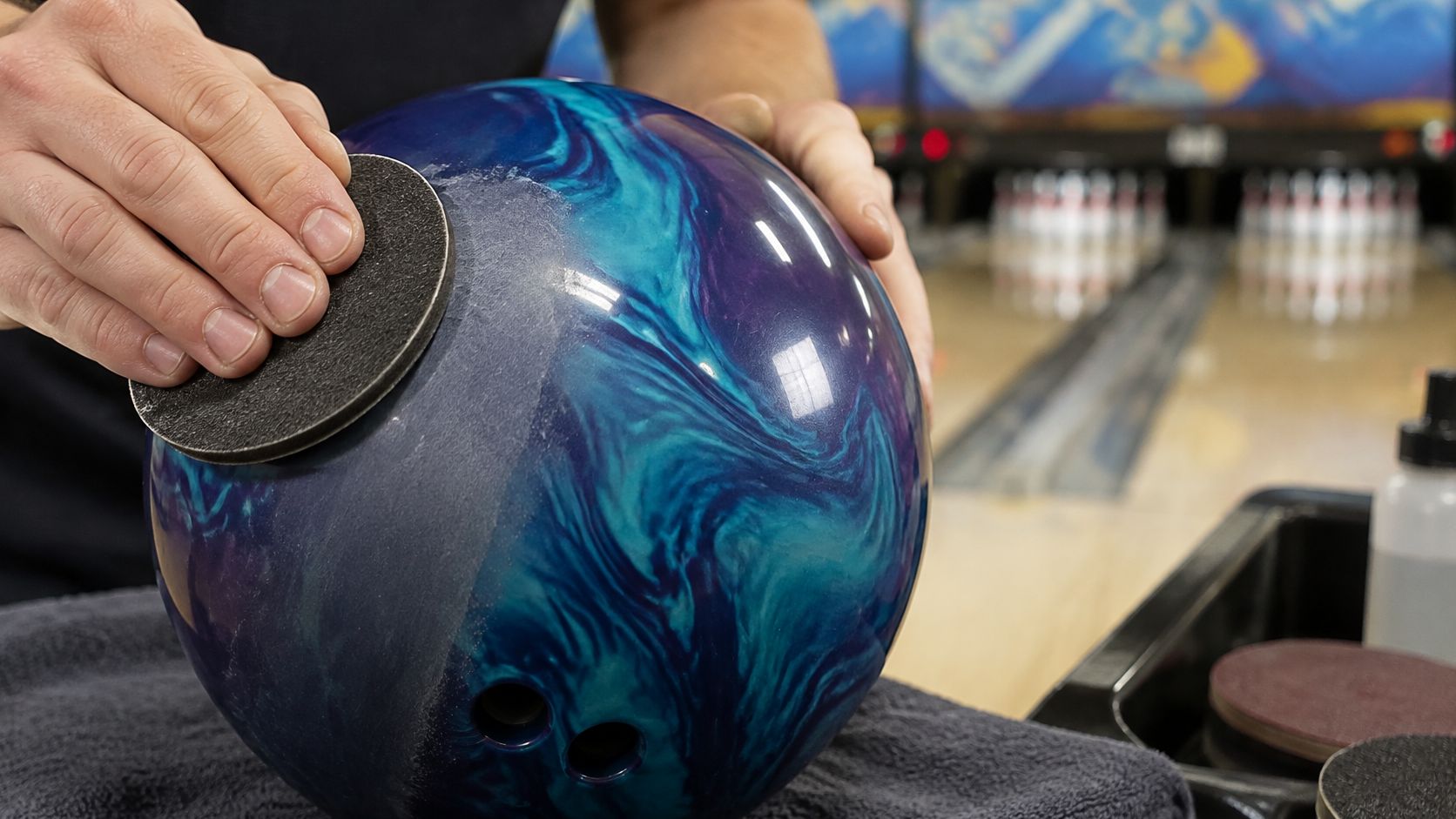
The usual full-resurface checkpoint for a frequent bowler is every 60–80 games, but noticeable reaction loss or visible wear means you should check the ball sooner. That range is a starting point, not a universal rule: oil exposure, coverstock and lane conditions all affect how quickly a ball's surface changes.
The popular game-count rule is useful for planning, but it can't tell you by itself whether your ball needs attention. A ball that still reads the lane consistently may not need a full resurface just because it hit a number, while a ball whose hook has faded or whose surface has become uneven may need service earlier. The practical approach is to track games, inspect the ball, and test its reaction before deciding what kind of maintenance will help.
Table of Contents
- Resurfacing Intervals by How Often You Bowl
- Signs Your Ball Needs Resurfacing Now
- DIY Versus Professional Resurfacing
- How to Resurface a Ball at Home
- How to Test Your Ball Before and After Resurfacing
- Plan Surface Work Around Your Next Competition
Resurfacing Intervals by How Often You Bowl
I treat the 60–80 game figure as a planning checkpoint, not a countdown. Use it to schedule an inspection, then let the ball's reaction and the conditions you bowl on decide whether it needs a full resurface, a surface refresh, or nothing yet.
| Bowling pattern | Full resurface interval | Adjust when |
|---|---|---|
| Competitive or tournament bowler | 60–75 games | Shorten the interval during heavy oil or back-to-back events |
| League bowler | 100–150 games | Check reaction at each season break and after heavy-oil weeks |
| Recreational bowler | Until reaction noticeably declines | Use performance symptoms rather than a game count |
| General starting checkpoint for frequent bowlers | 60–80 games | Move earlier if backend motion weakens or oil rings darken |
| Between full services | Every 10–30 games | Wipe after each shot, clean after each session, refresh with the intended abrasive or polish |
The spread in that table is the useful part. A tournament bowler who logs several games per event can reach 60 games in about two months, and that schedule gives oil and friction more chances to change the surface. The competitive row moves to 60–75 games because heavy oil and back-to-back events shorten the useful life of a fresh finish. League bowlers often get more games from a ball, but the 100–150 game window assumes regular cleaning and a reaction check at each season break.
One ball-care guide on resurfacing intervals gives 60–80 games as a general resurfacing interval and recommends earlier attention if backend motion weakens or oil rings darken.
Recreational bowlers can ignore the calendar while the ball still reads the lane well. Coverstock porosity and lane oil set the pace. A porous reactive ball used on oily lanes will usually need attention before a urethane ball used sparingly, even when both show the same game count. If your pro shop measures oil absorption, use that reading as a second checkpoint. It can move the next service earlier than the game count suggests.
Routine care sits between full services. Wipe the ball after every shot, clean it after each session, and refresh the surface with the abrasive or polish that matches the finish you want, roughly every 10–30 games. A refresh restores texture. A full resurface removes more of the worn outer layer and re-establishes the shape of the surface.
For tournament play, schedule surface work with enough lead time to test the ball at the finish you will use. A fresh surface can change when the ball starts to hook, and you do not want that discovery in the first frame. Run a short before-and-after check on the same lane condition. If the ball picks up earlier and holds the pocket with less effort after a refresh, the interval was right. If nothing changes, move the next service later.
Practical rule: Log the date and game count after each full service, note every refresh, and record how the ball reacts. Bowling Gear Reviews' maintenance guidance shows how to build a care routine you can repeat.
Signs Your Ball Needs Resurfacing Now
A ball can pass the eyeball test and still be overdue. The reliable signals show up in motion and surface condition: a visible track ring or darker oil path, a finish that feels unexpectedly dull or shiny, oiliness that returns soon after cleaning, or a hook that stays weak after normal maintenance. A backend motion that fades earlier than usual belongs on the same list.
Coverstocks absorb and hold oil at different rates, and lane oil, surface prep and delivery change how quickly wear shows. That makes a game count a starting checkpoint, not a diagnosis. Two reactive balls with the same number of games can carry very different amounts of oil, so judge the ball in front of you.
Read the symptom before choosing the service
Oil that reappears after cleaning can point to saturation. That calls for deeper oil extraction, not another surface refresh. A dull, shiny or uneven finish points more directly to surface work. Resurfacing changes texture; it won't necessarily pull oil out of the coverstock.
Use this decision rule: one sign means test the ball on a lane before deciding; two or more mean book a service. If the ball hooks too much rather than too little, check the lane and surface setup before changing anything. This guide to why a bowling ball hooks too much helps separate a surface problem from a reaction that does not suit the conditions.
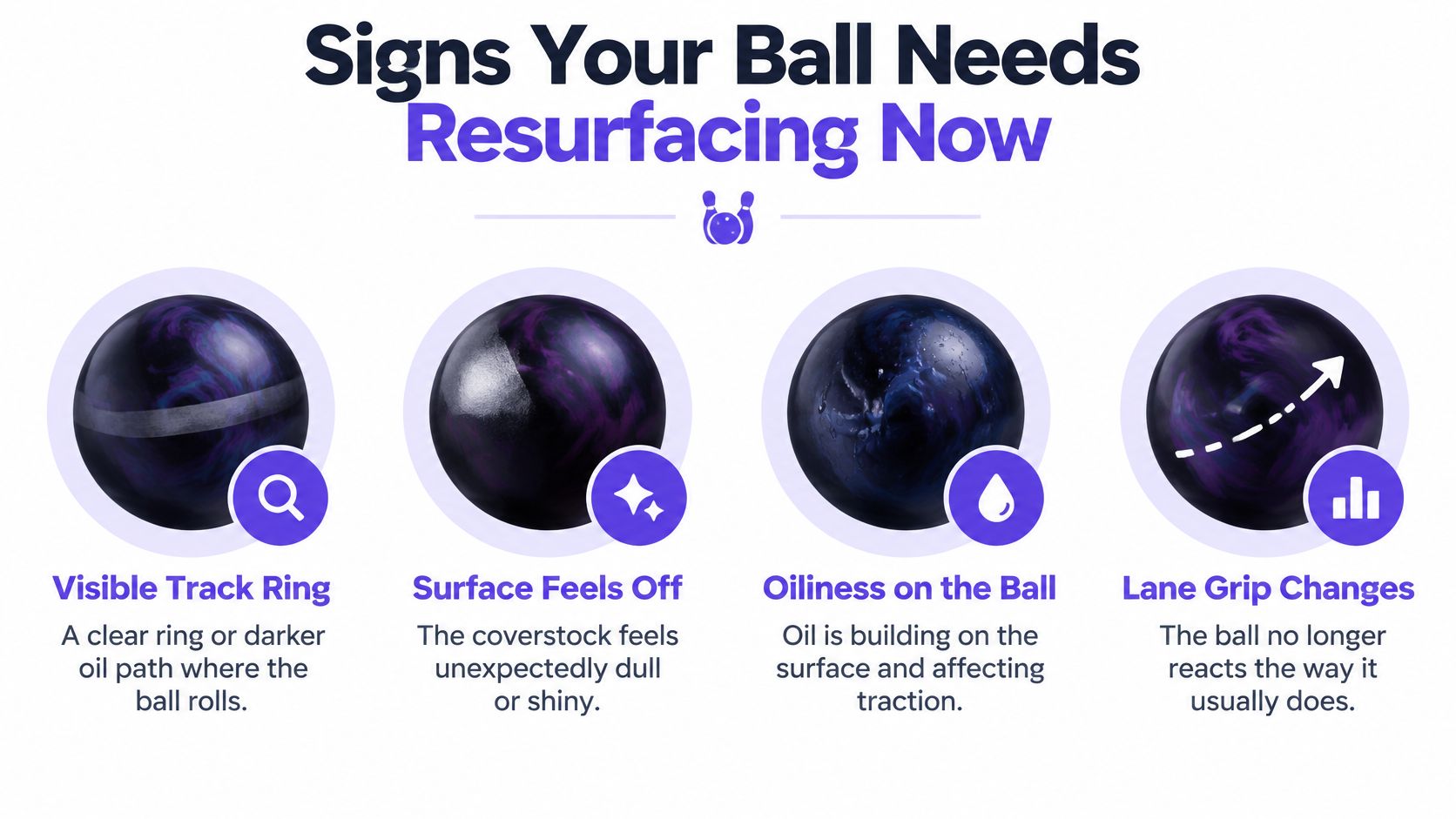
Before league night, run the four checks: track ring visible, finish feels different, oiliness returns after cleaning, reaction has changed. If any check fails, confirm with a lane test before buying pads or booking a service. A before-and-after test on the same lane and oil pattern tells you whether the surface work restored the shape you expect.
DIY Versus Professional Resurfacing
| Factor | DIY at home | Professional service |
|---|---|---|
| Cost per service | Lower after the initial pad and polish purchase | Charged each visit; check local shop rates |
| Time required | Your own evenings plus drying time | Varies by shop; ask for turnaround before dropping off |
| Consistency | Depends on hand pressure and pad condition | Controlled grit and more uniform texture |
| Oil removal | Limited to cleaning and surface work | Can include deeper oil removal for saturated balls |
| Best use | Routine refreshes on a ball you know well | Full resurfacing, uneven wear, new balls or verified finish |
DIY works well when you're repeating a finish you already understand. If you use the same pads and polish each time and keep the ball moving evenly, you can handle routine refreshes at home. Your cost per service drops after you've bought the pads and polish, but your results still depend on pressure, pad condition and whether you've treated the whole surface consistently.
A professional service makes more sense when the ball is new, the wear looks uneven, the finish is unfamiliar, or oiliness keeps returning after cleaning. A pro shop can control grit more consistently and may be able to include deeper oil removal. That costs more per visit, but it can solve problems that sanding alone won't fix. If oil seems to return after cleaning, learn about bowling ball oil extraction before deciding that another surface pass is enough.
Use a hybrid maintenance plan
For many bowlers, the sensible middle ground is to do routine refreshes at home and book a full professional resurface around the 60–80-game checkpoint, or sooner if symptoms appear. That keeps minor finish changes from becoming a surprise while leaving the more controlled work to a technician when the surface needs a proper reset. Bowling Gear Reviews gives advice on maintaining and caring for bowling equipment, including how to think about surface upkeep as part of a regular routine.
Don't assume polish is a shortcut to a full resurface. Polish can restore gloss and length, but it can't recreate texture that's worn smooth or correct uneven abrasion. If you can't describe the finish you're aiming for, start with a professional and ask them to document it so you can repeat that target later.
How to Resurface a Ball at Home
A home refresh is most reliable when you have a target finish and work the whole surface evenly. Bowling Gear Reviews' equipment-care advice starts with basics: remove oil after play, use products made for bowling balls, and inspect the result before the ball goes back into competition.
Wipe and clean first. Wipe the ball dry after every shot, then clean it with an approved ball cleaner after the session. Removing surface oil promptly keeps residue from building up. If you wait until the next league night, it becomes harder to tell whether a reaction change comes from oil, wear or the finish itself.
Identify the finish you want. Note whether the ball is dull, shiny or uneven, then decide what result you are trying to restore. A rough finish and a polished finish produce different lane responses. Do not start sanding just because the ball looks different.
Choose only as coarse a pad as needed. A 500-grit Abralon-style pad is a reasonable coarse starting point for removing a worn surface layer, and many home refreshes do not need to go coarser. The coverstock surface is what the lane reads, so a more aggressive grit can change motion more than you intended. Start finer when the wear is light and step coarser only if the surface will not clean up.
Work toward a uniform texture. Move to a finer grit only as the surface evens out. Use even pressure and cover the whole ball consistently. A worn or dirty pad cuts differently, so inspect it rather than assuming it still bites the same way.
Remove dust before finishing. Clean off sanding residue before applying polish. Trapped grit can scratch the surface, and extra polish will not correct an uneven sanding job.
Polish only for a polished target. Apply polish lightly if the intended finish is shiny. If the target is sanded, stop at the appropriate grit instead. Household cleaners and abrasive products can alter the coverstock unpredictably, so stick with products made for bowling-ball care.
Dry and test the ball. Let it dry fully, inspect the texture, then test it on a lane before using it in league. The bowling-ball resurfacing and maintenance guide separates routine cleaning and surface refreshes from a full resurface, and notes that surface work should be finished before competition begins.
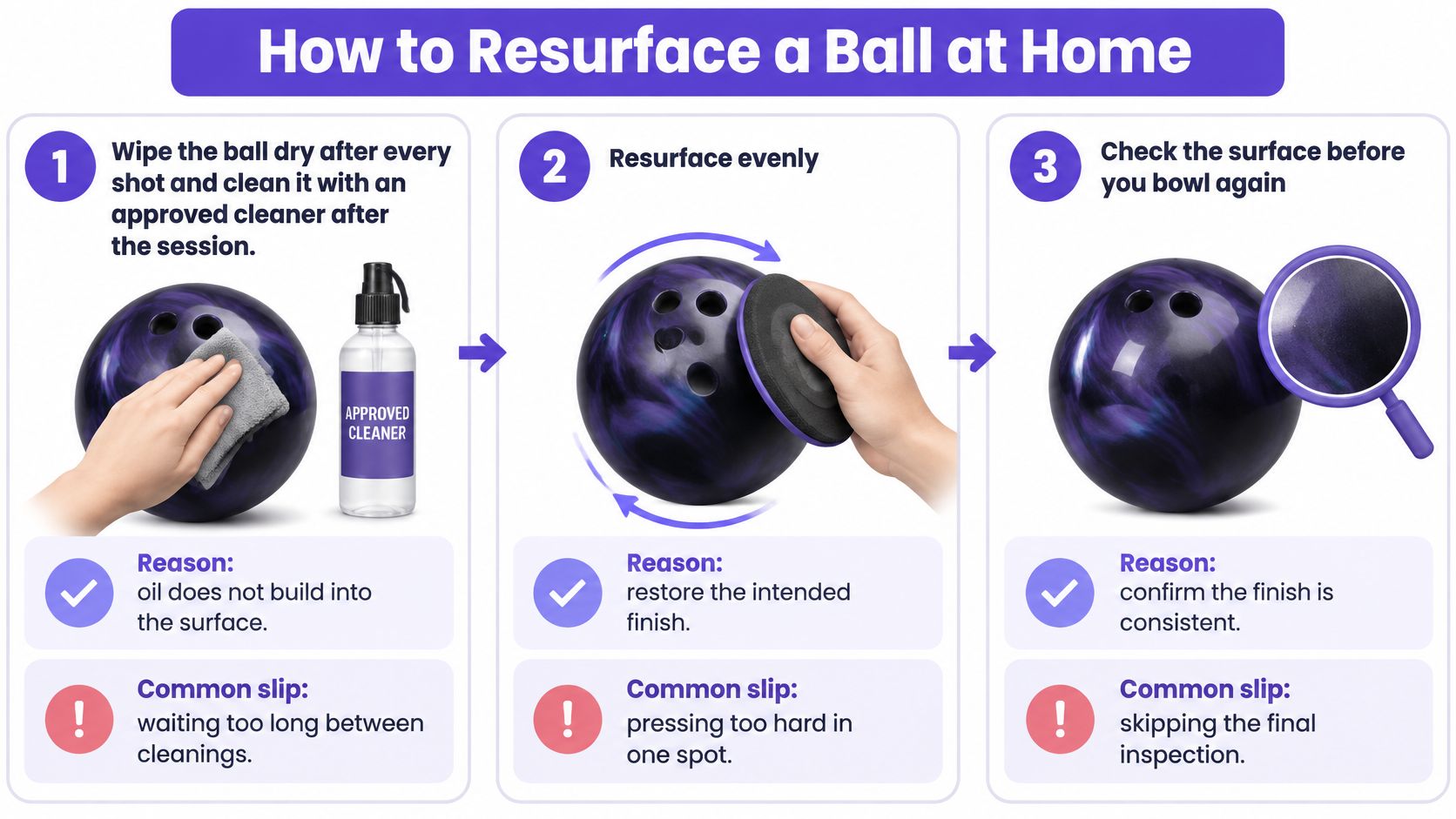
Rushing the sanding, pressing harder in one spot, and using polish to hide a texture problem are the usual failures. Treat the pad as part of the process: its condition and your pressure decide whether the finish lands where you aimed. If the texture looks even but the reaction is still wrong, the finish target is the issue, not the amount of sanding.
How to Test Your Ball Before and After Resurfacing
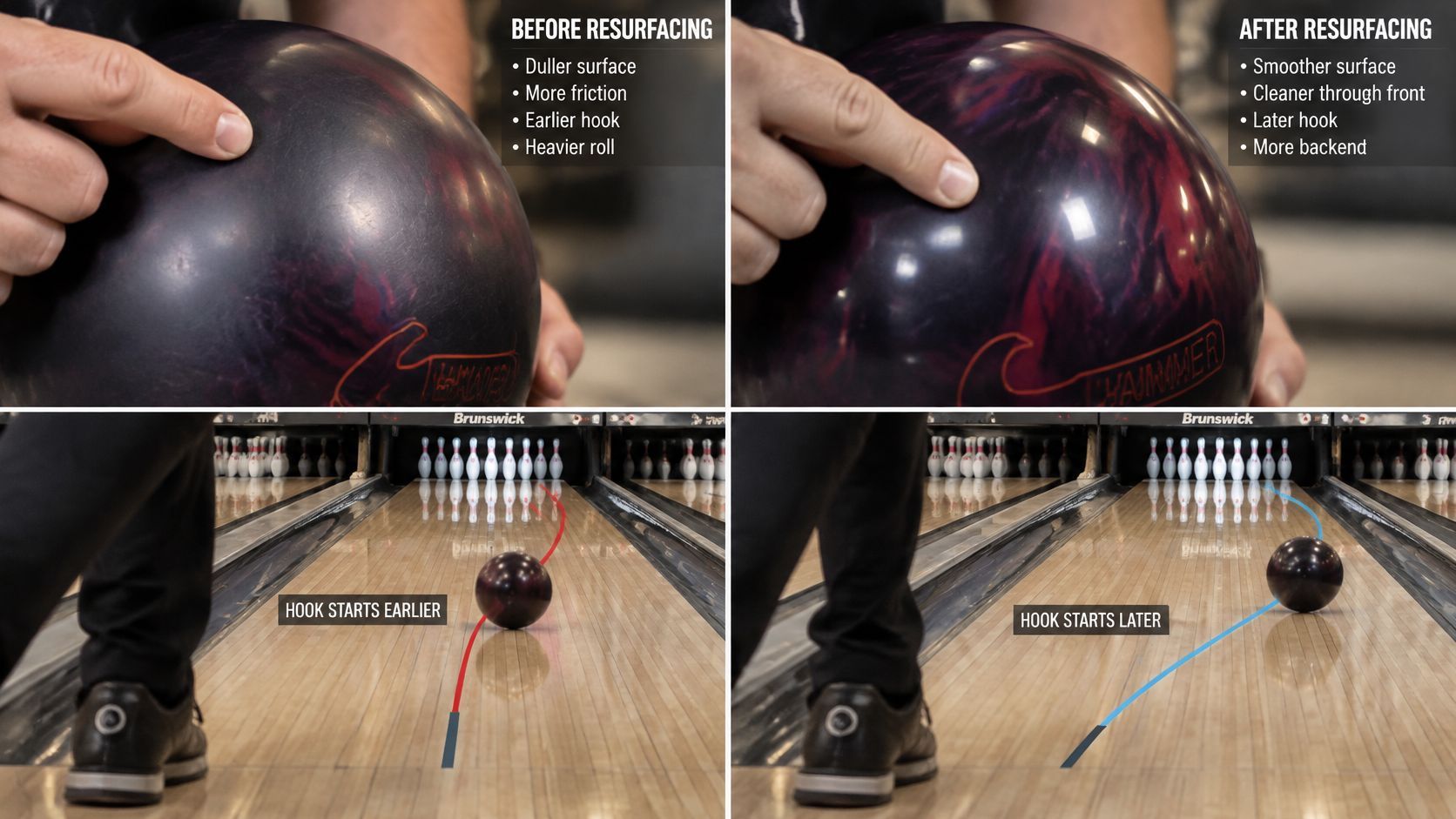
A surface change can move a ball's reaction even when the ball looks nearly the same. Rougher surfaces generally create more lane grip and earlier motion, while smoother or polished finishes tend to delay the response. A controlled before-and-after test helps you decide whether the new finish is producing the reaction you wanted.
Run the same drill on the same pattern
Before service, pick a familiar lane pattern and bowl three shots to the same target. Record how far the ball skids, where it reaches its breakpoint, the shape of the hook and what happens at the pins. Keep the target and line as consistent as you can so you're comparing surface response rather than a different release or angle.
After resurfacing, clean and dry the ball, then repeat the same three-shot drill on that pattern. Note whether the breakpoint moved earlier, later or stayed about the same, and whether the hook shape changed. Bowling Gear Reviews tests bowling gear in real bowling conditions, and a repeatable lane test is more useful than judging the ball by appearance alone.
Decide what to keep
Compare your notes rather than relying on a single shot. If the new finish gives you the motion you were aiming for, keep it and log the grit or polish used. If the breakpoint moved too early or too late, adjust the finish before deciding the ball itself has become unsuitable.
Repeat the drill after about 10 games to see how quickly the reaction changes again. That check helps separate an immediate result from a finish that doesn't hold its behavior during use. Record the surface, test conditions and reaction notes with your game count so the next service has a clear target.
Plan Surface Work Around Your Next Competition
Competition changes the maintenance decision. At home, you can clean and refresh the ball as part of routine care. Before an event, you can prepare the surface and test the ball. Once play begins, an adjustment that seems like a quick fix may not be allowed.
At home and before play
Handle routine wiping and cleaning at home, and schedule sanding, polishing or a full resurface before your event. Use the pre-event window to check the finish and test the ball on a lane. If you carry several balls, you can prepare them with different surfaces so you have options for changing lane conditions without altering a ball during competition.
During the event
Under current USBC rules, bowlers may sand, polish or clean before competition starts, but abrasive alteration and liquid cleaning are prohibited once league or tournament play begins. The restriction applies even to a ball that hasn't yet been introduced into play, according to the USBC Playing Rulebook for 2026–27.
That matters when oil carrydown, a damaged surface or a changed reaction appears during a multi-game session. Don't assume you can restore the ball between blocks. Use permitted dry wiping during play, and rely on a tested backup ball if you need a different reaction. Rules can differ between governing bodies and events, so check the specific tournament requirements before you compete.
Bring your game log to a pro shop before the event and use it to discuss a surface plan. Gary shares personalized recommendations to help bowlers find equipment that fits their style and goals, so your service decision can reflect how and where you bowl.
If your ball's reaction has changed, bring your game log and surface notes to Bowling Gear Reviews for practical guidance on maintenance and equipment choices. Our reviews, comparisons and how-to guides draw on real-lane testing to help you make a more informed decision about your next surface service.
