

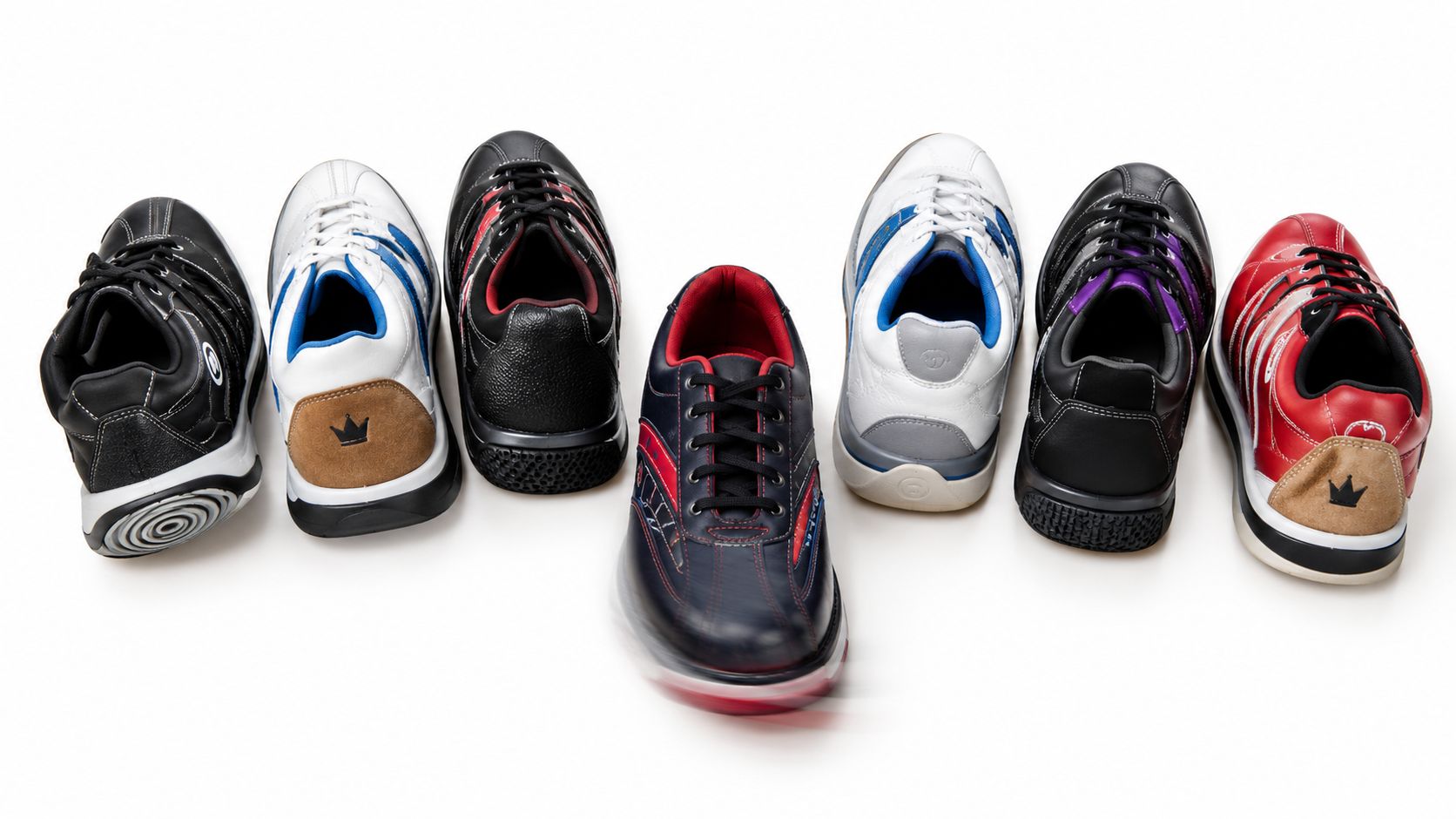
You're halfway through your approach, your slide foot either sticks to the approach or keeps traveling past the finish position, and the release timing falls apart. That problem rarely comes from needing the slickest shoe available. Bowling shoes have to balance a low-friction slide area with controlled traction, so you can glide into the finish and still brake without a sudden catch. Independent biomechanics research describes this separation as a microfiber slide area near the forefoot and a higher-friction rubber area near the heel, which supports both movement and balance (biomechanics research on bowling footwear).
There isn't one universal answer among the best bowling shoes for sliding. This roundup sorts seven models from simple fixed-feel designs to highly tunable platforms, matching each shoe to a specific approach, foot profile, and use case. The list addresses beginner bowlers, league players, and tournament competitors.
Table of Contents
- 1. Hammer Razor
- 2. Linds Classic
- 3. KR Strikeforce TPC Hype
- 4. Dexter SST 8 Pro
- 5. 3G Tour Ultra / C
- 6. Dexter T·H·E 9 Stryker BOA
- 7. Dexter The 9 HT
- Top 7 Bowling Shoes: Sliding Performance Comparison
- Match Your Slide Setup to How You Actually Bowl
1. Hammer Razor
The Hammer Razor is a practical entry point for bowlers who want adjustable slide without immediately moving into a flagship platform. Its athletic upper feels familiar, and the shoe comes in right- and left-handed versions, so the slide setup matches the foot you use. That hand-specific design matters because right-handed bowlers usually slide on the left foot, while left-handed bowlers slide on the right.
The main attraction is the interchangeable slide sole on the slide foot. Hammer supports numbered slide pads from #2 through #10, giving you a straightforward way to move from a more controlled feel toward a longer glide. You won't get the same heel adjustment offered by the most advanced shoes, but the system is simple enough for a new owner to understand quickly.
Practical rule: Don't choose a pad only because it offers more slide. Your target is a repeatable finish position, not the longest possible travel.
The Razor suits a beginner who has outgrown rentals and a developing league bowler who notices inconsistent friction from week to week. It also works well for bowlers with a moderate-width athletic-shoe fit, provided the heel stays secure and the toes aren't compressed. A sticking approach can come from contamination, humidity, or worn slide material, so cleaning and replacement still matter. Bowling Gear Reviews explains why bowling shoes feel slippery and how that sensation relates to the approach in its guide to why bowling shoes are slippery.
What works: Low-complexity slide adjustment, comfortable athletic construction, and accessible replacement pads.
What doesn't: The fixed heel limits how precisely you can tune braking, and you must buy the correct hand-specific version.
See the current Hammer shoe collection for available Razor configurations.
2. Linds Classic
The Linds Classic takes the opposite approach from the Hammer Razor. Instead of asking you to tune a pad system, it gives you a traditional leather shoe with a natural buckskin slide sole that settles into a familiar rhythm from the first session. Bowlers who dislike synthetic, overly managed slide systems often prefer this kind of direct feel.
The full-grain leather upper and lining provide a substantial fit that becomes more comfortable as the shoe breaks in. Its rubber traction sole supplies the push-off and braking contrast needed for a controlled approach, while the hand-specific construction keeps the sliding geometry appropriate for right- or left-handed play.
This is a good match for a bowler with a consistent approach and a preference for a long, buttery slide. It can also suit someone whose foot profile works better in structured leather than in lightweight athletic uppers. The trade-off is clear: you can't make quick sole or heel swaps when the approach changes. If the slide feels too short, accessories such as a slide sock can alter the sensation, but that isn't as precise as replacing a pad.
Where the fixed feel helps
A fixed-feel shoe removes decision-making. You lace it, confirm the heel is planted, and learn how that specific sole behaves on your center's approaches. That simplicity can help beginners who are still building balance, because they're not changing equipment every week and then mistaking a new slide response for a technique problem.
The Linds Classic is less suitable for a tournament bowler who regularly faces different approach surfaces or wants to make fine friction changes between sessions. It rewards consistency rather than experimentation.
Explore the Linds Classic bowling shoes for current hand-specific options.
3. KR Strikeforce TPC Hype
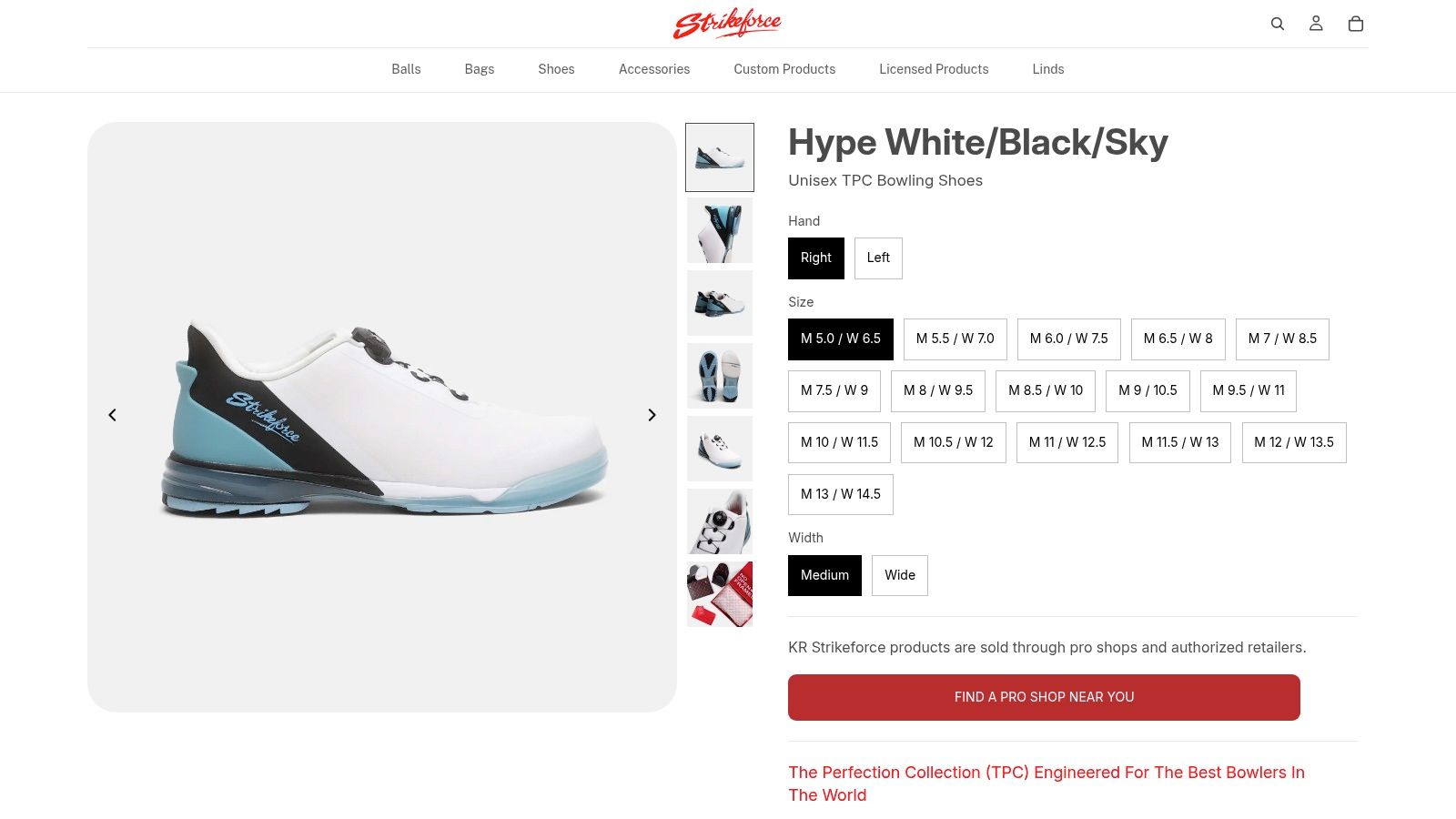
The KR Strikeforce TPC Hype gives league bowlers more useful adjustment than a traditional fixed shoe without demanding the full accessory ecosystem of a top-tier platform. Its TRI-SOLE outsole includes an interchangeable slide pad and heel on the sliding foot, and the package includes a Clarino #8 slide pad, a #5 rubber heel, and a Dura-Flex protective shoe cover.
That included setup makes the Hype easier to evaluate out of the box. You can begin with the supplied combination, learn whether the slide starts too early or stops too abruptly, then adjust the slide foot rather than replacing the entire shoe. Wide options and multiple hand-specific SKUs also make it easier to find a workable fit than with a narrow, one-configuration model.
The TPC Hype fits a league bowler who wants reliable comfort and an adjustable finish without spending time building a large collection of parts. It can also work for a beginner moving into organized play, although the pad and heel terminology may take a little practice.
The best starting setup is the one you can repeat, record, and change deliberately.
The limitations show up when you want to tune both feet independently. The traction-foot pieces remain fixed, so the shoe's adjustment range is concentrated on the slide foot. That isn't a problem for many bowlers, but it matters if your push-off or braking foot needs a very specific response. Retail pricing also varies by retailer, so compare the included components rather than judging the shoe by the upper alone.
The KR Strikeforce TPC Hype is a sensible middle ground for players who want parts included and a comfortable platform.
4. Dexter SST 8 Pro
League bowlers usually notice the SST 8 Pro after a few sets, not on the first practice ball. The appeal is simple: this shoe starts as a stable adjustable option and grows with you if your slide gets longer, faster, or more deliberate over time. It uses an interchangeable slide sole, a removable heel, and a replaceable Goodyear rubber traction sole. The leather toe drag protector also matters for players who finish hard over the toe and do not want the front of the shoe wearing out early.
What separates the SST 8 Pro from simpler fixed-feel models is the depth of the Dexter replacement system. You can keep the same upper and change the part that is affecting your finish. For a league player who wants more tuning than an entry model offers, but does not want to jump straight to Dexter's top-tier platform, that is a practical middle ground. Parts are also generally easier to find, which makes this a better long-term choice for bowlers who expect to tune and maintain their setup instead of replacing the whole shoe.
Fit still decides whether the slide works.
Bowlers with a medium or wide foot should check the actual width and heel hold before assuming the adjustable sole solves everything. It does not. In league-length sessions, a loose heel tends to show up as side movement at the line, while a tight toe box can make you shorten the slide or protect the foot without realizing it.
What to monitor during a league session
Test the shoe at full approach speed, not just during warm-ups. In my own league-session use, the slide stayed predictable once the sole picked up a bit of lane conditioner, but heel response became the bigger variable when approach tempo increased. That is the trade-off with a modular shoe at this level. It gives you room to tune, but you still need to learn whether the problem is slide length, braking, or fit. The broader pattern of approach and slide mechanics is also discussed in three-dimensional bowling biomechanics research.
The SST 8 Pro is not convertible between hands, so order the correct version. Its materials and finish are less premium than the T·H·E line, but many league bowlers will see that as a fair trade if they want replaceable parts at a more manageable ongoing cost. If you plan to maintain the shoe yourself, Bowling Gear Reviews has a useful guide to replacing bowling shoe soles and heels. Check the current Dexter SST 8 Pro details before buying.
5. 3G Tour Ultra / C
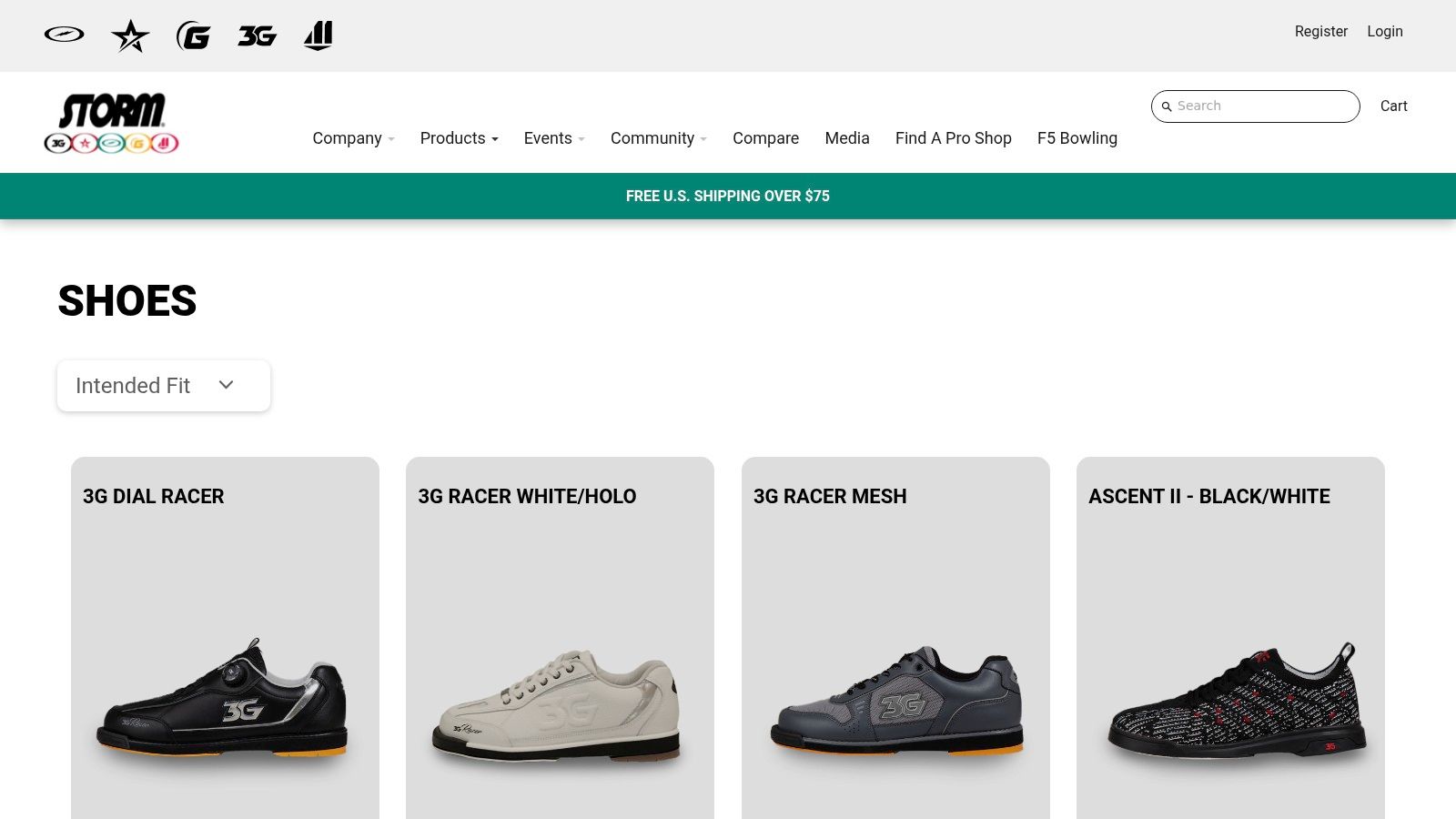
The 3G Tour Ultra and Tour C models appeal to bowlers who want a traditional leather feel with a modern tuning system. The buckskin slide frame provides the familiar response of a classic slide, while interchangeable soles and heels let you modify both glide and braking. Many versions include a useful accessory kit, though the exact package depends on the model and current distribution.
The larger EVA wedge in the Tour outsole helps position the slide components, and replaceable toe caps are valuable for bowlers who drag the toe during the finish. That serviceable design is particularly attractive to competitive players who would rather replace a worn component than retire an otherwise comfortable shoe.
A tournament bowler may appreciate the broad tuning range, especially when moving between approaches with different levels of cleanliness or friction. A league bowler who has already learned a preferred slide feel can also benefit, but the system is more involved than the Hammer Razor or Linds Classic. You need to label your preferred combinations and test changes before competition.
The product family has one practical complication: availability changes by model and colorway. Verify the current stock, hand, width, and included accessories before ordering. A listing that looks like the right Tour Ultra may not include the same sole and heel kit as another version.
Approach-specific advice: If you slide long and fast, start by improving braking control. If you stick before release, address friction and fit before simply choosing a slicker pad.
Bowling Gear Reviews' guide to bowling shoe sliders is useful when you want to understand accessory-based adjustments.
Check the current Storm and 3G shoe range for available configurations.
6. Dexter T·H·E 9 Stryker BOA
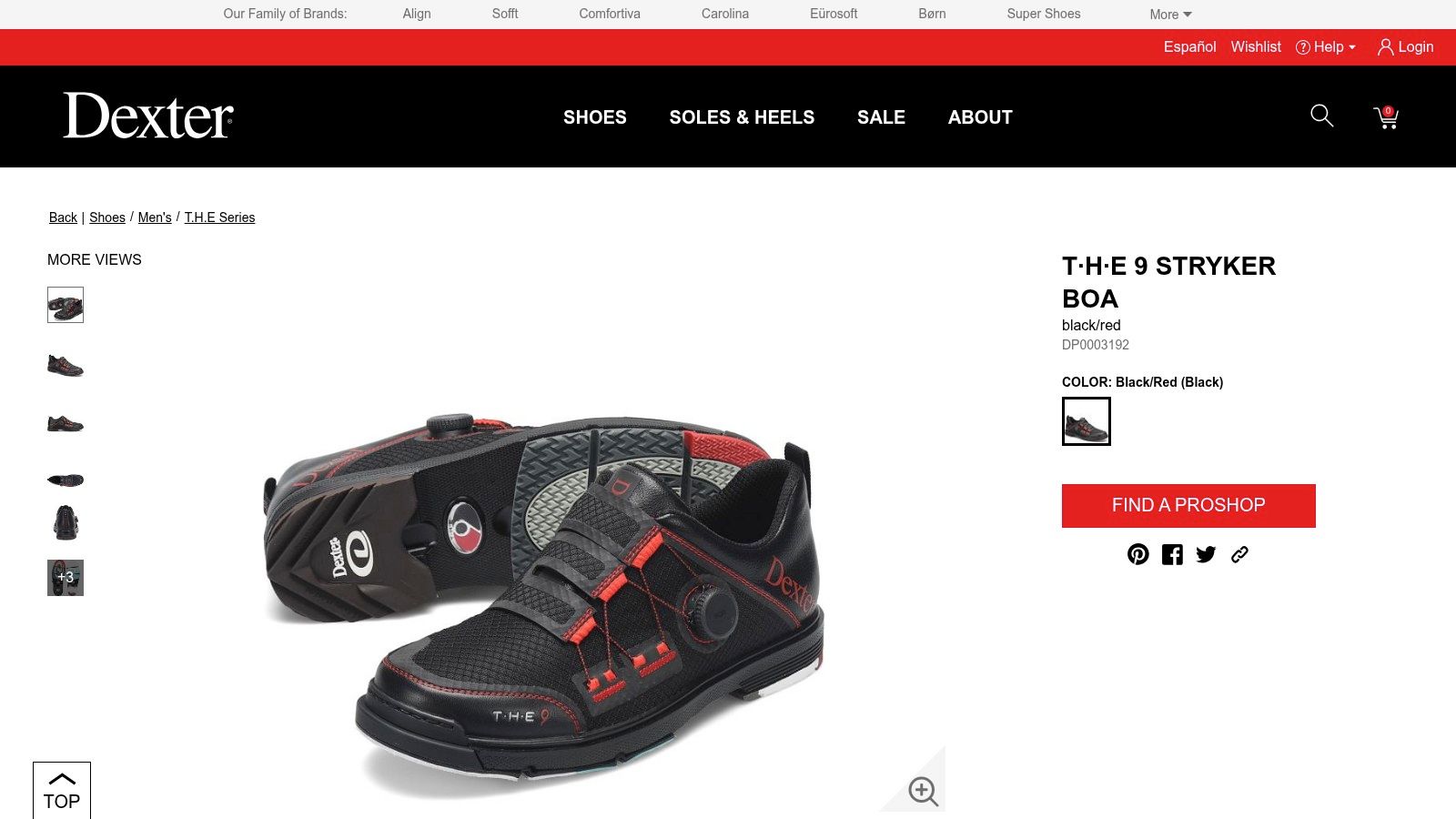
The Dexter T·H·E 9 Stryker BOA is built for bowlers who want to make small, repeatable fit and slide changes without treating the shoe as a fixed object. Its BOA Li2 closure lets you adjust lockdown quickly, which helps when your foot changes slightly during a long session or when laces don't give you the same pressure across the midfoot.
The sole layout is symmetrical and can be configured for either foot. That makes the shoe useful for left- and right-handed setups, ambidextrous training, and pro shops that need more inventory flexibility. Interchangeable slide pads and heels provide a broad tuning range, while the replaceable Toehold Hyperflex component protects a high-wear section of the shoe.
This platform suits a competitive league bowler or tournament player who understands why a shoe feels too sticky, too loose, or too eager to keep moving. It doesn't make those problems disappear, but it gives you more ways to isolate them. Adjust the closure when the fit is the problem. Change the slide pad when forefoot friction is the problem. Change the heel when braking is the problem.
The cost of control
The T·H·E replacement ecosystem costs more than SST-series parts, and the initial shoe is premium equipment. That investment makes more sense if you bowl often enough to use the adjustability and maintain the components. A casual bowler may notice the extra hardware before noticing a meaningful benefit.
A preliminary footwear study found that an E-TPU midsole produced lower vertical ground-reaction forces than a traditional rubber-midsole design in static and dynamic testing (footwear study on bowling midsole construction). That doesn't establish an injury advantage for this commercial model, but it reinforces the value of considering cushioning, fit, and force management alongside slide speed.
Shop the Dexter T·H·E 9 Stryker BOA if you want a convertible, highly adjustable platform.
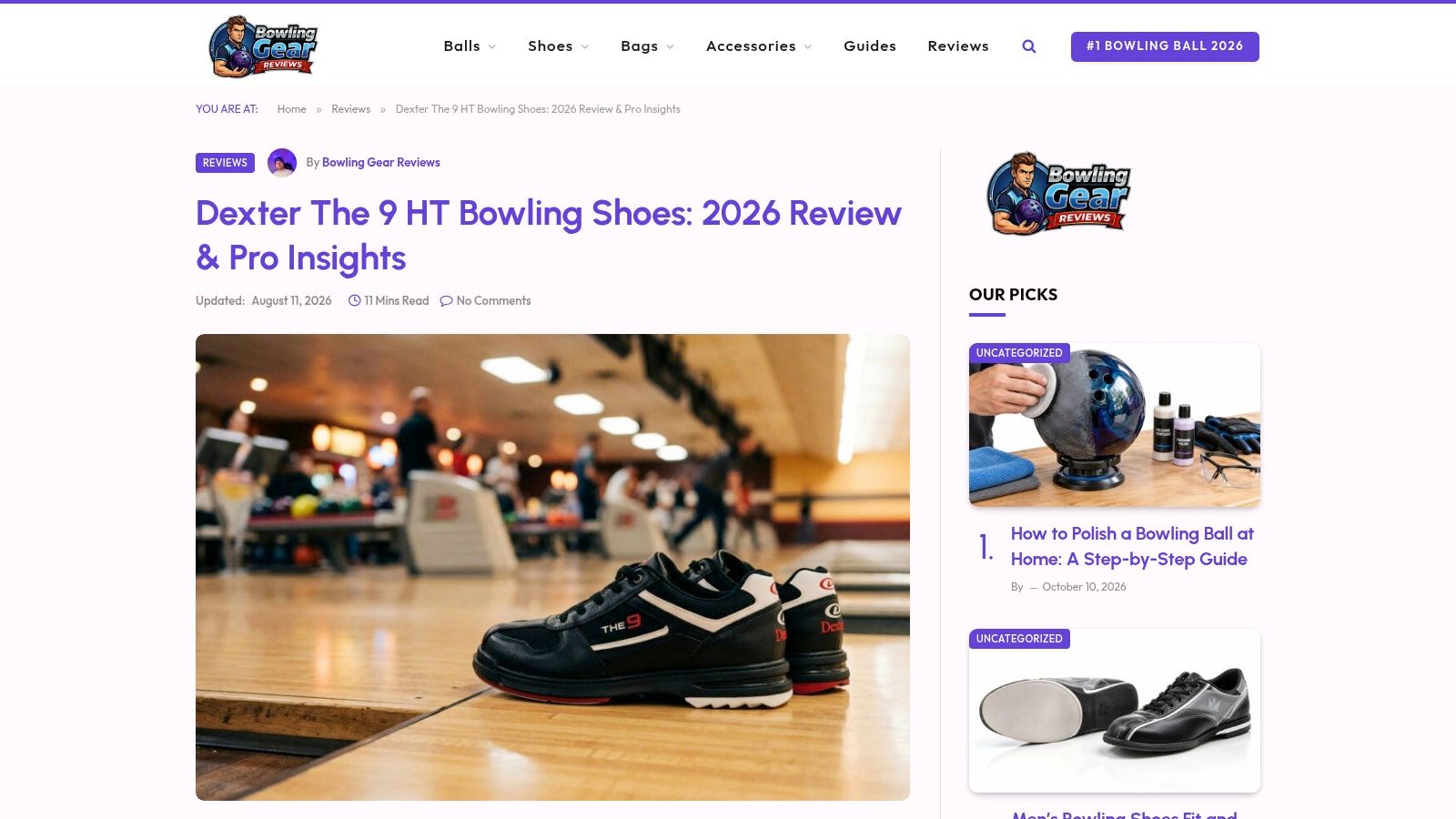
7. Dexter The 9 HT
League night on a touchy approach is where the Dexter The 9 HT makes sense. This is the most adjustable slide setup in this lineup, and it suits bowlers who want to tune the whole motion, not just chase more skid. The interchangeable sole and heel let you set how the shoe enters the slide and how firmly it checks up at the end. The HyperFlex H-Bar platform helps keep the shoe planted laterally, which matters if your approach gets quick or your finish starts drifting.
In league-length testing, the practical difference was balance. The shoe supported a repeatable transition into the slide, kept the foot steadier from side to side, and made the finish easier to reproduce when the approach changed from pair to pair. I would put it in the tournament-tuning camp first, but a serious league player can also justify it if one pair needs to cover a lot of conditions.
The Toehold Hyperflex toe cap is a real part of that package. Bowlers who roll over the toe at release tend to beat up that area fast, and this design both protects it and keeps toe-off cleaner. Replaceable soles, heels, and the toe component also give the shoe a longer useful life than a fixed-feel model. If your slide changes over time, or you switch between practice, league, and events, the platform can change with you.
Who should buy it
The 9 HT fits a tournament player who sees different approaches every week, a committed league bowler who wants one high-end pair, or a technically confident player who knows whether the problem is too much slide, too little slide, or poor braking. It is less appealing for a beginner practice shoe. A newer bowler usually benefits more from a simpler, more fixed feel than from a platform that invites constant adjustments.
That flexibility has a cost. You need some trial and error to find the right sole and heel combination, and the shoe makes the most sense for bowlers willing to pay attention to setup details. For the right user, that tuning range is the point. For everyone else, it may feel like more hardware than they need.
Read the full Dexter The 9 HT review for fit, slide, and durability observations.
Top 7 Bowling Shoes: Sliding Performance Comparison
| Item | 🔄 Implementation complexity | ⚡ Resource requirements | 📊 Expected outcomes | 💡 Ideal use cases | ⭐ Key advantages |
|---|---|---|---|---|---|
| Hammer Razor | Low, simple interchangeable slide sole; fixed heel | Low cost; common replacement slide pads (#2–#10) widely available | Improved slide tuning vs fixed shoes but limited heel adjustability | Entry-level bowlers wanting on‑shoe tuning on a budget | Value‑minded; easy tuning range; good parts availability |
| Linds Classic | Low, fixed leather construction, no modular swaps | Moderate, durable full‑grain leather, slide socks/accessories for tuning | Long, smooth natural slide out of box; very durable | Traditionalists who prefer classic leather slide feel | Natural leather slide; long lifespan; classic feel |
| KR Strikeforce TPC Hype | Medium, TRI‑SOLE with interchangeable slide pad + heel (slide foot) | Mid price; ships with Clarino #8 pad, #5 heel and cover | Strong out‑of‑box slide package and reliable comfort | Bowlers who want a ready‑to‑tune package with comfort | Includes extra parts; comfortable TPC fit; good retailer support |
| Dexter SST 8 Pro | Medium, interchangeable slide sole and removable heel; leather toe protector | Affordable SST ecosystem; widely stocked replacement soles/heels | Broad, affordable tuning options and solid value for leagues | League/tournament bowlers seeking economical tuning options | Deep, low‑cost parts ecosystem; durable toe protector; value |
| 3G Tour Ultra / C (Storm/3G) | High, max‑tunable with buckskin slide frame and many replaceable parts | Variable availability; often ships with multiple soles/heels and toe caps | Highly customizable leather slide feel; extended life with replaceable toe cap | Bowlers wanting leather feel plus extensive tuning and repairability | Multiple included accessories; replaceable toe caps; classic leather build |
| Dexter T·H·E 9 Stryker BOA | High, flagship, symmetrical convertible sole, BOA closure, many replaceable parts | Premium cost; higher‑priced T·H·E soles/heels and accessories | Extremely tunable, consistent slide and lateral stability; convertible between feet | Competitive/pro shop use and bowlers needing precise, configurable setups | Top‑tier tunability; fast BOA fit; convertible sole for versatility |
| Dexter The 9 HT (2026) | High, interchangeable sole/heel with HyperFlex H‑Bar platform | Premium investment; replaceable components extend life | Controlled, repeatable slide with improved lateral stability and toe‑off durability | Competitors who need one shoe adaptable across oil patterns and practice/league | HyperFlex stability; Toehold durability; highly customizable performance |
Match Your Slide Setup to How You Actually Bowl
Beginners generally need a forgiving, understandable slide more than a large parts collection. The Linds Classic offers a traditional fixed feel for bowlers who want to learn one consistent approach, while the Hammer Razor gives newer owners a manageable way to adjust the slide foot as their timing develops. The KR Strikeforce TPC Hype sits between those choices, with useful components included and enough adjustability for a growing league player.
League bowlers should prioritize repeatability over headline slipperiness. The Dexter SST 8 Pro is a strong value for players who want replaceable soles and heels, while the 3G Tour Ultra / C favors bowlers who like a classic leather response and broader tuning. The T·H·E 9 Stryker BOA adds quicker fit adjustment and a convertible sole layout, but its higher replacement-part cost makes the most sense when you use that range regularly.
Tournament bowlers need to match the shoe to approach speed, slide-foot mechanics, and braking preference. The Dexter The 9 HT stands out because its platform combines lateral stability, controlled flex, and interchangeable components. Still, no shoe can compensate for a loose heel, the wrong width, a contaminated slide sole, or an approach that exceeds your ability to brake safely. Medical guidance describes shearing forces through the forefoot and midfoot during the slide and substantial deceleration through the plant foot, so bowlers with foot or ankle symptoms should treat stability and fit as priorities rather than chasing maximum slide (bowling foot-health discussion).
Before you buy, write down your approach style, the foot you slide on, and whether your center tends to feel dry, sticky, humid, or heavily conditioned. Confirm the hand-specific configuration, measure your width instead of relying only on length, and budget for replacement soles or heels if you choose a modular shoe. Then test one change at a time over a full league session and keep the combination that produces the most stable, repeatable release.
Bowling Gear Reviews publishes hands-on bowling shoe reviews, comparisons, and how-to guides focused on fit, slide systems, traction, and long-session durability. Visit Bowling Gear Reviews to compare current shoes and find practical equipment advice for your approach.
