

You step onto the approach, take your last step, and instead of a smooth glide you either stop short or drift farther than you expected. The ball is already on the way, and you know before it reaches the pins that the shot timing was off. A lot of bowlers blame the release first. Quite often, the shoe started the problem.
That's why leather bowling shoes still matter. Not because leather automatically means premium, and not because old-school materials are always better. They matter because your shoe is part fit tool, part motion-control tool. The upper affects how stable your foot feels. The sole affects how long you slide. The heel affects how you stop.
Some bowlers do great in leather. Others are better off in lighter synthetic models with interchangeable parts. The smart choice depends on how you move, how often you bowl, how your feet fit standard widths, and how much tuning you want on the approach.
Table of Contents
- Introduction to Leather Bowling Shoes and Why They Matter
- How Leather Bowling Shoes Work as a Performance System
- Leather Versus Synthetic Uppers and What Changes for You
- Finding the Right Fit and Width in Leather Bowling Shoes
- Slide and Heel Systems Explained for Leather Soles
- Durability and Care That Keeps Leather Bowling Shoes Performing
- Choosing Leather Bowling Shoes by Use Case and Final Verdict
Introduction to Leather Bowling Shoes and Why They Matter
League night gives you a clear lesson in shoes. One frame you feel planted and balanced. The next frame your slide foot grabs a little too hard, your upper body pitches forward, and the ball misses the pocket. Same bowler, same ball, same lane pair. Different feel through the shoe.
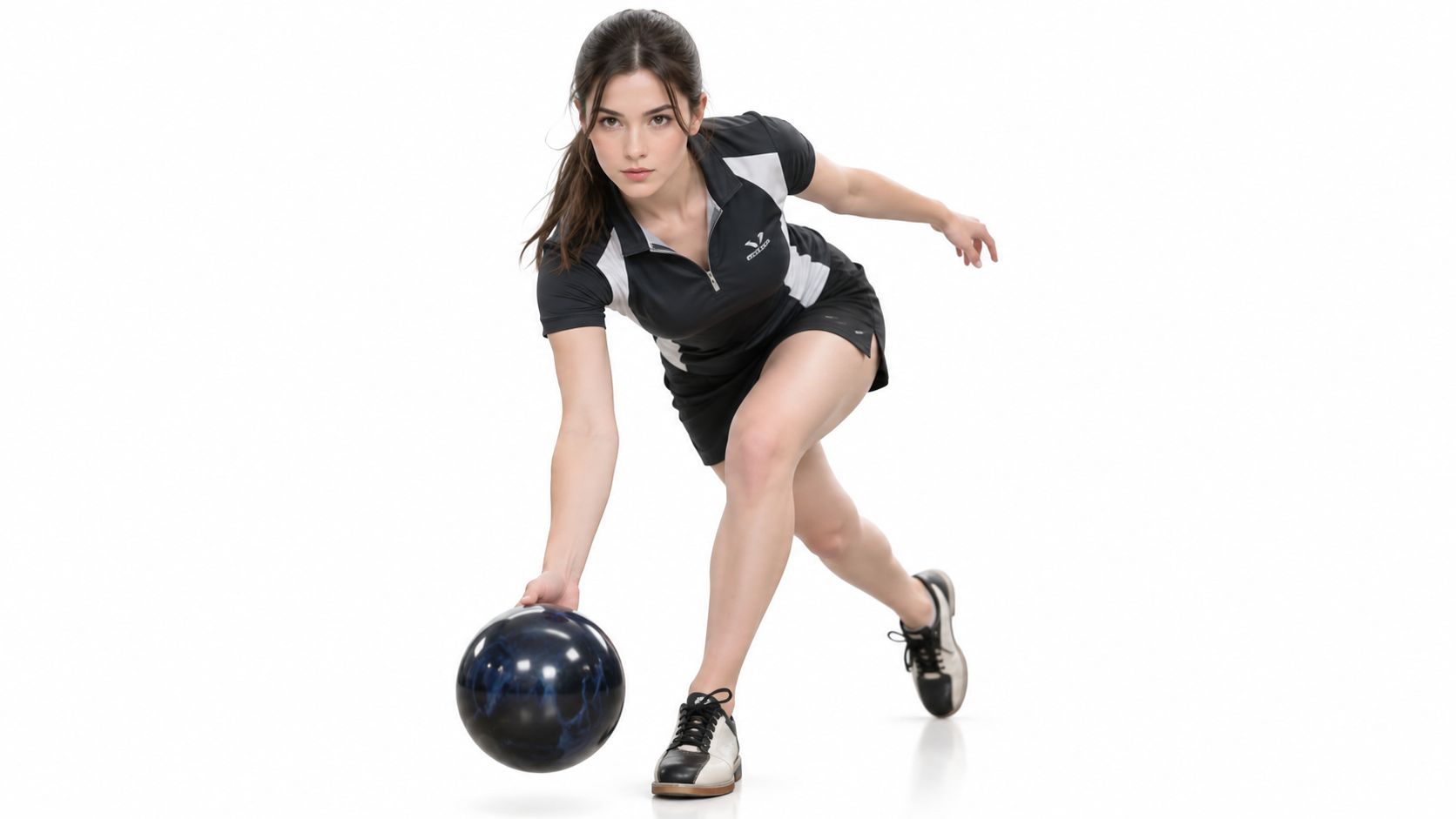
Leather bowling shoes sit right in the middle of that conversation. They're not just about looks, and they're not only for highly competitive players. They're one option in a modern lineup that also includes synthetic uppers, hybrid builds, and shoes with removable slide soles and heels. The key is understanding what leather changes for your foot and your timing.
Why bowlers still ask about leather
Leather has deep roots in bowling. A historical account notes that bowling shoes were already being made from leather in the late 19th century, including an American model introduced in 1888, which shows leather has been part of bowling footwear for more than 130 years (history of bowling shoe development). That long run didn't happen by accident. Leather held up to repeated use and could shape itself to the wearer over time.
But history alone isn't a reason to buy. Today's question is simpler: does leather help your game, your comfort, and your fit?
Practical rule: If your biggest shoe problem is unstable fit, leather may help. If your biggest shoe problem is fatigue or hard-to-fit width, a lighter synthetic option may be the smarter move.
What makes this decision tricky
A lot of buyers hear “leather” and assume better. That's too simple. Leather often rewards bowlers who play regularly and want a more settled-in fit after break-in. Synthetic shoes often suit bowlers who want less maintenance, quicker comfort, or less weight on long sessions.
Think of this guide like a pro-shop conversation. You're not picking a status material. You're picking a fit-and-slide system that needs to match your body and your approach.
How Leather Bowling Shoes Work as a Performance System
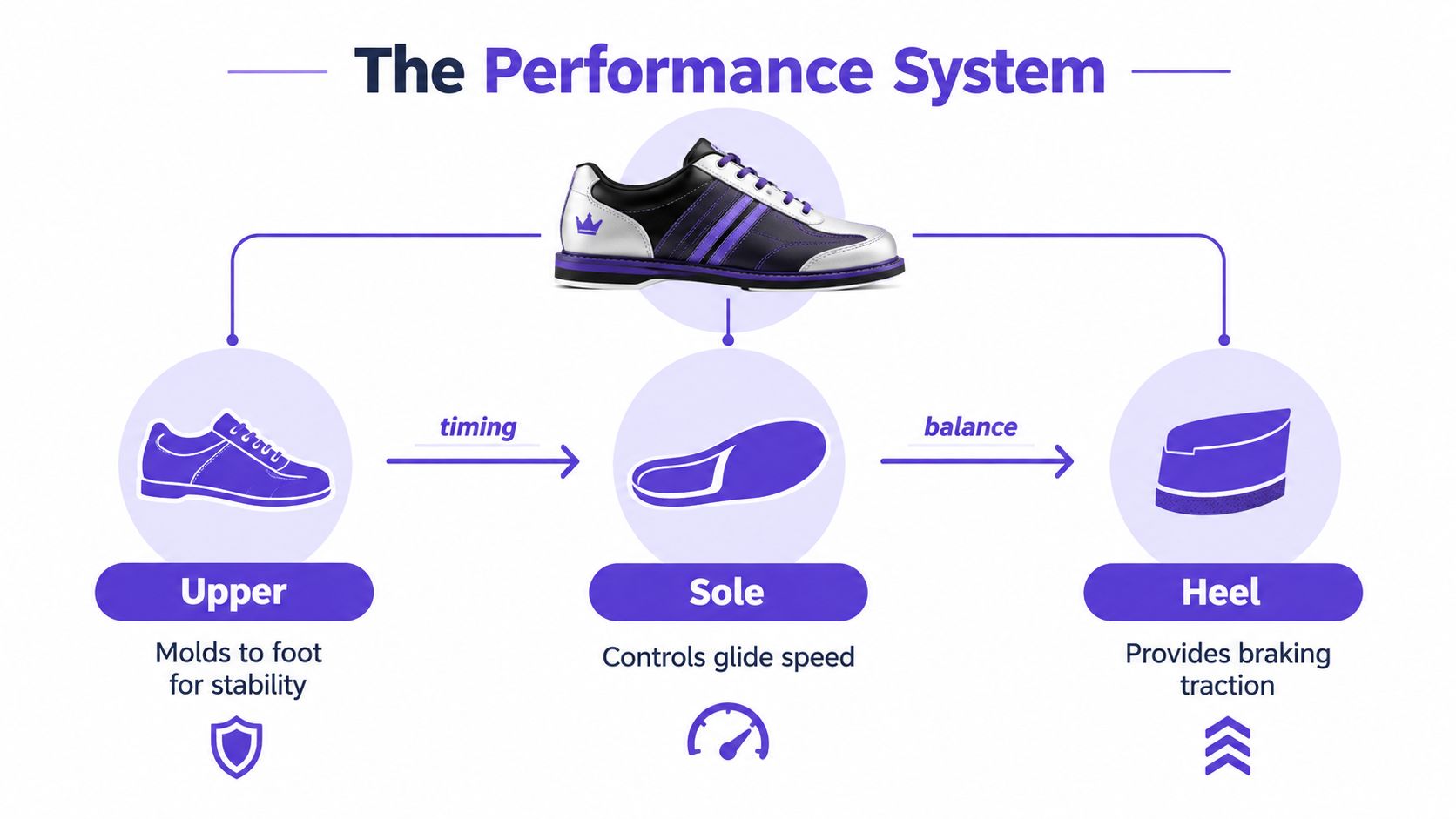
A bowling shoe works like a tuned instrument. If one part is off, the whole thing feels off. The upper holds the foot in place. The sole manages movement. The heel finishes the motion and helps you stop under control.
The upper does more than cover your foot
The leather upper is the part many bowlers notice first. Higher-performance buying guidance notes that full-grain leather can improve fit as it breaks in and conforms to the foot over time, while entry-level synthetics tend to break in faster but wear sooner under regular use (bowling shoe material guidance). That matters because a stable upper helps your foot stay centered during the approach and release.
A loose upper can let the foot move around inside the shoe. That doesn't just feel sloppy. It can change balance at the line.
The sole and heel do opposite jobs
By the mid-20th century, bowling shoes had already evolved toward specialized designs with one side built to slide and the other to brake, according to the historical account linked earlier. That dual-function idea is still the heart of modern bowling footwear.
Here's the simplest way to picture it:
- Slide foot: Needs controlled glide into the foul line.
- Push-off foot: Needs traction so you can drive forward without slipping.
- Heel: Helps finish the slide without skidding past your balance point.
If any one of those jobs is mismatched, timing gets messy fast.
Why modern leather shoes often include removable parts
Patent records show bowling shoe design became more formalized during the postwar bowling boom. A U.S. bowling-shoe patent was filed on June 12, 1959 and published in 1962, and another was filed in 1963. Later patents show the move toward adjustable friction zones with a 1999 priority date and a 2000 patent covering customizable ground engagement (bowling shoe patent timeline).
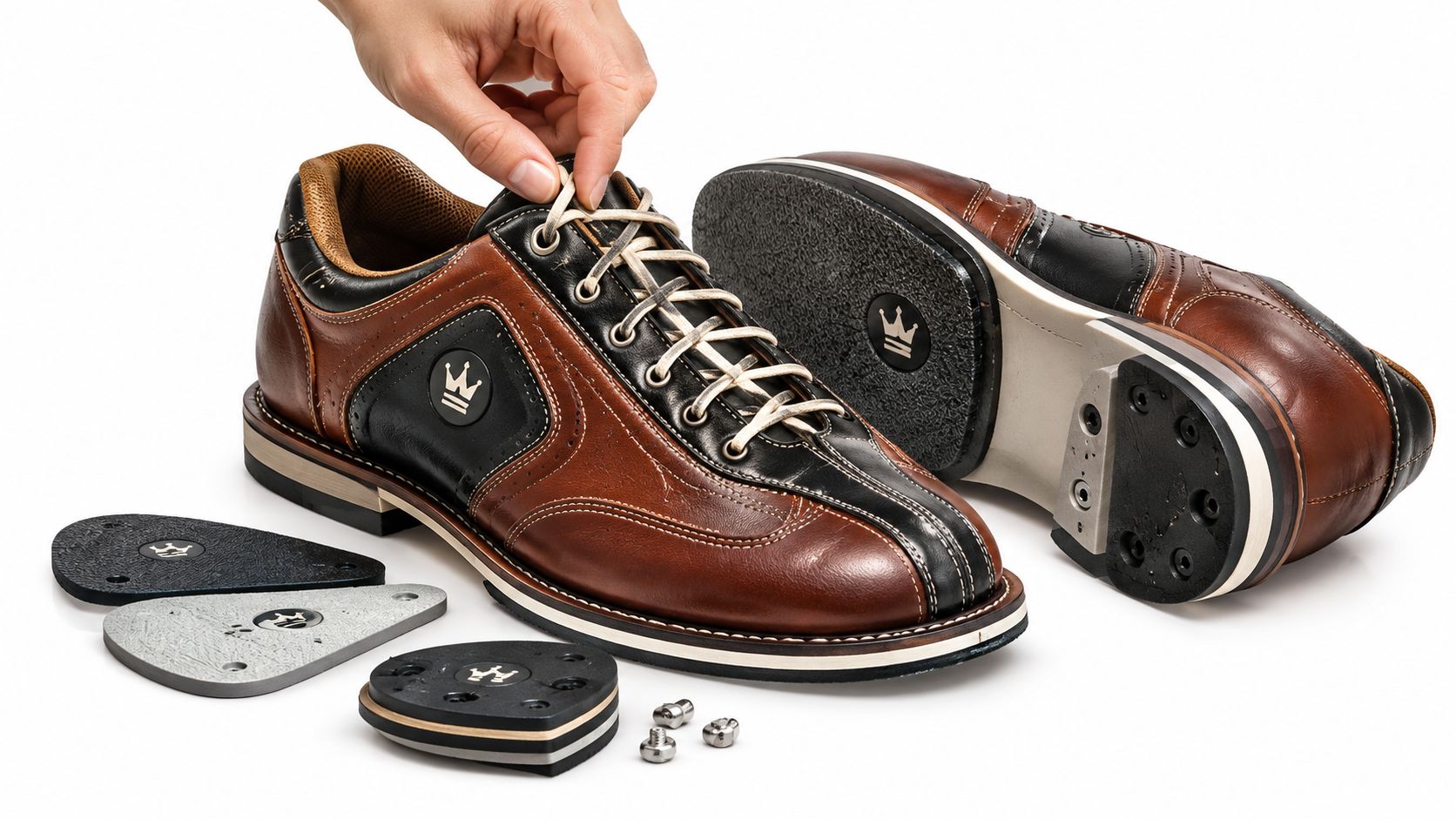
That patent trail matters because it explains today's common setup. A leather upper may still provide the fit and structure, while the sole and heel become tuneable parts.
Your shoe isn't one feature. It's a chain. Foot security affects balance. Balance affects slide timing. Slide timing affects release.
When you look at any pair of leather bowling shoes, judge it as a system, not a material badge.
Leather Versus Synthetic Uppers and What Changes for You
Leather and synthetic uppers solve different problems. One isn't universally better. The better one is the one that fixes the issue you have.
Where leather usually helps
Leather often works well for bowlers who want the shoe to settle around the shape of their foot. If you bowl league regularly, that break-in can pay off because the upper starts feeling more personalized instead of generic. Many bowlers also like the structured feel, especially when they want a firm, stable hold during the approach.
That said, leather usually asks more from you early. It may feel stiffer at first. It may take a few sessions before the fit feels natural.
Where synthetic can win
Synthetic uppers usually feel easier right out of the box. They're often lighter, and that can matter when you bowl long practice sessions or multiple blocks in a day. For some bowlers, especially those sensitive to foot fatigue, less weight is more important than the long-term molding effect of leather.
A recent buyer guide also notes a growing interest in customizable fit options, interchangeable soles, personalized bowling shoes, and sustainability-focused materials, while pointing out that leather isn't automatically the best answer for comfort or performance for every bowler (3G Tour Black review and market context).
Leather vs Synthetic Bowling Shoe Trade Offs
| Feature | Leather Upper | Synthetic Upper |
|---|---|---|
| Fit over time | Tends to mold to the foot after break-in | Usually changes less over time |
| First wear feel | Can feel firmer or stiffer at first | Often feels easier right away |
| Structure | Often gives a more supportive, shaped feel | Varies widely by model |
| Weight | Often heavier | Often lighter |
| Long sessions | Can feel excellent once broken in, but some bowlers notice more shoe weight | Often preferred by bowlers trying to reduce fatigue |
| Maintenance | Usually needs more care | Usually simpler to maintain |
| Budget focus | Often chosen for long-term fit value | Often chosen for lower entry cost |
A simple way to choose
Use your current problem as the filter.
- Your shoes feel sloppy: Leather may help because the upper can settle into your foot shape.
- Your feet get tired: A lighter synthetic or composite build may serve you better.
- You need instant comfort: Synthetic is often the safer first try.
- You bowl often and want the fit to improve with use: Leather becomes more appealing.
Don't buy leather just because it sounds serious. Buy it if you want what leather specifically does.
Finding the Right Fit and Width in Leather Bowling Shoes
Most fit mistakes start with the wrong question. Bowlers ask, “What size am I?” when they should ask, “How does my foot sit inside this shoe during an approach?”
Start with length, not brand size
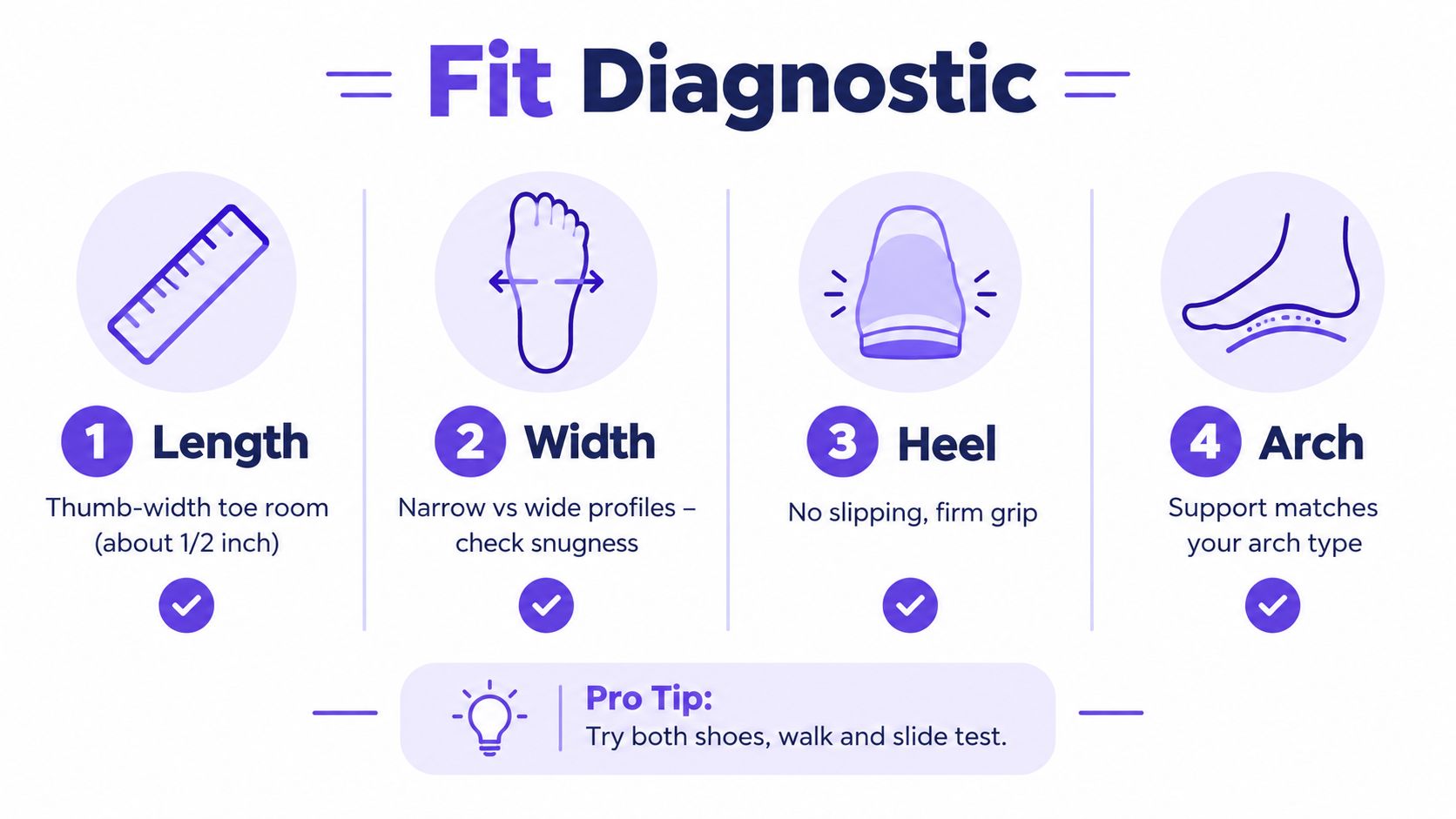
A useful baseline is thumb-width toe room, which buyer guidance still emphasizes for bowling shoes. You want space in front of the toes, but not so much that your foot slides forward every step. That little bit of room helps during walking and the final slide without jamming the front of the shoe.
If you're comparing sizes, use a detailed bowling shoe sizing guide to translate brand differences into something practical before you order.
Width changes everything
Leather gets talked about as if it solves all fit issues. It doesn't. It can improve contour over time, but it won't magically turn a narrow last into a wide one.
Check width in three places:
- Forefoot pressure: If the sides pinch before break-in, be careful. Leather can give some, but not enough to rescue a clearly too-narrow fit.
- Midfoot hold: You want contact, not squeeze. The shoe should feel secure through the arch area without making the foot feel trapped.
- Toe spread: Your toes shouldn't stack or curl to stay in the shoe.
For narrow feet, leather can be helpful because it often wraps and settles more neatly over time. For wide feet, the bigger factor is whether the model starts with the right shape in the first place.
A leather upper can refine fit. It can't rewrite the shoe's basic width.
Heel security and arch feel
Heel slip is one of the easiest fit problems to overlook. Walk, stop, and simulate your finish position. If the heel lifts noticeably, the shoe may feel unstable on the approach no matter how good the sole is.
Arch feel is more personal. Some bowlers like a flat, direct feel. Others need more support to keep the foot from collapsing inward during the slide. What matters is consistency. The shoe should let you repeat the same finish without fighting for balance.
At-home checks before you commit
Try the shoes with the socks you bowl in. Then run a simple test:
- Walk test: The shoe should flex where your foot flexes, not crease awkwardly across the toes.
- Set-up test: In your stance, your heel should stay planted and calm.
- Finish-position test: Step into a mock slide and hold your finish. If your toes slam the front or your heel pops up, something is off.
- End-of-day check: Feet often swell later in the day. If the fit is already tight in the morning, it may become a problem during longer sessions.
Leather bowling shoes often feel better after break-in, but “better later” is not a good excuse for “wrong now.” Start close, then let the material fine-tune the fit.
Slide and Heel Systems Explained for Leather Soles
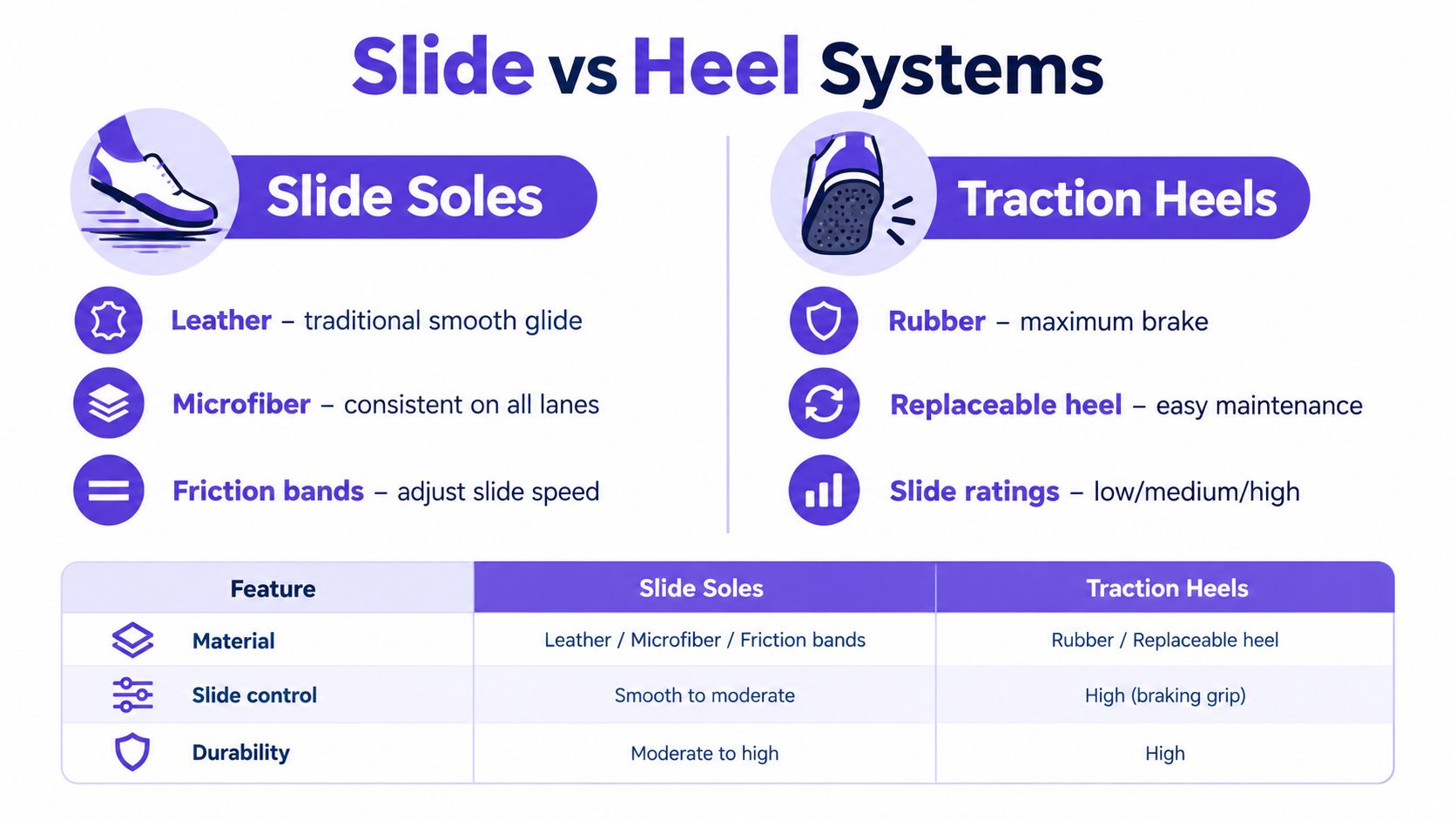
A leather bowling shoe does not perform because it is leather. It performs when the sole and heel work with your foot speed, balance, and the approach under you. That is why two bowlers can wear leather and walk away with completely different results.
What leather does on the slide foot
The slide sole is the part that lets your front foot keep moving just enough to finish the shot instead of jamming to a stop. Leather often works well here because it gives a controllable glide on many house approaches, especially once it has broken in and settled. If you want a closer look at how different slide soles change motion, that guide helps make the differences easier to spot.
But leather is only one option in the system.
A leather sole can feel smooth and readable. It can also feel too slow on a sticky approach or too quick for a bowler who already has plenty of slide. That is the key idea to keep in mind throughout this article. Leather is not automatically the premium answer. It is one way to set friction, and it works best when that friction matches your mechanics.
Why the heel matters just as much
The heel is the brake pedal. The slide sole starts the motion. The heel helps finish it.
A more aggressive heel slows you down sooner and can make the finish feel firmer. A smoother heel lets the slide carry a little longer before the foot settles. Bowlers often blame the front sole for every problem, but the heel is often the reason a slide feels rushed, short, or unstable at the end.
Watch for simple clues. If you feel like you are drifting past your finish, the heel may not be giving you enough stop. If your body pops upward or forward at the line, the heel may be stopping you too sharply.
Interchangeable systems and where leather fits
Leather shoes become a system choice, not a status symbol.
Some bowlers like leather because it breaks in to the foot and gives a familiar slide once dialed in. Others do better in interchangeable setups, especially if they bowl in different centers, get tired late in long sessions, or need width and underfoot comfort that many synthetic-based performance models now handle better. If your feet swell, if you need more cushioning, or if you want easier tuning without waiting on break-in, synthetic models with replaceable parts can solve problems that leather alone does not.
If you are comparing setups, this roundup of bowling shoes with interchangeable soles shows the type of system bowlers use when they want to tune sole speed and heel brake separately.
A simple way to read conditions:
- Sticky approach: Try a faster slide sole or a smoother heel.
- Slick approach: Try more heel brake or a slower slide surface.
- Different feel from center to center: Interchangeable parts usually make adjustment easier than forcing one leather setup to do every job.
A quick visual demonstration can help if you're new to sole changes.
How to test safely during warm-up
Do not test a new sole and heel combination at full speed right away. Build up in layers, the same way you would loosen up before throwing harder shots.
- First approach: Walk through slowly and notice when the slide begins.
- Second approach: Use normal foot speed without the ball.
- Then throw a shot: Judge balance and finish position before you judge ball reaction.
- Adjust one piece at a time: Change the sole or the heel first, not both together.
Lane-side check: If you cannot hold your finish, the shoe setup needs work before you start blaming the ball.
Durability and Care That Keeps Leather Bowling Shoes Performing
Leather bowling shoes last better when you treat them like performance gear instead of regular casual shoes. The upper, slide sole, and heel all wear differently, so your care routine should match those jobs.
Protect the parts that affect motion
The slide sole is the most sensitive area. Moisture, debris, and rough walking surfaces can change the glide quickly. Keep the slide sole off wet floors, and avoid wearing your bowling shoes outside. If the sole starts feeling grabby, inspect it before assuming the approach changed.
The upper needs simpler care. Wipe it down after use, especially around the flex points and lace area where dirt collects. Let the shoes air out before storing them so sweat doesn't sit in the material.
Break-in and wear patterns
Leather usually rewards patience, but break-in should move toward comfort, not pain. Normal signs include softer flex and a more settled wrap around the foot. Bad signs include persistent toe pressure, heel slip that never improves, or upper creasing that rubs the same hot spot every session.
Modern replaceable sole and heel systems also changed the durability equation. As the patent record discussed earlier shows, bowling shoes evolved toward customizable ground engagement, and that helps extend the useful life of a leather upper because you can swap worn contact parts instead of replacing the whole shoe.
A simple care routine that works
- After each session: Brush or wipe the sole area and let the shoes dry out naturally.
- Before bowling: Check the slide sole for dirt or moisture.
- Every so often: Inspect stitching, lace tension points, and heel edges for uneven wear.
- When slide changes noticeably: Replace the worn pad or heel if your shoe uses interchangeable parts.
Store them in a bag compartment where the sole won't rub against loose dirt or heavy hardware. Consistent care doesn't just preserve the leather. It preserves your timing.
Choosing Leather Bowling Shoes by Use Case and Final Verdict
The right shoe depends less on hype and more on what kind of bowler you are when you step on the approach.
Casual open play and occasional bowling
If you bowl once in a while, full leather may be more shoe than you need. A comfortable synthetic or hybrid model often makes more sense because it's easier right away and asks less from you in care. If your sessions are short and social, easy fit usually beats long break-in value.
Weekly league bowlers
Leather starts making a stronger case. If you bowl often enough to let the upper shape to your foot, and you want a stable feel week after week, leather can be a smart investment. It's especially appealing if your current shoes feel loose through the midfoot or inconsistent at the line.
Still, don't force leather if your main issue is tired feet or difficult width. Some league bowlers are better served by lighter synthetic shoes with a replaceable slide setup.
Tournament and adjustment-focused bowlers
If you travel between centers or bowl in changing approach conditions, a leather upper paired with interchangeable soles and heels is often the more flexible path. You keep the supportive fit up top while adjusting the contact points underneath. That's usually a stronger answer than chasing one fixed sole to do every job.
If you want to compare testing-focused shoe coverage, Bowling Gear Reviews publishes hands-on evaluations that include fit profile, slide behavior, replaceable parts, and build observations from league-length sessions.
Final verdict
Leather bowling shoes are a fit-and-slide choice, not an automatic upgrade.
Choose leather when you want:
- A break-in upper that molds closer to your foot
- More structure during the approach
- A long-term fit feel that improves with regular use
Choose synthetic or composite when you want:
- Quicker comfort
- Less weight
- An easier answer for fatigue or some fit challenges
The best shoe is the one that lets you repeat your approach calmly. Match the shoe to your movement, not to the marketing.
If you're narrowing down leather bowling shoes, interchangeable models, or width-specific fits, Bowling Gear Reviews publishes hands-on guides and comparisons built around real lane use. You can use those reviews to compare fit shape, slide behavior, and sole systems before you commit to a pair that looks right but doesn't match your approach.
