

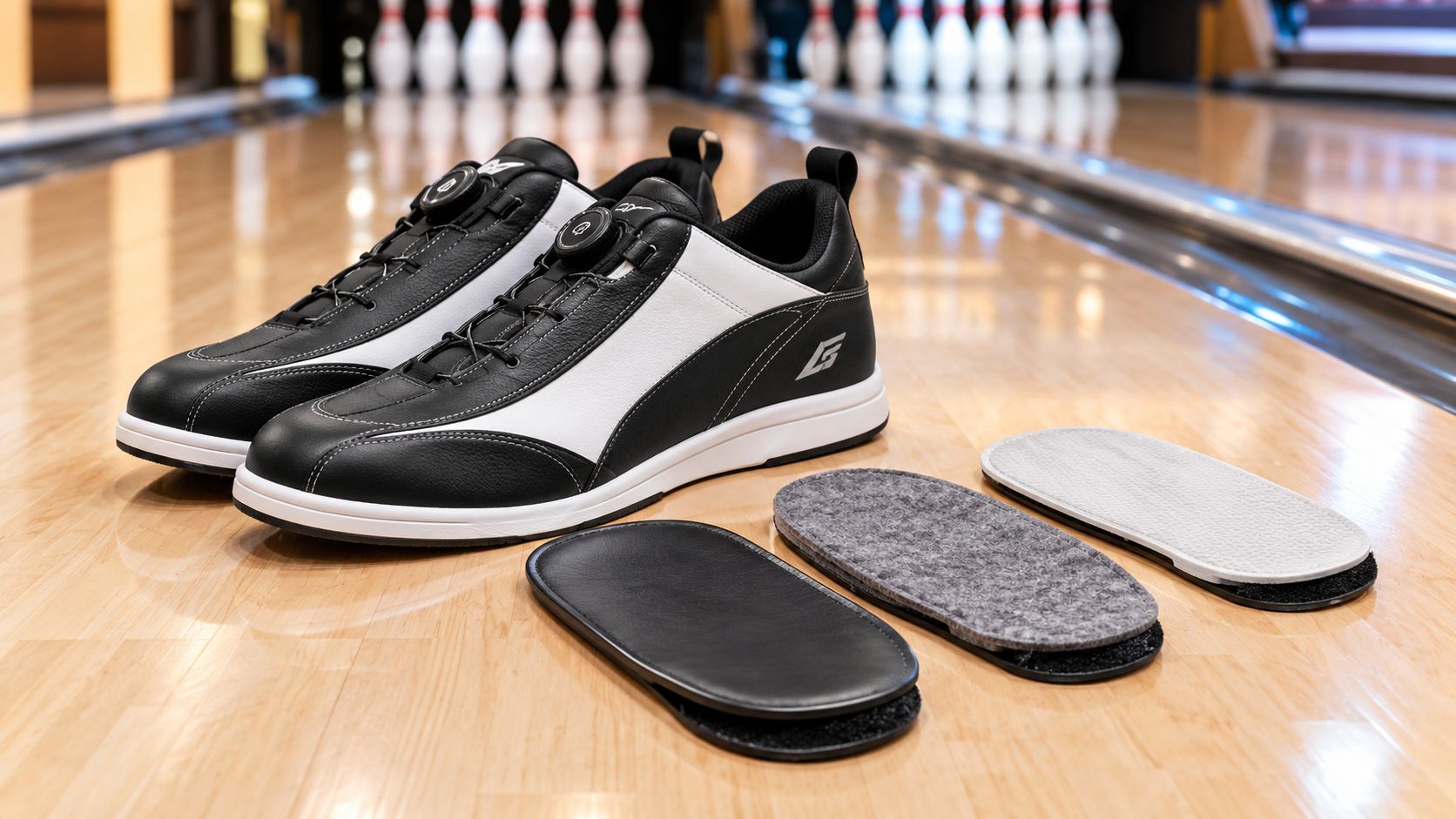
You step onto the approach during league night, make the same release you've made all season, and your sliding foot suddenly grabs. The ball comes off late, the seven pin survives, and you're left wondering whether the lane changed or your shoes did. A fixed-sole pair gives you one answer to every approach. Bowling shoes with interchangeable soles give you a way to change the shoe instead.
That flexibility isn't automatically worth paying for. The question is whether you bowl across enough different approaches to use it, whether the shoe fits your foot, and whether you'll maintain the hook-and-loop system instead of treating it as a set-and-forget feature. The seven picks below focus on those practical trade-offs, with Amazon availability included where the product listings support it.
| Model | Best fit | Main advantage | Main compromise |
|---|---|---|---|
| Dexter SST 8 BOA | League regulars | Broad slide and heel tuning | Higher platform commitment |
| 3G Shift | Bowlers wanting a clean, predictable feel | Smooth break-in and stock slide | Less forgiving if you dislike frequent setup changes |
| Brunswick TPU II | Value-focused league players | Useful numbered sole system | Compatibility stays within the Brunswick ecosystem |
| Storm Ion | Wide-foot bowlers | Width-friendly fit options | Sole selection requires platform planning |
| Hammer | Bowlers needing strong toe-side stability | Secure traction and replaceable components | Stable feel can seem firm to lighter sliders |
| 3G Fanatic | Tournament travelers | Tour-oriented construction | More shoe than casual bowlers need |
| KR Strikeforce Strik Force | Narrow-foot bowlers | Snug, straightforward fit | Less expansive tuning than premium platforms |
Product availability changes, so verify the included soles, heel pieces, handedness, and size before ordering. For a current retail example, the ELITE Alien men's interchangeable-sole listing on Amazon specifically advertises included slide soles and heels, while other listings, including the Dexter SST 8 BOA, emphasize interchangeable outsole components.
Table of Contents
- Why Interchangeable Soles Matter on the Approach
- How the Hook-and-Loop System Actually Works
- The Value Question for League Bowlers
- Comparing the Seven Top Interchangeable-Sole Shoes
- Matching the Right Shoe to Your Bowling Profile
- Trimming, Swapping, and Caring for Replacement Soles
- Final Verdict and Buying Recommendation
Why Interchangeable Soles Matter on the Approach
The problem usually appears without warning. The approach feels normal during practice, then the first competitive frame starts with a sticky slide foot. You reach the foul line late, lose your balance, and watch a shot that should have carried turn into a weak leave. A teammate tells you to slow your feet, but changing your timing to compensate for a shoe is usually the wrong fix.
Approaches vary by center, lane surface, and humidity. A surface that feels comfortable on one pair can feel noticeably different on another, even during the same league night. That's why the bowling shoe slider guide matters as a starting point, but the useful decision happens when you match the sole to the approach under your feet.
Three approach problems bowlers recognize
On a freshly prepared sport pattern, the approach may feel clean and fast. A bowler who already creates a long slide can overrun the finish if the sole is too slippery.
A conditioned house shot can feel different by the second game. Traffic, dust, and changing surface feel may make the slide less predictable, especially when the bowler relies on a precise final step.
Dry wood on an outside pair can grab a sole that felt fine elsewhere. The result is a shortened slide, an interrupted release, or a bowler forcing the upper body to finish a motion the foot couldn't complete.
A fixed sole forces a compromise. You either accept too much glide on a slicker approach or make do with a shoe that stops short on a tackier one. Interchangeable systems move the adjustment into the equipment, where it belongs, instead of asking you to rebuild your footwork from frame to frame.
Practical rule: Change the friction component before changing your release mechanics.
The trade-offs are real. These shoes cost more, spare soles take planning, and hook-and-loop adhesion can weaken if you let approach dust or oil collect on the fastener. The feature earns its keep when you regularly bowl in centers with different textures, not when the shoe spends every session wearing the same sole.
How the Hook-and-Loop System Actually Works
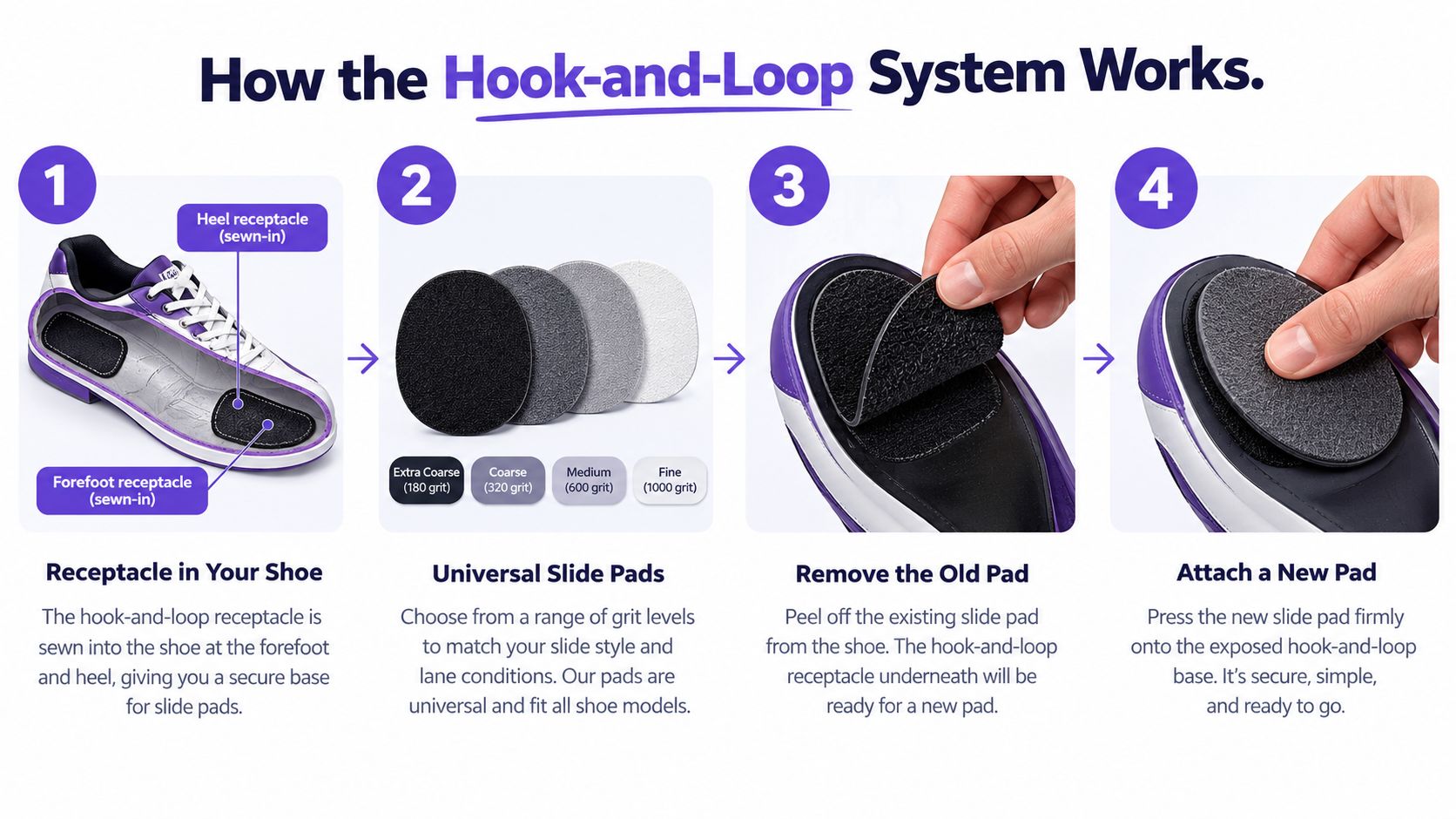
An interchangeable shoe has a hook-and-loop receptacle built into the forefoot, and sometimes into the heel as well. The slide pad uses the matching loop or hook surface, so you can peel one component away and press another into place without changing the shoe upper or your basic release mechanics.
Reading the slide numbers
Industry guides commonly describe slide soles on a scale around S2 through S10. Lower numbers provide a shorter, grippier slide, while higher numbers create a longer, smoother slide. The scale is useful as a direction of travel, but it isn't a universal laboratory standard. An S8 from one manufacturer shouldn't be assumed to feel identical to an S8 from another.
For a right-hander, the left shoe is typically the sliding foot. The replaceable sole on that foot controls most of the glide length. A left-hander generally needs the opposite arrangement, so confirm the handed configuration before buying replacement pads.
Heel numbers work in the opposite direction. Lower heel numbers generally create stronger stopping characteristics, while higher numbers allow more continuation through the finish. Some shoes pair an interchangeable slide sole with a fixed push-off sole, while more advanced systems let you tune both the slide and the heel.
A practical setup example
Suppose a bowler faces a 39-foot house shot with a sticky middle and wants a controlled finish. An S5 forefoot slide paired with the stock leather heel can provide a moderate slide with dependable braking.
On a 45-foot sport pattern, that same bowler may want a cleaner release. Moving to an S8 forefoot slide and a brushed rubber heel changes both the glide and stopping relationship, without forcing a wholesale change to the timing of the approach.
The exact combination depends on the shoe platform and the bowler. Dexter SST systems, Brunswick systems, and other brands may use similar numbering progressions, but their materials and construction still change the feel. Don't buy an S8 just because the number sounds right. Buy a compatible pad for your model, test it before competition, and record what worked.
The Value Question for League Bowlers
A league bowler who stays at one center may gain little from a large collection of replacement soles. A bowler who travels between wood and synthetic approaches faces a different calculation. Fit, dependable slide, and enough adjustment for changing surfaces matter more than owning every available pad.
Wear makes the return easier to judge. A high-quality slide sole can last 6 to 12 months for someone bowling about three games a week, while the shoe itself may continue much longer when the worn component can be replaced separately. The system therefore does more than provide customization. It can keep a worn slide from forcing a full-shoe purchase. See the broader bowling shoe price guide when comparing the cost of the platform and its replacement parts.
Who benefits most
Interchangeable soles make the strongest case for bowlers who:
- Change centers often: Wood, synthetic surfaces, humidity, and lane maintenance can alter the feel under the slide foot.
- Fight inconsistent sliding: A controlled sole change can provide a more repeatable correction than constantly changing stride length.
- Use a two-handed release: The approach and finish can place added demands on slide and braking control.
- Compete seriously: Travel and tournament bowling expose the shoe to more approach variables.
Beginners still learning balance, tempo, and foul-line position usually have other priorities. Casual open-play bowlers may prefer a comfortable fixed shoe or a simpler sole system. If the sole will stay unchanged between sessions, the extra flexibility has little practical return.
What wears first
The replaceable slide component usually takes the punishment. Leather can pack down and lose its original feel, while synthetic and felt materials may retain their character longer, depending on the approach and the bowler's movement. A shoe can still look new while the final step no longer stops and slides as it did when the setup was trusted.
Record games, centers, and sole changes in a phone note. That log gives a clearer value check than a feature list because it shows whether replacement parts and a more adjustable platform match your actual bowling schedule. For traveling league bowlers, also keep a proven pad available before competition, since a familiar sole is more useful than a larger kit that has not been tested on the approaches you will face.
Comparing the Seven Top Interchangeable-Sole Shoes
The best model depends less on the logo than on the relationship between fit, sole access, heel control, and replacement availability. The table uses the requested comparison criteria, but the ratings should be treated as editorial buying guidance rather than universal laboratory measurements.
| Model | Slide-sole Heel Range | Pad Quality After 60+ Games | Break-in Time | Approach Traction | Durability Rating |
|---|---|---|---|---|---|
| Dexter SST 8 BOA | Broad, platform-dependent range | Strong when kept clean | Short to moderate | Highly tunable | High |
| 3G Shift | Useful interchangeable range | Consistent stock feel | Short | Balanced | High |
| Brunswick TPU II | Numbered Brunswick system | Good with regular cleaning | Moderate | Predictable | Good |
| Storm Ion | Interchangeable options with fit focus | Good, dependent on pad choice | Moderate | Adaptable | Good |
| Hammer | Slide and heel flexibility | Strong traction component | Moderate | High toe-side security | High |
| 3G Fanatic | Tour-oriented range | Strong premium construction | Moderate | Precise and stable | High |
| KR Strikeforce Strik Force | More limited tuning than premium platforms | Adequate for its use case | Short | Snug, straightforward traction | Good |
Dexter SST 8 BOA
The SST 8 BOA is the most complete choice for bowlers who want quick access to both slide and heel tuning. Its dial closure helps maintain a repeatable fit, and the platform is widely associated with interchangeable components. The trade-off is that the system makes more sense when you'll carry and use compatible spares.
3G Shift
The 3G Shift stands out for a clean break-in and a stock slide feel that doesn't demand immediate experimentation. It suits league bowlers who want customization without turning every practice session into a parts test. The compromise is less about construction and more about discipline. You still need to learn which pad combinations work for your approach.
Brunswick TPU II
The TPU II offers a practical route into numbered sole tuning. Brunswick's interchangeable slide systems are organized around friction levels, with slide soles spanning approximately #2 to #10 according to Brunswick-focused technical guidance. The hidden limitation is ecosystem loyalty. Replacement parts are generally platform-specific, so mixing brands isn't a safe assumption.
Storm Ion
The Ion makes the most sense for bowlers whose fit needs come before maximum sole range. Width options can matter more than another specialty pad if your foot moves inside the shoe. Its compromise is that wide-foot comfort still requires careful sizing, and a good fit won't rescue a contaminated or poorly seated fastener.
Hammer
Hammer shoes appeal to bowlers who want a planted, secure feel near the toe and finish. The stability can help bowlers who dislike a loose or vague platform, especially when changing traction components. Bowlers who naturally create a soft slide may find that secure feel firmer than expected.
3G Fanatic
The Fanatic is aimed at bowlers who travel and need construction that can handle repeated setup changes. It's a serious investment for someone who treats footwear as competition equipment. For a single-center league bowler, that durability and range may be unnecessary overhead.
KR Strikeforce Strik Force
The Strik Force suits narrower feet and bowlers who want a snug, uncomplicated pattern. It can be a smarter fit choice than a roomier premium model that requires extra lacing or inserts. Its limitation is customization depth, so it won't satisfy a bowler building a broad tournament quiver.
Amazon shoppers should inspect the exact package contents. The Dexter SST 8 BOA Amazon listing is a useful retail reference for the model, but included soles, heel pieces, and sizes can vary by listing.
Matching the Right Shoe to Your Bowling Profile
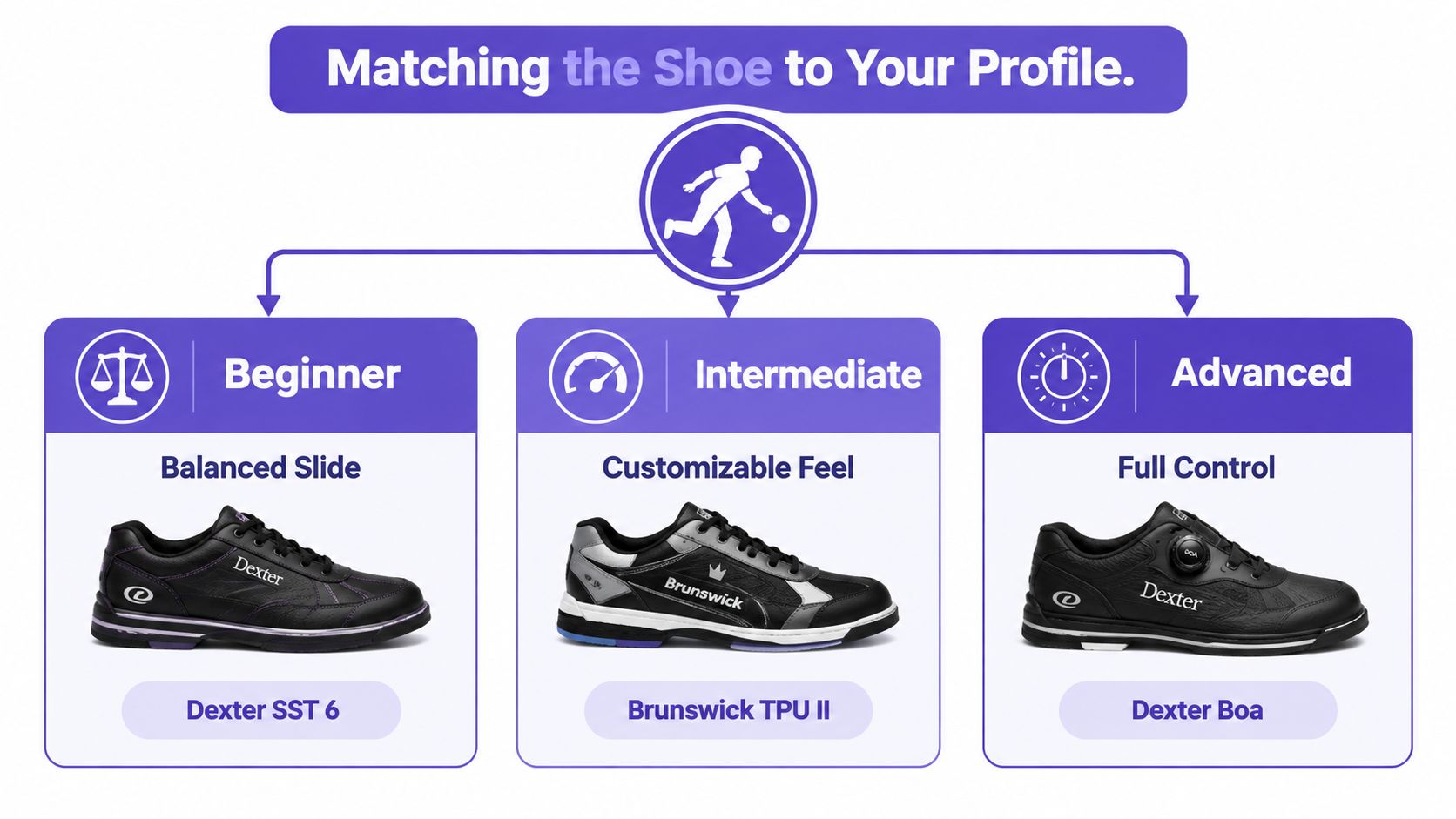
A ranking cannot decide whether a shoe suits your foot, approach, and travel schedule. A beginner needs a forgiving platform, while a tournament bowler may need dependable swapping across centers with different approach textures. The practical return comes from using the soles you can evaluate and maintain, not from collecting every available pad.
Beginners need a stable baseline
A beginner set on interchangeable shoes should start with a balanced, forgiving option such as the Dexter SST 6 or a similar entry-level model. Build a repeatable approach before chasing fine friction changes. One dependable slide sole teaches more than a bag of pads the bowler cannot yet judge.
League regulars need practical range
League bowlers who already know their preferred slide length can use the 3G Shift as a straightforward entry into customization. The Dexter SST 8 fits bowlers who move between centers and want broader heel control with easier component access.
The Brunswick TPU II is the value-oriented choice. Its numbered system gives bowlers a clear way to compare friction levels, while replacement planning stays simple within the Brunswick platform. Check the fit around the heel and arch before buying. A flexible sole cannot correct a shoe that shifts during the slide.
A league kit also needs a plan. Mark which sole works on each center's approach, then carry a proven option and a backup rather than the entire catalog.
Tournament bowlers pay for predictability
Travel-heavy competitors should prioritize stock component quality and reliable swapping over cosmetic features. The 3G Fanatic and Dexter SST 8 Pro suit bowlers who treat slide and heel control as competition equipment. Their broader range earns its space when approaches vary often. For a single-center league schedule, that range may be unnecessary overhead.
Travel-bag standard: Carry the sole you trust, one step more slide, one step more braking, and the tools to clean the fastener.
Wide-foot bowlers should examine Storm Ion options and Dexter's wide offerings. Narrow-foot bowlers may prefer the secure feel of the KR Strikeforce Strik Force or another snug pattern. Bowling Gear Reviews publishes shoe comparisons and fit guidance for narrow and wide profiles, along with replaceable sole systems. That reference can narrow the platform before you order from a retailer.
Trimming, Swapping, and Caring for Replacement Soles
Replacement soles are often sold oversized so bowlers can trim them to a particular shoe. That flexibility is useful, but a rushed cut can leave an edge that catches, peels, or changes the way the slide enters the approach.
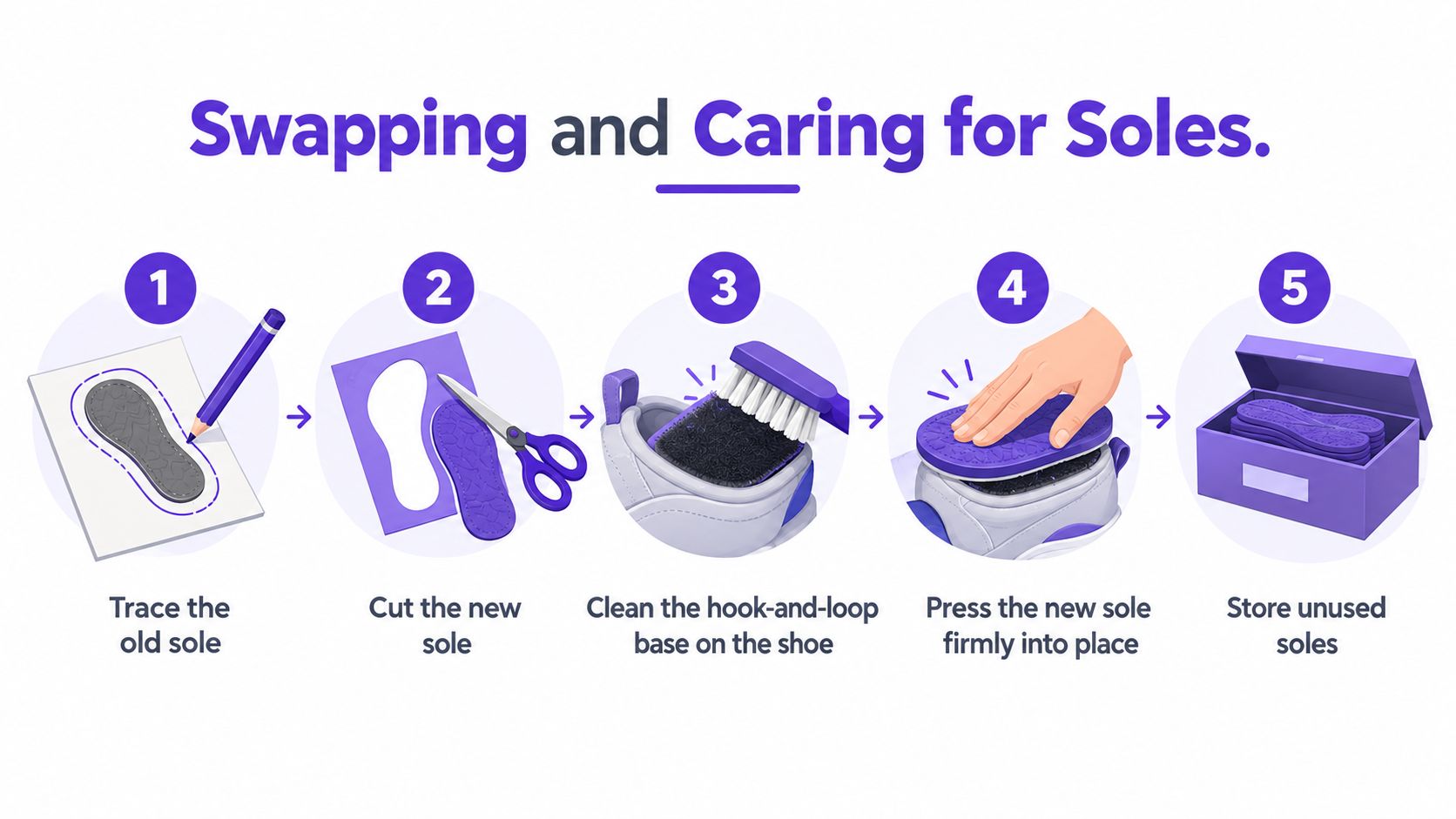
Start with the sole already fitted to the shoe. Peel it from heel to toe, trace its outline onto the replacement, and cut with sharp scissors. Installation guidance for Brunswick interchangeable slide sole replacement follows this general workflow. Keep the new piece dry before testing it.
A clean installation sequence
- Remove the old pad carefully: Pull from heel to toe instead of yanking across the fastener.
- Trace the shape: Use the old sole as a template and mark the new pad accurately.
- Cut and smooth the edge: Fresh scissors or a sharp utility blade work better than a dull tool. File or trim the leading edge so it sits flush.
- Brush the mounting surface: Remove dust, lint, and loose debris from the hook-and-loop base.
- Press the replacement into place: Align the pad with the existing channels, then apply firm pressure across the surface.
- Test before competition: Walk the approach several times and make practice slides before committing to league frames.
Build a small kit, not a random pile
A useful starter kit includes one matched pair of common slide soles, a pair in the friction range immediately below your normal choice, and replacement hook-and-loop pads compatible with your shoe. Keep the pieces in labeled bags so you don't confuse right-hand and left-hand configurations.
Clean the fastener after sessions with a stiff brush. Store the shoes sole-down in a ventilated bag, and keep spare pads dry. If adhesion weakens, replace the worn fastener before it releases during a competitive approach.
Here's a visual demonstration of the replacement process:
Don't swap soles on an oily approach or dirty floor. Contamination can transfer to the hook-and-loop pad, reducing its grip and making the next installation less secure. A few seconds with a brush before the change can prevent a mid-session failure.
Final Verdict and Buying Recommendation
For the average league bowler, the 3G Shift is the most balanced recommendation when the priority is a clean break-in, dependable stock feel, and enough flexibility to handle changing approaches. It doesn't force a casual player into the complexity of a large kit, but it gives a regular bowler room to grow.
The Brunswick TPU II wins on practical value for bowlers who want numbered sole choices without immediately committing to a premium tournament platform. Its value depends on staying within the compatible Brunswick replacement system and changing the sole when the approach calls for it.
For tournament play, the Dexter SST 8 BOA or 3G Fanatic makes the stronger long-term case. Their appeal isn't just more parts. It's the ability to maintain a familiar upper and timing while adjusting slide and braking as centers change. That matters most when a travel schedule exposes you to wood, synthetic surfaces, humidity, and different maintenance habits.
Plan your purchase around usage. Budget for replacement slide soles after roughly 60 to 90 league games only as a practical planning range, not a guaranteed lifespan, because wear depends on the approach, material, and bowler. Keep a compatible backup heel in the bag, inspect the Velcro before every session, and never assume a pad from another brand will fit just because it also uses hook and loop. Compatibility guidance for adjustable sole shoes makes the brand-specific limitation clear.
A sensible trial setup is one compatible shoe platform, an S8 slide spare, and an S5 heel spare. Step up to a premium model if you regularly travel, compete across centers, or lose confidence when approach texture changes. Stay with the workhorse option if your home center is consistent and you rarely need a different friction setting.
Bowling Gear Reviews offers independent bowling shoe reviews, comparisons, and practical fit guides covering interchangeable soles, heels, width profiles, and league-length use. Visit Bowling Gear Reviews to compare a shoe platform and replacement-sole setup before your next league purchase.
