

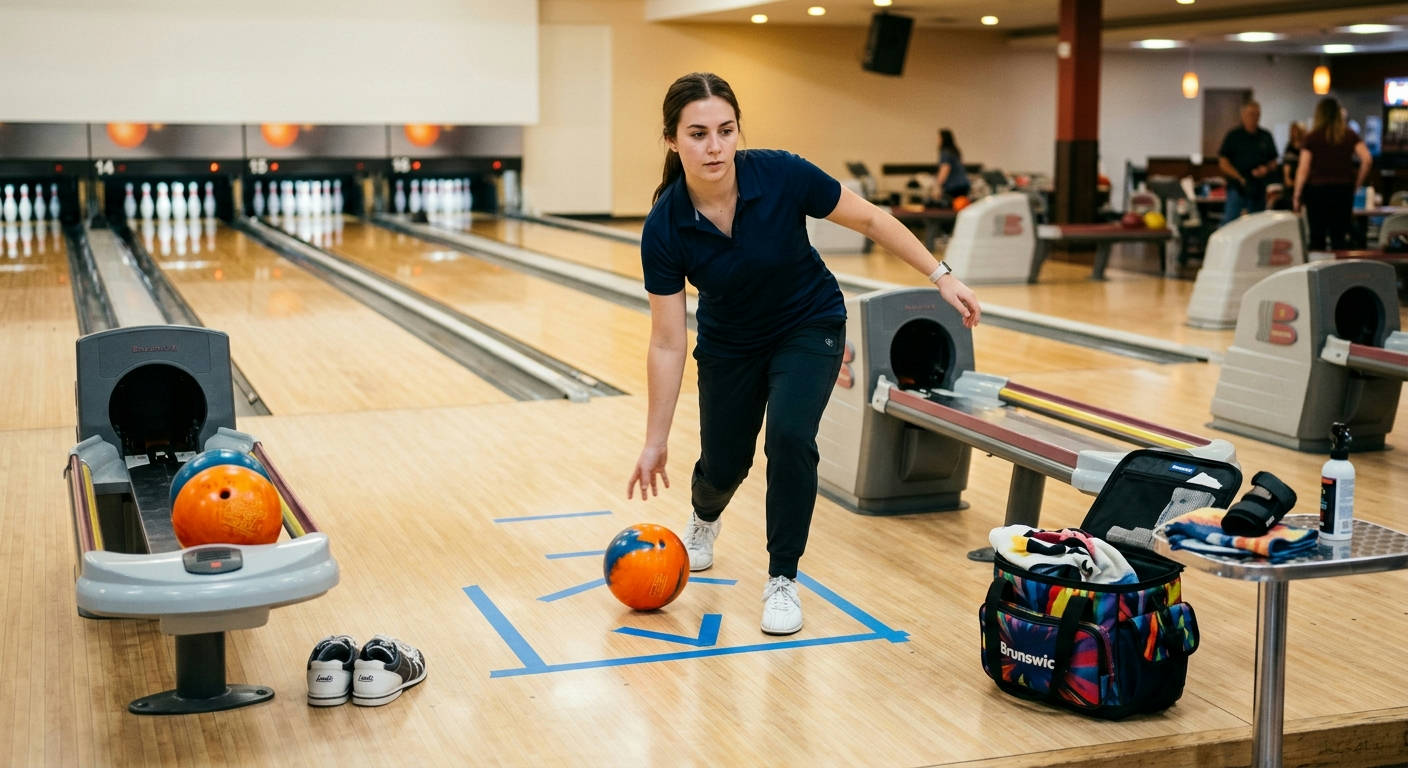
Stepping into the bowling world and want to get good, fast? You’re in the right place. The secret isn’t just throwing a ball down the lane a thousand times; it’s about smart, targeted practice. That’s where the best bowling drills equipment for beginners comes in, allowing you to build muscle memory and perfect your form without even leaving your living room. This guide breaks down the essential tools that will shave points off your learning curve and get you striking like a pro in 2026.
Why Practice Gear Beats Just Rolling Games
Throwing game after game is fun, but it’s not the most efficient way to improve. You risk reinforcing bad habits. Deliberate practice, focusing on one small piece of your form at a time, is the fastest path to consistency.
Think about it. On the lanes, you’re worried about the score, the pin action, and the people watching. At home, with the right gear, you can isolate your release, perfect your balance, and nail your timing without any of that pressure.
This approach builds a solid foundation. You’re training your body to perform the correct motions automatically. When you get back to the alley, you won’t have to think about your footwork or your arm swing—it’ll just happen. This is how you build a repeatable, powerful shot.
Plus, let’s be honest, lane time is expensive. Investing in a few key pieces of practice equipment can save you a significant amount of money in the long run. A few focused sessions at home can be more valuable than hours of mindless, expensive games.
The Ultimate List of Bowling Drills Equipment for Beginners
Ready to build your at-home training arsenal? These are the must-have items we recommend at Bowling Gear Reviews. They are proven tools that target the most common challenges new bowlers face.
1. Bowling Release Trainer
This is non-negotiable. A release trainer is a weighted tool, often shaped like a partial bowling ball with finger inserts, designed to strengthen the exact muscles you use in your release. It’s the single best way to develop a consistent, powerful rotation on the ball.
You can practice the “yo-yo” motion, feeling the weight of the ball and learning how to let it roll off your fingertips. Doing this for just 10-15 minutes a day builds incredible muscle memory. Look for one with a comfortable grip that mimics your actual bowling ball.
Our Amazon Pick: A simple search for a Bowling Release Trainer will give you plenty of excellent options.
2. A Dedicated Practice Ball
You might be tempted to use your main performance ball for at-home drills, but we advise against it. You don’t want to risk scuffing or damaging your prized equipment on your floor.
A simple, inexpensive polyester or plastic ball is perfect for this. The goal here isn’t to practice your hook; it’s to practice your swing and approach. A “house ball” material is durable and gets the job done without breaking the bank. For more details on ball types, check out our guide on how to choose a bowling ball.
Our Amazon Pick: Search for a basic Polyester Bowling Ball in your preferred weight.
3. Bowling Shoe Slide Socks
Your approach is half the battle, and the slide is its grand finale. You can’t practice a smooth slide on your carpet or hardwood floor with your regular bowling shoes. That’s where slide socks come in.
These are simple fabric covers that slip over the sole of your shoe, allowing you to simulate the slide on almost any surface. This helps you practice your balance and posture at the “foul line” without needing an actual lane. They are cheap, effective, and a total game-changer for at-home practice.
Our Amazon Pick: Any highly-rated Bowling Shoe Slider Sock will do the trick.
4. Agility Dots or a Foul Line Marker
Consistency in your setup and finish is crucial. You need to hit the same mark at the foul line every single time. A simple set of flat agility dots or even a strip of painter’s tape on your floor can serve as a practice foul line and target for your feet.
Use them to mark your starting position and your slide foot’s ending position. This visual aid forces you to be precise with every step of your approach, drilling that consistency into your muscle memory.
Our Amazon Pick: Agility Dot Markers are versatile and perfect for this drill.
Check Price on Amazon for Agility Dot Markers
5. Video Recording Tripod for Your Phone
You can’t fix what you can’t see. Your phone is one of the most powerful coaching tools you own, but only if you can use it effectively. A simple, flexible tripod allows you to record your form from multiple angles.
Set it up to record from behind to check your swing plane. Set it up from the side to check your timing and posture. Watching yourself back in slow motion will reveal flaws you’d never feel on your own. This is how modern athletes in every sport fine-tune their mechanics.
“Self-analysis via video is no longer a luxury for pros; in 2026, it’s a fundamental practice tool for any serious beginner. What you feel isn’t always what’s real.”
Our Amazon Pick: Search for a Smartphone Tripod with flexible legs for maximum versatility.
Check Price on Amazon for Smartphone Tripod
How to Choose the Right Gear for Your Drills
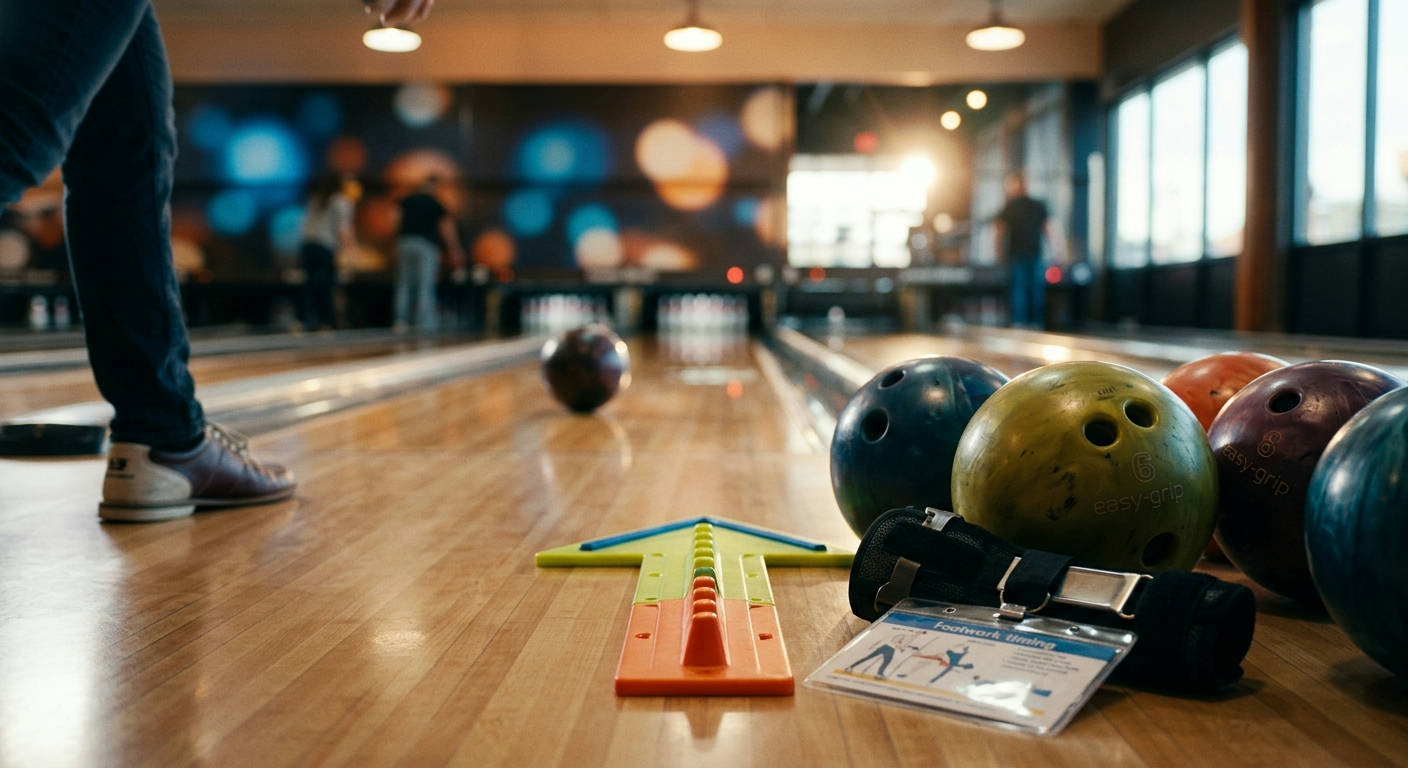
Walking through the options can feel overwhelming. Don’t feel like you need to buy a pro shop’s worth of equipment on day one. Here’s how to choose wisely.
Start Simple, Then Expand
If you are on a tight budget, prioritize. The two most impactful pieces of equipment are the bowling release trainer and the shoe slide socks. These target the two most difficult parts of the sport for beginners: the release and the slide. Master those, and you’re already ahead of 90% of newcomers. You can add the other items as you progress.
Focus on Your Specific Weakness
Be honest with yourself. What’s the weakest part of your game? If you’re constantly dropping the ball or have zero rotation, the release trainer is your best friend. If you feel off-balance and clunky at the line, the slide socks and foul line markers are what you need. Buy the tool that solves your biggest problem first.
Read Reviews (With a Critical Eye)
Amazon reviews are helpful, but learn to read them correctly. Ignore the hyper-positive 5-star reviews with no text and the hyper-negative 1-star reviews from someone who probably used the product incorrectly. Look for the detailed 3 and 4-star reviews. They often give the most balanced perspective, highlighting both the pros and the cons.
Essential At-Home Drills Using Your New Equipment
You’ve got the gear. Now what? It’s time to put it to work with some high-impact drills that will translate directly to higher scores on the lanes.
The One-Step Delivery Drill
This drill isolates the single most important moment of your shot: the final step and release.
- Place your agility dot or foul line marker on the floor.
- Stand on your non-sliding foot, about one step back from the marker.
- Holding your practice ball or release trainer, get into your set position.
- Perform just the final step of your approach, sliding your other foot forward toward the marker.
- As you slide, execute your arm swing and release. Hold your finish position for three seconds.
Focus on balance and a clean release. Do this 20-30 times in a session.
The Balance and Posture Drill
A stable finish is the bedrock of an accurate shot. This drill, using your slide sock, builds that stability.
- Put your slide sock on your sliding shoe.
- Go through your full approach (or just the one-step drill) without a ball.
- When you hit your final slide, freeze in your finishing position. Your non-sliding leg should be back for balance, your torso tilted forward, and your head steady.
- Try to hold this pose for a full 10 seconds without wobbling. If you can’t, your balance is off.
According to research from institutions like the National Center for Biotechnology Information (NCBI) on biomechanics, static balance is a critical component of athletic performance and injury prevention. This drill directly trains that skill.
The Swing Plane Drill
A straight, free arm swing is essential for power and accuracy. Many beginners pull the ball around their body.
- Stand parallel to a wall, about six inches away from it, on your ball-side.
- Using your release trainer, perform your arm swing.
- The goal is to complete the entire swing—back and forward—without your hand, arm, or the trainer touching the wall.
- This forces you to keep your swing straight and in line with your shoulder.
Beyond the Basics: When to Upgrade
As you progress from a beginner to an intermediate bowler, your practice needs will evolve. The initial gear is about building a foundation. The next level of equipment is about refinement.
Once you have a consistent release, you might invest in a bowling ball spinner. This tool allows you to clean, polish, and even resurface your high-performance bowling balls at home, giving you precise control over your ball’s reaction on the lanes. Paired with a quality bowling ball cleaning kit, a spinner is a serious piece of equipment for a serious bowler.
You might also look into more advanced video analysis software that can track your ball speed and rev rate from your phone recordings. The tools are out there, but don’t jump ahead. Master the fundamentals first.
“The mistake most amateurs make is buying advanced gear to fix a fundamental flaw. Perfect your swing with a $20 release trainer before you worry about the surface grit on a $250 ball.”
Expert Q&A: Your Top Questions Answered
We get a lot of questions from new bowlers. Here are answers to some of the most common ones about practice gear.
Can I just use regular dumbbells instead of a bowling release trainer?
You can, and it’s better than nothing for building general strength. However, it’s not ideal. A dedicated release trainer forces you to use the correct grip and wrist position, which is crucial. The unique shape helps you practice the “un-cupping” of the wrist and the finger lift that generates rotation—something a dumbbell simply can’t replicate.
How often should I be doing these drills?
Consistency trumps duration. A focused 15-minute session four times a week is far more effective than a single, grueling hour-long session on a Sunday. You want to keep the motions fresh in your muscle memory. Short, frequent practice is the key.
What is the single most important piece of bowling drills equipment for beginners?
If we had to pick just one, it would be the bowling release trainer. Without a doubt. The release is the most complex and least intuitive part of the delivery for a new player. It’s where speed is converted to power and rotation. Mastering this single element will have the biggest and fastest impact on your scores. Everything else in your game can be perfect, but a bad release will ruin the shot every time. The United States Bowling Congress (USBC) has extensive resources showing that the moment of release dictates the entire path of the ball.
Final Thoughts from Bowling Gear Reviews
Becoming a skilled bowler doesn’t happen by accident. It’s the result of intentional, focused practice. By investing in a few key pieces of bowling drills equipment for beginners, you’re investing in your own improvement.
You’re taking control of your development, building a rock-solid foundation of fundamentals that will serve you for your entire bowling career. Start with a release trainer and a slide sock, record yourself, and focus on one improvement at a time. The strikes will follow.
If you have more questions or need personalized advice, don’t hesitate to get in touch with our team of experts. We’re here to help you roll your best game.
