

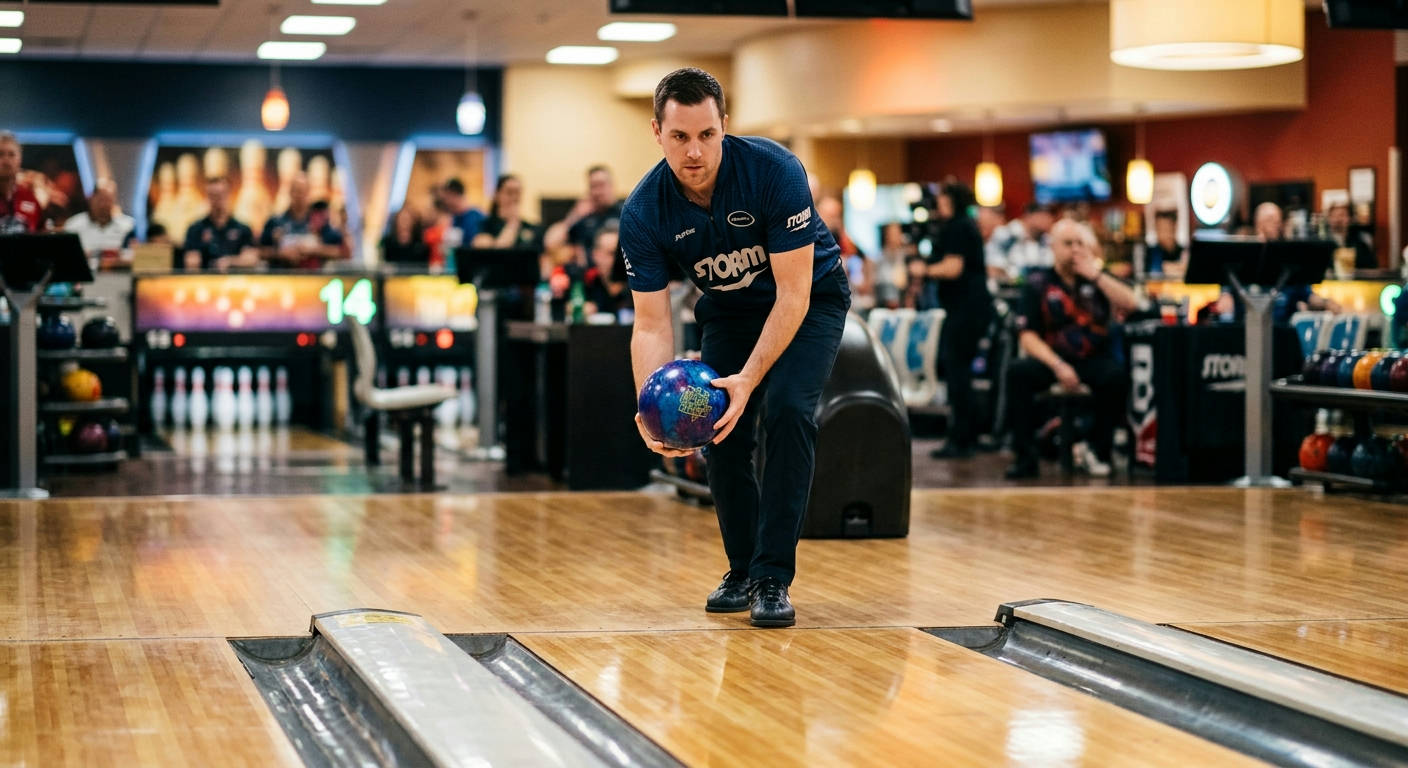

Stepping up to the lane and seeing that slick, glistening oil pattern can be intimidating. Your normal strike ball suddenly looks like a plastic spare ball, hydroplaning straight into the 7-pin. If you're tired of your ball skidding endlessly and never finding the friction it needs to make the turn, you've come to the right place. We're here to break down the absolute best bowling balls for oily lanes in 2026, giving you the traction and aggressive hook you need to cut through the flood and obliterate the pocket.
At Bowling Gear Reviews, our team of experts lives and breathes this stuff. We've spent countless hours on heavy oil patterns, testing the latest releases to see what truly bites and what just slides by. This guide is the result of that rigorous, real-world analysis, designed to help you make a confident investment and start striking on the toughest conditions.
Understanding Oily Lanes: Why Your Current Ball Isn't Cutting It
Before we dive into the top picks, let's get a handle on what we're up against. Not all oil is created equal, and knowing the enemy is the first step to defeating it.
What Are "Heavy Oil" Conditions?
Heavy oil refers to a high volume of conditioner applied to the lane, typically extending further down the lane than a standard house shot. Think of it as a deeper puddle. These patterns, like the 45-foot "Badger" or "Shark" patterns used in professional tournaments, are designed to challenge a bowler's accuracy and equipment choices.
Your standard "benchmark" ball, designed for medium conditions, simply can't generate enough friction to hook effectively. It will skid too far, lose energy, and hit the pocket with all the force of a wet noodle, often resulting in washouts or corner pin leaves.
The Physics of Skid, Hook, and Roll on Oil
A bowling ball's journey down the lane has three phases: skid, hook, and roll. On heavy oil, the skid phase is dramatically elongated. The goal of a heavy oil ball is to get through this phase cleanly but then start the hook phase at the right time with maximum force.
This requires a combination of an aggressive coverstock that can displace oil and a powerful core that wants to rev up early and create a strong, continuous motion towards the pocket. The ball needs to read the mid-lane, not the last ten feet.
Key Features of Bowling Balls for Oily Lanes
When you're shopping for a solution to slick lanes, you'll see a few key terms pop up again and again. These are the non-negotiables:
- Aggressive Coverstock: Look for solid reactive or strong hybrid covers. These have more pores and a rougher surface texture to create friction.
- Low RG / High Differential Core: A low Radius of Gyration (RG) core revs up earlier, while a high differential provides more flare potential, creating a bigger, more powerful hook. Asymmetric cores are often preferred for this.
- Dull/Sanded Surface Finish: A matte finish, typically achieved with a 500, 1000, or 2000-grit Abralon pad, is essential. This rough surface digs into the oil instead of gliding over it like a polished ball would.
The 7 Best Bowling Balls for Oily Lanes in 2026
We've done the work, rolled the games, and analyzed the data. Here are the top performers for 2026 that will give you the upper hand on even the oiliest conditions.
1. Storm Omega Crux – Best Overall
The Storm Omega Crux is an absolute monster, plain and simple. It's the 2026 evolution of a legendary line known for dominating heavy oil. Storm paired their aggressive NEX+ Solid Reactive coverstock with the Catalyst X-Core, an asymmetric beast designed for early revs and a massive backend move. This ball reads the mid-lane exceptionally well and doesn't quit.
If you need a ball that digs in, revs up, and powers through the pins without a second thought, this is your weapon of choice. It provides a surprisingly consistent and readable motion for such a strong ball, making it our top pick.
Pros:
- Incredibly strong mid-lane read
- Unmatched traction in the heaviest oil
- Continuous, powerful backend motion
- Forgiving on slight miss-releases due to its strong cover
Cons:
- Not for dry or medium-light oil conditions
- Can be too much ball for lower rev players if not drilled correctly
Check Price and Reviews on Amazon
2. Roto Grip Tectonic Shift – Best for Power and Hook
When you need to create area and watch a ball make a powerful, arcing move, the Roto Grip Tectonic Shift is the answer. It uses the Hyper-Cell Solid coverstock, an oil-soaking machine, wrapped around a new low-RG asymmetric core called the Epicenter Core. This combination is all about creating momentum and generating a devastatingly strong hook.
This is the ball you pull out when others are struggling to get their ball back to the pocket. It's designed for players who want to open up their angles and trust that their equipment will make the turn every single time.
Pros:
- Massive overall hook potential
- Excellent choice for high-rev and low-speed players
- Reads the mid-lane early and aggressively
- Predictable, strong arcing motion
Cons:
- Requires a significant amount of oil to be effective
- Can burn up its energy too early if the lane has dry spots
Check Price and Reviews on Amazon
3. Brunswick Enigma Blackout – Best for Control and Predictability
Power is great, but control wins championships. The Brunswick Enigma Blackout delivers top-tier heavy oil performance without the wild, unpredictable backend some other "hook monsters" have. It features the innovative Durability Core+ and the A.C.T. 3.0 Solid coverstock, which provides a smooth, controllable, and incredibly powerful roll.
This ball is perfect for players who prefer a more direct line to the pocket or those bowling on sport patterns where breakpoint control is paramount. It hooks a ton, but it does so in a way that you'll see coming, which inspires confidence.
"The Enigma Blackout from Brunswick gives me the confidence to stay firm with my shot on the fresh. I know exactly where it's going to read the lane and what it's going to do at the pins. It's a must-have for any tournament bag." – A Pro Shop Operator's Take
Pros:
- Extremely predictable and smooth ball motion
- Excellent for building a reliable breakpoint on tough patterns
- Still offers elite-level traction and power
- Durable coverstock that maintains its surface texture
Cons:
- Less dramatic backend "snap" than others on this list
- May not be strong enough for the absolute heaviest oil volumes for some styles
Check Price and Reviews on Amazon
4. Motiv Hydra Dominance – Most Versatile Heavy Oil Ball
Motiv has engineered something special with the Hydra Dominance. While it's a certified heavy oil ball, its unique hybrid reactive coverstock, the Propulsion HV+, allows it to handle transitioning lanes better than its solid-covered counterparts. It combines the early read of a solid with a touch more backend continuation.
This makes the Hydra Dominance an excellent choice for being the first ball out of your bag in a tournament or league night. It can handle the fresh oil and won't immediately force you to ball down as the lanes start to break down. It's a smart, strategic choice.
Pros:
- Can be used longer as lanes transition
- Strong but controllable mid-lane and backend
- Hybrid cover provides a unique shape on oil
- Vibrant, eye-catching color scheme
Cons:
- Not as strong as the top-tier solids on pure flood
- Requires a good understanding of ball reaction to fully utilize
Check Price and Reviews on Amazon
5. Hammer Vicious Strike – Best Budget-Friendly Option
You don't need to empty your wallet to get a great heavy oil ball. The Hammer Vicious Strike proves this by delivering incredible performance at a more accessible price point. It features the aggressive Semtex Solid CFI cover and a strong symmetric core, a combination that has no trouble finding traction.
While it might not have the same ceiling as the high-end asymmetric balls, it's more than enough for 95% of league bowlers facing oily conditions. It’s a reliable, no-nonsense ball that gets the job done without the premium price tag. For bowlers building an arsenal, this is a fantastic starting point.
Pros:
- Excellent performance for the price
- Strong, continuous hook in heavy oil
- Symmetric core is easier to drill and control for many bowlers
- Classic Hammer toughness and durability

Cons:
- Lacks the raw power of top-tier asymmetric cores
- Slower response to friction down-lane
Check Price and Reviews on Amazon
6. 900 Global Subzero Reality – Best for Low-Rev Players
If you're a lower-rev or speed-dominant player, you need a ball that does the work for you. The 900 Global Subzero Reality is that ball. It boasts the S84 Response Solid cover and the incredibly dynamic Disturbance Asymmetric Core. This core is designed to get into a roll effortlessly, helping players who don't generate a lot of natural spin.
The Subzero Reality helps "straight-ballers" and "strokers" see a hook shape they've only dreamed of on slick lanes. It digs through the oil, revs up on its own, and provides that much-needed motion to improve carry and increase scores.
Pros:
- Core design is perfect for lower-rev styles
- Extremely early and strong mid-lane read
- Forgiving on shots that are thrown a little too hard
- Provides a strong hook shape for multiple styles
Cons:
- Can be unmanageable for very high-rev players
- Strictly a heavy oil specialist ball
Check Price and Reviews on Amazon
7. Ebonite Vortex Fury – Smoothest Motion
Sometimes you don't need a hockey-stick backend reaction. You need a smooth, powerful, and utterly reliable arc. The Ebonite Vortex Fury provides just that. Its GSV-X Solid coverstock is designed for maximum surface contact, ensuring it never gets jumpy or unpredictable.
This is the kind of ball that blends out the wet/dry parts of a lane pattern, giving you a consistent reaction from shot to shot. It's an excellent piece for bowlers who value a controlled burn over an explosive pop, making it a fantastic benchmark ball for heavy oil.
Pros:
- Incredibly smooth and predictable ball roll
- Blends out tricky lane patterns effectively
- Strong traction from the foul line to the headpin
- Excellent control of the pocket
Cons:
- Less recovery for shots missed wide
- May feel too slow or unresponsive for players used to sharp backends
Check Price and Reviews on Amazon
How to Choose the Right Bowling Ball for Oily Lanes: A Buyer's Guide
Picking a name off a list is easy, but understanding why a ball works is the key to true mastery. Here’s what you need to focus on when making your decision.
Coverstock: The Most Important Factor
The coverstock is the tire of your bowling ball—it's what makes contact with the lane. For heavy oil, you need a winter snow tire, not a racing slick.
- Solid Reactive: This is the king of heavy oil. The porous, aggressive nature of solid covers soaks up oil and creates the most friction. All but one ball on our list feature a solid cover.
- Hybrid Reactive: A mix of solid and pearl, hybrids offer a good blend of mid-lane read and backend continuation. The Motiv Hydra Dominance is a perfect example of how this can be used effectively.
- Pearl Reactive: Generally, avoid pearl covers for heavy oil. They are designed to skid further and have a sharper backend reaction, which is the opposite of what you need when there's no friction to be found.
For more in-depth information, check out our complete guide on How To Choose Bowling Ball.
Core Dynamics: Asymmetric vs. Symmetric
The engine inside the ball is the core. Its shape dictates how the ball wants to spin and transition.
- Asymmetric Cores: These have an unbalanced, complex shape (and a third balance point, the PSA or Mass Bias). They tend to rev up faster and have a more aggressive, angular motion. Most high-performance heavy oil balls are asymmetric because they help create motion when the lane isn't helping.
- Symmetric Cores: These are perfectly balanced and shaped like a lightbulb or sphere. They provide a smoother, more controllable, and arcing motion. They can be very effective, like our budget pick, the Hammer Vicious Strike.
According to the United States Bowling Congress (USBC), lane conditioners have become far more complex over the years, necessitating equally advanced ball technology to create the proper friction.
Surface Finish: Sanded vs. Polished
The final piece of the puzzle is the ball's surface. A shiny, polished ball is like a car with bald tires in the rain—it’s going to hydroplane. For heavy oil, you want a dull, sanded finish. This is measured in grit. A lower number (like 500 or 1000 grit) means a rougher, more aggressive surface that will bite through the oil earlier. All the balls on our list come with a factory-sanded finish for this very reason.
Maintaining Your Arsenal: Keeping Your Heavy Oil Ball Aggressive
Buying the right ball is only half the battle. Heavy oil balls are like sponges; they soak up lane conditioner. If you don't maintain them, they'll lose their aggressive reaction and become ineffective.
The Importance of Regular Cleaning
Oil-soaked coverstocks lose their friction-creating ability. You absolutely must clean your ball after every session. A simple spray-on cleaner and a microfiber towel will remove most of the surface oil and dirt.
Having a dedicated Bowling Ball Cleaning Kit is a small investment that protects the larger investment you made in your high-performance ball.
Resurfacing and Detoxing Your Ball
Every 50-60 games, the deep-down oil needs to be removed. You can take your ball to a pro shop for a "detox" in a special oven that sweats the oil out. They can also lightly sand the surface (resurface) to restore the factory finish, which is critical for maintaining that oil-biting texture.
Frequently Asked Questions (FAQs) About Bowling Balls for Oily Lanes
Can I use a heavy oil ball on medium or dry lanes?
You can, but it's not recommended. A heavy oil ball will read the friction far too early on drier lanes, using up all its energy before it even gets to the pins. This results in weak pocket hits and ugly splits. It's a specialized tool for a specific job.
How do I know if the lanes are oily?
The most obvious sign is your ball's reaction. If your normal strike ball is failing to hook and is skidding much further down the lane than usual, you're likely facing a higher volume of oil. You can also look for visible oil lines on your ball as it comes back through the return.
What's the difference between a "heavy oil" ball and a "strong" ball?
These terms are often used interchangeably, but there's a nuance. A "strong" ball generally refers to one with a high hook potential. A true "heavy oil" ball is a specific type of strong ball, one that is engineered with a dull, solid cover and an early-rolling core to create its hook in the front part of the lane, specifically to combat oil volume.
How often should I replace my bowling ball for oily lanes?
With proper maintenance (cleaning, detoxing, resurfacing), a high-quality bowling ball can last for several hundred games. You'll typically replace it not because it's "dead," but because newer technology offers a significantly better or different reaction that fills a need in your arsenal.
Final Thoughts: Conquering the Oil
Facing a river of oil doesn't have to mean a night of frustration and low scores. With the right equipment, those challenging conditions become an opportunity to shine. The balls on this list, from the all-powerful Storm Omega Crux to the budget-friendly Hammer Vicious Strike, represent the pinnacle of 2026 oil-conquering technology.
By understanding the key components—coverstock, core, and surface—and committing to proper maintenance, you can turn a weakness in your game into a strength. Choose the ball that best fits your style and budget, consult your pro shop operator for the perfect layout, and get ready to watch your scores climb.
